
Running Codex Safely in Enterprise Environments: A Practical Guide for Engineering Leaders and Security Teams
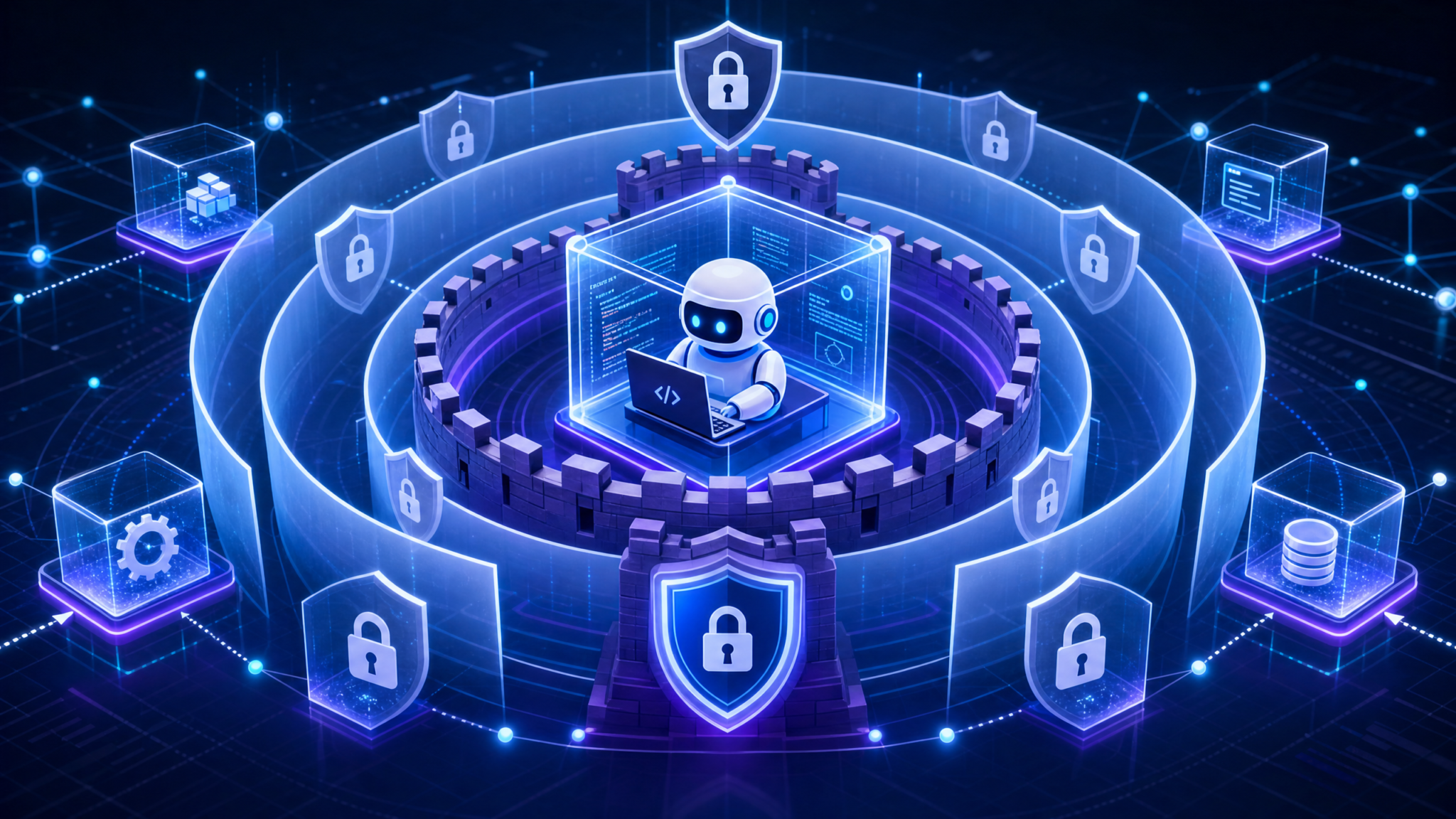
OpenAI’s Codex has rapidly become a foundational AI technology empowering enterprises to integrate AI-driven coding assistants, automation tools, and intelligent workflows. As of May 2026, Codex serves over 4 million weekly active enterprise users worldwide, reflecting an 8x surge in adoption just this year alone.
With such widespread use, engineering leaders, DevOps teams, and security professionals face the critical challenge of operating Codex safely, ensuring security, compliance, and operational stability. On May 9, 2026, OpenAI released a detailed framework titled “Running Codex safely at OpenAI”, offering invaluable insights into the security practices fuelling Codex’s robust, scalable deployment at OpenAI itself.
This comprehensive guide distills the framework’s core principles and practical steps to help your enterprise adopt Codex securely — aligning with stringent security standards, regulatory compliance, and internal risk management policies.
The Four Pillars of Safe Codex Deployment in Enterprise Settings
OpenAI’s Codex security framework centers around four robust pillars, designed to mitigate operational risk while enabling smooth AI-powered innovation:
- Sandboxing: Isolating AI tasks to protect critical systems.
- Approvals: Integrating human-in-the-loop checkpoints for sensitive actions.
- Network Policies: Enforcing granular control over external connectivity.
- Agent-native Telemetry: Creating transparent audit trails for compliance and forensics.
Each pillar plays a crucial role in balancing agility with security and compliance demands. We will explore each pillar in detail along with implementation best practices, challenges, and enterprise use cases.
Sandboxing: Isolating Codex Tasks for Maximum Security
What Is Sandboxing and Why Does It Matter?
Sandboxing involves executing Codex-generated tasks within a tightly controlled, isolated environment that restricts their access to resources and systems outside the sandbox. This containment is vital to:
- Prevent unintended interactions with production environments.
- Stop malicious or erroneous code from compromising infrastructure.
- Limit any potential data exfiltration or leakage.
- Allow safe experimentation and iterative task execution.
Key Mechanisms in Codex Sandboxing
OpenAI employs multiple technologies and policies that comprise sandboxing.
- Containerization per Task: Codex tasks run inside ephemeral containers with minimal privileges tailored to the task’s requirements.
- Resource Permission Limitation: Sandboxes restrict file system reads/writes, network access, and system calls to pre-approved scopes.
- Privilege Escalation Prevention: Attack surface is minimized by blocking privilege escalation or lateral movement across networks within sandbox boundaries.
- Automatic Rollbacks: Once a task completes or hits an error threshold, the container environment automatically resets to a secure baseline.
Implementing Sandboxing in Your Enterprise
To leverage sandboxing effectively, engineering teams can:
- Integrate containers such as Docker or Kubernetes namespaces for Codex task execution.
- Define fine-grained security policies using platform-native tools (e.g., SELinux, AppArmor).
- Set up environment orchestration workflows that ensure clean state resets after each AI task.
- Continuously monitor sandbox boundaries and trigger alerts on policy violations or anomalous behavior.
Enterprise Use Case
At an international fintech firm, Codex-powered CI/CD pipelines run automated code generation and testing inside sandboxed Kubernetes pods. This approach enables rapid feature iteration without risking outages or data exposure.
Approvals: Human-in-the-Loop Checkpoints for Sensitive Operations
Why Human Oversight Is Crucial
While automation enhances speed and efficiency, certain operations carry too much risk to trust fully to AI-generated automation. Attaching human review checkpoints helps:
- Prevent accidental or malicious deployment of flawed code.
- Maintain accountability and governance over critical changes.
- Comply with auditing and regulatory requirements.
Critical Operations Requiring Approvals
OpenAI’s framework identifies these kinds of activities as requiring human-in-the-loop (HITL) approval:
- Production deployments or push to main branches triggered by Codex.
- Schema migrations or any direct manipulations of production databases.
- External API calls accessing sensitive third-party services or exposing confidential data.
- Access to privileged resources or operational dashboards.
Best Practices for Approval Workflows
To align approval steps with existing security workflows:
- Integrate AI-generated change requests with existing code review tools like GitHub, GitLab, or Bitbucket.
- Use automated gating systems to enforce mandatory approval before execution.
- Design approval processes that minimize bottlenecks via role-based delegation.
- Audit approval trails to continuously optimize the balance of agility and control.
Enterprise Example
A global e-commerce company requires DevSecOps teams to approve any Codex-assisted pushes directly to production branches, implemented via automated pull request workflows integrated into their CI/CD tooling.
Network Policies: Granular Control Over External Access
The Security Imperative for Network Restrictions
Codex agents often need to reach external services such as repositories, APIs, or cloud storage. Open network access, however, exposes enterprises to risks like data leakage, malware C2 channels, and compliance breaches.
Defining Codex Network Policies
OpenAI enforces strict network policies entailing:
- Allowlists: Explicitly permitted domains, IPs, and APIs needed for task execution.
- Blocklists: List of prohibited destinations, including high-risk or untrusted endpoints.
- Contextual Adaptation: Access permissions conditional on task context and sensitivity level.
How to Implement in Your Enterprise
Best practices include:
- Leverage cloud-native firewall rules, API gateways, and zero-trust network segmentation to enforce policies.
- Monitor outbound connections from Codex containers or agents to detect unauthorized communication attempts.
- Periodically review network policies in tandem with threat intelligence updates.
- Automate policy deployments to keep pace with evolving AI-assisted workflows.
Example Scenario
A multinational healthcare provider restricts Codex network access to only specific internal endpoints and validated external APIs, enforced via a zero-trust architecture incorporating granular micro-segmentation.
Agent-native Telemetry: Comprehensive Audit Trails for Transparency and Compliance
Why Telemetry Matters in Enterprise AI
Visibility into AI agent actions is essential for security investigations, operational debugging, and regulatory reporting. Without detailed telemetry, it’s impossible to audit or respond to incidents effectively.
What OpenAI’s Telemetry Captures
- All Codex agent decisions and reasoning steps during task execution.
- Triggers and outcomes of every external tool, API call, or system interaction.
- Contextual metadata such as timestamps, user or service IDs, and environment variables.
- Versioning info for Codex models, plugins, and deployed task configurations.
Implementing Audit Logging Best Practices
Enterprises should:
- Use centralized logging platforms (e.g., ELK stack, Splunk, Datadog) to aggregate Codex telemetry.
- Enable immutable logging and tamper detection mechanisms to maintain integrity.
- Define alerting on anomalous agent behaviors or repeated failed tasks.
- Periodically review logs for compliance verifications and operational insights.
Example Use Case
At a Fortune 500 energy company, Codex telemetry data feeds into the SOC (Security Operations Center) enabling rapid investigation of suspicious automation task behaviors during critical infrastructure updates.
Additional Security and Compliance Considerations
Data Privacy and Protection
When deploying Codex in regulated industries, enterprises must ensure:
- Data processed by Codex complies with GDPR, HIPAA, CCPA, or other applicable regulations.
- Use of data minimization techniques and anonymization where feasible.
- Encryption of data in transit and at rest in Codex-related components.
Role-Based Access Control (RBAC) for Codex Systems
Implement strict RBAC to restrict who can initiate Codex tasks, approve actions, or access telemetry data. This limits insider threats and accidental misuse.
Continuous Risk Assessment and Penetration Testing
Regularly conduct security testing and risk assessments of Codex integrations, including:
- Red team exercises simulating attack scenarios involving Codex.
- Penetration testing of sandbox boundaries and network policies.
- Evaluations of AI model behavior for emergent vulnerabilities.
Employee Training and Awareness
Ensure that engineering and security teams receive ongoing training about Codex capabilities, risks, and safe usage guidelines.
Practical Implementation Checklist for Engineering Leaders and Security Teams
- Define security and compliance requirements tailored to your industry and enterprise policies.
- Set up sandboxed environments leveraging containerization or VM-based isolation.
- Configure human-in-the-loop approval workflows integrated with DevOps pipelines.
- Enforce granular network policies based on allowlists and blocklists with contextual rules.
- Implement comprehensive telemetry collection centralized in secure logging platforms.
- Continuous monitoring, alerting, and incident response planning for Codex-operated workflows.
- Periodic audits, penetration tests, and model behavior assessments.
- Develop and maintain detailed documentation to support compliance and governance.
Frequently Asked Questions (FAQ)
Q1: Can Codex be deployed on-premises to ensure data sovereignty?
A: Currently, OpenAI offers Codex primarily as a cloud-hosted service. However, enterprises with strict data sovereignty requirements should explore hybrid architectures combining on-premise sandboxing and network controls with API access. Discuss your needs with OpenAI representatives for dedicated deployment options.
Q2: How does the sandbox reset impact performance?
A: Sandbox resets are optimized for speed using container snapshotting and ephemeral resource provisioning. While some overhead exists, the security benefits outweigh minimal latency introduced in mission-critical workflows.
Q3: What tools can integrate with Codex approvals?
A: Codex approval checkpoints can integrate with common CI/CD tools like Jenkins, GitHub Actions, GitLab CI, and security platforms such as Jira and ServiceNow using webhook triggers and API connectors.
Q4: How is telemetry data protected?
A: Telemetry is transmitted securely with encryption and stored in hardened environments with role-based access controls, ensuring data integrity and preventing unauthorized access.
Q5: How to handle false positives from automated approvals or network policies?
A: Implement feedback loops and anomaly detection thresholds that trigger human review on suspicious events, enabling fine-tuning of automation to minimize false positives over time.
Useful Links
- OpenAI’s Official “Running Codex Safely” Framework
- OWASP Security Knowledge Framework
- Kubernetes Pod Security Standards
- Google Cloud Secure DevOps Guide
- ISO/IEC 27001 Information Security Standard
- More Enterprise AI Security Articles on ChatGPT AI Hub
Conclusion
Deploying OpenAI’s Codex safely in enterprise environments requires a holistic approach integrating sandboxing, human approvals, network governance, and rigorous telemetry. Engineering leaders and security teams that implement these four pillars effectively will unlock AI’s full potential while maintaining robust security and regulatory compliance.
As Codex adoption continues to expand, maintaining proactive security postures and continuous improvement will ensure your enterprise benefits from AI innovation without compromise.
If you have questions about implementing Codex securely or want assistance tailoring these best practices to your environment, feel free to reach out via our contact page.
