
Complete Guide to Anthropic’s Claude Agent SDK Credits: Pricing, Limits, and Optimization Strategies
Complete Guide to Anthropic’s Claude Agent SDK Credits: Pricing, Limits, and Optimization Strategies
By Markos Symeonides
As of June 15, 2026, Anthropic has introduced a significant update to the Claude Agent SDK pricing and access model, transitioning to a credit-based system designed to offer clearer cost management and differentiated usage segmentation. This comprehensive guide explores the new credit tiers, clarifies the critical distinctions between programmatic and interactive usage, unveils practical optimization strategies to control costs effectively, and benchmarks Anthropic’s offering against OpenAI’s API pricing. For developers and enterprises building with Claude, mastering these updates is essential to maximizing ROI and ensuring scalable, cost-efficient deployments.
Understanding the Claude Agent SDK Credit System
Anthropic’s Claude Agent SDK, known for its cutting-edge AI agent capabilities, now employs a credit system in place of traditional usage-based billing. This evolution is more than a simple rebranding of costs; it represents a strategic shift designed to better align consumption with developer needs, operational scale, and usage patterns.
Credit Tiers Breakdown
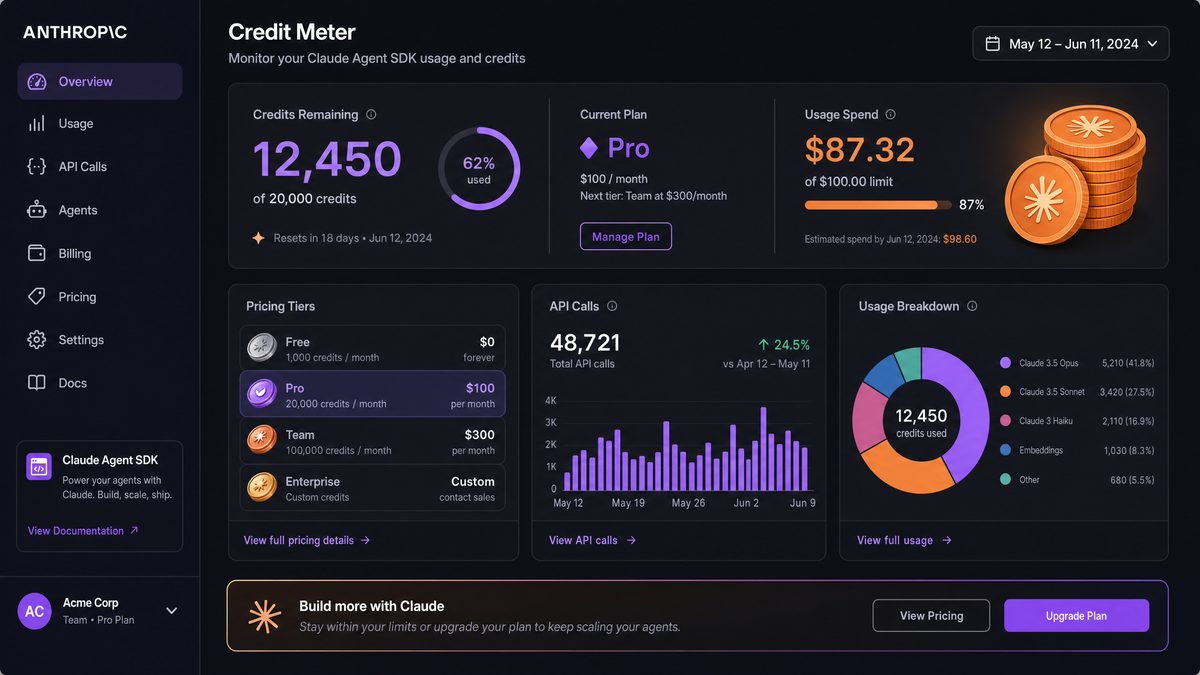
The updated pricing tiers for Claude Agent SDK credits are straightforward and segmented into three primary plans:
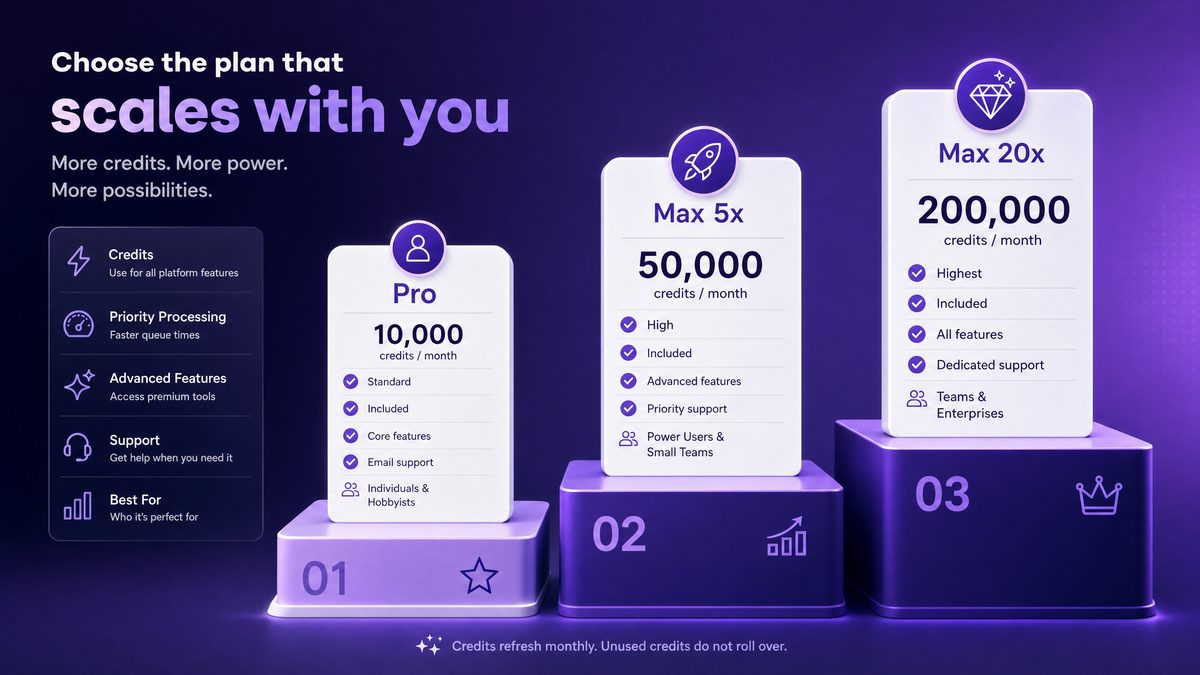
- Pro Plan – $20 per month: Tailored for individual developers and small projects. Offers a monthly credit allocation sufficient for moderate, interactive usage scenarios.
- Max 5x Plan – $100 per month: Suited for growing teams and mid-sized applications requiring significantly more capacity. This plan provides five times the credits of the Pro plan, ideal for scaling both interactive and programmatic workflows.
- Max 20x Plan – $200 per month: Designed for enterprise users or high-volume applications. Offering twenty times the Pro plan credits, this tier supports extensive agent deployments and heavy programmatic workloads.
Each credit corresponds to a defined unit of computational work, with Anthropic specifying credit consumption rates based on request type, model size, and interaction mode. This approach offers developers predictable monthly costs, greater budgeting control, and flexibility to select plans that best match their operational demands.
How Credits Translate to Usage
Credits are consumed differently depending on whether usage is interactive or programmatic. Interactive usage typically involves direct human-agent conversations such as chatbots or workflow assistants, characterized by lower token volumes but higher request frequency. Programmatic usage includes backend API calls, integrations, or batch processing, often involving larger token volumes or complex multi-agent orchestration.
Due to these differences, credit consumption rates vary. Anthropic’s new system explicitly separates these two categories to enhance billing transparency and usage insights.
Programmatic vs Interactive Usage: Understanding the Differences
A key feature of the June 2026 Claude Agent SDK update is the explicit bifurcation of programmatic and interactive usage pricing. This distinction highlights Anthropic’s understanding that these usage modes have unique resource demands, cost implications, and operational patterns.
Interactive Usage Explained
Interactive usage primarily refers to real-time, human-facing interactions with Claude Agents — examples include chat interfaces, virtual assistants, and live customer support bots. These interactions generally require lower latency and involve smaller token payloads per request but occur with higher frequency.
Under the credit system, interactive usage consumes credits at a lower rate per token compared to programmatic calls. This pricing incentivizes developers to create rich, seamless interactive experiences without incurring prohibitive costs.
Programmatic Usage Explained
Programmatic usage covers automated backend calls, batch processing, and integrations where Claude agents operate without direct human input. Common scenarios include data enrichment pipelines, automated report generation, and complex multi-agent orchestration workflows.
Because these tasks often involve larger payloads and greater computational overhead, programmatic calls are charged at a higher credit rate per token. This encourages developers to optimize workflows, minimize waste, and monitor usage closely.
Business and Development Implications
This separation requires developers and businesses to design architectures aligned with usage patterns. For instance, a customer support chatbot handling intermittent human queries benefits from lower interactive credit rates. Conversely, backend integrations processing thousands of documents daily must focus on optimizing programmatic usage to maintain cost efficiency.
Furthermore, this distinction promotes transparent billing, enabling teams to forecast expenses accurately and adjust usage or upgrade plans proactively.
Optimization Strategies to Maximize Claude Agent SDK Credits
With the introduction of credit limits and differentiated pricing, it’s crucial to implement strategies that optimize usage, reduce waste, and maximize output within budget constraints. Here are proven tactics tailored for both interactive and programmatic usage under the new system.
1. Monitor Token Usage Proactively
Tokens directly impact credit consumption. Utilize Anthropic’s usage dashboards and third-party analytics tools to track token counts per request. Identify high-consumption queries and refine prompts to reduce verbosity and eliminate unnecessary token generation. Monitoring usage trends helps anticipate cost spikes and informs optimization efforts.
2. Architect Workloads by Usage Type
Segregate interactive and programmatic requests within your system architecture. Route human-facing queries through interactive pipelines to leverage lower credit rates, while scheduling programmatic batch jobs during off-peak hours or throttling them to control consumption. This separation enables targeted optimization and clearer cost attribution.
3. Employ Advanced Prompt Engineering and Compression
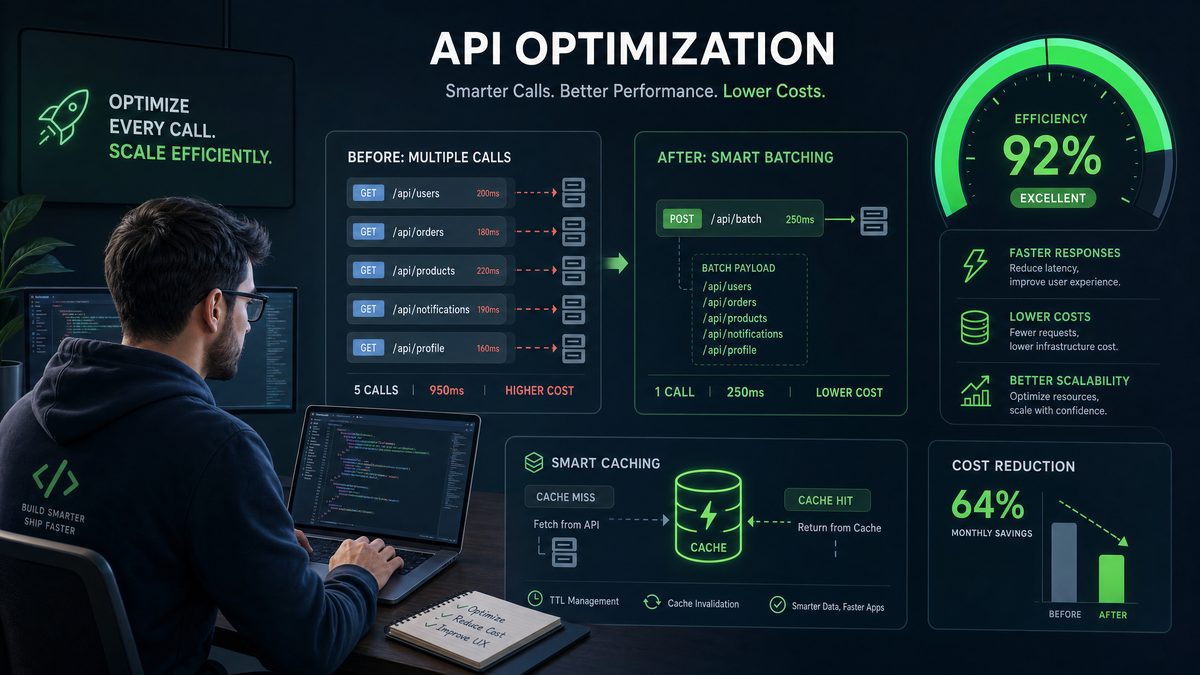
Effective prompt design significantly reduces token counts. Use concise instructions, remove redundant context, and adopt prompt templates that maintain performance with fewer tokens. For programmatic workflows, consider summarizing or compressing data inputs before sending them to the API, minimizing payload size and credit usage.
4. Implement Caching for Repeated Queries
Cache responses for frequently requested or predictable outputs to avoid redundant API calls. This strategy preserves credits for unique or dynamic queries and improves system responsiveness.
5. Select the Optimal Plan Based on Usage Scale
Analyze monthly usage to choose the most cost-effective plan. The Max 5x plan is ideal for scaling teams requiring higher interactive and programmatic capacity, whereas the Max 20x plan suits enterprises with heavy and sustained workloads, offering the best value for large-scale deployments.
6. Set Rate Limits and Quotas
Implement strict rate limiting and daily quotas, particularly for programmatic workflows vulnerable to spikes caused by batch runs or integration errors. These controls prevent runaway costs and maintain operational stability.
7. Conduct Continuous Review and Adjustment
Regularly analyze billing reports and usage metrics to spot inefficiencies. Adjust prompts, upgrade or downgrade plans, or re-architect workflows as your application evolves to maintain optimal cost-performance balance.
By applying these strategies, developers and businesses can fully leverage Claude Agent SDK’s capabilities while managing costs effectively.
Claude Agent SDK Credits vs OpenAI API Pricing: A Comparative Analysis
With Anthropic’s new credit system debuting in mid-2026, it is important to compare it against OpenAI’s established API pricing models to understand relative strengths, weaknesses, and best-fit use cases.
Pricing Models and Structure
Anthropic Claude Agent SDK: Employs a subscription-based credit system with three tiers ($20, $100, $200) offering defined monthly credit bundles. Pricing explicitly separates interactive and programmatic usage, with credits consumed based on token volume and interaction mode.
OpenAI API: Uses a pay-as-you-go model with per-token pricing differentiated by model (such as GPT-4 and GPT-3.5). There are no fixed monthly tiers, though volume discounts apply for higher usage levels.
Cost Efficiency at Different Scales
For low to moderate usage, Anthropic’s Pro plan at $20 per month can be more cost-effective due to included credits and lower interactive usage rates. OpenAI’s pay-as-you-go model may offer more flexibility for sporadic or unpredictable workloads.
At higher volumes, Anthropic’s Max 5x and Max 20x plans provide predictable budgeting with bundled credits, potentially delivering superior value for enterprises with steady or growing usage. OpenAI’s volume discounts narrow the cost gap but lack fixed monthly caps, which can complicate budgeting.
Usage Segmentation and Transparency
Anthropic’s explicit separation of programmatic and interactive usage is unique, giving developers enhanced control and clear cost visibility. OpenAI applies a uniform per-token charge regardless of interaction type, which may obscure underlying cost drivers in mixed-use cases.
Developer Experience and Ecosystem
Both Anthropic and OpenAI offer robust SDKs and extensive documentation. Anthropic’s Claude Agent SDK is increasingly favored for complex agent orchestration and multi-step workflows, while OpenAI’s models remain versatile for a broad spectrum of AI applications.
Summary Table of Key Differences
| Aspect | Anthropic Claude Agent SDK | OpenAI API |
|---|---|---|
| Pricing Model | Subscription credit tiers ($20, $100, $200) | Pay-as-you-go per token, volume discounts |
| Usage Categories | Separate pricing for interactive vs programmatic | Unified token-based pricing |
| Cost Predictability | Fixed monthly credits, predictable billing | Variable monthly costs, depends on usage |
| Target Audience | Developers optimizing agent workflows and orchestration | Wide range of AI use cases, from chatbots to code generation |
| Optimization Levers | Prompt engineering, usage mode separation, credit budgeting | Prompt tuning, batching, model selection |
Understanding these distinctions helps developers select the platform and plan best aligned with their technical requirements and budget constraints.
For those interested in mastering cost management with Anthropic’s Claude Agent SDK credits, our detailed article on Claude Agent SDK credits dives deeper into credit consumption mechanics and billing nuances.
Teams seeking insights on managing expenses for backend automation will find our analysis on Anthropic programmatic usage pricing invaluable, breaking down cost drivers and optimization techniques.
Enterprises evaluating subscription options should review our comprehensive breakdown of the Claude Max plan credits June 2026, which explains benefits and trade-offs across the premium tiers.
If you’re a small business looking to expand Claude’s capabilities, check out the article on Claude for Small Business: Anthropic Launches 15 AI Skills and 8 Connectors for SMB Automation. It provides a detailed overview of the latest tools designed to streamline workflows and enhance productivity by automating routine tasks and improving customer interactions.
To enhance your AI projects further, learn how to build custom workflows with Claude’s MCP Server Integration. The step-by-step guide in building custom AI workflows with Claude’s MCP server explains how to integrate Claude into your existing systems for streamlined automation and improved performance.

Conclusion
Anthropic’s introduction of the Claude Agent SDK credit system marks a pivotal evolution in AI agent pricing and consumption management. By establishing clear tiered plans, separating programmatic and interactive usage, and providing tools for credit-based budgeting, Anthropic empowers developers to scale intelligently while controlling costs.
When combined with disciplined optimization strategies such as token monitoring, prompt engineering, usage segmentation, and caching, this system can unlock significant cost efficiencies and performance benefits for AI applications.
As the AI landscape continues to mature, understanding these pricing models and their operational implications is critical for developers and enterprises seeking to maximize the value of their AI investments.
