
How a 3-Person Startup Used Claude Code and Codex to Build and Launch a SaaS Product in 30 Days
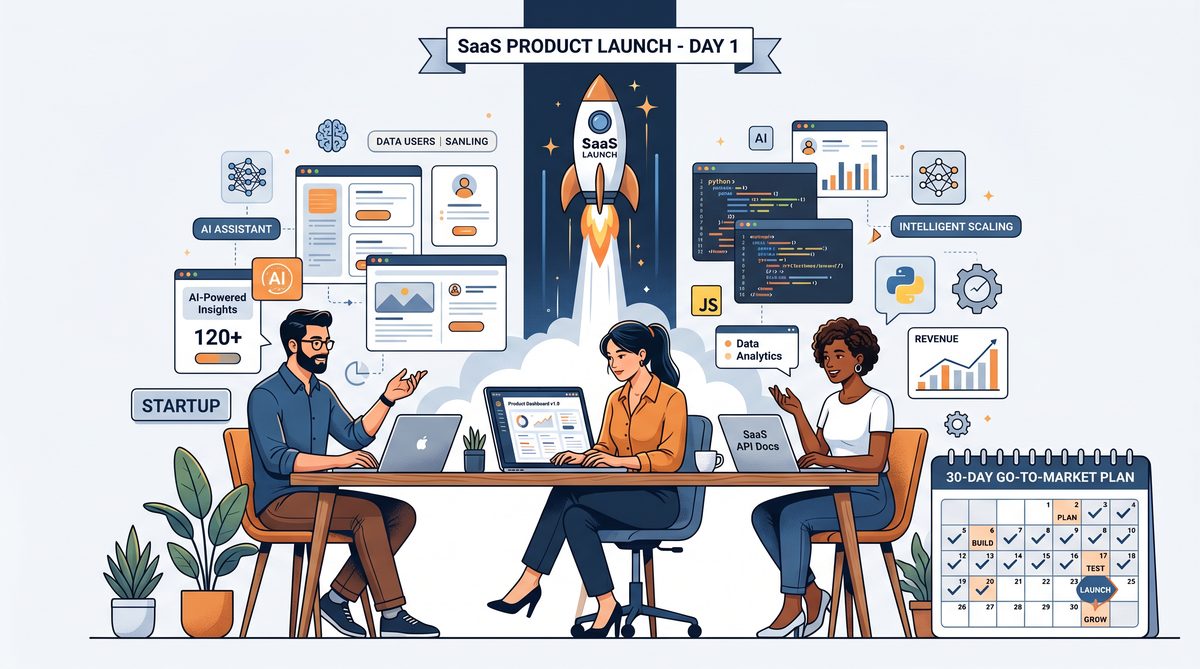
Launching a successful software-as-a-service (SaaS) product is notoriously challenging, especially for small teams with limited resources. Yet, in today’s rapidly evolving AI-driven development landscape, early adopters of cutting-edge tools can dramatically compress development timelines while maintaining high quality. This case study explores how a lean, three-person startup leveraged the latest advances in AI coding assistants—Anthropic’s Claude Code and OpenAI’s Codex—to design, build, and launch a fully functional SaaS product in just 30 days. Their journey offers valuable insights into the practical integration of AI tools, cost management strategies, and real-world lessons learned from an aggressive, high-stakes timeline.
The startup, focused on delivering an AI-powered project management platform for creative teams, entered the market with a barebones prototype and an ambitious roadmap. Unlike traditional development approaches that require extensive upfront planning, large teams, and costly iterations, this team harnessed Claude Code and Codex to automate and accelerate coding tasks, generate documentation, and streamline testing workflows. The case study details the specific phases of their 30-day sprint, including ideation, MVP development, testing, iteration, and launch.
Beyond the technical narrative, this article dives into the financial and operational aspects that defined their success. It examines the cost structures associated with API usage for Claude Code and Codex, the trade-offs in feature prioritization, and the impact of AI-generated code quality on the speed of debugging and deployment. Additionally, the team’s reflections highlight critical lessons about managing expectations, mitigating risks, and adapting AI tools to fit human workflows.
For developers and startup founders contemplating the integration of AI coding assistants into their products or development pipelines, this case study provides a comprehensive, data-driven example of what is possible today. It also demystifies the process of leveraging AI not merely as a coding aid but as a strategic partner in rapid product development. Throughout the article, readers will find detailed timelines, tool comparisons, cost breakdowns, and actionable takeaways designed to inform and inspire similar ventures.
Project Conception and Planning: Defining the MVP and Setting Milestones
The initial phase of the startup’s 30-day journey centered on solidifying the product vision and defining a minimum viable product (MVP) that could be realistically delivered within the aggressive timeline. With only three team members—a product manager/UX designer, a backend developer, and a frontend developer—the focus was on maximizing output through strategic use of AI coding assistants and rigorous prioritization.
The idea stemmed from observing inefficiencies in current project management tools that failed to cater specifically to creative teams’ workflows. The startup aimed to build a lightweight, intuitive platform that integrated AI to automate task categorization and deadline recommendations. Rather than building a fully featured system, the team concentrated on core functionalities that would demonstrate value and validate market interest: project creation, task assignment, AI-powered task prioritization, and basic team collaboration features.
To formalize the plan, the team adopted an agile approach with clearly defined weekly milestones. Week one focused on finalizing feature specifications, designing the user interface, and setting up the development environment. The product manager created detailed wireframes and user flows, leveraging early feedback from potential users to refine the scope. This phase also involved establishing the technical stack, including frontend frameworks and backend services, and deciding how Claude Code and Codex would integrate into the development workflow.
A significant early decision was to use Claude Code primarily for generating backend logic and API endpoints, given its strength in producing clean, maintainable code with robust error handling. Codex, on the other hand, was favored for frontend development tasks, such as generating React components and user interface behaviors, due to its proficiency in JavaScript and React syntax. This division allowed the team to parallelize development efforts while exploiting the unique advantages of each AI assistant. The choice of these tools was also informed by a cost-benefit analysis, balancing API usage costs against the expected acceleration in development velocity.
In addition to feature and tool selection, the team invested time in outlining the testing strategy. They decided on continuous integration with automated unit testing, leveraging AI to generate test cases and mock data. This approach was critical to maintaining quality despite the compressed timeline. The use of AI-generated tests not only expedited coverage but also helped identify edge cases that might have been overlooked in manual test writing, an advantage that bolstered confidence before launch.
Throughout the planning phase, the team documented their process carefully, including the prompts and interactions with Claude Code and Codex. This documentation proved invaluable for transparency, debugging, and onboarding any potential collaborators or investors. Moreover, it contributed to a growing internal knowledge base that informed best practices for future AI-assisted projects.
By the end of the first week, the startup had a well-defined MVP scope, a clear division of labor, and a detailed project roadmap. This foundation was essential for the rapid development cycles that followed, ensuring that the team remained aligned and could quickly pivot if necessary. The strategic integration of AI tools from the outset exemplifies a modern approach to lean product development, where human expertise and artificial intelligence complement each other to overcome resource constraints and time pressure.
For a deeper understanding of agile methodologies adapted for AI-augmented development, see our detailed guide on integrating AI into sprint planning
Building on the insights of how a 3-person startup leveraged Claude Code and Codex to rapidly develop a SaaS product, the article Case Study: How a SaaS Startup Cut Development Time by 60% Using OpenAI Codex provides an in-depth analysis of the specific strategies and technical implementations that enabled a similar company to significantly accelerate their development cycle. This case study highlights practical applications of OpenAI Codex in streamlining coding workflows and optimizing project timelines, offering valuable lessons that complement the approaches discussed in the initial startup story.
.
Project Timeline, Tool Utilization, and Cost Breakdown
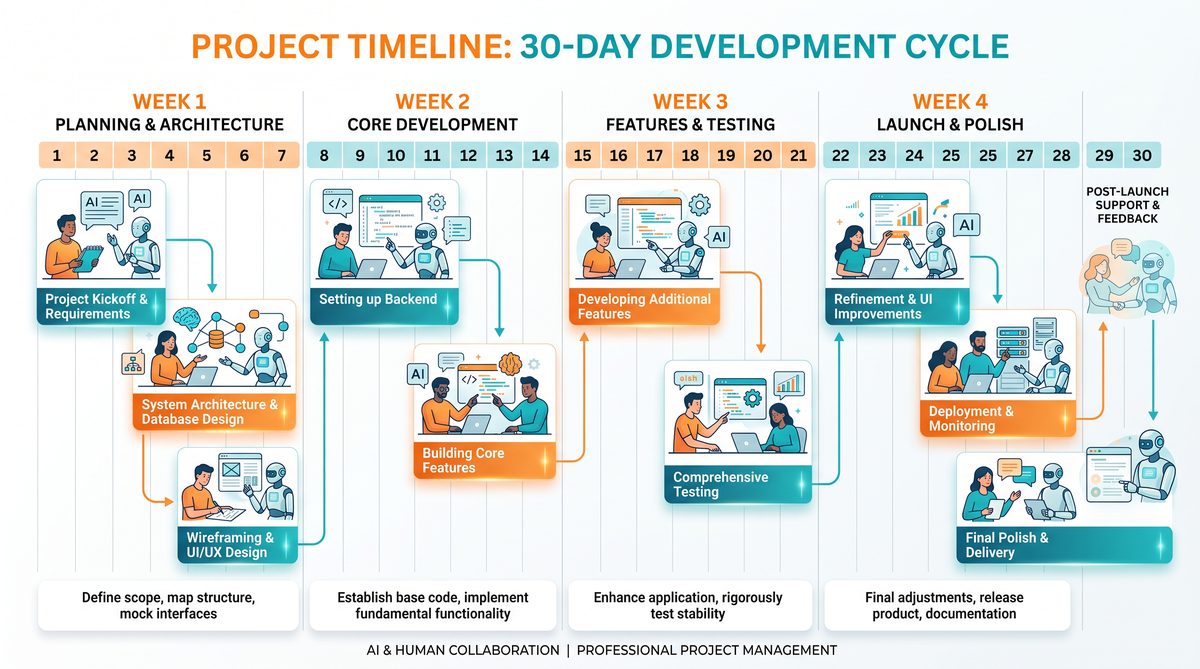
The journey of this three-person startup from concept to launch within a mere 30 days is a testament to strategic planning, efficient tool usage, and disciplined execution. Their approach centered around leveraging AI-assisted coding platforms—Claude Code and OpenAI Codex—to accelerate development cycles and reduce manual coding overhead. This section delves into the detailed timeline of their project milestones, the specific tools they employed, the associated costs, and the critical lessons learned throughout the process.
The initial phase, spanning the first five days, was dedicated exclusively to defining the product scope and architecture. Given the limited team size, clarity on features and system design was paramount. The founders used Claude Code extensively during this stage for ideation and prototyping, particularly for generating boilerplate code and architectural templates. Claude Code’s natural language interface allowed them to draft backend API structures and database schemas rapidly, cutting down what would traditionally take weeks into days. This accelerated ideation facilitated early prototype iterations that were reviewed and refined collaboratively.
From day six through day fifteen, the team moved into the core development phase. Here, OpenAI Codex became the primary coding assistant, helping to automate repetitive coding tasks and generate complex functions based on concise natural language prompts. The developers integrated Codex into their IDEs, enabling on-the-fly code suggestions and immediate testing. This synergy reduced development time significantly, especially for integrating third-party APIs, implementing authentication flows, and setting up the SaaS subscription management system. The seamless integration of Codex allowed the developers to maintain high code quality while iterating rapidly on features.
The final stretch, days sixteen to thirty, was reserved for testing, debugging, UI/UX refinements, and deployment. Claude Code was used again here, this time to generate test cases and assist in automating quality assurance scripts. The team also leveraged cloud-based CI/CD pipelines to streamline deployment cycles. Throughout this phase, the founders prioritized gathering user feedback from a closed beta group, which informed incremental improvements. The ability to quickly spin up new builds using AI-generated scripts shortened the traditional feedback loop, enabling them to respond within hours rather than days.
The financial aspect of this rapid development was carefully managed to fit a lean startup budget. Subscription costs for AI tools formed the largest portion of the technology expenditure. Claude Code’s tiered pricing, optimized for startups, allowed unlimited code generation within fair usage limits, while Codex was billed based on API usage volume. The team also allocated funds for cloud hosting, domain registration, and essential third-party SaaS integrations such as payment gateways and email services.
The following table compares the key features and usage scenarios of Claude Code and OpenAI Codex within this project, highlighting how each tool contributed uniquely to the startup’s accelerated development timeline:
| Aspect | Claude Code | OpenAI Codex |
|---|---|---|
| Primary Use | Architectural prototyping, boilerplate code generation, test script creation | Function-level code generation, API integration, code completion |
| Interaction Mode | Natural language prompts with contextual understanding | IDE-integrated code suggestions based on inline prompts |
| Strengths | High-level design support, multi-language proficiency, test automation | Fine-grained code completion, real-time assistance, broad framework coverage |
| Limitations | Less effective for granular code snippets, occasional verbosity | Requires precise prompting, sometimes generates overly generic code |
| Pricing Model | Subscription-based with usage tiers | API usage-based billing |
| Integration | Standalone web interface and CLI tools | IDE plugins and REST API |
From a cost perspective, the startup invested approximately $1,200 in AI tool subscriptions and API calls during the 30-day development period. Cloud hosting and ancillary services added another $400, bringing the total technology expenditure to roughly $1,600. This budget was notably lower than traditional development costs, which often run into tens of thousands for comparable projects, underscoring the financial efficiency enabled by AI-assisted development.
Several salient lessons emerged from this rapid development experience. First, while AI coding assistants significantly accelerate development, human oversight remains indispensable. The team invested time in validating generated code, ensuring security, and optimizing performance, which prevented costly rework later. Second, clear and concise prompt engineering was critical to extracting high-quality outputs from both Claude Code and Codex. Iterative refinement of prompts became a daily routine, improving code relevance and reducing manual edits. Finally, adopting a modular approach to architecture facilitated parallel workstreams and easier incorporation of AI-generated components.
This case study also demonstrated the importance of integrating AI tools seamlessly into existing workflows. Both tools’ compatibility with popular IDEs and CI/CD pipelines minimized context switching and enhanced developer productivity. For startups looking to replicate this success, the strategic combination of high-level generative AI platforms with fine-grained code assistants offers a balanced approach to rapid product development.
For additional insights on integrating AI tools in startup environments and maximizing their impact on product timelines, refer to our comprehensive guide on AI-powered development workflows
Building on the insights from how a small team leveraged Claude Code and Codex for rapid SaaS development, the article Case Study: How Simplex Reduced Software Development Time by 60% Using OpenAI Codex Agentic Workflows delves deeper into the practical application of Codex-driven automation to accelerate complex software projects. It provides a comprehensive analysis of how Simplex integrated agentic workflows powered by OpenAI Codex to streamline their development pipeline, achieving significant efficiency gains that parallel the rapid prototyping demonstrated by the startup.
. This resource elaborates on best practices and advanced techniques, helping development teams to harness AI capabilities effectively while maintaining code quality and project control.
Execution Timeline and Cost Breakdown: From Concept to Launch
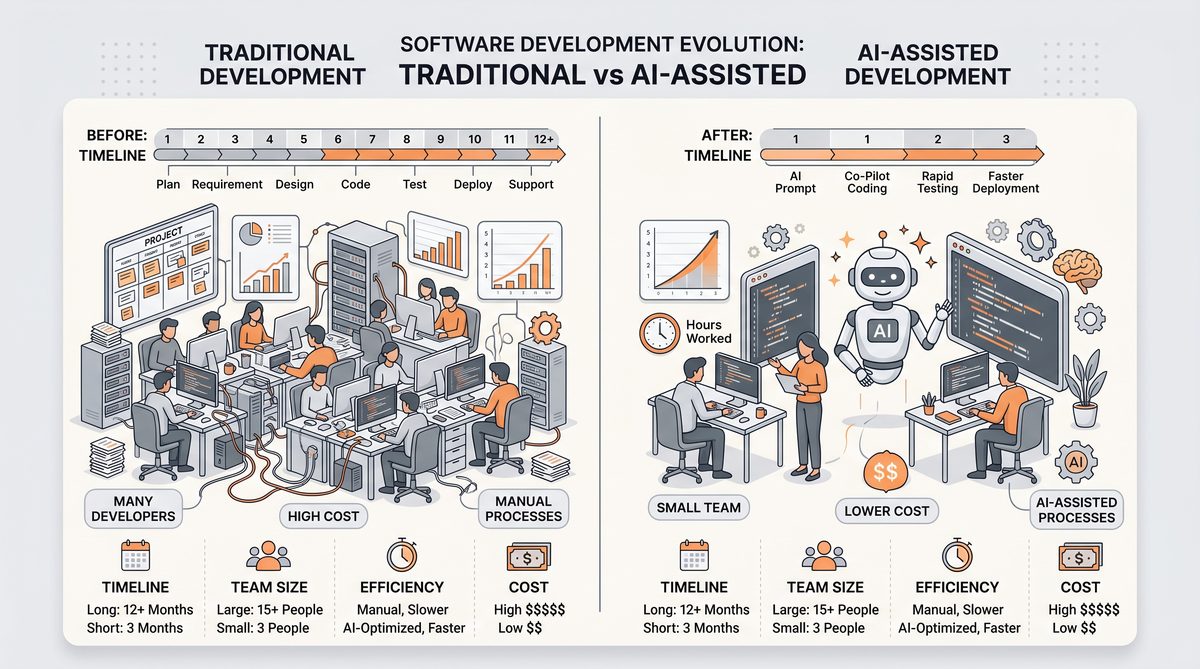
The journey from initial concept to a fully functional SaaS product launched in just 30 days is a remarkable feat, especially for a lean team of three. This section unpacks the execution timeline, the suite of tools leveraged, the associated costs, and key lessons learned throughout the process. By analyzing these components in detail, developers and startup founders can better understand how to efficiently harness AI-driven coding assistants like Claude Code and OpenAI’s Codex to accelerate product development.
The startup’s process was divided into four main phases: ideation and planning, development sprints, testing and iteration, followed by deployment and launch. Each phase was tightly scheduled, with clear milestones to maintain momentum and ensure deliverables aligned with the overarching vision.
**Week 1: Ideation and Project Setup**
The startup began by defining the product’s core value proposition—a task management SaaS tailored for remote teams, emphasizing seamless AI-powered task prioritization and natural language input. During this phase, the team utilized Claude Code extensively for brainstorming feature sets, generating user stories, and producing initial UI wireframes. Claude’s language model capabilities allowed the team to quickly iterate on the product concept, reducing what could have been days of discussion into mere hours.
Simultaneously, the team set up the development environment, selecting a React front-end framework combined with a Node.js backend. They integrated OpenAI’s Codex early on to aid with code generation for both front-end components and server-side APIs. Codex’s ability to write boilerplate code and suggest optimized functions significantly accelerated initial coding efforts.
The cost during this phase was minimal, primarily involving subscription fees for cloud-based development tools and API access. The team subscribed to Claude Code’s developer plan at approximately $50 per user per month and maintained Codex API usage under a budget of $100 for the initial exploratory calls.
**Week 2: Core Development Sprint**
With a clear roadmap in place, the startup entered an intensive development sprint. The three-person team divided responsibilities into front-end development, backend API creation, and continuous integration setup. Claude Code was used as a pair programming assistant, helping to generate complex functions, troubleshoot bugs, and even write unit tests. The team reported that Claude Code’s contextual awareness allowed it to provide relevant suggestions without extensive prompting, which was crucial for rapid iteration.
Codex complemented this by generating code snippets based on plain English prompts, handling routine CRUD operations, and accelerating database schema design. Using Codex’s output as scaffolding, developers refined and customized code to fit the unique product requirements.
The team adopted daily stand-ups and utilized project management tools such as Jira and Slack for communication and progress tracking. They remained vigilant about code quality, employing automated linting and testing frameworks, which Codex helped to enhance by generating test cases.
API usage costs increased during this phase, with Codex calls amounting to roughly $400 due to the extensive code generation tasks. Claude Code subscription fees remained consistent. Cloud hosting costs started to incur as prototypes were deployed to staging environments, estimated at $50 for the week.
**Week 3: Testing, Feedback, and Iteration**
Once the minimum viable product (MVP) was functional, the focus shifted to rigorous testing and iterative improvements. The team invited a small cohort of beta users to provide feedback on usability and feature completeness. Claude Code proved invaluable for rapidly incorporating user-reported fixes and feature tweaks, significantly reducing turnaround time.
Issues such as UI responsiveness, API latency, and task prioritization accuracy were addressed promptly. Codex was employed to refactor inefficient code segments and generate additional integration tests to enhance reliability.
During this phase, the startup also began preparing documentation and marketing materials, again leveraging Claude Code’s natural language generation capabilities. This included writing detailed API documentation, onboarding guides, and blog posts announcing the upcoming launch.
Operational costs during testing included ongoing API usage hovering around $300 and increased cloud hosting fees of approximately $100, reflecting expanded server usage to support beta testers.
**Week 4: Final Preparations and Launch**
The concluding week was centered around polishing the product, optimizing deployment pipelines, and ensuring scalability. The team automated deployment using CI/CD tools integrated with their cloud provider, facilitating smooth releases and rollbacks as needed.
Claude Code assisted in writing deployment scripts and infrastructure-as-code templates, while Codex helped optimize database queries to improve performance under load. The startup also implemented analytics tracking and error monitoring to maintain post-launch stability.
Marketing efforts ramped up with social media campaigns, email outreach, and content publication. The team’s prior documentation work simplified user onboarding and reduced support overhead.
By the end of day 30, the SaaS product was publicly launched. Total API usage costs for Codex reached approximately $1,000, while Claude Code subscriptions totaled $150. Cloud hosting expenses for the month were around $300, primarily due to increased traffic and staging environments. Additional costs included domain registration, SSL certificates, and third-party integrations, bringing the total project budget to roughly $1,600—not including the team’s opportunity cost.
**Lessons Learned and Best Practices**
This case study underscores several important lessons for startups aiming to leverage AI coding assistants for rapid product development. First, integrating AI tools early in the development lifecycle maximizes their impact, enabling faster ideation, coding, and testing cycles. Second, maintaining a disciplined schedule with clear milestones and daily progress reviews helps keep a small team aligned and productive.
The balance between AI-generated code and human oversight was critical. While Claude Code and Codex accelerated routine coding tasks, human developers were essential for architectural decisions, quality assurance, and final refinements. The team found that iterative feedback loops with AI tools enhanced code quality and reduced technical debt.
Cost management also proved vital. By monitoring API usage and cloud expenses closely, the startup stayed within budget while scaling resources as needed. Selecting appropriate subscription plans and leveraging free-tier options where possible helped optimize spending.
Lastly, the startup’s experience illustrates the value of combining multiple AI tools. Claude Code’s conversational assistance paired with Codex’s code generation created a synergistic workflow, each tool complementing the other’s strengths.
For developers interested in replicating this approach or exploring detailed tutorials on integrating these AI tools into their workflows, visit
While the story of a 3-person startup leveraging Claude Code and Codex to rapidly develop a SaaS product highlights the agility AI tools bring to early-stage companies, the scale and integration challenges are markedly different in large enterprises. The article How NVIDIA Deployed GPT-5.5-Powered Codex to 10,000 Employees: An Enterprise AI Case Study provides an in-depth examination of how NVIDIA successfully implemented GPT-5.5-powered Codex across thousands of employees, illustrating the complexities and strategic considerations involved in deploying AI solutions at enterprise scale. This contrast underscores the versatility and transformative potential of AI platforms across diverse organizational contexts.
for comprehensive guides and best practices.
In conclusion, this 30-day sprint demonstrates that with a focused team, strategic tool adoption, and disciplined execution, startups can rapidly develop and launch sophisticated SaaS products. The combination of Claude Code and Codex offers a powerful catalyst for accelerating software development cycles and reducing time-to-market in competitive environments.
Conclusion and Future Outlook
The case study of the 3-person startup leveraging Claude Code and OpenAI’s Codex to build and launch a SaaS product within 30 days highlights several critical insights into rapid product development in a lean environment. First, the strategic integration of AI-powered code generation tools significantly accelerated the development lifecycle. By automating boilerplate code creation, debugging assistance, and feature prototyping, the team was able to focus their limited human resources on high-value design and user experience tasks. This not only reduced development time but also helped maintain a high standard of code quality despite the tight timeline.
Secondly, the choice of tools and infrastructure played a pivotal role in cost management and scalability. Using cloud-based APIs like Claude Code and Codex allowed the startup to avoid upfront investments in development resources and infrastructure. Instead, they operated on a pay-as-you-go model, which aligned well with their initial budget constraints and minimized financial risk. The team’s decision to use serverless architecture and managed database services further simplified deployment and maintenance, enabling faster iteration cycles.
The detailed timeline of the project underscores the importance of disciplined project management and clear milestone setting. By breaking down the 30-day period into distinct phases—including ideation, prototyping, iterative development, and testing—the startup ensured continuous progress and timely delivery. Daily stand-ups and the use of agile methodologies helped maintain team alignment and quickly address blockers, which is critical for small teams operating under aggressive deadlines.
Looking ahead, the case study suggests that startups and small teams can increasingly rely on AI-assisted coding to overcome traditional resource limitations. As these tools continue to evolve, we can expect even greater improvements in code generation accuracy, context awareness, and integration capabilities. However, it remains essential for developers to maintain oversight and domain expertise to ensure that AI-generated code aligns with business goals and security standards.
In summary, the successful launch of the SaaS product demonstrates that a well-coordinated team equipped with advanced AI coding assistants and cloud infrastructure can deliver high-quality software rapidly and cost-effectively. This case serves as a blueprint for future startups aiming to leverage AI-driven development in competitive markets, highlighting the convergence of technology, strategic planning, and agile execution.
Useful Links
- Claude Code Official Documentation
- OpenAI Codex API Documentation
- OpenAI Cookbook GitHub Repository
- AWS Lambda Serverless Computing
- Agile Project Management Best Practices
- Stripe API Documentation for SaaS Payments
- PostgreSQL Official Documentation
- Heroku Platform for SaaS Deployment
- Product Hunt – Launch and Marketing Platform
Access 40,000+ AI Prompts for ChatGPT, Claude & Codex — Free!
Subscribe to get instant access to our complete Notion Prompt Library — the largest curated collection of prompts for ChatGPT, Claude, OpenAI Codex, and other leading AI models. Optimized for real-world workflows across coding, research, content creation, and business.
