
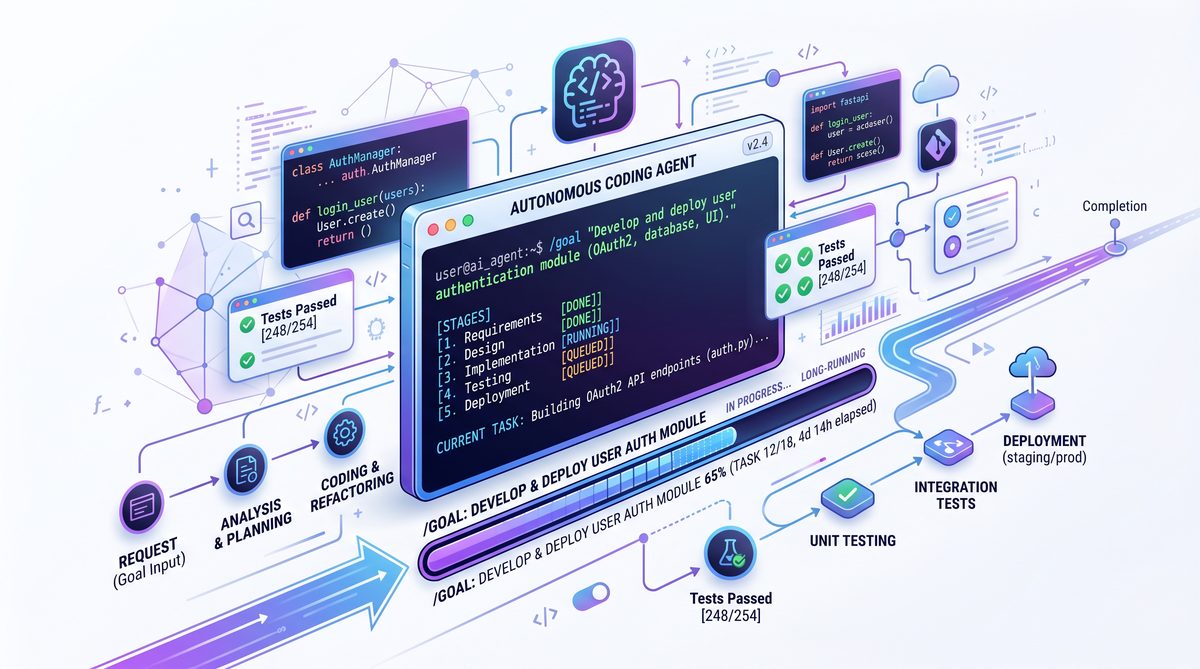
Introduction to Claude Code’s /goal Feature for Autonomous Coding
In recent years, the evolution of AI-driven coding assistants has accelerated dramatically, transforming the way developers approach software creation, debugging, and optimization. Among the latest innovations in this space is Claude Code’s groundbreaking /goal feature, designed to facilitate long-duration, multi-step autonomous coding tasks. This feature represents a significant leap forward in AI assistance, enabling developers to delegate complex programming objectives to the AI with minimal oversight, thereby enhancing productivity and allowing human engineers to focus on higher-level strategic work.
The /goal command in Claude Code shifts the paradigm from single-turn code generation to extended autonomous workflows. Rather than issuing individual prompts for specific functions or fixes, developers can now specify comprehensive goals that the AI will pursue independently. This capability is particularly valuable for projects requiring iterative development, integration across multiple modules, or systematic testing and refactoring, where sustained attention and context retention are crucial. By leveraging advanced natural language understanding and sophisticated task management algorithms, Claude Code manages dependencies, tracks progress, and dynamically adapts to codebase changes throughout the autonomous session.
As software projects grow in complexity, the need for AI systems that can handle prolonged, goal-oriented tasks becomes increasingly apparent. Traditional AI coding assistants often rely on short, discrete interactions, which can lead to fragmentation and inefficiency in multi-step projects. Claude Code’s /goal feature addresses these challenges by maintaining continuity across sessions, supporting checkpoints, and enabling iterative refinement of the solution. This continuous context retention and goal-driven approach empower developers to offload intricate sequences such as implementing feature sets, performing comprehensive refactors, or conducting in-depth performance improvements.
This comprehensive guide explores the /goal feature in depth, detailing how it works, best practices for crafting effective goals, and strategies for integrating it into your development workflow. We will analyze its technical underpinnings, discuss its limitations, and provide practical examples demonstrating how it can be used to streamline long-term coding projects. For those interested in the broader landscape of autonomous coding agents and their operational frameworks, we also reference foundational concepts and prior developments in AI task automation
Building upon the comprehensive strategies outlined in The Complete Guide to Claude Code /goal: Running Long-Duration Autonomous Coding Tasks, the article How to Use OpenAI Codex /goal for Autonomous Multi-Hour Coding Sessions in 2026 delves into leveraging OpenAI Codex’s advanced capabilities to orchestrate extended, uninterrupted coding workflows. It offers an in-depth examination of the latest tools and techniques designed to optimize multi-hour autonomous coding sessions, complementing the foundational concepts presented for Claude Code and expanding the practical applications for developers seeking sustained productivity.
. Understanding the nuances of Claude Code’s /goal feature will equip developers and teams to harness its full potential, ultimately accelerating software delivery and improving code quality in complex, multi-step scenarios.
Understanding the Architecture and Workflow of the /goal Feature
The /goal feature in Claude Code is architected to enable the AI to autonomously handle complex coding tasks that unfold over extended periods and multiple steps. Unlike traditional prompt-response interactions, /goal initiates a persistent task session where the AI maintains contextual awareness and systematically progresses toward the specified objective. This requires a sophisticated underlying architecture that integrates natural language understanding, task planning, code generation, and iterative validation mechanisms.
At its core, the /goal system begins when a developer submits a high-level objective expressed in natural language. This objective might range from “Implement a RESTful API with authentication and rate limiting” to “Refactor the legacy payment processing module for improved maintainability and performance.” Upon receiving this input, Claude Code parses the goal into actionable subtasks by leveraging advanced decomposition algorithms. These subtasks form a dynamic task queue, which the AI iteratively executes, testing each component and integrating the results into the evolving codebase.
One fundamental aspect of this architecture is the session memory, which preserves the state of the codebase, task progress, and relevant context throughout the autonomous run. This memory allows Claude Code to recall prior steps, dependencies, and decisions, thereby preventing redundant work and ensuring consistency. The system also supports checkpointing, enabling developers to review intermediate outputs, adjust priorities, or inject new requirements without restarting the entire process.
To manage the complexity of multi-step workflows, the /goal feature incorporates a feedback loop mechanism. After generating code for a subtask, Claude Code runs automated tests or static analysis tools where applicable, evaluates the results, and determines whether further refinement is needed. This loop allows the AI to self-correct and optimize its outputs, closely mimicking an experienced developer’s iterative approach to coding and debugging. When needed, the AI can also flag ambiguities or request clarifications, maintaining a collaborative dynamic with the user.
The integration of this autonomous workflow with existing development environments is another critical element. Claude Code can interface with version control systems, continuous integration pipelines, and code editors, thereby embedding the /goal feature seamlessly into the developer’s toolchain. This interoperability ensures that long-duration tasks do not operate in isolation but contribute directly to the live codebase, with proper versioning and change tracking.
Effective use of the /goal feature also requires an understanding of how to frame objectives clearly and comprehensively. Because the AI’s planning and execution depend heavily on the initial goal description, precision in specifying requirements, constraints, and priorities is essential. For example, including performance targets, preferred architectural patterns, or testing expectations within the goal can guide the AI’s decision-making process more effectively. The system’s flexibility allows for incremental adjustments, enabling users to refine or extend goals as the autonomous task progresses.
In summary, the /goal feature represents a convergence of advanced AI capabilities designed to support autonomous, multi-step coding workflows. Its architecture emphasizes persistent context management, dynamic task decomposition, iterative validation, and seamless integration with development tools. Mastering these components allows developers to leverage Claude Code for sophisticated programming challenges that would traditionally require significant manual coordination and oversight, marking a new frontier in AI-assisted software engineering.
Exploring Claude Code’s /goal Feature for Multi-Step Autonomous Coding
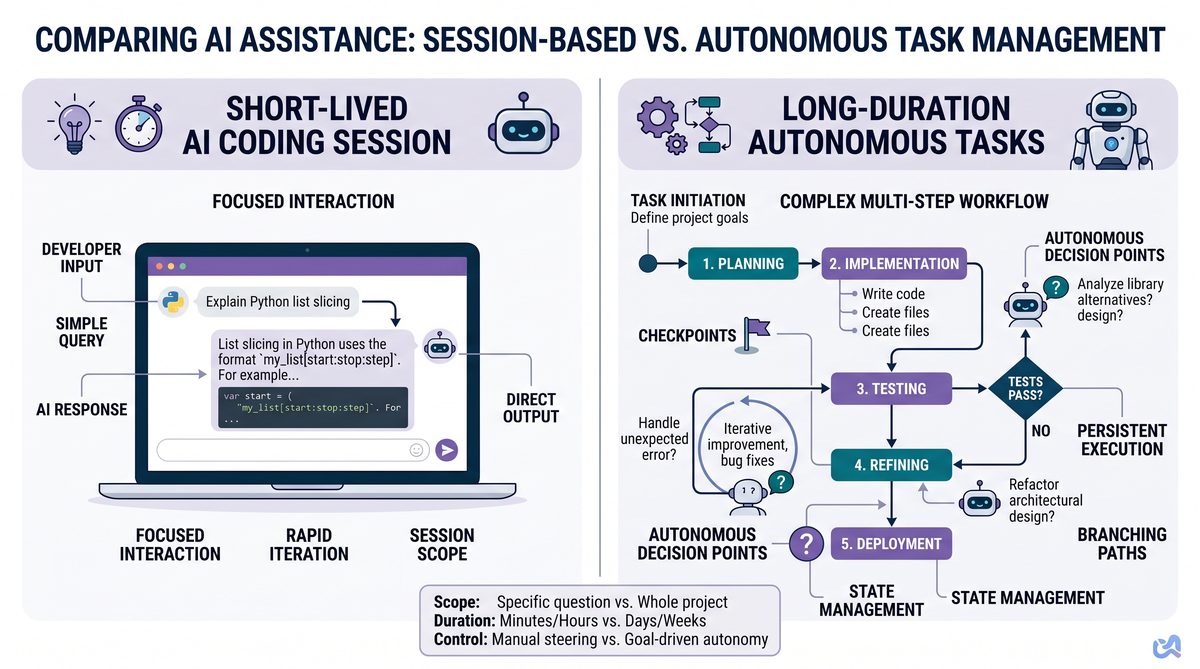
Claude Code’s introduction of the /goal command marks a significant advancement in facilitating long-duration, multi-step autonomous coding tasks. Unlike traditional prompt-based interactions, which often rely on single-turn instructions or require repeated user input to guide complex workflows, the /goal feature enables users to define a high-level objective that Claude Code can pursue independently over an extended session. This capability is transformative for developers who need to automate intricate coding operations that involve multiple stages, dependencies, and iterative refinements.
At its core, the /goal command allows users to specify a comprehensive task or project goal in natural language, encapsulating the desired outcome without prescribing every micro-step. Claude Code then interprets this directive, decomposes it into actionable subtasks, and orchestrates execution autonomously. This mirrors the cognitive approach of a human developer who plans, codes, tests, and debugs a project through iterative cycles, but with the speed and persistence of an AI.
One of the key strengths of the /goal feature is its ability to maintain context and state throughout the task lifecycle. Traditional AI coding assistants frequently lose track of complex workflows when prompts become too lengthy or disjointed. Claude Code’s architecture, however, is designed to manage persistent memory and incremental progress updates, enabling it to handle dependencies between code modules, libraries, and configuration files. This persistent contextual awareness allows Claude Code to adapt dynamically if initial assumptions prove incorrect or if intermediate results suggest alternative approaches.
The autonomy granted by /goal also reduces the cognitive load on developers. Instead of micromanaging every code snippet or debugging step, users can delegate the entire process and monitor progress via status reports or intermediate outputs. This is particularly valuable for projects requiring extensive refactoring, optimization, or integration testing, where the AI can methodically address each layer without constant human intervention.
To illustrate the breadth of capabilities enabled by /goal, consider a scenario where a developer wants to build a microservice architecture for an e-commerce application. By issuing a single /goal command describing the components, APIs, database schema, and security standards, Claude Code can generate initial scaffolding, implement authentication flows, create REST endpoints, and even write unit and integration tests. Crucially, it can identify when a subtask is complete or if a design pattern needs revision, iterating until the overall goal criteria are satisfied.
The following table highlights key differences between traditional single-turn coding prompts and the multi-step autonomous workflows facilitated by /goal, emphasizing how Claude Code’s feature redefines AI-assisted software development:
| Aspect | Traditional Single-Turn Prompts | Claude Code /goal Feature |
|---|---|---|
| Task Scope | Limited to specific, isolated code snippets or tasks | Supports comprehensive, multi-step projects with complex dependencies |
| Context Management | Context often lost or fragmented between turns | Maintains persistent context and state across entire workflows |
| User Involvement | Requires frequent user input and guidance | Operates autonomously with minimal user intervention after goal setting |
| Iteration and Refinement | User must manually identify and correct errors or improvements | Automatically iterates, tests, and refines code to meet goal criteria |
| Complexity Handling | Struggles with large, interconnected codebases | Manages dependencies and modular components effectively |
| Output Monitoring | Outputs discrete snippets per prompt | Provides progress updates and intermediate results during execution |
From a developer’s perspective, the /goal feature unlocks new workflows in which AI operates as a collaborative team member rather than a simple code generator. By setting a clear objective, the user entrusts Claude Code with planning and execution responsibilities, freeing up time to focus on higher-level design or parallel projects. This can enhance productivity and code quality, especially for tasks that would traditionally require extensive manual coordination.
However, realizing the full potential of /goal requires understanding its best practices and limitations. Clear and unambiguous goal formulations are critical, as vague or overly broad instructions can lead to inefficient or off-target outputs. Developers should invest time in defining concrete acceptance criteria and milestones within their goal statements. Additionally, while Claude Code’s autonomy is powerful, it is not infallible; human oversight remains essential to validate outputs, manage edge cases, and ensure alignment with business logic or coding standards.
Integration with existing development environments and continuous integration pipelines is another important consideration. Claude Code’s /goal workflows can be embedded into IDE plugins, command-line interfaces, or cloud-based environments to facilitate seamless transitions between human and AI-driven coding phases. This integration supports a hybrid development model where automated coding and manual review coexist harmoniously.
Further exploration of use cases and advanced configuration options for the /goal feature is available in our detailed tutorials and implementation guides at
Building upon the foundational strategies outlined in “The Complete Guide to Claude Code /goal: Running Long-Duration Autonomous Coding Tasks,” the article 20 Advanced Prompts for OpenAI Codex /goal: Master Autonomous Multi-Hour Coding Sessions delves into sophisticated prompt engineering techniques tailored specifically for OpenAI Codex. It provides practical examples designed to optimize the AI’s performance during extended, uninterrupted coding workflows, thereby enhancing the efficiency and reliability of autonomous multi-hour development projects.
. These resources provide hands-on examples illustrating how to tailor goal statements for specific programming languages, frameworks, and project types.
In summary, Claude Code’s /goal feature represents a paradigm shift in AI-assisted development by enabling persistent, autonomous multi-step coding. It empowers developers to delegate entire project workflows to AI, reducing repetitive effort while maintaining control through clear goal definitions and iterative feedback. As this technology matures, it is poised to become a foundational tool for software engineering teams aiming to leverage AI for complex, long-duration coding challenges.
Exploring Claude Code’s /goal Feature for Multi-Step Autonomous Coding
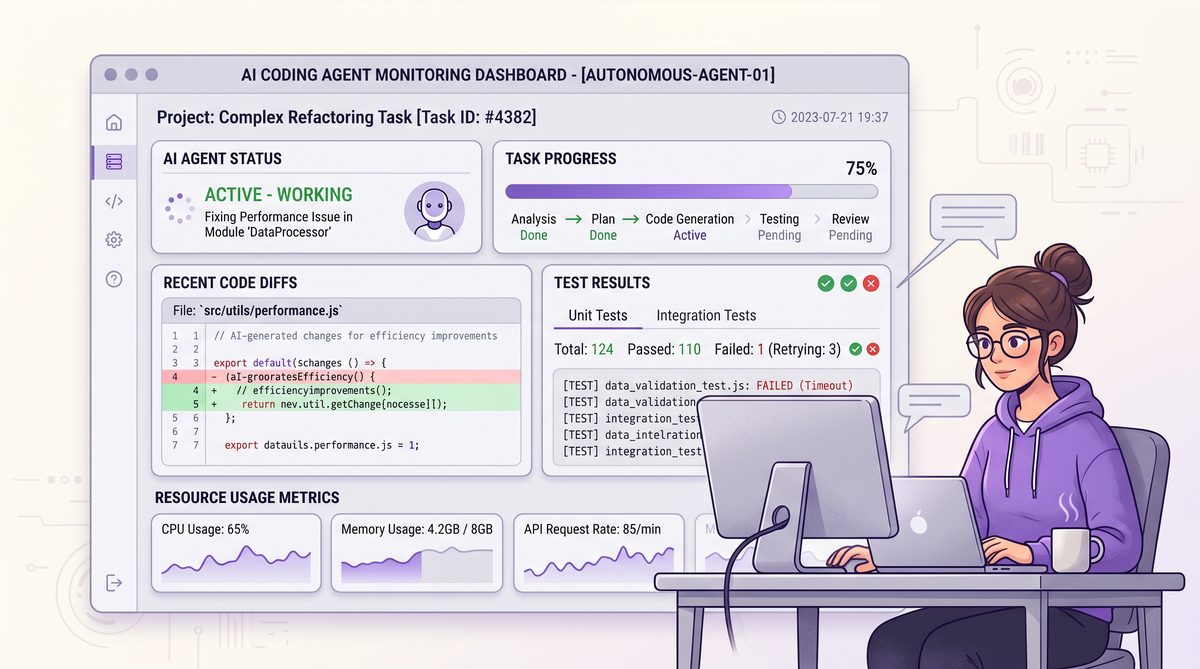
Claude Code’s introduction of the /goal feature marks a significant advancement in autonomous coding workflows, designed specifically to handle complex, multi-step tasks over extended durations. This capability enables developers to delegate high-level objectives to the AI, which then independently plans, executes, and iteratively refines its approach without constant human intervention. Understanding the intricacies of this feature is essential for leveraging Claude Code to its fullest potential in long-duration autonomous projects.
At its core, the /goal command allows users to specify a comprehensive, often multi-faceted coding objective in natural language. Unlike traditional prompt-based interactions, where the AI responds to discrete queries or short tasks, /goal sets a strategic direction that the AI interprets into a sequence of actionable steps. This shift from reactive to proactive task management empowers Claude Code to function more like an autonomous coding assistant or junior developer, capable of managing the dependencies and logical flow inherent in complex software development.
The underlying architecture supporting /goal is optimized for persistent context retention and dynamic task decomposition. When a /goal is issued, Claude Code parses the requested outcome, breaking it down into manageable subtasks. It then prioritizes these subtasks based on dependencies, complexity, and estimated execution time. This planning phase is critical because it ensures the AI does not attempt to execute tasks sequentially without regard to logical order or resource constraints. Instead, it dynamically adjusts its workflow as it encounters new information or obstacles during execution.
One notable advantage of the /goal feature is its ability to maintain an internal state across multiple interactions and time intervals. This statefulness allows Claude Code to pick up where it left off after interruptions or when additional input is provided. For example, a developer can initiate a /goal to build a REST API with specific features and later return to review progress, provide clarifications, or ask for refinements. The AI seamlessly incorporates this feedback without losing sight of the overall objective, which is essential for long-duration tasks that may span hours or days.
Furthermore, the /goal feature supports iterative refinement cycles. After completing an initial implementation, Claude Code can autonomously generate test cases, identify bugs, and propose or enact fixes. This iterative process mimics the typical development workflow, where code is seldom perfect on the first attempt. By automating these cycles, the AI reduces the manual oversight required, accelerating the delivery of robust and well-tested code.
From a technical perspective, the /goal feature integrates with Claude Code’s enhanced memory and contextual understanding modules. These modules allow the AI to reference previous code snippets, documentation, and even external resources when necessary. This contextual awareness is a departure from many conventional code generation tools that treat each prompt in isolation. In practice, this means Claude Code can adapt its approach based on the evolving codebase, project conventions, and user preferences recorded during the session.
Another critical aspect of /goal is its configurability. Developers can specify parameters such as desired programming language, framework, coding style guidelines, and performance constraints within the initial command. This customization ensures that the AI’s autonomous output aligns with the specific project requirements and organizational standards. Additionally, the feature supports checkpoints, enabling users to save intermediate states of the AI’s progress. These checkpoints facilitate rollback or branching, which is invaluable for experimentation or when multiple development paths need evaluation.
The /goal feature also enhances collaboration in multi-developer environments. By clearly defining objectives and progress, it serves as a transparent task manager that can be monitored or handed off to other team members. The AI-generated documentation and comments during the autonomous process improve code maintainability and onboarding efficiency. This aspect is particularly beneficial when tasks are complex and span multiple domains or systems.
Despite its strengths, effective use of the /goal command requires thoughtful prompt construction. Users must provide sufficiently detailed objectives to guide the AI’s planning and execution accurately. Vague or overly broad goals can lead to suboptimal or incomplete outcomes. To address this, Claude Code includes feedback mechanisms where the AI requests clarifications or additional details when necessary, fostering a collaborative interaction pattern that balances autonomy with user control.
Security and compliance remain paramount considerations when using autonomous features like /goal. Claude Code incorporates safeguards to prevent the generation of insecure code patterns or the inclusion of sensitive data. It also supports integration with static analysis and code review tools to ensure compliance with industry standards. These integrations help maintain high-quality output even in extended autonomous sessions.
In practical applications, the /goal feature excels in scenarios such as developing modular libraries, implementing end-to-end features, or managing infrastructure-as-code deployments. Its ability to handle dependencies and iterative testing reduces the cognitive load on developers and accelerates delivery timelines. For organizations exploring DevOps automation, integrating Claude Code’s /goal into CI/CD pipelines can streamline continuous development and deployment cycles.
Developers interested in mastering this feature can benefit from tutorials and case studies that demonstrate best practices in defining goals, managing iterative cycles, and integrating AI-generated code into existing workflows. For a comprehensive technical walkthrough of Claude Code’s capabilities and integration tips, refer to the dedicated resources available on
Building on the insights from “The Complete Guide to Claude Code /goal: Running Long-Duration Autonomous Coding Tasks,” the article AI Coding Agents in 2026: Codex vs Claude Code vs Gemini — Which Wins? offers a comprehensive comparison of leading AI coding agents, evaluating their performance, capabilities, and suitability for complex development workflows. This analysis provides critical context for understanding where Claude Code stands among its contemporaries in advancing autonomous coding solutions.
.
In summary, Claude Code’s /goal feature represents a paradigm shift in autonomous coding by enabling multi-step, long-duration task execution with minimal supervision. Its combination of advanced planning, persistent context, iterative refinement, and configurability positions it as a powerful tool for modern software development challenges. As the AI coding assistant landscape evolves, leveraging such autonomous features will become increasingly critical to maintaining competitive development velocity and quality.
Conclusion and Future Outlook
The introduction of the /goal feature in Claude Code represents a significant advancement in the realm of autonomous AI-driven software development. By enabling the model to manage long-duration, multi-step coding tasks independently, developers can now leverage Claude Code for complex projects that require sustained reasoning, iterative refinement, and contextual awareness over extended periods. This capability moves beyond simple code generation or single-step automation, positioning Claude Code as a powerful assistant in scenarios that traditionally demanded continuous human oversight.
Throughout this guide, we explored how the /goal command empowers Claude Code to break down ambitious programming objectives into manageable subtasks, monitor progress, and adjust strategies dynamically based on intermediate results. This structured approach not only enhances the reliability of generated code but also reduces the cognitive load on developers by allowing them to delegate intricate workflows with clear end goals in mind. The model’s ability to maintain context over multiple interactions and resolve dependencies autonomously is a crucial step towards scalable AI-assisted development environments.
Looking ahead, the /goal feature is poised to evolve in several exciting directions. Integration with real-time debugging tools and continuous integration pipelines will further streamline the development lifecycle, enabling Claude Code to proactively identify and fix issues as they arise. Additionally, improvements in memory management and contextual retention will allow even longer and more complex task sequences, facilitating applications in large-scale systems, legacy code modernization, and cross-language orchestration.
Moreover, as the AI community continues to refine safety and interpretability measures, users can expect more transparent decision-making processes within multi-step workflows, fostering greater trust and collaboration between human developers and AI agents. The synergy between Claude Code’s autonomous capabilities and human expertise will unlock new paradigms of productivity where AI handles routine or complex coding operations while developers focus on strategic design and innovation.
In summary, the /goal feature is a landmark in autonomous coding technology, offering a robust framework for tackling sustained programming challenges with minimal manual intervention. Developers seeking to harness AI for ambitious projects will find in Claude Code a versatile and forward-looking partner that continues to push the boundaries of what autonomous coding agents can achieve.
Useful Links
- Claude Code Official Documentation: /goal Feature
- Claude Code GitHub Repository
- OpenAI Blog: Autonomous Agents and Multi-step Tasks
- Research Paper: Long-Duration Autonomous AI Agents
- DeepLearning.AI: AI Tools for Software Developers
- Dev.to Article: Optimizing AI for Long-Running Coding Tasks
- Product Hunt: Claude Code Launch and Features
Access 40,000+ AI Prompts for ChatGPT, Claude & Codex — Free!
Subscribe to get instant access to our complete Notion Prompt Library — the largest curated collection of prompts for ChatGPT, Claude, OpenAI Codex, and other leading AI models. Optimized for real-world workflows across coding, research, content creation, and business.
