
The AI Coding War of 2026: How OpenAI Codex and Claude Code Are Reshaping Software Engineering
Introduction
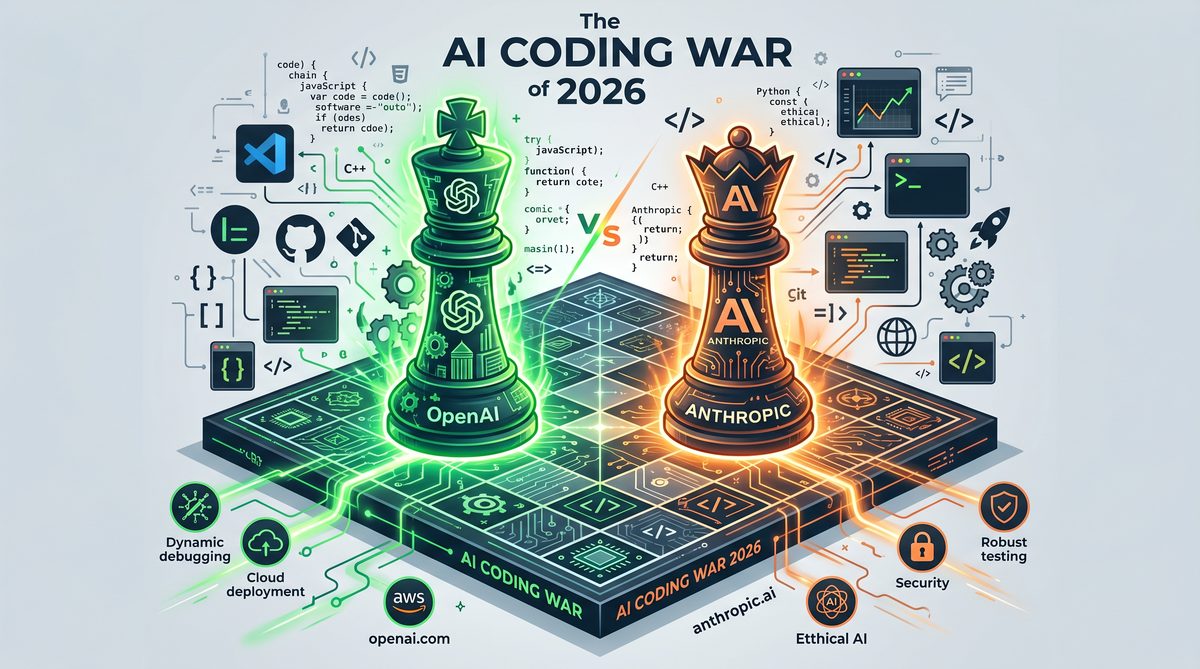
The year 2026 marks a pivotal chapter in the evolution of software engineering, driven by the escalating competition between two AI coding titans: OpenAI Codex and Claude Code. These sophisticated AI-driven coding assistants have rapidly transformed from experimental tools into integral components of the software development lifecycle. The ongoing rivalry between these platforms is not merely a battle for market share but a strategic contest that is redefining the very fabric of software creation, deployment, and maintenance.
OpenAI Codex, building on the legacy of GPT models, has gained widespread adoption among developers due to its ability to comprehend natural language prompts and generate complex code across diverse programming languages. Its integration into popular development environments and cloud platforms has accelerated coding productivity and lowered barriers for entry-level programmers. In contrast, Claude Code, developed by Anthropic, emphasizes safety, interpretability, and contextual understanding, positioning itself as a reliable assistant for enterprise-grade applications where compliance and precision are paramount.
The competitive dynamics between OpenAI Codex and Claude Code extend beyond technical capabilities to encompass strategic partnerships, data privacy frameworks, and ecosystem development. As organizations increasingly rely on AI to automate and optimize software engineering workflows, the choice between these platforms influences development speed, code quality, and operational risk. Moreover, this rivalry is catalyzing innovation in adjacent fields such as AI-driven testing, debugging automation, and continuous integration pipelines.
This article provides a comprehensive strategic analysis of the AI coding war of 2026, focusing on how OpenAI Codex and Claude Code are reshaping the software engineering industry. We explore their technological differentiators, market positioning, and the broader implications for developers, enterprises, and the future of programming. Understanding this competitive landscape is crucial for stakeholders aiming to leverage AI to maintain a competitive edge in an increasingly automated and intelligent development environment.
The Strategic Battleground: Technology, Ecosystem, and Market Positioning
The competition between OpenAI Codex and Claude Code centers on three intertwined dimensions: technological innovation, ecosystem integration, and market positioning. Each facet plays a critical role in determining the platforms’ influence over software engineering practices and the industry’s trajectory.
Technologically, OpenAI Codex leverages the extensive training on vast repositories of publicly available code and natural language data to deliver remarkable versatility. Its language models are optimized to interpret ambiguous user inputs and generate syntactically correct, efficient code snippets across multiple programming languages such as Python, JavaScript, and Rust. OpenAI has prioritized deep integration with mainstream development environments, embedding Codex into tools like GitHub Copilot and Visual Studio Code extensions. This has created a seamless user experience that encourages adoption among both individual developers and large teams.
In contrast, Claude Code adopts a more cautious and safety-first approach, focusing on minimizing hallucinations and ensuring code correctness through interpretability and transparency mechanisms. Anthropic’s emphasis on constitutional AI principles guides Claude Code’s development, resulting in a platform that is particularly well-suited for mission-critical applications where errors can have severe consequences. Claude Code’s ability to provide contextual explanations alongside generated code aids developers in understanding and validating outputs, thus fostering trust. This approach appeals strongly to regulated industries such as finance, healthcare, and aerospace, where compliance and auditability are non-negotiable.
From an ecosystem perspective, OpenAI Codex benefits from the extensive developer community and the network effects of its integration with GitHub, the world’s largest code hosting platform. This ecosystem facilitates rapid iteration, community feedback, and collective knowledge sharing, accelerating the refinement of Codex’s capabilities. OpenAI’s open collaboration with other AI research entities and cloud service providers further enhances Codex’s accessibility and scalability for enterprise applications.
Conversely, Claude Code is carving out a niche by fostering partnerships with corporations demanding higher degrees of customization and data sovereignty. Anthropic’s approach emphasizes on-premises deployments and hybrid cloud models, addressing concerns around intellectual property protection and data privacy. This strategic positioning allows Claude Code to penetrate markets where regulatory constraints limit the use of public cloud AI services. Additionally, Anthropic’s investment in explainability tools and developer training programs enhances user confidence and facilitates smoother onboarding.
Market positioning also reflects divergent strategies. OpenAI Codex aggressively targets the broader developer base, including startups, independent developers, and educational institutions, rapidly scaling adoption through freemium models and extensive documentation. Claude Code, meanwhile, pursues enterprise clients with tailored solutions and service-level agreements that prioritize reliability and compliance. This bifurcation in target markets underscores the complementary yet competitive nature of their offerings.
These strategic choices have significant implications for the software engineering industry. OpenAI Codex’s democratization of coding accelerates innovation and lowers entry barriers, potentially increasing software output volume and diversity. Claude Code’s focus on robustness and interpretability raises the standards for software quality and governance, particularly in sensitive sectors. Together, they drive a competitive ecosystem where speed, safety, and scalability are balanced to meet evolving industry demands.
For developers and organizations navigating this landscape, understanding the nuanced trade-offs between these AI coding platforms is essential. Factors such as the criticality of applications, regulatory environment, team expertise, and integration capabilities will influence the optimal choice. Moreover, as both platforms continue to evolve rapidly, staying informed about emerging features and industry trends is vital for maintaining a competitive advantage. The ongoing AI coding war is not only a technological contest but a strategic challenge shaping the future of software engineering at large. For a deeper dive into the technological foundations underpinning these platforms, see our analysis on
Building upon the transformative impact of OpenAI Codex and Claude Code discussed in “The AI Coding War of 2026,” the article AI Coding Agents in 2026: Codex vs Claude Code vs Gemini — Which Wins? provides an in-depth comparative analysis of these leading AI coding agents, including Gemini’s emerging capabilities. This comprehensive evaluation highlights their respective strengths, weaknesses, and practical applications, offering critical insights into how these technologies continue to redefine software engineering workflows.
architectural approaches to large language models.
Strategic Analysis of the Competitive Battle and Industry Impact
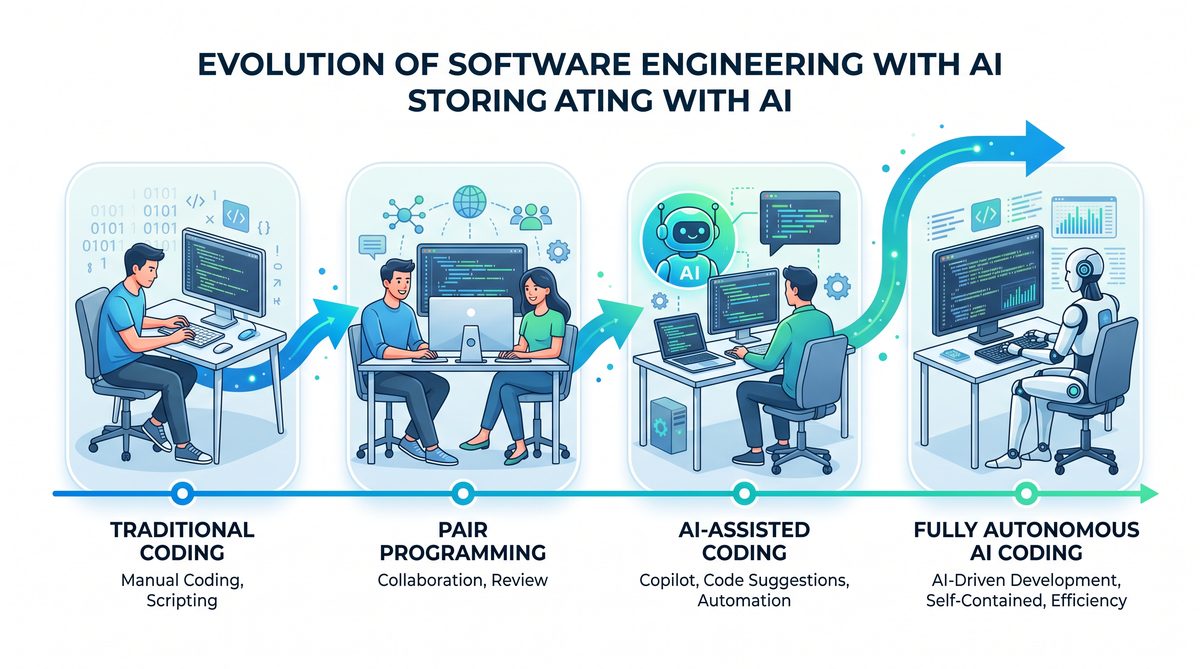
The competitive dynamics between OpenAI Codex and Claude Code in 2026 represent far more than a mere technological rivalry; they are fundamentally reshaping the software engineering landscape. Both platforms have evolved into strategic assets that influence how organizations approach software development, talent acquisition, and innovation cycles. The battle for dominance is not solely about which AI can generate cleaner or faster code but also about which ecosystem can deliver superior integration, scalability, and developer trust.
OpenAI Codex, benefiting from years of refinement and a deep integration with the broader OpenAI ecosystem, has established itself as the de facto standard in many enterprise environments. Its strength lies in its extensive training on diverse codebases, robust natural language understanding, and seamless compatibility with popular integrated development environments (IDEs). This has allowed enterprises to accelerate product development timelines by automating routine coding tasks and reducing errors, thereby shifting the focus of human engineers toward higher-level design and innovation challenges.
Conversely, Claude Code, powered by Anthropic’s emphasis on AI safety and interpretability, has positioned itself as the preferred choice for highly regulated industries and sectors demanding rigorous compliance standards. Its architecture prioritizes transparency in code generation and offers enhanced control mechanisms for developers to audit and customize outputs. This strategic differentiation has allowed Claude Code to capture significant market share in healthcare, finance, and government sectors, where trust and explainability are paramount.
From an industry perspective, the implications of this AI coding war extend deeply into the software development lifecycle. Organizations are increasingly adopting hybrid models where human engineers collaborate in real-time with AI assistants, leading to a paradigm shift in team structures and workflows. The rise of “AI-augmented developers” necessitates new skill sets, including proficiency in prompt engineering, AI oversight, and ethical considerations related to algorithmic bias and intellectual property.
Moreover, the competitive pressure exerted by Codex and Claude Code has accelerated innovation in complementary technologies such as code verification tools, automated testing frameworks, and continuous integration pipelines. This ecosystem-driven growth is fostering an environment where software delivery is faster, more reliable, and more secure. However, it also raises critical questions about the future role of traditional coding education and the potential for AI to disrupt labor markets within the tech sector.
A pivotal aspect of this strategic battle is the approach each platform takes toward developer community engagement and ecosystem building. OpenAI Codex has leveraged its extensive developer network to create a rich marketplace of plugins and extensions, fostering innovation and customization. Claude Code, on the other hand, has cultivated partnerships with leading cloud providers and enterprise vendors, embedding its capabilities deeply into existing infrastructure, which enhances adoption in large-scale enterprise settings.
The competitive landscape can be dissected further by analyzing key attributes of both platforms, which reveal their strategic strengths and potential vulnerabilities:
| Attribute | OpenAI Codex | Claude Code |
|---|---|---|
| Core Strength | Extensive pre-training on diverse open-source repositories; versatility across languages | Safety-first design; transparency and interpretability in code generation |
| Primary Use Cases | Rapid prototyping, general-purpose software development, startups, and tech companies | Regulated industries such as healthcare, finance, and government agencies |
| Integration Ecosystem | Vast plugin marketplace; deep IDE integrations; robust API support | Strong cloud partnerships; enterprise-grade security and compliance tools |
| Developer Community | Large, global community with active open source contributions and forums | Focused professional networks with emphasis on enterprise customers |
| Customization & Control | Flexible prompt engineering; moderate control over generation parameters | Granular control over output; enhanced auditability and compliance features |
| Market Penetration | Widely adopted among startups and mid-sized companies globally | Dominant in high-compliance verticals and government contracts |
| Potential Risks | Dependence on open-source licensing compliance; risk of biased training data | Higher cost of implementation; limited appeal outside regulated sectors |
This table highlights that while both platforms excel in different domains, the competition ultimately drives the entire software engineering ecosystem toward greater efficiency and innovation. The strategic interplay between Codex’s agility and Claude Code’s safety-driven approach is prompting industry leaders to rethink their development strategies and invest in AI literacy across their engineering teams.
Another critical dimension of the strategic battle is the geopolitical and regulatory environment influencing AI adoption. As governments worldwide enact stricter regulations on AI transparency and data privacy, Claude Code’s emphasis on explainability provides it with a competitive advantage in markets with stringent compliance requirements. OpenAI Codex, meanwhile, is innovating rapidly to incorporate explainable AI features and ethical guardrails, but the challenge remains to balance performance with regulatory adherence.
For software engineers, the evolving landscape means adapting to a future where AI is not just a tool but a collaborative partner in the creative process. Developers must master new workflows that integrate AI suggestions with traditional debugging and testing practices. Organizations, meanwhile, must invest in governance frameworks that manage AI-generated code quality, security vulnerabilities, and intellectual property rights.
The ongoing competition also catalyzes investments in AI research, particularly in areas like multi-modal coding assistants, real-time collaborative coding powered by AI, and advanced debugging using machine learning insights. These advancements promise to reduce technical debt and improve maintainability, ultimately transforming how software is engineered.
For a comprehensive understanding of how these trends affect developer productivity and organizational innovation, the detailed analysis provided in our previous section on AI-driven software development workflows is invaluable. This
Building on the transformative impact of OpenAI Codex and Claude Code discussed in the AI Coding War of 2026, the Complete Guide to AI Coding Assistants in 2026: Codex vs Claude Code vs Gemini offers an in-depth comparative analysis of these leading platforms alongside Gemini. This comprehensive guide examines their unique features, performance metrics, and integration capabilities, providing critical insights for software engineers navigating the evolving landscape of AI-assisted development.
offers deep insights into practical adoption scenarios and best practices emerging from early adopters of both OpenAI Codex and Claude Code.
In conclusion, the AI coding war of 2026 between OpenAI Codex and Claude Code is not merely a contest of capabilities; it is a strategic inflection point for the software engineering industry. The competition is fostering an environment of rapid technological advancement, shifting industry standards, and evolving developer roles. As enterprises navigate this new terrain, the choice between Codex and Claude Code will increasingly reflect broader strategic priorities—whether that is speed and versatility, or safety and compliance. This dynamic rivalry ultimately benefits the entire ecosystem, pushing the boundaries of what AI-assisted software engineering can achieve.
Strategic Analysis of the Competitive Battle and Its Industry Impact
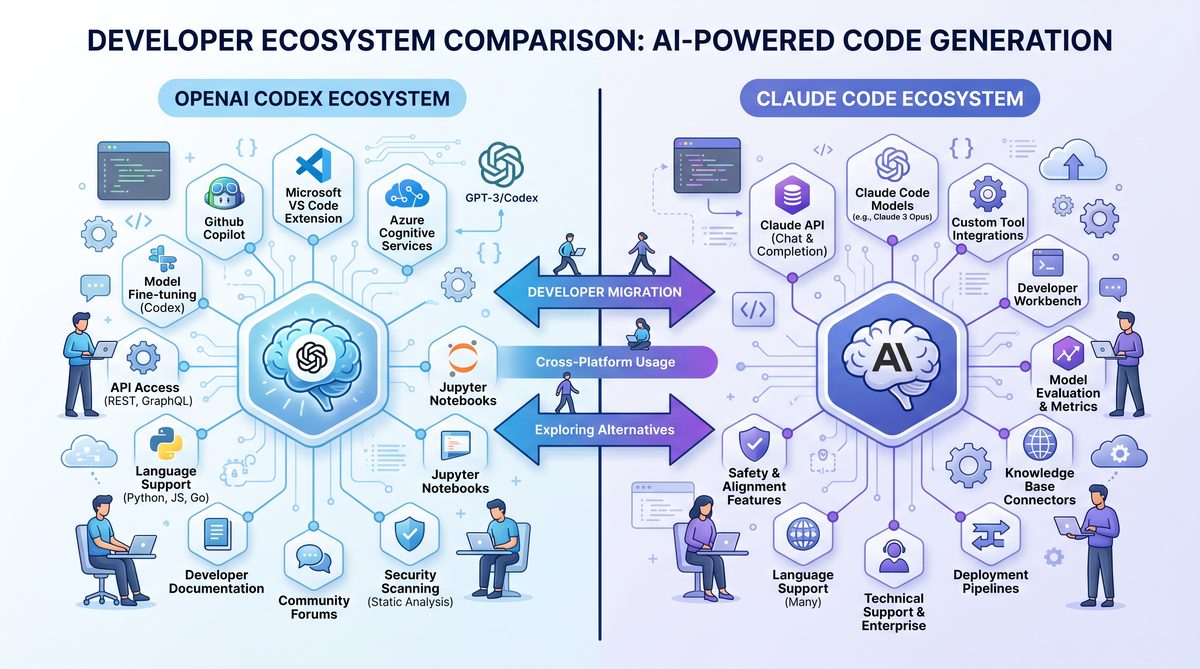
The ongoing competition between OpenAI Codex and Anthropic’s Claude Code represents a defining strategic battle within the software engineering landscape, one that is reshaping the entire industry. This rivalry goes beyond mere technical capabilities; it is fundamentally altering how software is conceptualized, developed, and maintained across enterprises worldwide. To understand the scope and depth of this impact, it is essential to analyze the strategic maneuvers each player has executed, the evolving demands of the market, and the broader implications for software engineering workflows and business models.
OpenAI Codex, as the earlier entrant with a robust foundation in natural language understanding and code generation, has aggressively expanded its ecosystem to embed AI-assisted coding deeply into developer toolchains. By partnering with major integrated development environments (IDEs) and cloud platforms, OpenAI has positioned Codex as a ubiquitous assistant capable of accelerating coding productivity and reducing the cognitive load of writing boilerplate or complex algorithmic code. This strategy hinges on seamless integration, making Codex not just a tool but an indispensable collaborator within the software development lifecycle (SDLC). The strategic advantage gained here is the creation of a network effect, where more developers using Codex generate increased data and feedback, enabling iterative improvements and customization tailored to diverse programming languages and frameworks.
Conversely, Claude Code has pursued a differentiated approach, emphasizing explainability, safety, and modular AI components that align with enterprise governance and compliance requirements. Anthropic’s focus on ethical AI and transparent decision-making processes appeals to organizations operating in highly regulated sectors such as finance, healthcare, and defense. Claude Code’s strategic edge lies in offering AI coding assistance that can be audited and controlled to an unprecedented degree, addressing widespread industry concerns about AI-generated code introducing vulnerabilities or biases. This focus on trustworthiness and compliance has allowed Claude Code to carve out a niche market segment that prioritizes reliability over sheer scale, which is increasingly important as companies move to integrate AI into mission-critical software systems.
The competitive dynamics between Codex and Claude Code also illustrate a broader industry trend: the convergence of AI capabilities with traditional software engineering principles. Both platforms are pushing the boundaries of what AI can autonomously generate while simultaneously embedding human-in-the-loop mechanisms to maintain quality assurance. This hybrid model is becoming the new standard, as organizations recognize that fully automated code generation, while promising, still requires rigorous validation and iterative refinement. The strategic implication for software teams is a paradigm shift towards augmented programming, where AI tools are collaborators that enhance human creativity and problem-solving, rather than replacements for skilled engineers.
From an industry perspective, the acceleration of AI coding assistants is precipitating significant changes in talent dynamics, software delivery timelines, and operational costs. The availability of tools like Codex and Claude Code enables smaller teams to produce complex software with greater efficiency, leveling the competitive playing field against larger incumbents. This democratization of coding expertise is fostering innovation across startups and established firms alike, as the barrier to entry lowers and iterative development cycles shorten. However, this also introduces strategic challenges related to workforce reskilling and talent retention, as engineers must now develop new competencies in AI supervision, prompt engineering, and collaborative development with machine intelligence.
Moreover, the competitive battle is influencing how organizational structures are adapting to AI-driven software engineering. Companies are increasingly investing in AI Centers of Excellence (CoEs) and cross-functional teams that blend software development expertise with data science and AI ethics. These organizational shifts are critical to fully leverage the capabilities of Codex and Claude Code, ensuring that AI-generated code aligns with business objectives, security standards, and user experience goals. The strategic emphasis on governance frameworks and continuous monitoring reflects a maturing industry that acknowledges the dual promise and risks of AI-powered development.
Economic implications are equally profound. The adoption of AI coding assistants is projected to reduce development costs substantially by automating repetitive tasks, accelerating debugging, and improving code quality. This enables enterprises to reallocate resources towards higher-value activities such as innovation, customer engagement, and strategic planning. However, this cost reduction is accompanied by increased investment in AI infrastructure, licensing, and ongoing model training, which must be balanced to achieve sustainable ROI. The competition between Codex and Claude Code is driving price-performance improvements and feature innovations, ultimately benefiting end-users but also intensifying market pressure on AI service providers.
A comparative analysis of Codex and Claude Code’s strategic positioning reveals nuanced differences that influence their respective adoption trajectories. OpenAI’s emphasis on broad applicability, rapid iteration, and community engagement has secured a dominant market share in developer-centric environments, especially among startups and tech giants prioritizing speed and scale. Anthropic’s Claude Code, with its principled stance on AI safety and transparency, enjoys strong loyalty among conservative enterprises and industries with stringent regulatory oversight. These contrasting strategies have prompted both companies to continuously refine their offerings, resulting in a dynamic competitive environment where innovation cycles are measured in months rather than years.
The ripple effects of this competition extend to the wider software engineering ecosystem, including third-party tool vendors, educational institutions, and standards bodies. Tool vendors are rapidly adapting to embed AI capabilities into their products, from code review platforms to continuous integration/continuous deployment (CI/CD) pipelines. Academic programs are updating curricula to incorporate AI-assisted development techniques and ethics, preparing the next generation of engineers for a hybrid coding future. Simultaneously, industry consortia and standards organizations are grappling with defining best practices, interoperability standards, and regulatory frameworks to govern AI-generated code, ensuring that innovation proceeds without compromising security or accountability.
Looking ahead, the strategic battle between OpenAI Codex and Claude Code is likely to drive further convergence and differentiation simultaneously. We can expect ongoing enhancements in natural language understanding, multi-modal coding support, and real-time collaboration features that blur the lines between human and machine creativity. At the same time, distinct value propositions around ethical AI, domain specialization, and integration flexibility will continue to shape enterprise choices. For software engineers and decision-makers navigating this evolving landscape, staying informed about these developments is critical. Comprehensive analyses and tutorials on adapting to AI-assisted development can be found in our detailed coverage at
As OpenAI Codex and Claude Code continue to redefine software engineering in the AI Coding War of 2026, mastering the nuances of prompt engineering has become essential for maximizing their potential. The article Prompt Engineering for AI Coding Agents: 30 Battle-Tested Prompts for Codex, Claude Code, and Cursor offers an in-depth collection of practical prompts designed to optimize interactions with these AI coding agents, providing developers with actionable strategies to enhance code generation and debugging workflows.
, which provides actionable insights for leveraging these platforms effectively.
In summary, the strategic competition between OpenAI Codex and Claude Code is not merely a contest of technical prowess but a transformative force driving the evolution of software engineering practices, organizational models, and industry economics. By pushing the boundaries of AI-assisted coding, these platforms are redefining developer productivity, fostering innovation, and prompting a reevaluation of trust, governance, and ethics in software creation. The ultimate winners in this AI coding war will be organizations that successfully integrate these tools into cohesive workflows, balancing automation with human expertise to deliver software that is not only faster and cheaper but also more reliable and aligned with evolving business needs.
Conclusion and Future Outlook
The AI coding landscape in 2026 is profoundly shaped by the competitive dynamics between OpenAI Codex and Anthropic’s Claude Code, marking a pivotal evolution in software engineering. This rivalry has accelerated innovation, driving both platforms to enhance their capabilities, refine user experience, and broaden their integration across development ecosystems. OpenAI Codex’s strength lies in its widespread adoption and seamless integration with popular IDEs and version control systems, enabling developers to embed AI assistance directly into their daily workflows. Conversely, Claude Code emphasizes ethical AI use, interpretability, and customizable model behavior, appealing particularly to enterprises with stringent compliance and transparency requirements.
From a strategic perspective, this competition is catalyzing a shift in how software is conceived and produced. The automation of routine coding tasks, coupled with advanced natural language understanding, is reducing development cycles and lowering barriers to entry for novice programmers. However, it also raises critical challenges around code quality assurance, intellectual property rights, and the evolving role of human developers. The industry is witnessing a gradual redefinition of developer skill sets, with greater emphasis on AI prompt engineering, model oversight, and hybrid human-AI collaboration techniques.
Looking forward, the trajectory suggests a convergence of capabilities as both OpenAI and Anthropic invest heavily in multimodal understanding, adaptive learning, and domain-specific customization. We can expect the emergence of new standards for AI-generated code validation and security, driven by both community-led initiatives and regulatory frameworks. Furthermore, cross-platform interoperability will become crucial, as organizations seek to leverage the strengths of multiple AI coding assistants within heterogeneous tech stacks.
Ultimately, the AI coding war of 2026 is more than a contest between two leading technologies; it is a transformative force redefining the software engineering discipline. Organizations that strategically integrate these AI tools stand to gain significant competitive advantage through enhanced productivity, innovation velocity, and code quality. Meanwhile, developers must adapt to a rapidly evolving landscape where collaboration with AI is not optional but fundamental. The next few years will determine how these AI systems mature, influence software development paradigms, and shape the future workforce in technology.
Useful Links
- OpenAI Codex Official Blog
- OpenAI Codex Examples Repository
- Anthropic Claude Code Information
- Claude Code SDK on GitHub
- MDN Web Docs: JavaScript Reference
- Eclipse IDE Official Site
- ISO/IEC Software Engineering Standards
- Google AI Blog: Advances in AI-assisted Software Development
- Software Engineering Daily: AI Coding Tools Roundtable
Access 40,000+ AI Prompts for ChatGPT, Claude & Codex — Free!
Subscribe to get instant access to our complete Notion Prompt Library — the largest curated collection of prompts for ChatGPT, Claude, OpenAI Codex, and other leading AI models. Optimized for real-world workflows across coding, research, content creation, and business.
