
The Evolution of AI Coding Assistants in 2026: Codex, Claude Code, and Beyond
Introduction: The Rise of AI Coding Assistants in Modern Software Development
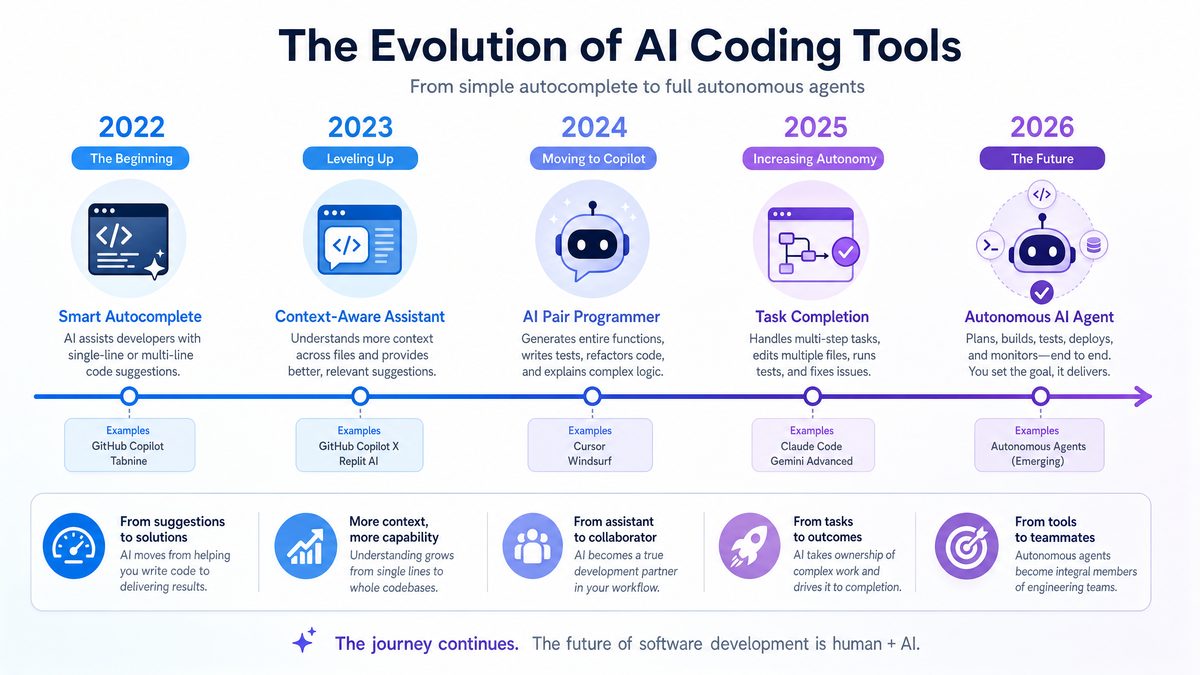
Artificial Intelligence (AI) has revolutionized many industries, but its impact on software development is among the most profound. Over the last decade, and particularly by 2026, AI coding assistants have transitioned from experimental prototypes to essential tools that deeply influence coding workflows. The once-simple autocomplete and syntax suggestion features have evolved into sophisticated, context-aware partners embedded directly within Integrated Development Environments (IDEs). These AI assistants no longer merely aid developers by suggesting snippets; they enable creation, comprehension, debugging, optimization, and refactoring of complex software across multifaceted codebases.
The maturation of AI coding assistants is marked by a confluence of significant technological advancements. Foremost among these are deep integration with IDEs, which permits real-time, project-wide understanding; the advent of multi-agent orchestration systems where specialized AI modules collaborate; and heightened emphasis on security risks and ethical considerations surrounding AI-generated code. This progressive landscape introduces both unparalleled productivity gains and new challenges for software engineers, technical leads, and organizations alike.
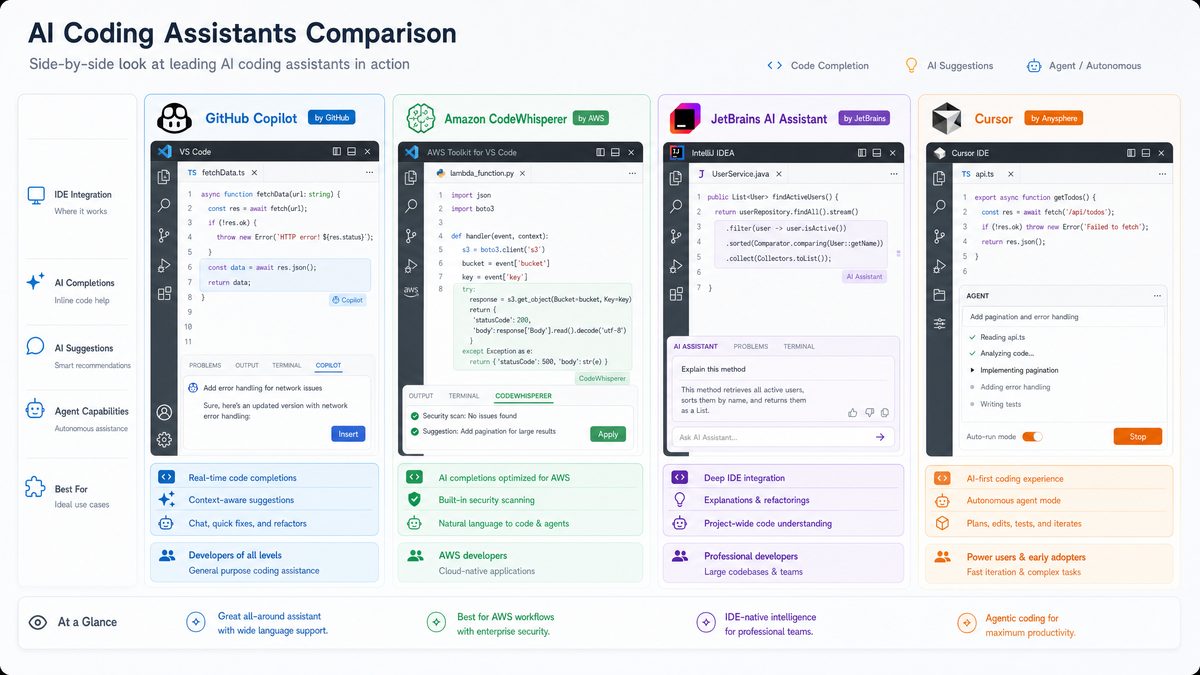
This comprehensive article aims to provide an authoritative exploration of the leading AI coding assistants dominating the 2026 market: OpenAI’s Codex, Anthropic’s Claude Code, GitHub Copilot (now its X iteration), and Cursor, an emergent player specializing in interactive code exploration. By examining historical development trajectories, current technological capabilities, integrations, security frameworks, and future innovation trends, this piece will equip professionals with detailed insights needed to intelligently adopt and utilize these tools.
- Historical Evolution of AI Coding Assistants: A look back to understand foundational milestones and the shift in software tooling paradigms.
- Leading Platforms in 2026: Comparative deep dives into Codex, Claude Code, Copilot X, and Cursor, emphasizing their distinct strengths.
- Technological Shifts and IDE Integration: How AI assistants are embedded at the kernel level of modern development environments.
- Multi-Agent Architectures & Orchestration: Collaborative AI ecosystems that enhance modularity and collaborative coding.
- Security and Ethical Considerations: Recognizing hidden vulnerabilities and mitigation mechanisms for AI-generated code.
- Comparative Performance and User Scenarios: Real-world case studies showcasing effectiveness across industries.
- Future Developments: Emerging trends such as AR integration, multi-project awareness, and on-device AI execution.
Embedded throughout are thoughtful analyses and tables comparing critical features, fostering a holistic understanding of how these tools fit into the evolving software engineering landscape. AI assistants are no longer mere novelty add-ons but foundational agents reshaping the craft of programming.
1. Detailed Overview of Leading AI Coding Assistants in 2026
OpenAI Codex: The Industry Pioneer and Its Evolution
OpenAI’s Codex has secured its position as the industry standard in AI-assistance for developers. Emerging from the GPT architectures, Codex was initially popularized as the intelligence behind GitHub Copilot. Over the years, OpenAI relentlessly enhanced Codex’s capabilities, culminating in the 2026 release that embodies a fusion of expansive language understanding with specialized programming knowledge.
The hallmark of Codex in this iteration is its unprecedented contextual awareness. Traditional AI assistants analyzed code snippets in isolation, often missing nuanced relationships that span multiple files or modules. Codex, however, interprets entire project architectures holistically, leveraging intricate knowledge graphs and dependency mappings to propose highly relevant suggestions. This results in intelligent code generation that respects architectural integrity and coding conventions native to the project.
Additionally, Codex supports seamless multi-language code synthesis, translating logic between languages on the fly and accommodating polyglot development environments. This feature is invaluable for modern projects that blend backend frameworks (e.g., Python, Go) with frontend technologies (e.g., JavaScript, TypeScript) and domain-specific languages.
Performance optimization is another core pillar for Codex’s evolution. Beyond code completion, it analyzes computational efficiency, memory usage, and algorithmic complexity, suggesting refinements to enhance runtime behavior and scalability. Codex integrates smoothly with cloud-based and local IDEs, including Visual Studio Code, JetBrains IDEs, and emerging cloud-native platforms like Gitpod and AWS Cloud9, offering developers low-latency interactions.
Anthropic’s Claude Code: Ethical AI Meets Advanced Coding
Anthropic’s Claude Code represents a paradigm shift emphasizing ethical AI application within software development. Built on Anthropic’s constitutional AI principles, Claude Code is engineered with safety, transparency, and compliance at its core. Unlike many assistants that focus purely on code generation, Claude Code embeds a comprehensive multi-layered filtering mechanism that minimizes the risk of generating biased, insecure, or unethical code patterns.
One of Claude Code’s standout traits is its emphasis on explainability. Every code suggestion is paired with detailed, human-readable commentary explaining the rationale behind the generated snippet, potential edge cases, and best practice guidelines. This fosters developer trust and accelerates learning by elucidating complex logic and design decisions.
Incorporating natural language understanding, Claude Code accepts multi-modal inputs, including voice commands and natural language queries, enabling developers to interact fluently with the assistant. It also excels in identifying security vulnerabilities during code reviews and automatically suggesting refactorings to remediate risks.
Claude Code’s stringent safeguards extend to compliance with industry standards such as OWASP, GDPR, HIPAA, and MISRA. It actively alerts developers if generated code blocks violate such standards or contain deprecated methodologies, serving as a proactive guardian for software integrity.
GitHub Copilot: From Extension to Deep IDE Partner
GitHub Copilot’s journey from a popular Visual Studio Code extension to GitHub Copilot X—a deeply integrated IDE partner—exemplifies AI coding assistant evolution in practice. Copilot X infuses collaboration-centric features with multi-agent orchestration, creating a development environment that is both responsive and adaptive to team workflows.
Copilot X utilizes a multi-agent framework coordinating several specialized AI agents, including contextual understanding informed by real-time telemetry data from usage analytics. This allows the assistant to personalize code suggestions to individual developer habits and project-specific coding styles, enhancing synergy between human and AI.
Its collaboration suite supports pair programming augmented by AI agents that provide real-time code reviews, in-line comments, and can even suggest alternatives based on team standards or previous project decisions. Integration with software lifecycle tools such as GitHub Issues, Actions (CI/CD), and Discussions means that AI-generated code is linked seamlessly to project management and deployment pipelines, streamlining the development lifecycle.
The deep embedding into multiple IDEs—Visual Studio, JetBrains, AWS Cloud9, and even emerging cloud-native low-code platforms—means that Copilot X is ubiquitous across development contexts and scales across enterprise environments smoothly.
Cursor: Next-Gen Interactive Code Generation and Navigation
Cursor has carved out a specialized niche in the crowded AI assistant market by focusing on interactive code exploration and developer intent understanding. Rather than solely generating code, Cursor excels at making complex codebases more navigable, understandable, and maintainable through intelligent interactions.
Cursor features live code explanations with real-time generation of documentation and inline comments, making it easier for developers, especially newcomers, to comprehend unfamiliar or legacy code. Its robust query answering system allows developers to ask detailed questions about code behavior, dependencies, or expected outputs directly from within the IDE and receive immediate, context-aware responses.
In addition, Cursor suggests modularization opportunities and recommends test coverage enhancements by analyzing code complexity and usage patterns. This proactive assistance improves code quality over time.
Supporting hands-free workflows, Cursor incorporates voice commands and multi-modal interactions, making it a compelling assistant for developers with accessibility needs or those working in physical environments where hands-on keyboard use may be limited.
2. Technological Shifts: From Standalone Plugins to Deep IDE Integration
The Transition to Seamless IDE Ecosystems
By 2026, the software development ecosystem has undergone an essential transformation. AI assistants no longer operate as optional plugins or add-ons loosely attached to IDEs. Instead, they have been architected and embedded as core components of the IDE’s kernel. This profound shift has dramatically enhanced responsiveness, relevance of suggestions, and developer experience.
Embedding AI at the kernel level enables assistants to maintain persistent, real-time awareness across entire projects, including version control history, semantic relationships, and runtime environments. Such close proximity eliminates latency inherent in remote API calls and yields richer contextual understanding, enabling suggestions that tightly align with ongoing development phases—whether prototyping, debugging, or preparing for deployment.
Adaptive interfaces further refine how AI assistants interact based on the current development phase. For example, during debugging, assistants prioritize code diagnostic suggestions, while at prototyping, they focus on rapid scaffold generation. These contextual cues ensure the AI’s output aligns with developer intent and workflow demands, reducing noise and increasing productivity.
Deep integration also facilitates sophisticated feedback loops. IDEs continuously monitor developer response patterns—acceptances and rejections of suggestions—and retrain or fine-tune integrated AI models dynamically, providing a personalized and evolving coding partner that grows smarter over time.
Cross-Platform and Cloud-Native Environments
The modern software landscape is fluid. Developers frequently toggle between local environments, remote servers, and cloud-based IDEs. AI assistants today ensure consistent coding assistance across this spectrum, supporting hybrid workflows that emphasize mobility, collaboration, and accessibility.
Cloud-native IDEs like Gitpod, AWS Cloud9, and CodeSandbox have integrated AI assistants into their platforms, enabling developers to maintain context continuity whether working from a desktop or a web browser on a tablet or mobile device. This ubiquity fosters seamless transitions and boosts team productivity in globally distributed setups.
Moreover, AI assistants now proactively suggest environment configurations such as dependency installations, containerization setups, and security patches, embedded within their workflow intelligence. This integration acts as a continuous development ops tool, reducing setup frictions, misconfigurations, and errors.
Multi-modal Inputs and Developer Experience Innovations
Natural language processing breakthroughs combined with advances in sensor technology have pushed the boundaries of developer interaction. Coding assistants accept voice inputs, gesture controls, and even eye-tracking cues to interpret and execute developer intents. This multi-modal interaction paradigm minimizes manual typing, accelerates common tasks, and improves accessibility for differently-abled programmers.
For example, a developer can verbally instruct “Refactor the database connection here to use async/await” or gaze at a function with a simple command prompt, prompting the assistant to analyze, rewrite, and document the code segment instantly. Such innovations are particularly valuable in ergonomic-challenging environments—hardware prototyping labs or while pairing code with physical device testing.
3. Multi-Agent Orchestration: The Rise of Collaborative AI Coding Ecosystems
Conceptualizing Multi-Agent Systems in Coding Assistance
The move away from monolithic AI models to multi-agent systems is one of the most sophisticated advancements in AI coding assistance by 2026. Here, multiple specialized AI agents collaborate in a coordinated manner to cover the diverse aspects of software development comprehensively. This architecture resembles a team where members have distinct competencies, such as generation, testing, security audit, or documentation.
- Code Generation Agent: Responsible for transforming developer specifications or prompts into syntactically and semantically correct code snippets or functions. It focuses on creativity, correctness, and efficiency.
- Quality Assurance Agent: Automates testing processes, performs linting, enforces consistent style guidelines, and detects logical flaws to ensure code robustness.
- Security Auditor Agent: Conducts static and dynamic vulnerability checks, enforces security best practices, and guarantees compliance with regulatory standards.
- Documentation Agent: Generates and updates in-line and external documentation, ensuring code accessibility and maintainability for present and future developers.
This division enables modularity: individual agents can be updated independently to enhance specific functionalities without degrading overall system performance. It also facilitates scalability, as agents can be instantiated or retired dynamically based on task requirements.
Benefits and Challenges of Multi-Agent Architectures
While multi-agent systems offer modular specialization and richer coding assistance, they introduce challenges related to synchronization, orchestration, and consistency:
- Coordination Complexity: Agents must communicate effectively to avoid contradictory suggestions or redundant work. For example, the Security Auditor should validate code generated by the Code Generation Agent before recommendations are finalized.
- Latency and Responsiveness: Layered assessments might introduce delays. Highly optimized orchestration frameworks embedded within IDE kernels mitigate this by parallelizing agent operations and prioritizing critical responses.
- Maintaining Context Coherence: Agents need a shared semantic representation of the codebase, user intent, and prior suggestions to provide coherent outputs.
Advances in AI middleware and orchestration protocols have made these challenges manageable, enabling real-time seamless developer experiences despite architectural complexity.
Examples in Leading AI Assistants
GitHub Copilot X stands out as a forerunner in multi-agent orchestration. It leverages telemetry data aggregated anonymously across millions of developers to coordinate behavioral patterns, optimizing agent interactivity and suggestion personalization on a global scale. For example, its Security Auditor agent dynamically adjusts its rules based on emerging vulnerability patterns seen in the wild, ensuring up-to-date compliance.
Claude Code’s adherence to ethical coding is implemented via a layered agent system, where each agent applies progressively stringent filters—from syntax safety at the code generation level, through runtime vulnerability analysis, to final compliance verification against ethical guidelines. This pipeline approach ensures every piece of recommended code is vetted extensively before reaching the developer.
OpenAI Codex and Cursor have adopted differing philosophies but are evolving toward similar multi-agent schemes. Codex currently employs foundational orchestration enabling code generation and optimization agents to interact, while Cursor’s focus on interactive exploration lends itself to integrating specialized explanation and navigation agents in the near future.
4. Security Risks Embedded in AI-Generated Code: Hidden Perils and Mitigation Strategies
Unseen Vulnerabilities in AI-Assisted Coding
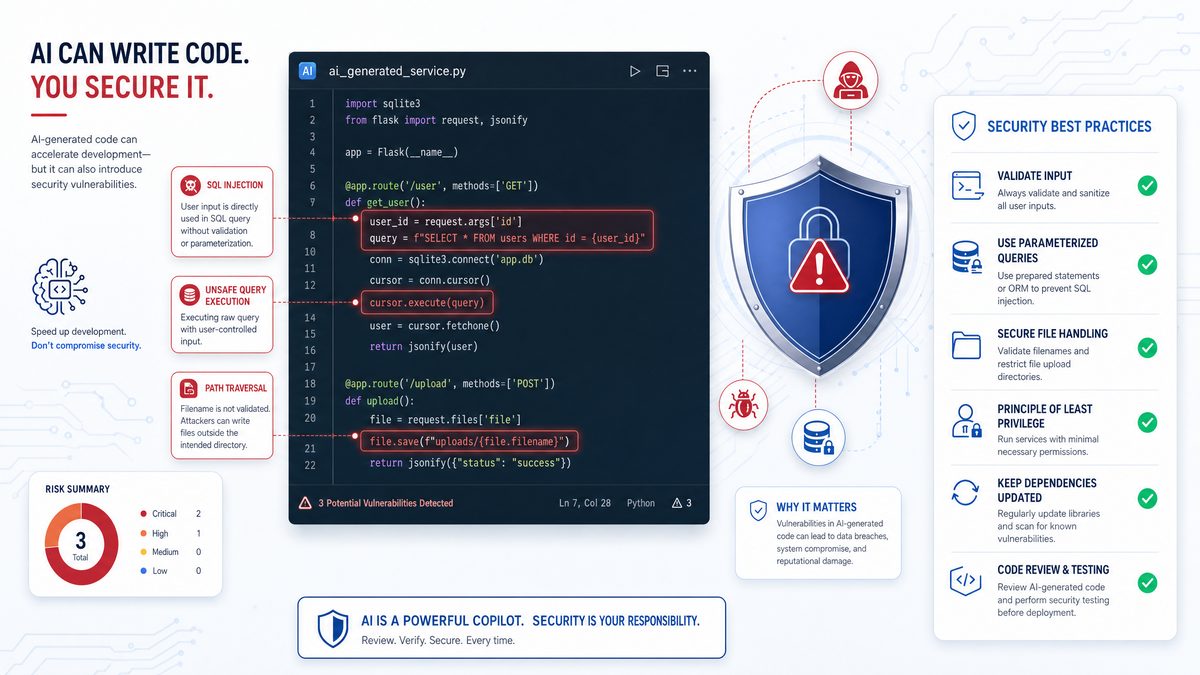
Despite transformative benefits, AI-generated code brings latent security risks that can jeopardize software integrity if not vigilantly managed. A few critical concerns have emerged in 2026’s development landscape:
- Obscure Backdoors and Malicious Code Patterns: AI models trained on vast, heterogeneous code corpora can inadvertently absorb insecure or even malicious code segments. Such latent patterns might surface as hidden backdoors or exploitable bugs within generated code without explicit developer knowledge.
- Propagation of Deprecated and Weak Practices: AI assistants may suggest cryptographic methodologies or API calls deprecated by security standards, undermining software defenses against emerging threats.
- Intellectual Property Exposure: Models trained on proprietary or public repositories risk reproducing sensitive code fragments, violating license or privacy agreements.
- Superficial Correctness with Deep Functional Failures: Code may compile and pass superficial tests but fail under adversarial inputs or edge cases, a concern especially poignant in safety-critical systems.
The subtlety of these risks means developers cannot blindly trust AI-generated code. Instead, thorough validation and awareness are mandatory components of responsible usage.
Detection and Defense Mechanisms
To mitigate these risks, the AI coding ecosystem in 2026 integrates comprehensive defenses at multiple layers:
- Automated AI-Powered Vulnerability Scanners: These tools analyze generated code snippets immediately, flagging potentially hazardous constructs using anomaly detection algorithms trained on security incident datasets.
- Human-in-the-Loop Review Processes: Systems prompt developers to review AI suggestions conscientiously, aided by context-aware explanations highlighting potential risks or questionable patterns for better decision-making.
- Explainability and Transparency Features: AI assistants like Claude Code provide detailed commentaries and probabilistic risk assessments that clarify why specific code might be insecure or non-compliant.
- Continuous Model Refresh with Secure Coding Best Practices: AI models are incrementally retrained using datasets curated to emphasize secure, compliant, and modern coding practices, dynamically adapting to the evolving threat landscape.
Security integration is further enhanced by coupling AI coding assistants with automated CI/CD pipelines that enforce compliance gates, conducting static and dynamic analyses before code deployment.
Regulatory and Ethical Dimensions
The proliferation of AI-generated software necessitates formal regulatory frameworks for auditing and accountability. Governments and standards bodies worldwide actively develop guidelines for certifying AI-powered development tools, ensuring safety, privacy, and fairness.
Claude Code has pioneered in this respect by embedding robust compliance checks within its architecture, aligning with GDPR for data privacy, HIPAA for healthcare, and MISRA for automotive software, among others. This proactive strategy not only fulfills legal requirements but fosters developer confidence in adopting AI assistant technologies for mission-critical applications.
Industry consortia are pushing for transparent AI audit trails, allowing traceability of every code suggestion back to the training data and model inference paths. This transparency is crucial for accountability and post-deployment forensic analysis in sensitive sectors.
5. Comparative Analysis of Top AI Coding Assistants: Capabilities, Integrations, and Performance
| Feature/Assistant | OpenAI Codex | Claude Code | GitHub Copilot X | Cursor |
|---|---|---|---|---|
| Primary Focus | General code generation and optimization | Safety, explainability, and ethical coding | Integrated multi-agent orchestration and collaboration | Interactive code exploration and navigation |
| Supported Languages | 40+ programming languages | 30+, emphasizing secure languages | Integrated support for major languages and frameworks | 20+ with focus on web and AI-related languages |
| IDE Integration Level | Deep kernel-level embedding | Plugin-based with expanding core integration | Full native embedding in major IDEs | Interactive sidebar and panel plugins |
| Security Features | Context-aware vulnerability detection | Multi-layered ethical and security filters | Integrated audit agents and compliance checks | Alerts for deprecated and unsafe code patterns |
| Multi-Agent Support | Basic orchestration | Advanced layered agent collaboration | Highly sophisticated multi-agent orchestration with user telemetry | Limited, focused on single interactive agent |
| Unique Selling Proposition | Versatility and continual updates from extensive corpora | Ethical AI with transparency and compliance emphasis | Seamless collaborative development augmented by AI | Exceptional interactive explanation and navigation support |
6. Case Studies: Real-World Applications and User Experiences
The practical utility of AI coding assistants is best appreciated through detailed real-world deployments. Diverse industries have applied these tools to improve development velocity, code quality, and compliance adherence.
Enterprise Cloud Infrastructure Automation
A multinational financial services company integrated GitHub Copilot X to overhaul its cloud infrastructure automation pipelines. Copilot X’s multi-agent orchestration enabled synchronized code generation aligned with stringent regulatory compliance requirements and telemetry-driven feedback loops. The team reported a staggering 40% reduction in scripting time for AWS and Azure infrastructure provisioning, directly impacting deployment frequency and operational resilience.
Deep integration within Visual Studio Enterprise allowed seamless adoption without disrupting existing workflows. Collaborative AI-assisted pair programming sessions helped spread coding knowledge across diverse engineering teams, reducing onboarding time for new hires.
Secure Medical Software Development with Claude Code
A healthcare startup specializing in patient data management leveraged Claude Code’s security-first design to build HIPAA-compliant software modules. Claude’s multi-layered audits ensured that encryption routines, data retention policies, and access controls conformed tightly to regulatory demands. Developers lauded the assistant’s explanatory comments, which greatly facilitated internal and external security audits.
This partnership exemplified how ethical AI assistants can enhance code correctness, regulatory compliance, and developer education simultaneously.
Open Source AI Library Expansion with OpenAI Codex
An open source AI research consortium harnessed Codex to accelerate multi-language library expansion efforts. Codex’s capability to understand and generate efficient algorithmic code across languages like Python, C++, and Julia enabled smooth cross-repository integrations. The contextual awareness minimized conflicts and redundant functionality, leading to improved overall codebase quality and reduced maintainability overhead.
Community contributors especially valued Codex’s code optimization hints, which bolstered computational efficiency crucial for large-scale AI model training.
Creative Coding and Interactive Learning Enhanced by Cursor
Educational technology providers integrating Cursor transformed programming learning environments. Cursor’s real-time explanation features paired with voice-command support enabled non-traditional learners to comprehend complex code logic intuitively. Students could navigate large codebases interactively, deepen understanding of software architecture, and receive immediate feedback on query inputs.
This immersive approach shortened the coding learning curve and empowered a diverse range of users, from hobbyists to professional novices.
7. Future Directions: Innovations Poised to Redefine AI Coding Assistance
Looking beyond 2026, several pioneering innovations promise to redefine how developers interact with AI coding assistants, further blurring the boundaries between human creativity and machine efficiency.
- Contextual Multi-Project Awareness: Future assistants will seamlessly track multiple concurrent projects, intelligently recommending unified design patterns, reusable modules, and cross-project dependencies. This will minimize redundancy and drive consistency across large code ecosystems.
- Augmented Reality (AR) Integration: Visualizing codebases spatially within immersive AR environments will enable developers to manipulate complex structures more intuitively. Imagine “walking through” object hierarchies or data flow graphs, enabling drastically enhanced comprehension and collaboration.
- On-Device Model Execution: To address privacy and latency concerns, AI assistant models will increasingly execute locally on developer machines or edge devices, eliminating cloud dependency. This ensures safe handling of proprietary code and enables work in offline or restricted network environments.
- Enhanced Explainability and Trust: Future AI assistants will incorporate probabilistic reasoning engines capable of providing governance audit trails, detailed risk assessments, and reasoning transparency for every suggestion. These explainability features will foster greater developer confidence and regulatory acceptance.
Collectively, these innovations will foster software development environments that are more human-centric, adaptive, trustworthy, and secure, catalyzing a new era of creative collaboration between humans and machines.
8. Conclusion: Navigating the Complex Landscape of AI-Powered Software Development
The AI coding assistants of 2026—OpenAI Codex, Claude Code, GitHub Copilot X, and Cursor—represent the apex of years of research, engineering, and ethical consideration. Each embodies distinct philosophies and technical achievements that shape today’s development methodologies.
Codex delivers versatile, high-performance code generation powered by deep contextual understanding. Claude Code prioritizes safety, explainability, and ethical guardrails for trustworthy software creation. GitHub Copilot X’s multi-agent orchestration and collaborative features enrich team workflows and accelerate innovation. Cursor’s interactive exploration redefines how developers understand and engage with complex codebases.
However, alongside productivity gains, developers must remain vigilant against emerging security risks embedded within AI-generated code. Incorporating rigorous review processes, explainability tools, and continuous model retraining are non-negotiable for sustainable adoption.
As these assistants become inseparable from modern coding practices, understanding their capabilities, integration architectures, security safeguards, and collaboration models is essential for maximizing benefits while minimizing vulnerabilities. The symbiotic relationship between human creativity and AI efficiency will continue to evolve, opening new horizons for software engineering innovation.
For a more detailed exploration of AI-driven development tools and integration strategies, explore our comprehensive resource on AI-assisted programming environments
OpenAI’s decision to bring Codex to mobile platforms represents a significant shift in how developers interact with AI coding agents, enabling task delegation and code review from any device without requiring a desktop IDE. OpenAI Codex Goes Mobile.
. Interested in the security frameworks around AI-generated code? Our dedicated analysis provides thorough insights into risk management in software automation
Getting the most from AI coding assistants requires understanding modern prompt engineering frameworks like RTF, Chain-of-Thought, and ReAct, which help developers structure their requests for more accurate and contextually appropriate code generation. Advanced Prompt Engineering Frameworks for 2026.
. To dive deeper into collaborative AI agents and orchestration, our expert breakdown offers valuable guidance for developers and technical managers
Enterprise teams deploying AI coding assistants at scale can learn from documented case studies showing how companies have integrated these tools into their development pipelines, measuring productivity gains and code quality improvements. Enterprise AI Automation Case Studies 2026.
.
Access 40,000+ AI Prompts for ChatGPT, Claude & Codex — Free!
Subscribe to get instant access to our complete Notion Prompt Library — the largest curated collection of prompts for ChatGPT, Claude, OpenAI Codex, and other leading AI models. Optimized for real-world workflows across coding, research, content creation, and business.
