
The Evolution of Agentic Architecture: From Chatbots to Managed AI Teams
In the early days of artificial intelligence, software agents were simple tools—primarily chatbots designed to simulate conversation or provide rudimentary autocomplete suggestions. These early implementations, while groundbreaking at the time, were limited in scope and capability. They often relied on pattern matching, rule-based systems, or shallow machine learning models that lacked deep contextual understanding and reasoning abilities. For example, early chatbots like ELIZA operated by recognizing keywords and responding with scripted replies, providing an illusion of understanding without genuine agency or adaptability.
Today, we stand at a pivotal moment in the evolution of AI-driven software development, where the paradigm is shifting from isolated, reactive agents to sophisticated, autonomous teams capable of managing complex workflows and decision-making processes. This transition is underpinned by advances in natural language processing, reinforcement learning, and multi-agent coordination frameworks, enabling agents to possess richer internal models of the world and collaborate effectively with both humans and other agents.
This transformation is more than a mere upgrade in functionality; it represents a fundamental change in how software agents are conceived and deployed. The concept of “agentic architecture” captures this shift, emphasizing systems that do not just respond passively but actively delegate, coordinate, and execute multifaceted tasks across organizational boundaries. These architectures harness hierarchical structures and emergent behaviors to tackle challenges that were once exclusive to human teams.
As AI moves from assisting individual users to operating as collaborative teams, the potential to revolutionize industries—from customer service to software engineering itself—is enormous. The ability to orchestrate agents specialized in distinct domains, communicate contextually, and self-organize according to dynamic priorities unlocks unprecedented levels of efficiency and innovation.
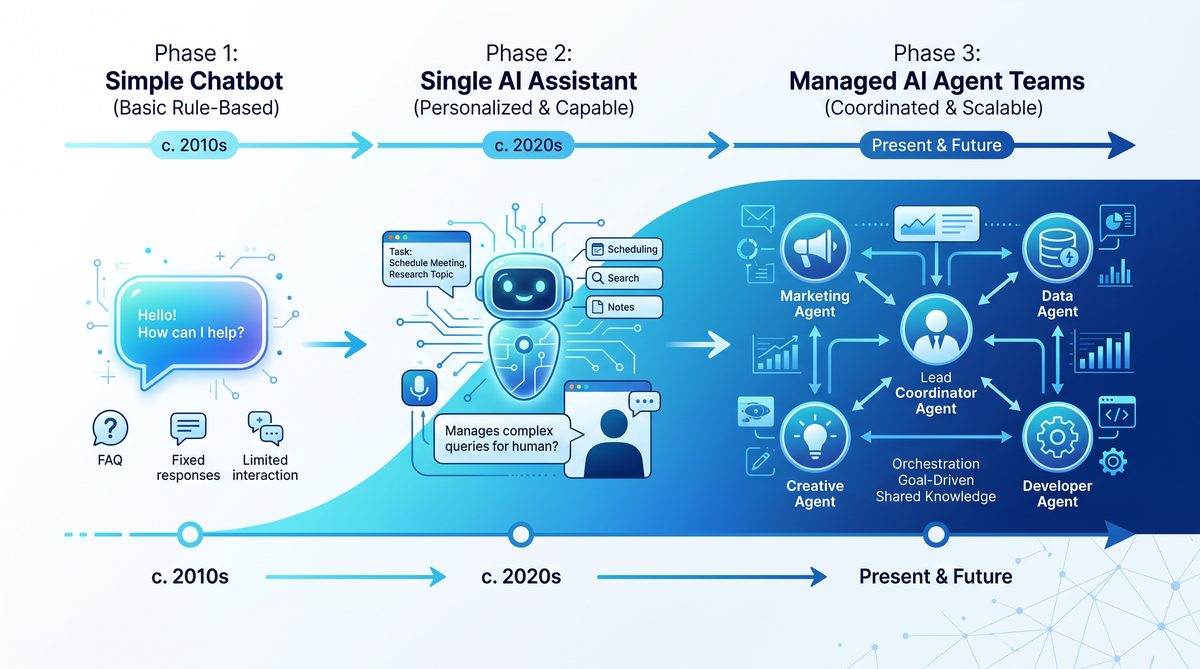
One of the most insightful perspectives on this evolution comes from Anthropic, a leading AI research company. They propose that the next major inflection point will be the emergence of managed AI teams working at an organizational level, rather than isolated agents performing singular functions. This vision highlights a crucial insight: intelligence alone is no longer the limiting factor in creating powerful AI-driven solutions. Instead, the bottleneck lies in the infrastructure required to coordinate, scale, and govern these teams of agents effectively.
Anthropic’s approach emphasizes the importance of building ecosystems where agents can share knowledge, resolve conflicts, and maintain alignment with overarching objectives. This requires innovations in agent communication protocols, shared memory architectures, and layered control mechanisms to ensure reliability and accountability.
The legal industry provides a compelling example of how agentic architecture is transforming knowledge work. Law firms are now deploying Claude Cowork’s specialized legal plugins to handle contract review at scale. Our case study on how law firms use Claude Cowork’s legal plugins for automated contract review documents specific workflow patterns, accuracy metrics, and the human-in-the-loop oversight mechanisms that maintain compliance standards.
This article will explore the journey from the simple chatbots of the past to the managed AI teams of the future, examining the technological, organizational, and infrastructural changes driving this evolution. By charting this trajectory, we aim to provide a comprehensive understanding of how agentic architecture is reshaping software development and what it means for the future of AI-powered systems.
The Core Technology Behind Agentic Architecture
Over the past decade, software development has witnessed a dramatic evolution from basic autocomplete functionalities to sophisticated systems capable of managing complex tasks autonomously. This transformation is largely driven by advancements in agentic architecture—an approach where AI agents act with a degree of autonomy, collaborating and making decisions to achieve higher-level objectives. The emergence of agentic systems represents a fundamental shift in how software is designed, moving from linear, instruction-based models to dynamic, multi-agent frameworks capable of operating at scale.
Agentic architectures leverage a combination of deep learning models, reinforcement learning algorithms, and symbolic reasoning methods to enable agents to understand their environment, formulate plans, and execute actions. For instance, recent breakthroughs in transformer-based models have facilitated agents that can process multi-modal data and maintain extended context windows, which are critical capabilities for sustained, goal-directed behavior.
From Simple Autocomplete to Autonomous Agents
The earliest wave of AI-assisted software development revolved around autocomplete and suggestion systems. These tools, while revolutionary for their time, operated primarily as reactive assistants, providing developers with code snippets or completing partially written commands. Their functionality was limited by their lack of agency—they did not initiate tasks, make strategic decisions, or adapt dynamically to changing requirements.
For example, IDE plugins utilizing static code analysis could suggest syntactic completions but lacked understanding of project requirements or runtime behaviors. As a result, developers remained responsible for interpreting and integrating suggestions manually.
Agentic architecture fundamentally redefines this paradigm by enabling software agents to act proactively. These agents can assess goals, allocate resources, and execute sequences of actions with minimal human intervention. For example, instead of simply suggesting code, an agent might autonomously generate, test, and deploy a feature based on high-level specifications. This shift from reactive autocomplete to proactive delegation marks a critical inflection point in AI-assisted development.
Consider an AI agent integrated into a continuous integration pipeline that detects a failing test, diagnoses the root cause by analyzing code dependencies, generates a fix, runs regression tests, and deploys the patch—all with limited human oversight. Such agents embody autonomy, adaptability, and collaboration with other agents or human stakeholders.
Key Features of Agentic Systems
Agentic architectures are characterized by several core technological features that differentiate them from traditional AI models:
- Autonomy: Agents operate independently, making decisions based on their understanding of the environment and predefined objectives. This entails the ability to plan multi-step strategies, evaluate trade-offs, and act without explicit step-by-step instructions.
- Collaboration: Multiple agents can communicate and coordinate, forming teams that distribute tasks effectively. Communication protocols, shared memory spaces, and negotiation mechanisms enable agents to align goals and resolve conflicts.
- Adaptability: Agents learn from feedback, adjusting their strategies and behavior in response to new information or failures. Techniques such as online learning, reinforcement learning with human-in-the-loop, and meta-learning play crucial roles.
- Hierarchical Control: Systems can implement layers of oversight, where supervisory agents oversee subordinate agents to ensure alignment with organizational goals. This hierarchical structure supports scalability and risk mitigation.
- Context Awareness: Agents maintain situational awareness, enabling them to prioritize tasks and integrate diverse data sources. Contextual embeddings and memory architectures allow agents to remember past interactions and adapt to evolving environments.
These features enable agentic systems to manage complex workflows that were previously impossible for single models or human operators alone. The ability to form managed AI teams, where agents specialize and cooperate, extends the reach of AI into organizational processes and strategic decision-making.
Anthropic’s Vision: Teams of Agents at the Organizational Level
Anthropic, a leading AI research organization, posits that the next major inflection point in AI development will arise from the deployment of teams of agents operating at the organizational level. Unlike isolated models executing predefined tasks, these teams embody a distributed intelligence that can handle multifaceted problems involving coordination, negotiation, and long-term planning.
This vision reflects a broader trend towards decentralization and modularity in AI systems. By combining specialized agents with distinct competencies, organizations can leverage a form of collective intelligence that surpasses individual AI capabilities. For example, one agent might focus on data analysis, another on project management, and a third on quality assurance, all working in concert to deliver complex software products efficiently.
Anthropic’s perspective emphasizes that the true power of agentic architectures lies not only in individual intelligence but in the emergent behaviors arising from agent collaboration. This approach mirrors human organizational structures, where teams of experts coordinate to solve problems too large or complex for any single individual.
Infrastructure: The New Bottleneck in Agentic Systems
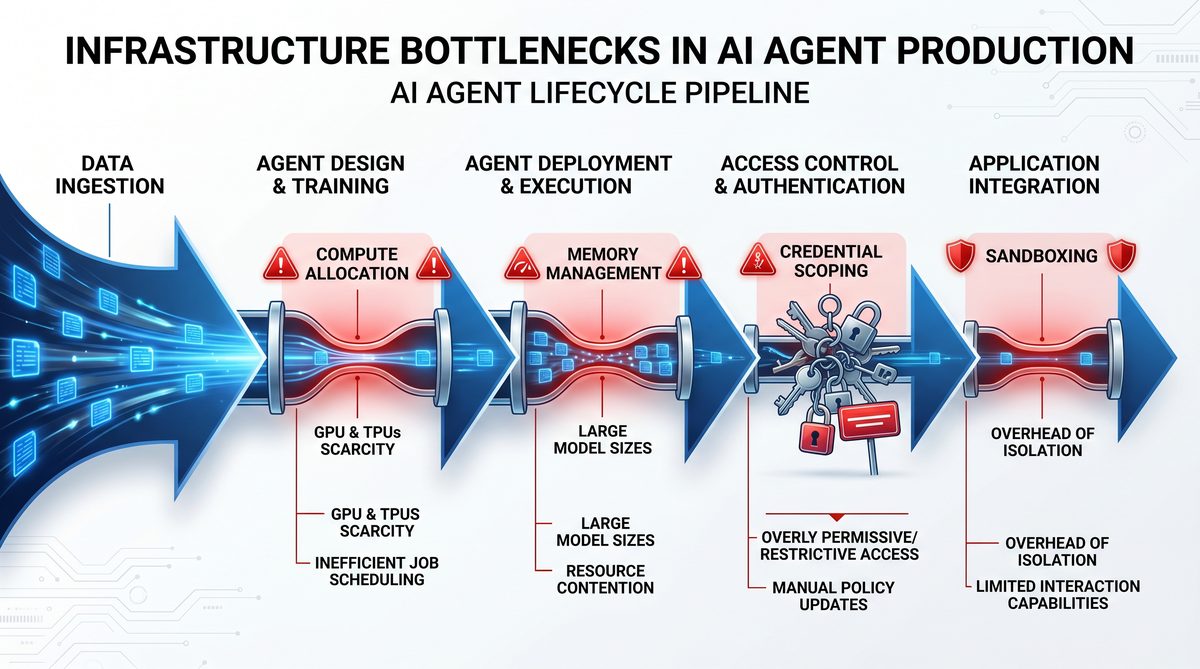
As agentic architectures mature, it has become clear that the primary limitations are no longer rooted solely in the intelligence of AI models but in the supporting infrastructure required to deploy and manage these agents at scale. Traditional AI deployments focused heavily on model accuracy and performance; however, agentic systems introduce unique infrastructural challenges:
- Communication Frameworks: Efficient, reliable channels for inter-agent communication are essential for real-time cooperation and coordination. Event-driven messaging systems, publish-subscribe models, and consensus protocols help maintain state consistency and enable synchronous or asynchronous interactions.
- Resource Management: Dynamic allocation of computational resources across multiple agents, ensuring scalability and responsiveness. Container orchestration platforms like Kubernetes, combined with serverless computing paradigms, allow elastic scaling of agent workloads.
- Security and Compliance: Maintaining data privacy and regulatory compliance while enabling agent interactions in sensitive environments. Techniques such as differential privacy, federated learning, and role-based access controls are vital to protect organizational assets.
- Monitoring and Control: Tools for supervising agent behavior, detecting anomalies, and enforcing alignment with human goals. Observability stacks integrating logs, metrics, and tracing facilitate transparency and auditability.
- Integration Layers: Interfaces that allow agents to access external APIs, databases, and organizational systems seamlessly. Middleware solutions and standard protocols (e.g., REST, gRPC) enable interoperability.
Without robust infrastructure, the potential of agentic architectures cannot be fully realized. This infrastructural layer acts as the backbone, supporting the complex workflows and multi-agent dynamics necessary for operational AI teams. As a result, significant investments in scalable cloud environments, container orchestration, event-driven messaging, and observability tools are becoming critical enablers of agentic systems.
Comparing Traditional AI Models and Agentic Architectures
| Aspect | Traditional AI Models | Agentic Architectures |
|---|---|---|
| Autonomy | Low – reactive, task-specific | High – proactive, goal-directed |
| Collaboration | Minimal or absent | Core feature – agents form teams |
| Adaptability | Limited to model updates | Dynamic learning and strategy adjustment |
| Task Complexity | Simple to moderate | Complex workflows and multi-step processes |
| Infrastructure Requirements | Basic deployment environments | Advanced orchestration, monitoring, and communication |
| Human Oversight | Direct and continuous | Hierarchical control with supervisory agents |
Looking Ahead: The Role of Agentic Architecture in Software Development
The transition from simple autocomplete tools to comprehensive agentic systems signifies a paradigm shift in software development. By delegating complex tasks to managed AI teams, organizations can accelerate innovation, reduce human error, and unlock new levels of productivity. However, fully harnessing this potential requires not only advances in AI intelligence but also a robust and scalable infrastructure that supports agent collaboration and governance.
Across multiple industries, the shift toward managed AI agent teams is producing measurable operational improvements. Our compilation of enterprise AI automation case studies from 2026 presents quantified results from organizations that have deployed coordinated agent systems for supply chain optimization, customer service automation, and software development lifecycle management.
Real-World Applications and Enterprise Implications of Agentic Architecture
The transition from simple, reactive chatbots to sophisticated, multi-agent systems marks a profound shift in how software development and AI integration occur within enterprises. Rather than merely assisting with isolated tasks like autocomplete or basic query responses, today’s agentic architectures enable the delegation of complex workflows to autonomous AI teams. This evolution is reshaping enterprise operations by embedding intelligence deeply into organizational processes, thereby enhancing agility, scalability, and decision-making capabilities.
Transforming Workflows with Managed AI Teams
Enterprises are increasingly leveraging agentic systems not as standalone tools but as integral components of their operational workflows. Managed AI teams—collections of specialized agents coordinating to achieve high-level goals—are enabling organizations to automate intricate sequences of tasks that previously required extensive human oversight. These systems can:
- Orchestrate multi-step processes: From customer support triage to supply chain management, AI teams can autonomously navigate complex workflows by assigning subtasks to domain-specific agents and integrating their outputs. For instance, in logistics, an agentic team might handle order processing, inventory management, and route optimization collaboratively, adjusting dynamically to disruptions such as delays or demand spikes.
- Adapt dynamically: Agentic architectures allow for real-time adjustments based on changing inputs or priorities, ensuring that workflows remain efficient and effective under fluctuating conditions. This adaptability is enabled by continuous learning loops and feedback integration, allowing agents to recalibrate strategies without human intervention.
- Facilitate cross-functional collaboration: By mimicking human team dynamics, AI agents can collaborate across departmental boundaries, bridging gaps between sales, engineering, marketing, and operations. For example, in product development, agents can synchronize market analysis, feature design, testing, and deployment processes, enhancing coherence and reducing bottlenecks.
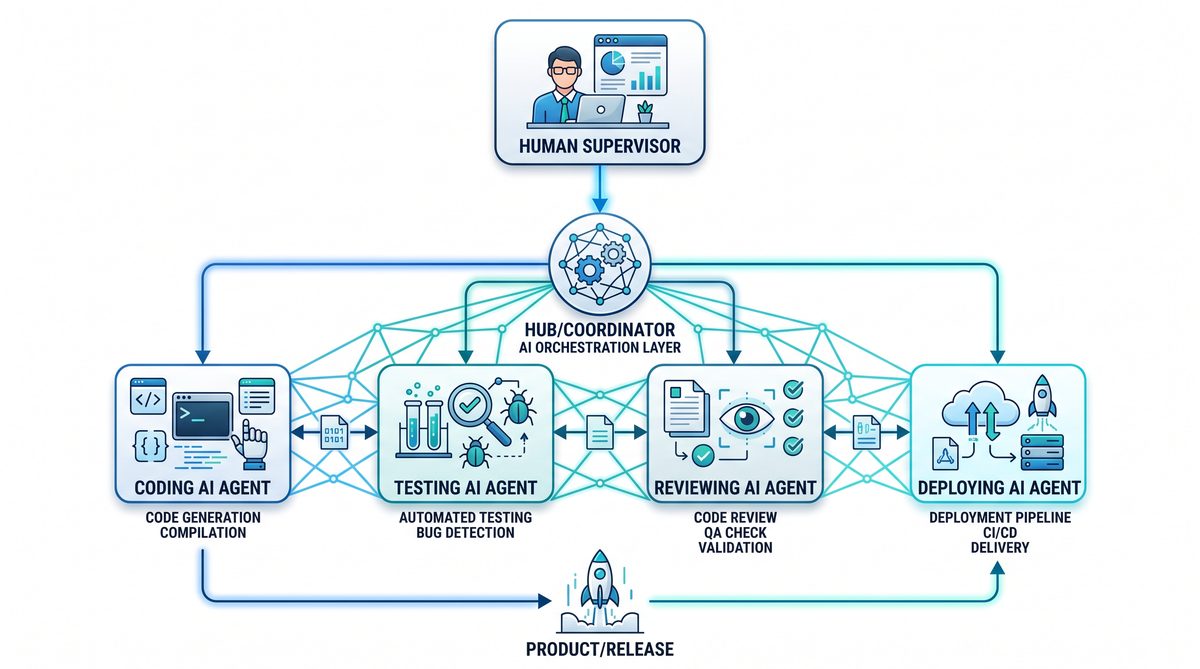
For example, in software development, agentic systems can coordinate multiple specialized agents—one handling code generation, another managing testing, and a third overseeing deployment—creating an end-to-end autonomous pipeline. This reduces the manual overhead traditionally involved in continuous integration and deployment (CI/CD), accelerates release cycles, and minimizes human error.
Infrastructure as the New Bottleneck
While advances in AI model capabilities have been rapid, leading organizations like Anthropic emphasize that the primary limitation for deploying production-grade agentic systems is no longer intelligence alone, but the supporting infrastructure. Unlike traditional software, managed AI teams require sophisticated orchestration frameworks, scalable computation resources, and robust monitoring mechanisms to operate effectively at scale. Key infrastructure challenges include:
- Resource Management: Dynamically allocating compute resources among multiple agents to optimize performance without excessive cost. Cloud-native solutions employing autoscaling and workload balancing are critical to meet these demands.
- Communication and Coordination: Ensuring reliable, low-latency communication protocols for agent interaction, task handoffs, and conflict resolution. Emerging standards in multi-agent messaging, such as decentralized message buses and publish-subscribe architectures, facilitate this communication.
- Security and Compliance: Maintaining strict access controls and audit trails, especially when AI agents handle sensitive data or critical business functions. Techniques like zero-trust architectures, encryption, and blockchain-based provenance tracking are increasingly adopted.
- Observability: Implementing comprehensive logging, performance metrics, and anomaly detection to maintain transparency and trustworthiness of autonomous operations. Advanced observability platforms integrate AI-driven insights to detect subtle deviations and predict failures.
Addressing these infrastructure demands requires a shift in enterprise IT strategy. Organizations must invest in modular, scalable platforms that can seamlessly integrate AI agents into existing systems and workflows, while providing the agility to evolve as agentic capabilities mature.
Enterprise Impacts: Efficiency, Innovation, and Risk Management
The integration of managed AI teams within enterprise environments yields multifaceted impacts across operational efficiency, innovation capacity, and risk management:
- Enhanced Efficiency: Automating complex, routine workflows reduces manual labor and accelerates turnaround times, freeing human workers to focus on strategic, creative tasks. For example, in financial services, agentic teams can automate compliance checks, fraud detection, and customer onboarding workflows.
- Accelerated Innovation: Agentic architectures enable rapid prototyping and iteration by autonomously conducting experiments, analyzing results, and refining approaches with minimal human intervention. This capability empowers R&D departments to explore broader solution spaces in shorter timeframes.
- Improved Decision Quality: By synthesizing diverse data sources and perspectives, AI teams can surface insights and recommendations that support more informed organizational decisions. Decision-support agents can model scenarios, simulate outcomes, and present actionable intelligence to human leaders.
- Risk Mitigation: Autonomous agents can continuously monitor compliance and operational health, flagging potential issues before they escalate into critical failures. For instance, in healthcare systems, agentic monitoring can detect anomalies in patient data or operational workflows, enabling timely interventions.
Moreover, enterprises adopting these architectures often experience a cultural shift toward greater trust in AI-driven processes and a redefinition of human roles. Instead of task execution, human professionals increasingly focus on supervising, guiding, and fine-tuning agentic workflows, thereby elevating the strategic value of their work.
Integration Challenges and Best Practices
Despite the promising benefits, integrating agentic architectures into existing enterprise environments presents challenges that require deliberate planning and execution. Some common hurdles include:
- Legacy System Compatibility: Many organizations operate on heterogeneous technology stacks, making seamless AI integration complex. Bridging gaps between legacy databases, monolithic applications, and modern AI agents often necessitates custom adapters and middleware.
- Change Management: Shifting from manual to autonomous workflows necessitates retraining staff and redefining roles. Building trust in AI systems requires transparent communication, gradual adoption, and clear delineation of responsibilities.
- Data Governance: Ensuring data quality, privacy, and regulatory compliance becomes more critical as AI agents access and process diverse datasets. Robust data lineage, validation pipelines, and policy enforcement mechanisms are essential.
Best practices to address these challenges include:
- Starting with targeted pilot projects to validate agentic workflows before scaling. This approach allows organizations to iterate rapidly and incorporate lessons learned.
- Establishing clear governance frameworks that define responsibilities for AI oversight. Roles such as AI ethics officers, monitoring teams, and incident response units help maintain control.
- Investing in interoperable infrastructure components that support modular agent deployment and management. Leveraging open standards and APIs facilitates extensibility.
- Promoting cross-disciplinary collaboration among AI developers, domain experts, and operations teams. Such collaboration bridges knowledge gaps and ensures alignment with business objectives.
One of the most innovative developments in managed agent architecture is Anthropic’s “Dreaming” feature, which enables agents to consolidate and synthesize knowledge from previous execution sessions. Our technical analysis of how Claude Managed Agents learn through the Dreaming mechanism explores how this persistent memory system enables agents to improve their performance over time without explicit retraining.
From Individual Agents to Managed AI Teams: The New Frontier
As the capabilities of individual AI agents have grown, the natural progression has been toward orchestrating these agents into cohesive, collaborative teams. This evolution mirrors traditional software development paradigms, where a complex product emerges not from a lone developer but from a well-coordinated team effort. Anthropic and other AI research pioneers emphasize that the next major inflection point lies in enabling these AI agents to operate collectively at an organizational scale, handling nuanced workflows and complex decision-making processes that exceed the scope of any single model.
Managed AI teams are not simply a collection of autonomous agents running in parallel; they embody a structured system where agents communicate, delegate, and specialize, much like human teams. This shift represents a move away from isolated task execution toward integrated ecosystem management. AI agents can now assume roles akin to project managers, reviewers, or domain experts within their own networks, dynamically allocating resources and expertise as needed.
However, the transition to agentic architectures at scale introduces new challenges, particularly in infrastructure. While early AI advances focused heavily on improving intelligence—model architectures, training data, and fine-tuning—the bottleneck for productive, enterprise-grade AI teams increasingly lies in orchestration platforms, data pipelines, security frameworks, and real-time monitoring tools. Robust infrastructure is essential to ensure agents can reliably interact, maintain context over long horizons, and integrate seamlessly with existing enterprise systems.
Moreover, governance and ethical considerations become paramount when AI teams are empowered to make independent decisions. Transparent auditing, fail-safes, and alignment with organizational policies are critical components that infrastructure must support. Ensuring that these managed AI teams remain accountable and interpretable is vital to fostering trust and widespread adoption.
In practical terms, this evolution is already visible in emerging tools and platforms that offer agent orchestration layers, workflow automation, and multi-agent communication protocols. These systems abstract away low-level technical complexities, enabling developers and business users alike to design, deploy, and refine AI teams tailored to specific organizational goals.
Ultimately, the future of agentic architecture promises a paradigm where AI systems transcend individual capabilities to become dynamic, adaptable collaborators within human workflows. This not only amplifies productivity but also unlocks innovative possibilities across industries—from automating complex customer service operations to accelerating scientific research and beyond.
Advanced Technical Considerations: Multi-Agent Reinforcement Learning and Emergent Behaviors
One of the most technically challenging and promising areas underpinning agentic architectures is multi-agent reinforcement learning (MARL). Unlike single-agent reinforcement learning, MARL involves multiple autonomous agents interacting within a shared environment, each learning to optimize their policies while considering the actions and strategies of others. This dynamic introduces complexities such as non-stationarity, partial observability, and coordination challenges.
Recent research explores how MARL frameworks can be tailored to simulate and train agentic teams capable of emergent cooperative behaviors. For example, agents may learn communication protocols, role specialization, and negotiation strategies through decentralized training regimes. Techniques such as centralized training with decentralized execution (CTDE) allow agents to benefit from shared learning while maintaining autonomy at runtime.
A case study illustrating MARL’s potential is in autonomous vehicle coordination. Multiple AI agents controlling individual vehicles learn to navigate traffic efficiently by communicating intent, negotiating right-of-way, and adapting to unpredictable conditions. Transposing this paradigm to software agent teams, MARL can enable agents to coordinate on development tasks, resource contention, and conflict resolution without explicit programming of these behaviors.
Emergent behaviors in agentic systems can lead to both positive synergies and unforeseen challenges. For instance, agents might develop novel problem-solving heuristics or optimize workflows beyond human design. Conversely, unintended coordination patterns or competitive dynamics can degrade performance or cause safety concerns. Addressing these issues requires monitoring emergent dynamics, incorporating human-in-the-loop oversight, and designing reward structures that align agent incentives with organizational goals.
Integrating MARL into production agentic architectures demands significant computational resources and sophisticated simulation environments. Advances in model parallelism, distributed training, and transfer learning are enabling these capabilities to scale. Furthermore, combining MARL with symbolic reasoning and knowledge graphs promises hybrid architectures that balance learning flexibility with structured domain expertise.
Case Study: Deploying Agentic Architecture in Large-Scale Software Engineering
To illustrate the practical implications and technical sophistication of agentic architectures, consider a large multinational technology company that implemented an end-to-end AI-driven software development pipeline using managed AI teams.
The system comprised multiple specialized agents:
- Requirement Analysis Agent: Interpreted high-level project briefs, extracted specifications, and formulated development goals using natural language understanding models.
- Code Generation Agent: Leveraged large-scale language models trained on company codebases to produce initial implementations, adhering to coding standards and security policies.
- Testing Agent: Designed and executed unit, integration, and performance tests, dynamically generating test cases based on code coverage analysis and risk assessments.
- Deployment Agent: Coordinated CI/CD pipelines, managing container orchestration and release scheduling while monitoring system health.
- Monitoring and Feedback Agent: Continuously analyzed runtime metrics, user feedback, and bug reports to trigger iterative improvements.
This orchestrated agentic team communicated through a secure message bus with a shared knowledge repository enabling context sharing and traceability. Hierarchical supervisory agents monitored adherence to project timelines, managed resource allocation, and intervened to resolve conflicts or escalate issues to human managers.
Key technical challenges addressed included:
- Maintaining context coherence: Ensuring consistent understanding of requirements and code changes across agents through versioned shared memory and embedding alignment.
- Scalable orchestration: Deploying agents on a Kubernetes cluster with autoscaling and fault-tolerance to handle variable workloads and maintain high availability.
- Security: Implementing fine-grained access controls, encrypted communication channels, and audit logging to protect intellectual property and comply with internal policies.
- Continuous learning: Incorporating human-in-the-loop feedback mechanisms to retrain models and refine agent policies based on deployment outcomes and user satisfaction.
The deployment resulted in a 40% reduction in development cycle time and a significant decrease in post-deployment defects. Moreover, it enabled human engineers to focus on high-level design and innovation, while routine coding, testing, and deployment tasks were efficiently managed by the AI team.
This case study exemplifies how agentic architecture, when combined with robust infrastructure and governance, can transform complex software engineering workflows into highly autonomous, scalable processes.
Conclusion
The journey from simple chatbots to sophisticated, managed AI teams epitomizes a profound transformation in software development and automation. Early iterations of AI focused on augmenting human tasks with autocomplete-like suggestions, gradually advancing toward agents capable of independently executing multifaceted assignments. Today, the frontier lies in orchestrating these agents into intelligent teams that operate at an organizational level, seamlessly integrating with infrastructure and human stakeholders alike.
Anthropic’s vision and the broader AI community’s efforts highlight that intelligence alone is no longer the primary constraint. Instead, the focus is shifting toward building the infrastructure that enables agents to collaborate, maintain context, adhere to governance frameworks, and scale effectively. This requires new architectural paradigms, tooling innovations, and a renewed emphasis on security and ethical considerations.
For developers and enterprises, embracing this shift means rethinking how AI is integrated into workflows—not as isolated assistants but as interconnected, managed entities that can delegate, negotiate, and optimize autonomously. As agentic architectures mature, they will drive a new wave of productivity gains and unlock complex problem-solving capabilities previously unattainable through conventional automation.
Looking forward, the evolution of agentic architecture promises to redefine the boundaries of what AI can achieve in software development and beyond. By harnessing the power of managed AI teams, organizations can transform not only how work is done but also expand the very scope of innovation and creativity in the digital age.
Useful Links
- Anthropic: Agentic Teams Overview
- OpenAI Research on Multi-Agent Systems
- OpenAI API: Building Autonomous Agents
- Microsoft Research: Project Orion – AI Orchestration Framework
- Arxiv: Survey on Multi-Agent Reinforcement Learning
Access 40,000+ AI Prompts for ChatGPT, Claude & Codex — Free!
Subscribe to get instant access to our complete Notion Prompt Library — the largest curated collection of prompts for ChatGPT, Claude, OpenAI Codex, and other leading AI models. Optimized for real-world workflows across coding, research, content creation, and business.
