
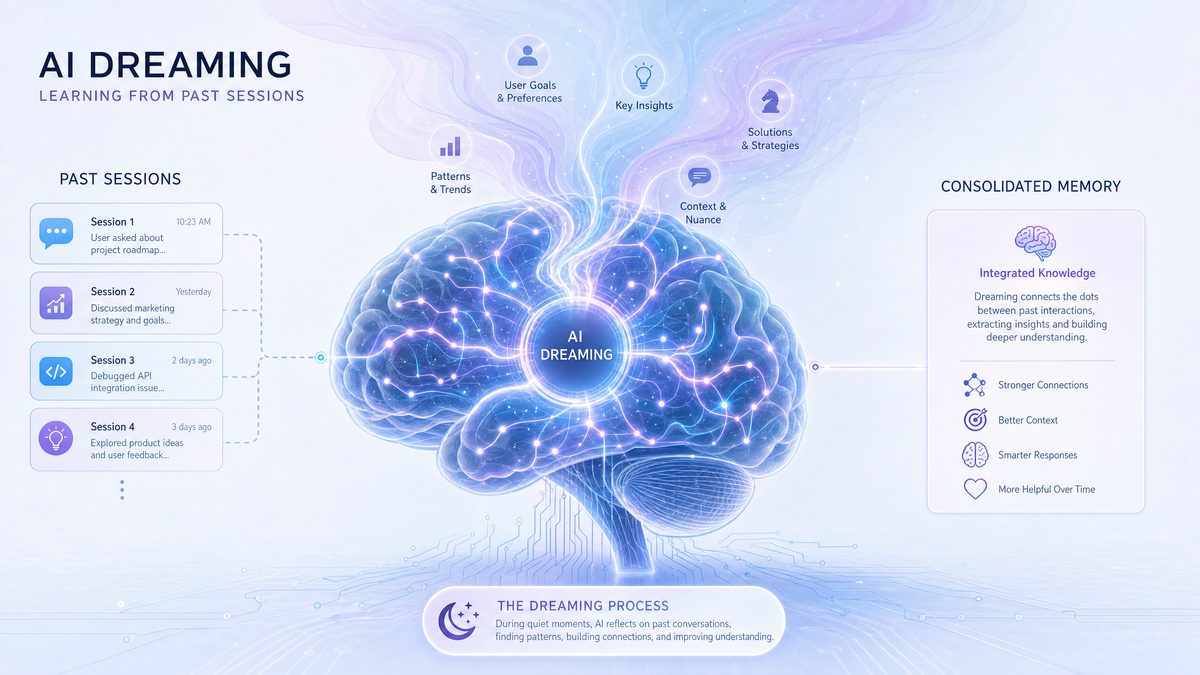
The landscape of artificial intelligence (AI) continues to evolve at an accelerating pace, enabling machines not only to perform complex tasks but also to adapt and improve autonomously. Among the pioneering innovations in this field stands Anthropic’s latest advancement: the “Dreaming” feature for its Claude Managed Agents. This revolutionary addition empowers AI agents to retrospectively analyze their past sessions, extract valuable insights, and self-enhance through a continuous learning cycle. By mimicking aspects of human reflective cognition, Dreaming transforms Claude Managed Agents from reactive tools into self-aware digital collaborators capable of nuanced understanding and dynamic growth.
This extensive article explores the intricacies behind Claude’s Dreaming feature. We delve into how these AI agents aggregate and review historical data, apply advanced analytic methods to discern patterns, curate memories structured for long-term utility, and implement those learnings to drive self-modification. Further, we discuss the integration of Outcomes, a framework for evaluating agent performance, and the orchestration of multiple AI agents working in concert—all foundational pillars enabling a new generation of adaptable, intelligent systems.
1. Introduction to Claude Managed Agents and the Dreaming Feature
1.1 Background of Claude Managed Agents
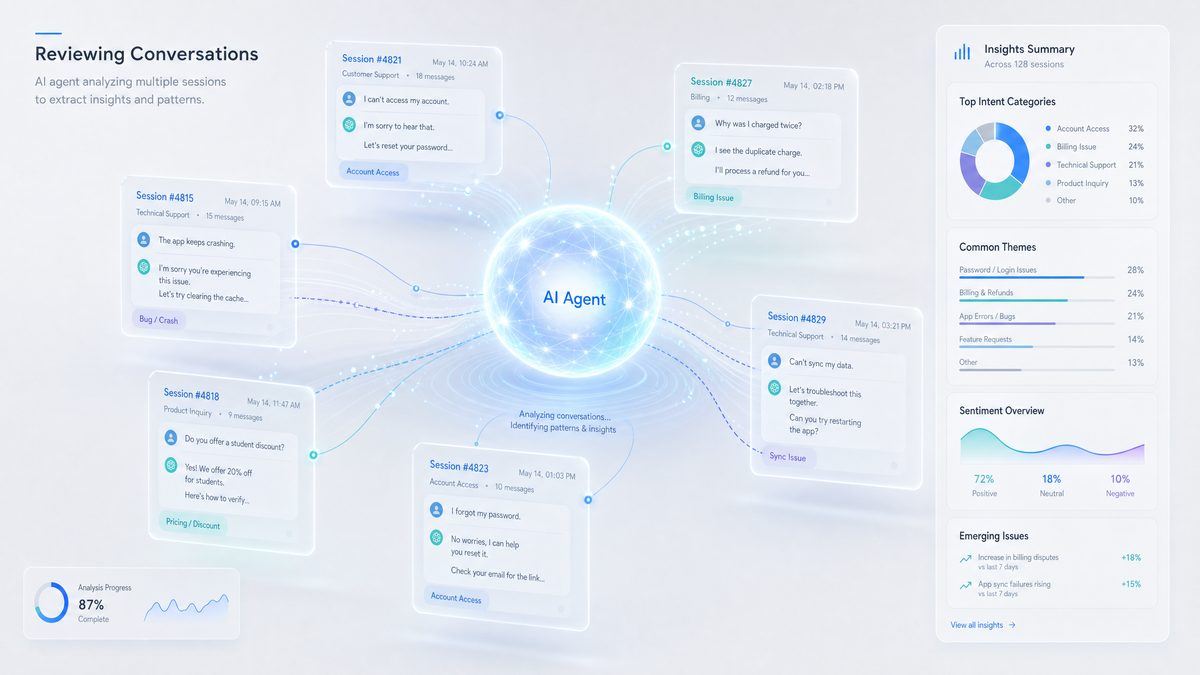
Claude Managed Agents embody Anthropic’s vision of highly autonomous AI systems that seamlessly blend robust task execution, contextual awareness, and adaptive behavior. These agents leverage large language models (LLMs) at their core, fine-tuned for deeper understanding, advanced reasoning, and multi-domain applicability. Unlike traditional AI tools that often require tightly scripted interactions or constant human guidance, Claude agents are architected to independently manage workflows ranging from simple queries to complex project orchestration.
Since their inception, Claude Managed Agents have become instrumental in numerous applications, supporting complex decision-making, data synthesis, and collaborative tasks across various industries. Their managed framework ensures operational reliability by monitoring agent states, enforcing policy compliance, and coordinating interactions within defined parameters. This platform-level oversight enables enterprises to deploy Claude agents confidently at scale, integrating natural language capabilities with external APIs and enterprise systems.
The evolutionary thrust toward managed agents represents a paradigm shift—from reactive AI components reacting passively to human prompts toward proactive, contextually-aware digital workers. Anthropic’s innovations anticipate environments where AI supports continuous workflows, learns from indirect signals such as user feedback and environmental cues, and refines its behavior autonomously.
1.2 Introducing the Dreaming Feature
Dreaming embodies a strategic leap in AI agent design by embedding metacognitive faculties—agents develop internal processes to review and learn from their operational history. This reflective functionality means Claude Managed Agents no longer simply process commands in isolation; they “dream” by revisiting past sessions, mining operational logs, and synthesizing experiences into actionable knowledge. The analogy to human dreaming is deliberate, evoking cognitive rehearsal and memory consolidation activities noted in neuroscience, which facilitate learning and adaptability.
Fundamentally, Dreaming confers an ability for sustained self-improvement through autonomous meta-learning. By harnessing patterns buried in prior interactions, the agents identify effective strategies, recurrent pitfalls, and emerging behavioral trends. This process transcends static AI behavior, nurturing agents that evolve based on cumulative experience, continuously honing their performance with minimal human intervention.
The integration of Dreaming within Claude’s architecture serves multiple roles:
- Automating retrospective analysis of prior sessions to extract meaningful insights.
- Structuring insights into hierarchical memory systems that balance recency and generalization.
- Informing real-time decision adjustments and strategic behavior shifts through learned experience.
With Dreaming, Anthropic ushers in a new generation of AI agents capable of adaptive expertise, setting a foundational precedent in creating systems that are not only intelligent but increasingly wise across time.
2. How Claude Managed Agents Review Past Sessions
2.1 Session Logging and Data Aggregation
At the core of Dreaming lies a meticulously designed data infrastructure capturing every aspect of the agent’s operational history. Each session an agent undertakes is recorded in fine detail, encompassing user inputs, intermediate reasoning steps, API calls made, context shifts, and output responses. This logging is comprehensive, ensuring no valuable signal is lost while maintaining privacy and security safeguards necessary for enterprise deployments.
Data aggregation mechanisms systematically consolidate these interactions into structured repositories. Each logged entry is annotated with metadata tags indicating session context, task category, timestamps, and performance indicators such as user satisfaction metrics or error rates. Such enrichment permits efficient querying and segmentation—for example, isolating sessions where responses achieved high accuracy versus those flagged for failure.
This structure supports multi-dimensional analysis, enabling the Dreaming process not only to access linear transcripts but also intuitive temporal, thematic, and performance-based perspectives of agent activity. The aggregation framework is built to be scalable, supporting thousands to millions of concurrent session logs while ensuring rapid retrieval for near real-time reflective analysis.
2.2 Pattern Extraction Through Advanced Analytics
Once the session data is harvested and organized, the Dreaming mechanism invokes advanced analytical techniques to extract meaningful patterns. This phase leverages multiple AI technologies working in tandem:
- Natural Language Processing (NLP): Sophisticated semantic parsing interprets conversations and textual data, enabling recognition of intents, sentiments, and contextual subtleties embedded within interactions.
- Statistical Analysis: Quantitative evaluation of performance metrics, error frequency, and temporal trends provides a macro view of agent efficacy across time and tasks.
- Machine Learning: Pattern recognition algorithms identify recurrent themes, anomaly detections, clustering of session scenarios, and correlation between behaviors and outcomes.
For example, an agent engaged in customer support may uncover through Dreaming that queries about billing issues consistently take longer to resolve and have a higher rate of escalation. This insight directs attention toward refining billing-related response strategies or incorporating external knowledge bases more effectively.
Similarly, behavioral patterns such as preferred response formulations, common conversation flows, or frequency of fallback strategies are quantitatively mapped. These patterns help the agent evolve by highlighting which tactics contribute most to desired outcomes and which require modification.
2.3 Abstracting Lessons and Insights
Beyond raw pattern identification, Dreaming synthesizes these findings into higher-level abstractions—lessons and insights that inform future agent behavior. This knowledge distillation process interprets patterns within the context of specific task domains and user expectations, enabling actionable recommendations rather than mere statistical summaries.
Typical abstractions generated include:
- Best practice templates: Proven methodologies derived from repeated successful interactions.
- Failure mitigation strategies: Approaches designed to preempt or correct commonly encountered pitfalls.
- Training priorities: Specific skills or knowledge gaps identified for targeted refinement efforts.
- Heuristic adjustments: Tuned decision rules that dynamically adapt algorithmic parameters to optimize outcomes.
These abstractions are not static; rather, they form a living knowledge base that evolves continuously as agents accumulate more experiential data. The process parallels human expertise development, where learned lessons influence future actions and decision making becomes progressively informed by reflective experience.
3. Curating Memories for Sustained Learning
3.1 Memory Management Architecture
Integral to Dreaming is a sophisticated memory management system that stores, organizes, and retrieves the distilled insights. Inspired by cognitive models of human memory, Claude Managed Agents implement a tiered memory architecture tailored to the temporal and contextual relevance of stored knowledge. The three primary layers are:
- Short-term memory: Captures immediate, context-specific information necessary for ongoing interactions. For example, details provided during a current customer call or parameters relevant to an active workflow.
- Intermediate memory: Holds aggregated insights from clusters of related recent sessions. This could include recently acquired problem-solving heuristics or patterns detected in a particular user segment over the past days.
- Long-term memory: Contains broadly generalized lessons and strategies formed from extensive longitudinal experience, shaping the agent’s core competencies and world knowledge.
This hierarchical structure balances the need for freshness and specificity against the benefits of enduring wisdom. Access mechanisms prioritize relevant memory layers dynamically, ensuring agents respond appropriately based on both immediate context and historically validated principles.
3.2 Techniques for Memory Consolidation
Drawing parallels from human neurocognitive processes, Dreaming incorporates techniques akin to sleep-dependent memory consolidation. Periodically, agents undergo offline processing phases—“dream cycles”—where they revisit logged sessions and extracted patterns without active external input. During these sessions, critical learnings are reinforced while redundant or obsolete data points are pruned, preventing cognitive overload and drift.
This consolidation employs attention models that weigh memories according to relevance, frequency, and impact on outcomes. As a result, key insights grow stronger and more accessible for future application, enhancing the agent’s recall precision and decision quality.
For instance, if an agent repeatedly succeeds applying a particular negotiation strategy in financial advisory tasks, this tactic’s representation in long-term memory is amplified and readily deployable in upcoming sessions. Conversely, ineffective approaches identified through outcomes are gradually deprioritized or eliminated.
3.3 Continuous Updating and Version Control
Memories within Claude Managed Agents are dynamic entities subject to continuous refinement informed by new experiences. To manage this evolution responsibly, Dreaming implements a strict version control framework tracking every memory update and modification. This system permits rollback to prior knowledge states if newly incorporated lessons prove to degrade agent performance.
Version control also ensures transparency and traceability in the agent’s learning trajectory, supporting audit requirements in regulated environments. Changes are documented with metadata detailing context, rationale, and source session data, enabling human overseers to review and validate memory updates when needed.
This rigorous governance balances innovation with stability, mitigating risks of destabilizing behavioral shifts while enabling flexible adaptation to emerging operational realities.
4. Enabling Self-Improving AI Agents
4.1 From Reflection to Self-Modification
The hallmark of the Dreaming feature lies in empowering Claude Managed Agents to autonomously transform their operational parameters based on reflective learning. Utilizing curated memories and abstracted lessons, agents undertake self-modification routines that influence various aspects of their internal functioning and external interactions.
These modifications include:
- Behavioral tuning: Adjusting dialogue generation strategies, conversational tone, and user engagement techniques. For example, an agent might adopt more empathetic responses after recognizing positive correlations between empathy and user satisfaction.
- Task prioritization: Re-sequencing or optimizing internal task steps to improve efficiency and reduce latency. A sales assistant may rearrange information discovery prompts to expedite client qualification.
- Knowledge updating: Integrating newly abstracted domain expertise into its knowledge base, broadening the scope of problem-solving tactics and factual understanding. A research assistant may update scientific topics based on the latest validated insights gathered during Dreaming cycles.
This iterative self-modification process is automated and continuous, enabling Claude agents to evolve gracefully across measurement cycles rather than requiring manual retraining or reprogramming.
4.2 Reinforcement from Outcomes
Central to self-improvement is the integration of well-defined outcomes—quantitative and qualitative criteria measuring agent success across various dimensions such as accuracy, user satisfaction, timeliness, and cost-effectiveness. Anthropic’s platform supports customizable outcome metrics allowing deployment teams to tailor performance targets to application nuances.
Outcome data feeds back into Dreaming’s learning loop as reward signals guiding agent adaptations. Positive outcomes reinforce behaviors and strategies leading to success, making those response patterns more likely in the future. Conversely, negative outcomes highlight failure modes demanding attention and revision.
This feedback loop creates a closed system where action, reflection, and adaptation form mutually reinforcing stages. Over time, agents optimize toward maximizing outcomes relevant to their deployed environments.
| Aspect | Traditional AI Agents | Claude Managed Agents with Dreaming |
|---|---|---|
| Learning from Past Sessions | Limited or human-supervised retraining | Automated retrospective analysis and pattern extraction |
| Memory Management | Static or limited context window | Hierarchical memory curation with continuous updates |
| Self-Improvement | Manual parameter tuning or offline updates | Autonomous behavior modification supported by Dreaming |
| Outcome Integration | Outcome feedback often sparse or delayed | Real-time incorporation of outcomes into learning loop |
| Multi-Agent Coordination | Ad hoc or external orchestration required | Built-in orchestration with shared memory and dynamic role assignment |
4.3 Safety and Ethical Considerations
Autonomous self-improvement introduces critical challenges in ensuring AI behaviors remain aligned with ethical values, user expectations, and regulatory standards. Anthropic has embedded comprehensive safety protocols into Dreaming to mitigate risks associated with unchecked agent evolution.
- Scoped Modifications: Self-modifications are constrained within defined behavioral parameters preventing abrupt or extreme changes that could cause operational disruptions or ethical breaches.
- Continuous Alignment Monitoring: Agents are monitored in real-time to ensure alignment with user intentions, intent verification processes, and adherence to established ethical guidelines.
- Comprehensive Audit Trails: All behavioral changes and the corresponding rationale are logged for accountability, allowing human stakeholders to review, validate, or revoke agent updates if necessary.
This multi-layered oversight fosters responsible AI development, balancing innovation with accountability to safeguard users and maintain trust.
5. Utilizing Outcomes for Strategic Enhancement
5.1 Defining Outcomes for Agent Evaluation
To operationalize continual agent improvement, defining explicit outcomes is essential. Outcomes constitute measurable targets reflective of desired agent capabilities, shaped by deployment contexts. Anthropic’s platform facilitates customization of outcome frameworks, enabling organizations to tailor success criteria precisely to business goals and use case demands.
Examples of outcome definitions include:
- Task accuracy: Percentage of correctly completed requests or error-free operations.
- User engagement and satisfaction: Qualitative and quantitative feedback scores representing user experience.
- Operational throughput: Number of tasks completed per unit time or session efficiency.
- Cost efficiency: Resource consumption metrics relative to task value.
Such metrics become the yardsticks guiding Dreaming’s prioritization of learning focus areas and adaptation strategies.
5.2 Outcome-Driven Learning Integration
Dreaming leverages these outcome indicators to weight extracted patterns and memory updates differentially. For example, patterns linked consistently with positive outcomes will receive higher salience in the agent’s knowledge repositories, making them the default go-to approaches in future interactions. Conversely, patterns associated with negative or neutral results may be flagged for retraining focus or phased out.
This strategic reinforcement builds an intelligent learning system that naturally prioritizes impactful improvements, accelerating progress in critical performance dimensions. Such outcome-driven integration ensures the agent’s evolution remains mission-aligned and value-centric rather than driven by undirected data accumulation.
5.3 Case Studies: Outcomes Impacting Agent Behavior
Anthropic’s early deployments of Dreaming demonstrate meaningful behavioral enhancements driven by outcomes:
- Customer Support Automation: By integrating customer satisfaction metrics as outcomes, support agents flexibly adjusted dialogue pacing and empathetic language usage, improving first-contact resolution rates by over 15% while reducing call duration.
- Financial Advisory: Outcome-based reinforcement allowed investment agents to refine portfolio recommendations iteratively, achieving better risk diversification and minimizing loss exposure during market volatility events.
- Content Generation: Agents producing marketing content employed readability and engagement feedback scores to continuously evolve style, tone, and structural choices, yielding measurable increases in audience retention and click-through rates.
These use cases illustrate Dreaming’s impact beyond theoretical benefit into tangible business value across sectors.
6. Multi-Agent Orchestration: Collaborative Intelligence
6.1 Orchestration Framework Overview
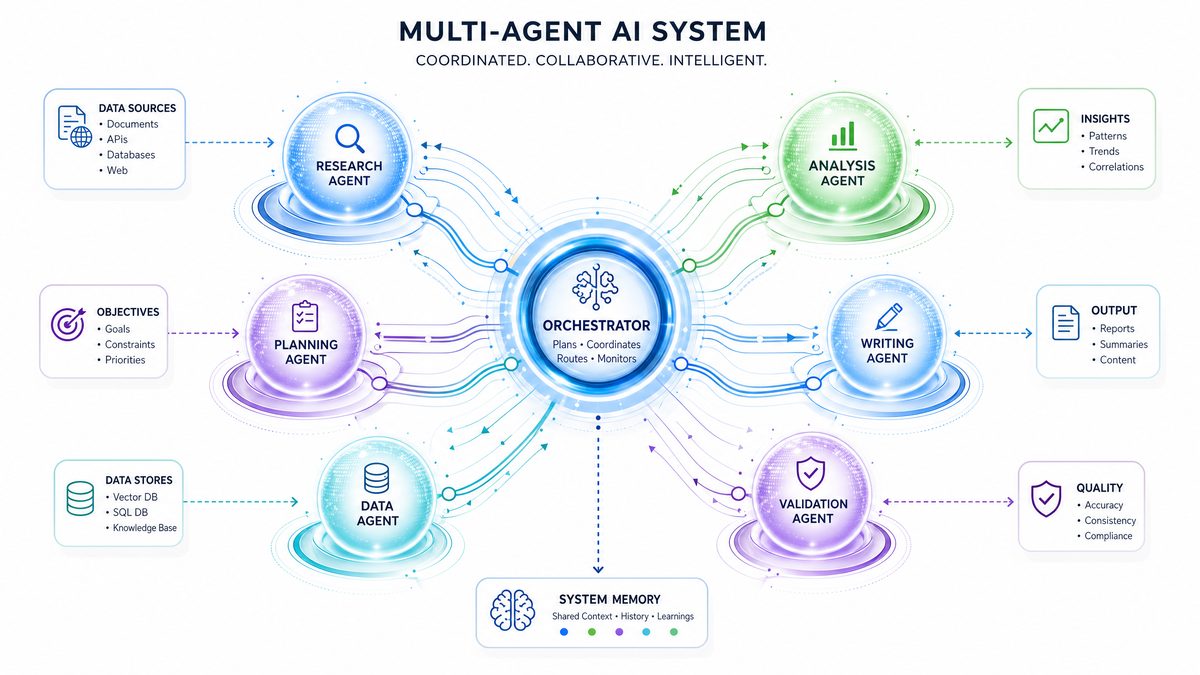
While the learning and self-improvement processes described thus far primarily focus on individual agents, Dreaming’s scope extends to multi-agent orchestration—coordinating a constellation of Claude Managed Agents collaborating on complex, interdependent workflows. Anthropic’s orchestration framework facilitates real-time communication, shared context, and dynamic role assignment among agents, enabling efficient division of labor and synergy.
This orchestration occurs atop a shared memory environment allowing agents to exchange curated insights and jointly “dream” about combined experiences. Through this cooperative reflective process, agents uncover cross-cutting patterns, optimize handoff protocols, and develop emergent strategies for multi-agent problem-solving.
6.2 Benefits of Multi-Agent Coordination
Multi-agent orchestration alleviates inherent limitations of isolated agents by offering:
- Specialization: Assigning agents to domain-specific subtasks capitalizes on tailored expertise and prevents knowledge fragmentation.
- Redundancy and Validation: Multiple agents cross-check outputs, boosting accuracy and reliability, reducing single points of failure.
- Scalability: Parallel task execution and workload distribution significantly increase throughput and responsiveness in large-scale deployments.
For instance, in a customer service environment, a multi-agent system might assign separate agents for technical troubleshooting, billing inquiries, and escalation management, with orchestration managing the routing and integration of outputs into a unified customer experience.
6.3 Role of Dreaming in Orchestration
Dreaming enhances orchestration by enabling agents to contribute their curated memories and insights to a collective knowledge ecosystem. This interchange fosters a form of collective intelligence whereby agents learn not only from their individual experiences but also from the experiences of peers. This meta-reflective capability accelerates learning curves and enables synergistic adaptation.
Moreover, the orchestration layer employs Dreaming-derived analytics to dynamically adjust agent roles, workloads, and collaboration protocols—ensuring optimal team configurations and continuous evolution of cooperative behaviors tuned to deployment objectives.
Ultimately, this integration lays the groundwork for highly adaptable AI ecosystems capable of sophisticated joint reasoning, problem decomposition, and coordinated execution transcending individual agent capacities.
7. Implementation Challenges and Future Directions
7.1 Technical Challenges
Scaling Dreaming to enterprise-grade deployments involves tackling multiple technical obstacles:
- Data Volume Management: Efficiently recording, indexing, and retrieving vast volumes of detailed session data without incurring prohibitive storage or latency costs.
- Computational Efficiency: Balancing depth of retrospective analysis and frequency of “dreaming” cycles with available processing resources to maintain responsiveness.
- Pattern Extraction Robustness: Preventing overfitting to noise or transient phenomena during analytic stages, preserving generalizability and reliability of learned insights.
- Consistency in Multi-Agent Environments: Maintaining state synchronization and consistent memory updates across multiple agents interacting concurrently.
Anthropic continues refining architecture designs and algorithmic strategies to address these challenges, prioritizing modularity, scalability, and fault tolerance.
7.2 Strategizing for Continuous Improvement
Looking forward, Anthropic’s roadmap centers on enhancing the Dreaming feature along several vectors:
- Model Interpretability: Providing transparent explanations of learned insights and behavior modifications to foster user trust and facilitate debugging.
- Customization: Allowing fine-grained tuning of learning parameters and memory management policies to meet diverse organizational requirements.
- API and Ecosystem Integration: Expanding interoperability with third-party data sources, analytics tools, and deployment platforms enriching context awareness and operational flexibility.
These focus areas aim to fortify Claude Managed Agents as adaptable, accountable AI collaborators tailored for evolving real-world challenges.
7.3 Opportunities for Cross-Domain Applications
Although initially optimized for conversational agents and task orchestration, the Dreaming paradigm holds promise far beyond traditional AI assistance. Domains poised to benefit include:
- Healthcare: Medical diagnostics agents reflecting on treatment outcomes and evolving clinical decision support knowledge.
- Scientific Research: Autonomous literature review and hypothesis generation agents refining strategies based on experimental results and peer feedback.
- Legal Analysis: Compliance monitoring and contract interpretation systems learning from case law precedents and regulatory changes.
- Education: Personalized tutoring agents adapting curricula and feedback styles informed by student progress and engagement patterns.
Anthropic actively collaborates with interdisciplinary partners to explore domain-specific Dreaming frameworks that amplify the impact of reflective AI learning across diverse sectors.
8. Conclusion: The Dawn of Reflective AI Agents
Anthropic’s unveiling of the Dreaming feature represents a watershed moment in AI development—one that moves agents from simple task executors to adaptive learners. By empowering Claude Managed Agents with robust introspective capabilities, hierarchical memory curation, outcome-driven refinement, and multi-agent orchestration, Dreaming lays the foundation for AI systems that grow more effective and nuanced with experience.
While challenges around scalability, safety, and interpretability remain active research areas, the core concepts of Dreaming resonate strongly with enduring AI goals such as meta-learning, lifelong learning, and collaborative intelligence. The ability of agents to autonomously learn from their history and coordinate knowledge across teams marks a fundamentally new phase in AI capability, poised to transform enterprises, research, and daily life.
As organizations harness these reflective AI agents and integrate them into increasingly dynamic workflows, the promise of truly intelligent, self-improving systems draws closer to reality—offering unprecedented levels of productivity, creativity, and innovation.
For further insights on AI agent management and Anthropic’s innovative solutions, explore our related resources:
For organizations seeking to understand how AI agents are already transforming enterprise operations across industries, our comprehensive analysis of enterprise AI automation case studies in 2026 documents real-world deployments and measurable ROI from companies implementing autonomous agent systems. Enterprise AI Automation Case Studies 2026.
. Discover technical deep-dives on memory architectures and agent coordination strategies here:
Small and medium businesses exploring Anthropic’s ecosystem should understand how Claude for Small Business integrates with existing tools like QuickBooks and HubSpot, providing a practical entry point into AI-powered operations without requiring enterprise-scale infrastructure. Claude for Small Business 2026.
. Stay updated with Anthropic’s latest AI breakthroughs and applications at this link:
The agent paradigm extends beyond Anthropic’s ecosystem, as OpenAI’s Codex has also embraced autonomous execution with its mobile coding agent that enables developers to delegate complex programming tasks from any device. OpenAI Codex Goes Mobile.
.
Access 40,000+ AI Prompts for ChatGPT, Claude & Codex — Free!
Subscribe to get instant access to our complete Notion Prompt Library — the largest curated collection of prompts for ChatGPT, Claude, OpenAI Codex, and other leading AI models. Optimized for real-world workflows across coding, research, content creation, and business.
