
Advanced Prompt Engineering for Agentic Systems: Mastering Codex and Claude Code Instructions
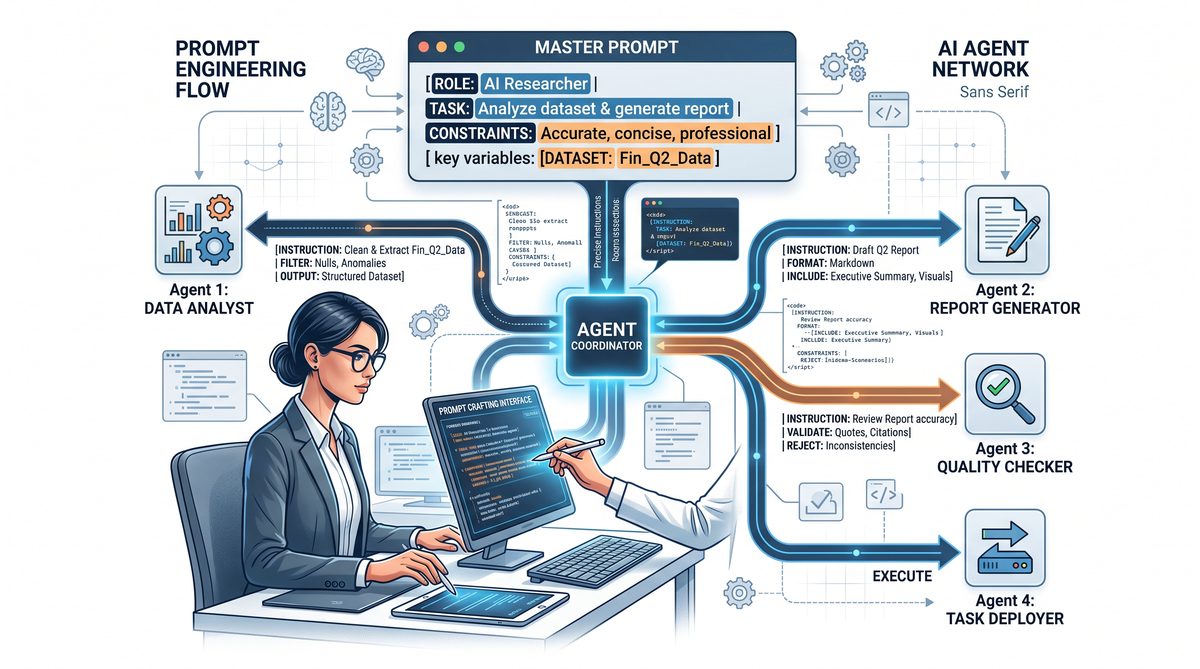
Advanced Prompt Engineering for Agentic Systems (Codex and Claude)
As artificial intelligence continues to evolve, the capabilities of autonomous agents like OpenAI’s Codex and Anthropic’s Claude have pushed the boundaries of what machines can achieve in complex, real-world tasks. These agentic systems are no longer mere reactive tools; they are proactive collaborators capable of reasoning, planning, and self-correcting in dynamic environments. However, unlocking their full potential hinges on one critical skill: advanced prompt engineering. Crafting effective prompts for these autonomous agents requires more than just listing commands or tools—it demands a strategic, nuanced approach that guides the agent’s reasoning process and decision-making behavior.
In AI development, the traditional prompt often serves as a simple instruction or a query. But when dealing with agentic systems, prompt engineering transforms into a sophisticated dialogue with the model that shapes its autonomy and effectiveness. Techniques such as the ‘advisor strategy’, where the agent consults specialized sub-agents for expert guidance, and integrating ‘critic’ roles—akin to GitHub’s Rubber Duck debugging approach—help create robust, self-improving workflows. These methods enable agents to reflect on their outputs, identify errors, and iteratively enhance their performance without human intervention.
Another critical aspect of advanced prompt engineering involves the precise specification of intent. Instead of merely enumerating available tools or commands, developers must articulate the desired outcomes and constraints clearly. This clarity allows agentic systems like Codex and Claude to prioritize actions intelligently and adapt to ambiguous or evolving scenarios. Moreover, managing the extensive context windows required for these interactions and preventing cache invalidation over billions of messages pose unique challenges. Efficient context management ensures that agents maintain continuity and relevance across prolonged conversations, avoiding performance degradation or loss of critical information.
In this guide, we will explore these sophisticated prompting strategies in depth, providing practical insights and methodologies to harness the full capabilities of agentic AI systems. Whether you are developing autonomous coding assistants, conversational agents, or complex multi-agent workflows, mastering advanced prompt engineering is essential to achieving reliable, scalable, and intelligent automation. By the end, you will understand how to structure prompts that not only instruct but empower agentic systems to think, critique, and act with unprecedented autonomy and precision.
For a deeper dive into foundational techniques that complement these strategies, consider exploring the concept of writing effective instructions for Codex, Claude Code, and autonomous systems provides the baseline techniques for task decomposition, constraint specification, and output formatting that serve as prerequisites for the advanced cache optimization and advisor strategies covered here.
“>contextual prompt design, which underpins effective communication with AI agents.
Core Technologies and Architectural Foundations of Agentic Prompt Engineering
Agentic systems such as Codex and Claude represent a paradigm shift in how autonomous agents interact with complex tasks and environments. Unlike traditional LLM interactions that focus on direct question-answering or single-turn completions, agentic systems are designed for iterative decision-making, self-monitoring, and multi-agent collaboration. The effectiveness of these systems hinges critically on advanced prompt engineering techniques that not only specify what the agent should do but also how it should reason, validate, and adapt its actions in real time.
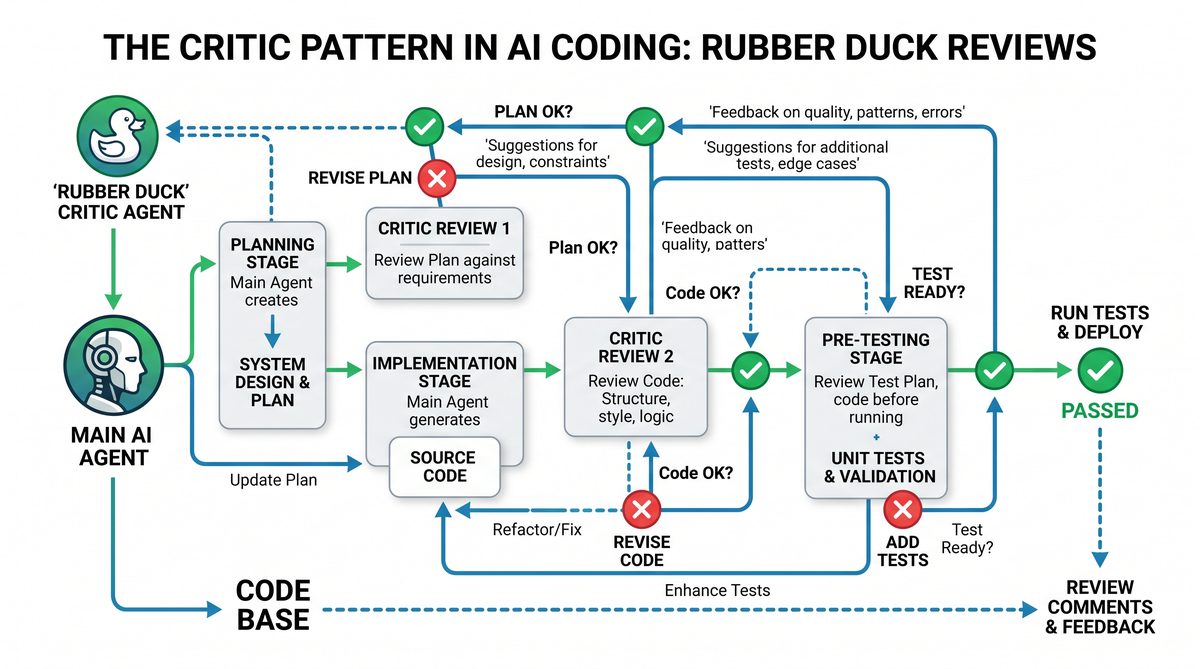
Modular Architecture of Agentic Systems
At their core, advanced agentic systems leverage modular architectures comprising specialized sub-agents or components that work synergistically. For example, in the case of GitHub’s Rubber Duck, a ‘critic’ agent functions alongside the primary coding agent to provide real-time feedback and error detection. Similarly, the ‘advisor strategy’ involves incorporating advisory agents that evaluate multiple potential actions or solutions and recommend the optimal path forward. This modular decomposition enhances robustness, scalability, and interpretability.
The architecture typically involves the following key components:
- Primary Executor Agent: The main agent responsible for task execution, generating outputs, and interacting with external APIs or code environments. This agent must maintain high accuracy and responsiveness, often optimized through tight integration with development environments or external databases.
- Critic/Evaluator Agent: A specialized sub-agent that reviews outputs from the executor, identifies inconsistencies or errors, and suggests improvements, mirroring the Rubber Duck debugging methodology. By incorporating formal verification methods or heuristic checks, these critics can significantly reduce error propagation in complex tasks.
- Advisor Agent(s): These agents provide strategic guidance by considering alternative approaches, assessing trade-offs, or validating assumptions. For example, an advisor might employ probabilistic reasoning or domain-specific knowledge bases to weigh potential outcomes before recommending a course of action.
- Context Manager: Manages context windows, maintaining task-relevant historical information while preventing cache invalidation in high-throughput scenarios. This component often employs advanced summarization algorithms and external memory management to optimize prompt size without sacrificing critical information.
Intent Specification Over Tool Enumeration
One of the transformative insights in advanced prompt engineering for agentic systems is the emphasis on specifying intent precisely rather than merely enumerating tools or commands. Traditional prompts often list available functions or APIs, expecting the LLM to choose accordingly. However, this approach can lead to rigid behavior and difficulties adapting to nuanced task requirements.
Instead, specifying the desired outcome, constraints, and rationale guides the agent’s autonomous decision-making more effectively. For example, rather than instructing an agent to “use the file system API to read and write files,” a prompt might clarify: “Ensure data persistence by securely saving intermediate results to a reliable storage medium to allow rollback in case of failure.” This kind of intent-driven prompt enables the agent to select the appropriate tools or methods dynamically within its operational context.
This approach also facilitates the integration of multiple sub-agents, each specializing in different capabilities, by providing a shared understanding of goals rather than rigid procedural instructions. Developers can leverage this by constructing layered prompts that articulate high-level objectives, which are then decomposed by the system into actionable subtasks. For instance, in a multi-agent coding workflow, the intent to “optimize algorithmic efficiency while maintaining readability” can guide both the executor and critic agents to balance performance and maintainability.
Handling Context Windows at Scale
Managing the limited context window of large language models remains a critical challenge, especially when deploying agentic systems that generate billions of messages across extended interactions. Inefficient context management can lead to cache invalidation, forcing costly recomputations and degrading system responsiveness.
Advanced prompt engineering addresses this through techniques such as:
- Context Compression: Summarizing or abstracting prior conversation history or code changes to retain essential information without exceeding token limits. Techniques include extractive summarization, abstractive rewriting, and embedding-based retrieval to maintain semantic relevance.
- Selective Context Retention: Prioritizing critical context elements (e.g., unresolved issues, key parameters) while discarding redundant or irrelevant data. This often involves heuristic filters or learned models that evaluate the importance of context segments dynamically.
- Hierarchical Context Structuring: Organizing context into tiers, where high-level summaries guide the agent’s understanding, supplemented by detailed sub-contexts accessible on demand. This stratified approach reduces cognitive load on the model and ensures focus on pertinent information.
Additionally, the incorporation of external memory systems or databases can offload large volumes of historical data, reducing pressure on the context window. Prompt designs often include references or retrieval commands that allow the agent to fetch relevant information dynamically, maintaining continuity without bloating the immediate prompt. For example, vector databases coupled with semantic search enable agents to recall prior task states or relevant documents efficiently.
Comparative Overview: Codex vs. Claude in Agentic Contexts
| Aspect | Codex | Claude |
|---|---|---|
| Primary Use Case | Code generation, coding assistance, API integration | General autonomous reasoning, multi-turn dialogue, complex reasoning |
| Prompting Style | Instruction-driven with emphasis on explicit code snippets and tool calls | Intent-driven with natural language guidance and reflection |
| Critic Agent Support | Integrated with Rubber Duck style debugging for iterative code validation | Built-in self-reflection and critique modules enabling self-improvement |
| Context Window Management | Token-efficient code context summarization; optimized for source code | Advanced conversational memory and context compression strategies |
| Scalability in High-Throughput Scenarios | Effective with modular executor and critic agents; requires external caching | Designed for large-scale agent orchestration with dynamic context retrieval |
| Integration with External Tools | Strong API and development environment connectivity | Flexible tool invocation based on intent and task context |
Supporting Autonomous Agent Collaboration
Agentic systems do not operate in isolation. Effective prompt engineering ensures that multiple agents—executors, critics, advisors—can collaborate seamlessly. This is achieved by establishing standardized communication protocols and shared representations of task state and intent. For instance, codifying a schema for agent outputs and feedback allows other agents to parse and respond accurately, ensuring alignment and preventing conflicts.
Developers should consider prompt structures that explicitly define roles, responsibilities, and expected interaction patterns among agents. This includes setting up monitoring agents that track overall progress and trigger escalation or fallback strategies when anomalies are detected. Such multi-agent orchestration is crucial for complex workflows that demand reliability and adaptability.
By combining these architectural principles with sophisticated prompt engineering techniques, developers can unlock the full potential of agentic systems like Codex and Claude, driving autonomous agents that are not only powerful but also transparent, reliable, and context-aware.
The GPT-5.5 model family introduces several new capabilities that directly impact prompt engineering strategies, particularly around memory persistence and multimodal reasoning chains. Our detailed guide on advanced prompting techniques for GPT-5.5 leveraging memory and multimodal reasoning covers how to structure prompts that take advantage of extended context retention and cross-modal understanding for more sophisticated agent behaviors.
Real-World Applications and Enterprise Workflows for Agentic Systems
As autonomous agents like Codex and Claude become integral to complex workflows, the challenge shifts from simply interacting with them to designing prompt strategies that maximize their effectiveness and reliability in real-world scenarios. Enterprises benefit most when these agents are embedded within structured processes that leverage their unique capabilities—ranging from code generation and document analysis to decision support and automated debugging. This section explores practical approaches and considerations for deploying agentic systems at scale, emphasizing strategies that improve accuracy, maintain context integrity, and optimize resource utilization.
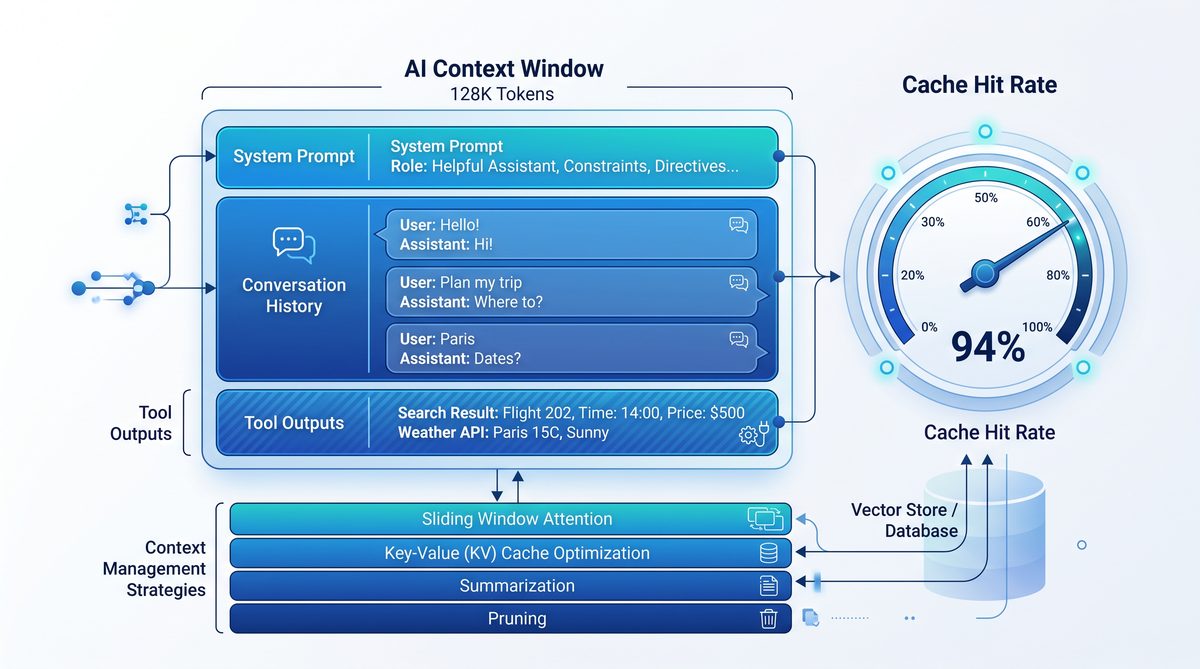
Embedding the Advisor Strategy in Collaborative Workflows
The advisor strategy involves structuring prompts to simulate a multi-agent collaboration where one agent acts as an expert advisor, providing informed guidance, while another executes tasks based on that advice. This approach significantly enhances the quality of outputs by introducing a layer of critical reasoning and domain expertise prior to action. In enterprise settings, examples include:
- Code Review and Generation: An advisor agent analyzes the requirements and existing codebase, recommending approaches and flagging potential issues before the Codex agent generates or modifies code. This reduces technical debt and accelerates development cycles through early-stage validation.
- Strategic Decision Support: In financial or operational planning, an advisor agent evaluates market data trends and suggests scenarios, which a primary agent then uses to formulate actionable plans. This layering supports risk management through scenario analysis and contingency planning.
- Content Moderation and Compliance: An advisor checks generated content against regulatory requirements or company policies, allowing the main agent to revise outputs accordingly. This is especially critical in highly regulated industries like finance and healthcare.
Implementing this strategy requires carefully crafted prompt templates that explicitly define the role of each agent, their expected contributions, and the interaction protocol. The advisor’s instructions should emphasize critical analysis and contextual awareness, while the executor’s prompts focus on synthesis and action. Additionally, integrating feedback loops between these agents ensures continuous improvement and adaptation to shifting objectives.
Leveraging Critic Agents for Quality Assurance
Inspired by GitHub’s Rubber Duck debugging concept, critic agents serve as internal reviewers that evaluate the outputs of primary agents and provide constructive feedback or identify errors. This method introduces a powerful feedback loop that can dramatically reduce mistakes and improve reliability in sensitive applications.
Typical workflows incorporating critic agents include:
- Automated Code Debugging: After Codex generates code, a critic agent reviews it for logical errors, security vulnerabilities, or adherence to style guides, prompting revisions as necessary. Advanced critic agents can integrate static analysis tools and linters for enhanced validation.
- Document Validation: When generating contracts or technical documents, a critic agent cross-checks terminology, consistency, and compliance with standards. This reduces legal risks and ensures clarity.
- Data Annotation and Labeling: In machine learning pipelines, critic agents verify annotations made by autonomous agents to ensure dataset integrity, minimizing bias and improving model training quality.
To implement critic agents effectively, prompts must be designed to encourage rigorous evaluation, asking for explicit identification of issues rather than passive acceptance. This often involves instructing the critic to “think aloud” or explain its reasoning, providing transparency that helps developers understand and trust the review process. Moreover, multi-stage critique, where several critic agents assess different aspects (e.g., logic, style, compliance), can further enhance output quality.
Precision in Specifying Intent Over Tool Listing
A common pitfall in prompting agentic systems is relying on enumerating tools or capabilities without clearly articulating the desired outcomes. Advanced prompt engineering emphasizes specifying intent in precise, actionable terms rather than simply listing the functions an agent can perform. This approach yields several benefits:
- Reduced Ambiguity: Clear intent minimizes misunderstandings, enabling agents to select the most appropriate methods autonomously.
- Adaptive Tool Use: Agents can dynamically choose or combine tools based on the intent, rather than being constrained to a static list.
- Improved Efficiency: Directly stating the goal helps avoid unnecessary steps and resource consumption.
Beyond the agentic-specific techniques covered here, several established prompt engineering frameworks provide the foundational patterns that underpin effective agent instructions. Our comprehensive overview of advanced prompt engineering frameworks for 2026 including RTF, CREATE, Chain-of-Thought, ReAct, and DSPy explains how each framework maps to different reasoning requirements and how they can be composed for complex agentic workflows.
Managing Context Windows and Preventing Cache Invalidation at Scale
One of the most significant challenges when deploying agentic systems in enterprise environments is the management of context windows, especially when handling billions of messages or interactions. Context windows define the amount of previous conversation or data the agent can access during inference. Efficient management is crucial to ensure continuity, accuracy, and cost-effectiveness.
Key strategies include:
- Context Summarization: Periodically condense conversation history into concise summaries that preserve essential information while freeing up space for new input. Summaries can be generated automatically using abstractive methods tuned for domain specificity.
- Hierarchical Context Management: Structure context into layers, where high-level summaries guide overall direction and detailed recent exchanges provide immediate context. This allows agents to maintain focus on relevant details without being overwhelmed by total history.
- Selective Context Inclusion: Include only relevant past interactions based on the agent’s current task, reducing unnecessary context load through relevance scoring or task-specific filters.
- Cache Invalidation Control: Design prompts and session management to minimize changes that invalidate cached computations, such as avoiding unnecessary token insertions or reordering. Stable prompt templates and consistent tokenization contribute significantly to cache efficiency.
In large-scale deployments, these approaches help maintain high throughput and low latency while avoiding degradation of model performance due to context overload or frequent cache resets. Integrating these techniques into automated pipelines ensures sustained agentic system efficiency over time.
Enterprise Implications and Best Practices
For organizations aiming to integrate agentic systems like Codex and Claude into their operations, a few overarching best practices emerge:
- Define Clear Roles for Agents: Use role-based prompt engineering (advisor, critic, executor) to modularize responsibilities and enhance collaboration. This improves maintainability and scalability of AI workflows.
- Iterate on Prompt Design: Continuously test and refine prompts to align with evolving business goals, data inputs, and compliance requirements. Employ A/B testing or reinforcement learning to optimize prompt efficacy.
- Monitor and Audit Outputs: Implement feedback loops, including critic agents and human oversight, to maintain quality and ethical standards. Logging and traceability are essential for compliance and debugging.
- Optimize Context Management: Develop tooling and automation that handle summarization, context prioritization, and cache optimization seamlessly. Integrate monitoring systems to detect context-related degradation proactively.
- Invest in Training and Documentation: Equip teams with knowledge about advanced prompt engineering techniques and agentic workflows to maximize adoption and impact. Encourage knowledge sharing and continuous learning.
By embedding these principles into their AI strategy, enterprises can unlock the full potential of agentic systems, driving innovation, efficiency, and competitive advantage across diverse domains.
Optimizing Long-Term Agentic Interactions: Managing Context and Cache Efficiency
As autonomous agents like Codex and Claude become integral in increasingly complex workflows, one of the paramount challenges is managing their interaction over extended periods and vast volumes of data. Unlike traditional single-turn prompts, agentic systems often engage in continuous dialogues or iterative decision-making processes that can span billions of messages. This introduces unique hurdles related to context window limitations and computational cache invalidation, which can severely impact performance and reliability if not addressed properly.
Context Window Management is critical when dealing with advanced agents. Both Codex and Claude operate with finite context windows—segments of the conversation or prompt history they can “remember” at once. When this window is exceeded, older information is truncated or discarded, potentially leading to loss of critical context. For multi-step autonomous agents, this can manifest as degraded output quality, repeated mistakes, or redundant queries.
To mitigate this, practitioners should adopt techniques such as:
- Hierarchical Summarization: Periodically condense prior interactions into concise summaries that retain intent and key decisions. This helps preserve essential context while staying within token limits.
- Selective Context Injection: Instead of feeding the entire chat history, dynamically include only the most relevant recent exchanges alongside these summaries. This reduces noise and focuses the agent’s attention.
- State Persistence via External Memory: Offload long-term state and knowledge to external databases or knowledge graphs, enabling the agent to query and retrieve pertinent information as needed rather than relying solely on the prompt history. For example, embedding-based retrieval can index key facts and task states for rapid access.
Cache Invalidation and Efficiency become especially problematic at scale. Agentic systems often leverage caching mechanisms to speed up repeated or similar queries. However, subtle changes in prompt formatting, tool specifications, or system instructions can cause cache invalidation, forcing costly recomputations.
Strategies to reduce cache invalidation include:
- Consistent Prompt Templates: Maintain stable prompt structures and avoid unnecessary reordering or reformulation. Even minor prompt alterations can disrupt cache hits, so rigorous template management is vital.
- Parameter Stability: Fix model parameters and tool versions whenever possible during prolonged sessions to avoid discrepancies that invalidate cached results.
- Versioning and Metadata Tracking: Employ rigorous version control for prompt components, tooling APIs, and agent configurations to quickly detect and isolate changes impacting cache efficiency. Automated alerts can notify developers of potential cache disruptions.
Another advanced approach is the integration of adaptive caching layers that intelligently predict when context modifications will affect output, selectively invalidating only impacted cache entries. Research and experimentation in this area are ongoing but promise substantial gains in throughput for agentic systems handling massive workloads.
Finally, fostering a culture of precise intent specification rather than tool enumeration further enhances cache stability. When an agent understands the goal explicitly, minor changes in tool availability or interface have reduced impact on prompt structure, enabling more robust and efficient long-term interactions.
Advanced Case Study: Agentic Prompt Engineering in Autonomous Software Development
To illustrate the practical implications of advanced prompt engineering, consider a case study involving an autonomous software development pipeline powered by a combination of Codex and Claude-based agents. The workflow integrates advisor, executor, and critic agents collaborating to deliver high-quality code with minimal human intervention.
Scenario: A tech company aims to automate feature development, testing, and deployment using agentic systems. The primary executor (Codex) generates code snippets based on feature specifications. An advisor agent (Claude) analyzes functional requirements and suggests algorithmic optimizations or architectural patterns. Concurrently, a critic agent performs static analysis and security audits on generated code.
Prompt Engineering Approach: The system employs layered prompts that specify intent at each stage:
- Advisor Prompt: “Given the feature requirements, evaluate possible implementations focusing on scalability and maintainability. Recommend design patterns or optimizations.”
- Executor Prompt: “Generate code that implements the feature per the advisor’s recommendations, ensuring adherence to coding standards.”
- Critic Prompt: “Review the generated code for logical errors, security vulnerabilities, and style compliance. Provide detailed feedback with suggested corrections.”
Through iterative cycles, the executor refines code based on critic feedback, while the advisor adjusts recommendations as requirements evolve. Context management is handled via hierarchical summaries capturing feature evolution and testing outcomes, stored in an external knowledge base accessible to all agents.
Outcomes: This engineered prompt architecture enabled the company to reduce development time by 40%, decrease bug rates by 30%, and maintain compliance with internal security policies. The modular agent collaboration improved transparency and allowed human developers to focus on high-level problem solving rather than routine coding tasks.
Emerging Implications and Future Directions in Agentic Prompt Engineering
As agentic AI systems mature, the landscape of prompt engineering is poised to evolve dramatically, influenced by advances in model architectures, system integration, and human-AI interaction paradigms. Several emerging implications and future directions merit deep technical consideration:
Integration of Reinforcement Learning from Human Feedback (RLHF) in Agentic Workflows
While current prompt engineering relies heavily on static prompt templates and heuristic design, embedding reinforcement learning from human feedback offers a dynamic adaptation mechanism. Agents can learn to refine prompts and interaction strategies based on success metrics and user preferences, progressively improving autonomy and output quality.
Technically, this involves tuning reward functions to balance task accuracy, efficiency, and compliance, while incorporating exploration-exploitation trade-offs in multi-agent settings. For example, advisor agents might adapt their guidance style based on feedback on decision outcomes, while critic agents could evolve evaluation criteria to better align with domain-specific standards.
Multi-modal and Context-aware Prompt Engineering
Future agentic systems will increasingly operate across multi-modal inputs—combining text, code, images, and structured data. Advanced prompt engineering will need to integrate these diverse data types coherently within agent workflows. This entails developing unified prompt schemas that encode multi-modal context effectively, ensuring agents can reason across heterogeneous information sources.
For instance, in autonomous robotics or simulation environments, prompts might include sensor data streams alongside textual instructions, requiring sophisticated context fusion and temporal reasoning. Architecturally, this may necessitate extending prompt representations with embeddings that capture multi-modal semantics and temporal dependencies, alongside advanced retrieval and summarization techniques.
Ethical and Safety Considerations in Prompt Design
As agentic systems gain autonomy, the ethical implications of prompt engineering become paramount. Designing prompts that embed safety constraints, fairness guidelines, and bias mitigation strategies is crucial to prevent unintended harmful behaviors. This includes implementing guardrails within prompts and multi-agent coordination protocols that enforce ethical standards.
Technically, this challenge involves integrating ethical ontologies, bias detection modules, and adversarial testing within prompt workflows. Moreover, transparency mechanisms—such as explainable agent outputs and audit trails—must be designed into prompt structures to facilitate accountability and human oversight.
Conclusion
Mastering advanced prompt engineering for agentic systems like Codex and Claude is a multifaceted endeavor that requires a deep understanding of both the models’ operational constraints and the strategic use of prompting techniques. Throughout this guide, we explored how to effectively harness strategies such as the advisor pattern, the implementation of critic agents like GitHub’s Rubber Duck, and the critical importance of specifying precise intent rather than simply enumerating tools.
These approaches collectively empower developers to build autonomous agents that are not only capable of sophisticated reasoning and problem-solving but also maintain resilience and efficiency in extended, high-volume interactions. Context window management and cache invalidation prevention emerge as pivotal considerations when scaling agentic systems to billions of messages, necessitating deliberate prompt structuring, state management, and caching strategies.
As agentic systems continue to evolve, the intersection of prompt engineering, system architecture, and tooling integration will become even more critical. Developers and AI practitioners are encouraged to adopt iterative experimentation, leverage tooling ecosystems judiciously, and prioritize clarity of intent in their prompts to unlock the full potential of these autonomous agents.
In closing, successful deployment of agentic AI demands a harmonious balance between human insight and machine capabilities—an ongoing partnership refined through meticulous prompt engineering and thoughtful system design. By following the principles outlined in this guide, you will be well-equipped to navigate the complexities of agentic systems and drive impactful AI-powered automation in your projects.
Useful Links
- OpenAI Codex Documentation
- Anthropic Claude API Documentation
- GitHub Rubber Duck: AI-Powered Code Review Assistant
- Research Paper: Efficient Context Management in Large Language Models
- Handling Long Contexts in Transformer Models – Hugging Face Blog
Access 40,000+ AI Prompts for ChatGPT, Claude & Codex — Free!
Subscribe to get instant access to our complete Notion Prompt Library — the largest curated collection of prompts for ChatGPT, Claude, OpenAI Codex, and other leading AI models. Optimized for real-world workflows across coding, research, content creation, and business.
