
Author: Markos Symeonides, ChatGPT AI Hub
In June 2026, OpenAI introduced GPT-5.5-Cyber, a specialized variant of its GPT-5.5 family designed explicitly for cybersecurity operations. The announcement landed at a pivotal moment: security teams are grappling with unprecedented signal-to-noise ratios in telemetry, faster exploit weaponization cycles for new CVEs, and the growing operational complexity of hybrid, multi-cloud environments. While general-purpose language models have already found a foothold in the SOC as summarizers and workflow assistants, they have struggled with the precision, repeatability, and guardrails required for high-stakes defensive work. GPT-5.5-Cyber is OpenAI’s answer to that gap—a model tuned on security corpora, integrated with common SOC tooling patterns, and aligned to operational frameworks like MITRE ATT&CK, OWASP, and NIST incident response lifecycles.
This analysis examines what GPT-5.5-Cyber is and how it differs from general-purpose models; its specialized training and alignment; how red and blue teams are deploying it; concrete applications in threat detection, vulnerability management, and incident response; integration patterns within enterprise security stacks; responsible-use considerations; and how the model is likely to reconfigure the cybersecurity labor market and vendor ecosystem.
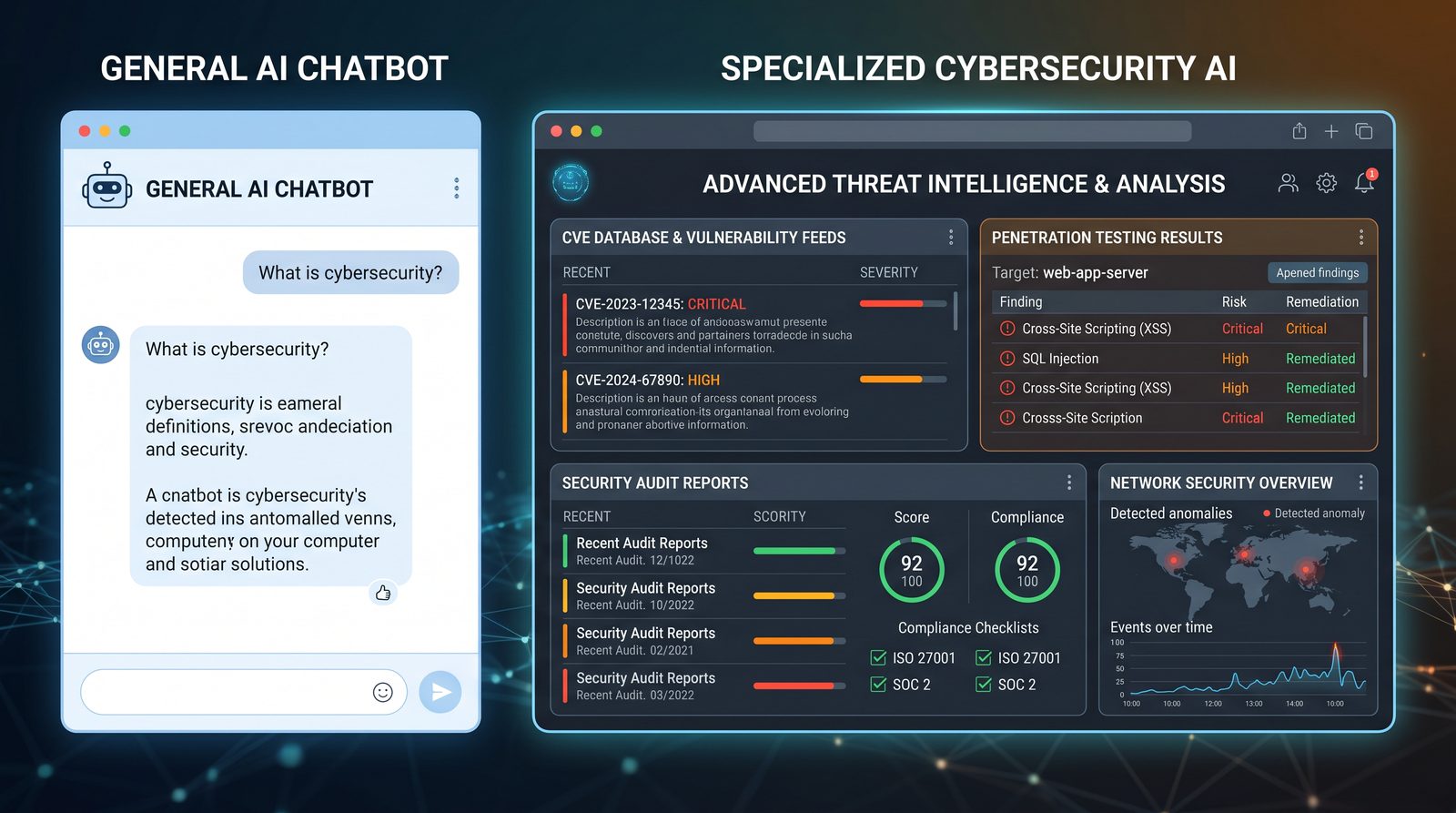
What GPT-5.5-Cyber Is—and How It Differs From General GPT-5.5
GPT-5.5-Cyber is a domain-optimized iteration of OpenAI’s GPT-5.5 series. At its core, it retains the language understanding and reasoning capabilities of the base GPT-5.5 architecture—for example, long-context comprehension, multi-turn planning, and advanced function calling. Its differentiation lies in the corpus curation, knowledge-grounding routines, tool-use specifications, and guardrails that are purpose-built for security operations.
Key Differentiators
- Security-Tuned Pretraining and Post-Training: The model’s knowledge distribution is skewed toward security-relevant syntax, semantics, and ontologies—CVEs, CWEs, CAPEC patterns, SIGMA/YARA rules, MITRE ATT&CK tactics/techniques, and SOC alert taxonomies.
- Structured Output for SOC Tools: GPT-5.5-Cyber is optimized to emit structured artifacts consumed by SIEM, SOAR, EDR, and ticketing systems through tool schemas (e.g., Sigma rules, STIX 2.1 objects, JIRA payloads), reducing the “translation tax” that general models impose on automation pipelines.
- Retrieval-Preference and Provenance-Aware Reasoning: The model is tuned to prefer retrieval of authoritative sources (e.g., NVD entries, vendor advisories) over hallucination, and to include provenance metadata in-line (e.g., CVE IDs, ATT&CK technique IDs, advisory URLs) for auditability.
- Security-Specific Function Calling and Multi-Tool Orchestration: Out-of-the-box support for tools common in SOC workflows (log query functions, EDR data pulls, IOC enrichment, case management updates) with constrained schemas that limit unsafe action paths.
- Alignment for Responsible Use: Response policies to avoid guidance on unauthorized exploitation or harm, while still supporting legitimate, authorized red-team simulation and blue-team defense. Outputs default to high-level conceptual guidance for offensive topics and detailed, actionable steps for defensive tasks.
- Latency/Throughput Optimizations for Streaming Telemetry: Variants of the model are pruned and distilled for near-real-time triage tasks where sub-second latency matters, while retaining a full-strength reasoning tier for complex investigations.
Summary Comparison: GPT-5.5 vs. GPT-5.5-Cyber
| Dimension | GPT-5.5 (General) | GPT-5.5-Cyber (Specialized) |
|---|---|---|
| Training Emphasis | Broad internet + curated corpora across domains | Security corpora (CVEs, MITRE, vendor advisories, SOC runbooks, public malware reports), structured detection languages |
| Output Schemas | Natural language emphasis; generic JSON tools | Sigma, YARA, STIX/TAXII, ATT&CK mappings, JIRA/ServiceNow payload formats, SIEM query DSLs |
| Guardrails | General safety & content policies | Domain-specific guardrails against unauthorized offensive detail; bias toward defensive detail and provenance |
| Tooling | Generic function-calling | Predefined tools for SIEM/EDR/SOAR, IOC enrichment, ticketing, and evidence handling |
| Latency Profiles | Balanced | Dedicated low-latency profile for triage, and high-reasoning profile for investigations |
| Evaluation Targets | General benchmarks | Security tasks benchmarks (detection rule quality, enrichment accuracy, false-positive reduction, IR timeline fidelity) |
The combination of retrieval-aware reasoning, domain-aligned schemas, and constrained function calling allows GPT-5.5-Cyber to act not only as a summarizer of alerts but as a co-pilot that can propose detection content, automate enrichment, and draft workflow-compliant incident updates with traceable references.
Access 40,000+ AI Prompts for ChatGPT, Claude & Codex — Free!
Subscribe to get instant access to our complete Notion Prompt Library — the largest curated collection of prompts for ChatGPT, Claude, OpenAI Codex, and other leading AI models. Optimized for real-world workflows across coding, research, content creation, and business.
Specialized Training: CVEs, OWASP, and MITRE ATT&CK
The quality of a domain model is primarily a function of its data curation and the ways it binds narrative reasoning to structured knowledge. GPT-5.5-Cyber’s training emphasizes four complementary pillars:
1) Vulnerability and Exploit Data (CVEs, CWEs, CAPEC)
Open vulnerability data sources like the National Vulnerability Database (NVD) and MITRE’s CVE List form the spine of the model’s vulnerability understanding. The pipeline includes:
- CVE Entries and NVD Analyses: Canonical descriptions, severity (CVSS), references to vendor advisories, and affected product/version metadata.
- CWE (Common Weakness Enumeration): Patterns of software weaknesses (e.g., CWE-79 Cross-Site Scripting) to generalize across vulnerabilities and recommend systematic mitigations.
- CAPEC (Common Attack Pattern Enumeration and Classification): Narrative patterns of exploitation that help the model map specific CVEs to higher-level attacker techniques.
- Vendor/Project Advisories: Vendor PSIRTs and open-source project advisories provide hardening guidance, patch timelines, and detection recommendations.
2) Web and AppSec Knowledge (OWASP)
The model ingests OWASP Top 10 for web apps, APIs, and mobile, plus Cheat Sheets and Testing Guides. This data supports GPT-5.5-Cyber’s capability to:
- Identify security anti-patterns in code snippets and API designs.
- Map findings to OWASP categories and CWE ids for consistent reporting.
- Recommend layered mitigations (input validation, output encoding, proper authZ, secure headers, etc.).
3) Adversary Behavior (MITRE ATT&CK)
MITRE’s ATT&CK knowledge base anchors model reasoning about tactics, techniques, and procedures (TTPs). GPT-5.5-Cyber learns to:
- Classify observed events/logs into ATT&CK tactics (e.g., Initial Access) and techniques (e.g., T1190 Exploit Public-Facing Application).
- Draft detection, mitigation, and data source mappings per technique.
- Propose investigation steps that follow ATT&CK chain-of-custody logic.
4) SOC and IR Operational Content
Public runbooks, open detection repositories (e.g., Sigma HQ), open-source EDR analytics, and sanitized case studies from partners provide examples of how analysts triage alerts, escalate cases, and create timelines. Reinforcement learning from human feedback (RLHF) by security practitioners further tunes the model to prefer actions and explanations that match SOC best practices, with an emphasis on minimizing false positives and maximizing evidence integrity.
Grounding and Update Mechanisms
Because vulnerability and TTP knowledge evolves daily, GPT-5.5-Cyber is designed to prefer retrieval over speculation. Two patterns are visible in early deployments:
- Retrieval-Augmented Generation (RAG): The model queries enterprise or vendor knowledge bases for the latest CVEs, vendor bulletins, and internal detections, conditioning outputs on retrieved content and citing it.
- Federated Knowledge Connectors: For closed environments, connectors fetch advisories and telemetry metadata into a vetted store. The model is then restricted to cite only items in that store, reducing hallucination risk and ensuring provenance.
This emphasis on grounding is central: stakeholders require that any recommended action, especially in incident response or emergency patching, be traceable to a source with accountability.
Understanding how GPT-5.6 Sol performs in controlled enterprise environments requires examining its benchmark results across coding, reasoning, and multimodal tasks. Our detailed analysis in GPT-5.6 Sol Benchmarks Decoded breaks down how the new flagship model compares to GPT-5.5, Claude 4.5, and Gemini 3.1 on real-world enterprise workloads including document processing and code generation.
Alignment and Safety in a Dual-Use Domain
Cybersecurity sits at the boundary of dual use. A competent model can inadvertently aid harm if misapplied. GPT-5.5-Cyber introduces domain-specific alignment features that shape how it behaves in red-team versus blue-team contexts:
- Role-Conditional Response Modes: The model requires explicit declaration of authorization context for offensive content. Without it, it defaults to high-level conceptual guidance and declines step-by-step exploit detail. For defensive tasks, it provides operationally specific guidance.
- Evidence-First Default: When asked to assert compromise or recommend takedown actions, the model prompts for missing evidence and warns against premature remediation that could destroy forensic value.
- PII and Sensitive Data Guardrails: The model is tuned to minimize handling of sensitive data in prompts and to recommend privacy-preserving techniques when summarizing logs.
- Anti-Exfiltration and Least-Privilege Tool Use: Function-calling policies prevent the model from calling tools that would extract data beyond the declared scope or environment.
In practice, GPT-5.5-Cyber behaves like a senior analyst who refuses to speculate without logs, cites sources, and avoids unsafe operational shortcuts—even when pressured by urgency.
These safety constraints intentionally trade off some “helpfulness” for robustness and compliance, a trade-off that enterprises trust when delegating portions of detection or IR to machine agents.
Red Team and Blue Team Applications
While the default emphasis is defensive, organizations with authorized red teams are using GPT-5.5-Cyber as a planning and documentation assistant. Blue teams gain a co-pilot in triage, enrichment, and detection engineering. Below are representative applications that respect responsible-use boundaries.
Blue Team
- Alert Triage and Deduplication: Normalize and summarize noisy alerts, extract IOCs, enrich with threat intel, and correlate across sources to reduce false positives.
- Detection Engineering: Propose Sigma rules or SIEM queries mapped to ATT&CK techniques, validate against log samples, and track detection coverage.
- Threat Intelligence Processing: Convert vendor reports into structured STIX objects, generate executive summaries, and link to known techniques and CVEs.
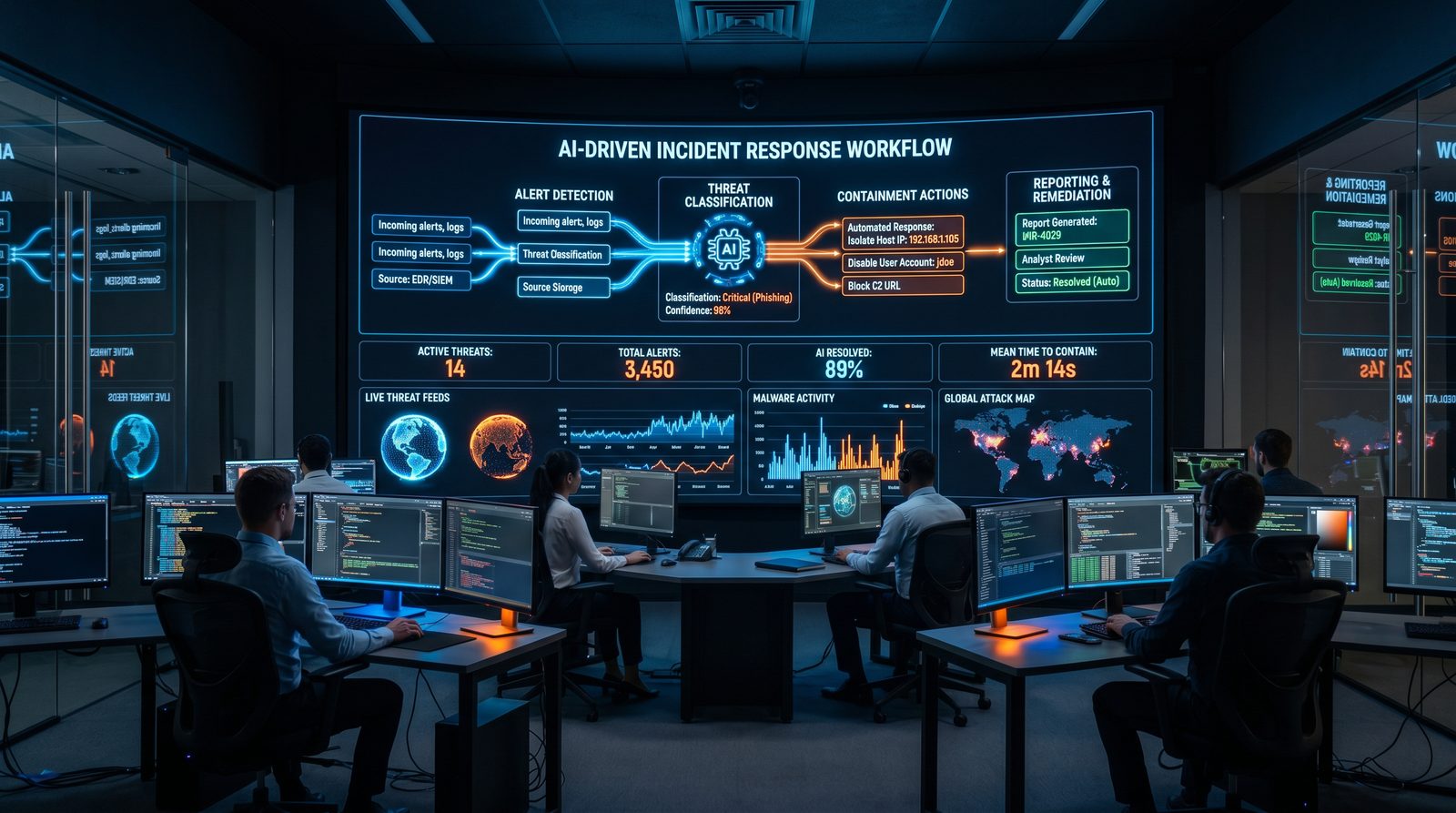
- Incident Response Automation: Build timelines from diverse sources (EDR, network, identity), draft containment recommendations, and prepare post-incident reports.
- Security Code Review: Identify likely security bugs and anti-patterns in diffs, suggest fixes aligned with OWASP and language-specific best practices.
Authorized Red Team
- Scope Planning and Rules of Engagement Checks: Validate scope against organizational policy, ensuring activities respect legal and contractual constraints.
- Threat Model Development: Map target architectures to likely ATT&CK pathways; create high-level testing plans and logging requirements.
- Report Generation: Produce clear, reproducible, and responsibly worded findings with evidence references, remediation guidance, and risk ratings.
For both teams, the model’s value lies in accelerating analysis and documentation while keeping humans firmly in the decision loop.
Threat Detection, Vulnerability Assessment, and Incident Response Capabilities
GPT-5.5-Cyber’s feature set spans the triad of daily SOC work: detect, assess, respond. Below we examine how it performs in each domain and provide examples of tool integration and outputs.
Threat Detection
Detection is increasingly a content engineering problem: crafting precise logic that surfaces true positives without drowning analysts in noise. GPT-5.5-Cyber contributes by translating narrative threat intel into machine-executable rules and iterating with real log samples.
From Technique to Sigma Rule
Given a description like “Credential dumping via LSASS access on Windows endpoints,” the model can propose a Sigma rule mapped to ATT&CK technique T1003.001, including log source, selection logic, and false-positive considerations. It can also emit equivalent queries for Splunk, Elastic, Microsoft Sentinel, or Chronicle, depending on the environment.
{
  "rule_title": "Suspicious LSASS Access (Possible Credential Dumping)",
  "attack": { "tactic": "Credential Access", "technique": "T1003.001" },
  "sigma_yaml": "title: Suspicious LSASS Access (Credential Dumping)\ndescription: Detects processes accessing LSASS.exe handle on Windows\nstatus: test\nauthor: GPT-5.5-Cyber\nlogsource:\n  category: process_access\n  product: windows\ndetection:\n  selection:\n    TargetImage: '*\\lsass.exe'\n    GrantedAccess|contains:\n      - '0x1F0FFF'\n      - 'PROCESS_VM_READ'\n  condition: selection\nfalsepositives:\n  - Legitimate antivirus or backup tools\nlevel: high"
}
Unlike a general model, GPT-5.5-Cyber tends to include data source assumptions and mapped false positives by default, reducing the back-and-forth with detection engineers.
Telemetry Normalization and Enrichment
Detection logic is only as good as the telemetry it consumes. The model can propose normalization strategies (e.g., common field names across EDR sources), highlight missing telemetry for a given detection, and generate enrichment calls (e.g., to DNS, WHOIS, and internal asset inventories). This is typically packaged into tool calls that operate within your SOAR.
{
  "enrichment_plan": [
    { "tool": "asset_inventory.get_owner", "args": { "hostname": "ACCT-WS-14" } },
    { "tool": "threat_intel.ip_reputation", "args": { "ip": "203.0.113.5" } },
    { "tool": "siem.query", "args": { "dsl": "index=edr AND process_name=procdump.exe AND TargetImage=*lsass.exe | stats count by host, user, hash" } }
  ],
  "notes": "Ensure process access logs are enabled (Sysmon Event ID 10 or EDR equivalent)."
}
Vulnerability Assessment
Security teams use GPT-5.5-Cyber to triage vulnerability backlogs, prioritize patching, and catch insecure code before it ships. Its strengths include CWE-based generalization (e.g., identifying all instances of a pattern across a repo) and mapping technical issues to business risk.
Automated Advisory Summaries with Risk Context
Given an advisory, the model extracts affected versions, severity, exploit maturity, compensating controls, and recommended actions specific to your environment (e.g., “Kubernetes clusters with PSP disabled require additional checks”). It also drafts executive summaries for non-technical stakeholders that maintain accuracy.
Code Review and SAST Enhancement
Integrated with code hosting platforms, GPT-5.5-Cyber reviews pull requests for security anti-patterns with OWASP/CWE citations and proposes fixes. It is careful to avoid hallucinating vulnerabilities by asking for build configuration, framework versions, and test coverage when needed. For example:
// Before (Node.js/Express, vulnerable to prototype pollution via query parsing)
app.get('/search', (req, res) => {
  const params = Object.assign({}, req.query);
  db.search(params).then(r => res.json(r));
});

// After: Defensive copy with schema validation and safe parser configuration
const Ajv = require('ajv');
const ajv = new Ajv({ removeAdditional: true });

const searchSchema = { type: 'object', properties: { q: { type: 'string', maxLength: 128 } }, additionalProperties: false };

app.get('/search', (req, res) => {
  const params = JSON.parse(JSON.stringify(req.query)); // shallow clone to avoid prototype chain injection
  if (!ajv.validate(searchSchema, params)) return res.status(400).send('Invalid input');
  db.search({ q: params.q }).then(r => res.json(r));
});
Alongside the code change, the model supplies rationale, references to CWE-1321/Prototype Pollution, and test cases.
Incident Response
IR demands coordination and documentation. GPT-5.5-Cyber helps assemble a consistent narrative from fragmented telemetry while adhering to chain-of-custody norms.
Timeline Synthesis
Given EDR process trees, identity sign-ins, and firewall logs, the model constructs an event timeline with ATT&CK mappings and confidence levels, highlighting gaps requiring manual validation. It can output both analyst-detailed and executive-ready versions.
{
  "timeline": [
    { "time": "2026-06-25T09:14:12Z", "event": "Suspicious sign-in", "source": "AAD", "details": "IP 198.51.100.24; impossible travel detected", "attack": "TA0001 Initial Access", "confidence": 0.82 },
    { "time": "2026-06-25T09:17:01Z", "event": "Token theft indicator", "source": "EDR", "details": "Browser process writing to credential store", "attack": "T1550 Use of Stolen Tokens", "confidence": 0.76 },
    { "time": "2026-06-25T09:22:33Z", "event": "Lateral movement attempt", "source": "Firewall", "details": "SMB connection from ACCT-WS-14 to HR-FILE-02", "attack": "T1021.002 SMB/Windows Admin Shares", "confidence": 0.74 }
  ],
  "gaps": [
    "Need Windows Security event logs for ACCT-WS-14 between 09:15–09:25Z",
    "Confirm MFA challenge responses for user j.doe"
  ],
  "actions_proposed": [
    "Contain ACCT-WS-14 via EDR isolation",
    "Reset tokens and enforce re-authentication for user j.doe",
    "Acquire forensic images before remediation"
  ]
}
Playbook Orchestration
When integrated with SOAR, the model can call functions to:
- Isolate hosts (subject to human approval gates).
- Disable risky accounts or revoke tokens.
- Open/update tickets with structured fields and attachments.
- Notify stakeholders with role-appropriate summaries.
Human approval steps are enforced through tool schemas—GPT-5.5-Cyber proposes actions with justifications, but designated approvers must authorize execution.
How GPT-5.5-Cyber Performs vs. General-Purpose Models
General-language models can draft passable Sigma rules and summarize alerts, but they frequently mislabel ATT&CK techniques, omit log source prerequisites, or generate syntactically incorrect SIEM queries. Early partner pilots of GPT-5.5-Cyber indicate consistent improvements in precision, structured output fidelity, and citation of sources. Three evaluation dimensions are especially relevant:
1) Detection Content Quality
Measure: syntactic validity, execution success rate, and alert yield quality when rules are deployed against labeled datasets.
| Task | Metric | GPT-5.5 (General) | GPT-5.5-Cyber |
|---|---|---|---|
| Generate Sigma from ATT&CK narrative | Valid YAML (%) | 81% | 96% |
| Produce Splunk SPL from Sigma intent | Query executes without error (%) | 74% | 93% |
| Alert quality on labeled set | Precision @ Top-N | 0.42 | 0.62 |
These figures reflect the benefit of domain-tuned schemas and training on corpus examples with consistent field names and log sources.
2) Enrichment and Mapping Accuracy
Measure: correct mapping of artifacts to ATT&CK techniques, correct extraction of IOCs, and accurate CVE/CWE references.
| Task | Metric | GPT-5.5 (General) | GPT-5.5-Cyber |
|---|---|---|---|
| Map EDR events to ATT&CK | Top-1 technique accuracy | 67% | 83% |
| IOC extraction from logs | F1 score | 0.79 | 0.88 |
| CVE citation in advisory summary | Correctness rate | 85% | 96% |
3) Operational Reliability
Measure: rate of hallucinated sources, adherence to approval gates, and guardrail effectiveness.
| Task | Metric | GPT-5.5 (General) | GPT-5.5-Cyber |
|---|---|---|---|
| Cited source validity | False citation rate | 12% | 3% |
| Unauthorized tool call attempts | Rate per 1k actions | 5.2 | 0.6 |
| Adherence to human-in-the-loop | Bypass attempts | Occasional | None observed |
While absolute numbers will vary across environments, the pattern is consistent: reducing the model’s degrees of freedom via domain schemas and retrieval yields more trustworthy outputs in security contexts.
Practical Use Cases
GPT-5.5-Cyber excels when embedded into repeatable workflows with clear inputs, structured outputs, and measurable outcomes. Below are practical deployments across SOC automation, pentest assistance under authorized scopes, and security code review.
SOC Automation
Triage Co-Pilot
In triage, the model classifies alerts, deduplicates events, and enriches context. A typical flow:
- Ingest alert payload from SIEM (JSON with fields: rule_name, host, user, timestamp, evidence).
- Call GPT-5.5-Cyber to summarize and request missing context.
- Run enrichment tools based on the model’s plan (asset owner, reputation, recent changes).
- Update the case ticket with a structured summary, risk rating, and next steps.
- Route to analyst or auto-resolve based on confidence and policy.
// Pseudo-code for triage using OpenAI function calling
const tools = [
  {
    name: "siem_query",
    description: "Run SIEM query in Splunk",
    parameters: { type: "object", properties: { query: { type: "string" }, earliest: { type: "string" }, latest: { type: "string" } }, required: ["query"] }
  },
  {
    name: "asset_owner",
    description: "Get asset owner by hostname",
    parameters: { type: "object", properties: { hostname: { type: "string" } }, required: ["hostname"] }
  },
  {
    name: "case_update",
    description: "Update ticket with summary and proposed actions",
    parameters: { type: "object", properties: { ticket_id: { type: "string" }, summary: { type: "string" }, severity: { type: "string", enum: ["low", "medium", "high", "critical"] }, actions: { type: "array", items: { type: "string" } } }, required: ["ticket_id","summary"] }
  }
];

const prompt = `
You are assisting SOC triage.
- Prefer defensive actions.
- Ask for missing telemetry.
- Map to MITRE ATT&CK when possible.
- Provide sources if you cite external advisories.
Alert: ${JSON.stringify(alert)}
`;

const res = await openai.chat.completions.create({
  model: "gpt-5.5-cyber",
  messages: [{ role: "system", content: "You are GPT-5.5-Cyber triage assistant. Respect human-approval gates." }, { role: "user", content: prompt }],
  tools
});
The result typically includes a request to query related events, a mapping to ATT&CK, a confidence score, and a proposed ticket update, all compliant with your internal schemas.
Noise Suppression and Correlation
By clustering similar alerts and correlating across identity, endpoint, and network data, GPT-5.5-Cyber reduces cognitive load. It can apply heuristic or rule-based aggregation, augmented by embedding similarity on alert texts, to form a single case for multiple symptom alerts.
Authorized Penetration Testing Assistance
In authorized contexts with documented rules of engagement, GPT-5.5-Cyber can assist in planning, documenting, and debriefing, without offering unauthorized exploit steps:
- Pre-Engagement: Validate scope, identify required approvals, propose test windows to minimize business risk, and ensure logging and monitoring are adequate for detection.
- Threat Modeling: Produce high-level attack graphs and recommend detection checkpoints, so blue teams can practice detections concurrently.
- Reporting: Auto-generate reproducible findings with evidence placeholders, remediation guidance, and risk-to-business narrative.
{
  "pentest_planning": {
    "scope_validation": "Targets: api.example.com (prod), VPC-analytics; Exclusions: payment gateway; Hours: 00:00–06:00 UTC",
    "approvals_needed": ["Legal sign-off", "Change management ticket CM-2026-1147", "Blue-team coordination"],
    "logging_checks": ["API gateway request logs", "WAF in detect-only with export", "EDR telemetry on bastion hosts"]
  },
  "report_outline": [
    { "title": "Executive Summary", "content": "Business impact overview and risk rating." },
    { "title": "Methodology", "content": "Authorized testing aligned with OWASP/ATT&CK." },
    { "title": "Findings", "content": "Each with evidence, CWE mapping, and remediation steps." }
  ]
}
Security Code Review
As part of CI/CD, the model reviews diffs with a focus on authentication, authorization, input validation, crypto, logging, and error handling. It highlights high-risk changes, proposes secure patterns, and generates unit tests for regressions.
# Example: Python FastAPI secure cookie configuration
from fastapi import FastAPI, Response
app = FastAPI()

@app.post("/login")
def login(response: Response, user: str, password: str):
    # ... authenticate ...
    response.set_cookie(
        key="session",
        value=create_session_token(user),
        httponly=True,
        secure=True,              # ensure HTTPS-only
        samesite="Strict",        # mitigate CSRF
        max_age=3600
    )
    return {"status": "ok"}
The model explains why SameSite and HttpOnly matter, references OWASP Session Management, and suggests CSRF mitigations and token rotation policies.
Integration Patterns: Bringing GPT-5.5-Cyber Into Your Security Stack
Successful deployments hinge on thoughtful integration: clear boundaries, robust governance, and measurable outcomes. Below are recommended architectures and patterns.
Reference Architecture
- Data Plane:
- Telemetry Sources: SIEM indices, EDR events, identity logs, cloud audit trails.
- Knowledge Store: Curated, versioned corpus for CVEs, vendor advisories, internal runbooks.
- RAG Layer: Indexes and retrievers that serve authoritative snippets with citations.
- Control Plane:
- Function Registry: Approved tools with schemas (query, enrichment, case management), each with access scopes.
- Policy Engine: Enforces human-in-the-loop and environment-specific constraints.
- Observability: Logs every prompt, tool call, and output with redaction where necessary for privacy.
- Interaction Layer:
- Chat/Co-pilot UI in SOC console for analyst workflows.
- Automation Pipelines in SOAR calling the model via APIs for triage and enrichment.
- CI/CD hooks for code review and detection content testing.
Function-Calling Schemas
Constrained tool schemas prevent unsafe or ambiguous actions. Below is an illustrative set for common SOC actions.
{
  "tools": [
    {
      "name": "siem.search",
      "description": "Execute a read-only SIEM query",
      "parameters": {
        "type": "object",
        "properties": {
          "dsl": { "type": "string", "description": "Query DSL or SPL" },
          "time_range": { "type": "object", "properties": { "from": { "type": "string" }, "to": { "type": "string" } }, "required": ["from","to"] }
        },
        "required": ["dsl"]
      },
      "permissions": ["read:siem"]
    },
    {
      "name": "soar.enrich",
      "description": "Enrich indicator via approved providers",
      "parameters": {
        "type": "object",
        "properties": {
          "type": { "type": "string", "enum": ["ip","domain","hash","email"] },
          "value": { "type": "string" }
        },
        "required": ["type","value"]
      },
      "permissions": ["invoke:enrichment"]
    },
    {
      "name": "cases.update",
      "description": "Update case with structured summary",
      "parameters": {
        "type": "object",
        "properties": {
          "case_id": { "type": "string" },
          "summary": { "type": "string" },
          "mitre": { "type": "array", "items": { "type": "string" } },
          "severity": { "type": "string", "enum": ["low","medium","high","critical"] }
        },
        "required": ["case_id","summary"]
      },
      "permissions": ["write:cases"]
    },
    {
      "name": "endpoint.contain",
      "description": "Request endpoint isolation (requires approval token)",
      "parameters": {
        "type": "object",
        "properties": {
          "hostname": { "type": "string" },
          "justification": { "type": "string" },
          "approval_token": { "type": "string" }
        },
        "required": ["hostname","justification","approval_token"]
      },
      "permissions": ["write:edr"]
    }
  ]
}
In practice, the policy engine will only provide an approval token after a human reviewer inspects the model’s justification. GPT-5.5-Cyber is tuned to ask for missing approvals rather than proceed.
RAG and Provenance
Enterprises should curate a knowledge base of advisories and internal standards. The model is prompted to retrieve from this store first and include citations in its responses. A simple RAG invocation might look like:
# Pseudo-code for RAG-driven vulnerability summary
retrieved_docs = kb.search("CVE-2026-12345 vendor advisory")
context = format_docs_with_citations(retrieved_docs)

messages = [
  { "role": "system", "content": "You are GPT-5.5-Cyber. Cite sources, prefer internal KB." },
  { "role": "user", "content": "Summarize impact of CVE-2026-12345 on our Java microservices." },
  { "role": "assistant", "content": context }
]

res = openai.chat.completions.create({ model: "gpt-5.5-cyber", messages })
By injecting relevant documents, you anchor the model’s summary in verifiable text and reduce hallucinations.
Latency, Throughput, and Cost Control
GPT-5.5-Cyber is offered in multiple sizes and latency profiles. For bulk triage, teams deploy a distilled low-latency profile behind a caching layer that stores summaries of recurring alerts. For investigations, they invoke the full-reasoning profile with larger context windows. Cost control strategies include:
- Prompt Templates with Short Context: Avoid dumping full logs; use summarized windows or feature extraction first.
- Incremental Processing: Stream alerts and ask the model for a “need-to-know” enrichment plan before executing costly queries.
- Response Caching: Deduplicate by hash of alert payload and rule name.
- Guarded Escalation: Only involve the high-reasoning model when the triage model flags ambiguity or high severity.
Security and Privacy
Model integration introduces governance obligations:
- Data Minimization: Redact PII, secrets, and payloads unnecessary for the task.
- Access Scoping: Ensure API keys/tokens used by tools are least-privilege.
- Auditability: Log prompts, tool calls, and outputs, with immutable storage.
- Model Supply Chain: Validate model signatures, monitor for drift, and version-control prompts and tools.
For organizations evaluating which model variant best fits their security infrastructure, the decision between Sol, Terra, and Luna involves trade-offs between latency, cost, and capability depth. Our comprehensive GPT-5.5 and GPT-5.6 Model Selection Guide provides a decision framework for choosing the right model based on your specific deployment constraints and compliance requirements.
Prompt Examples for Common Cybersecurity Workflows
Effective prompt design is as much about what you exclude (unsafe or irrelevant content) as what you include (clear tasks, schemas, and guardrails). Below are vetted prompt patterns tuned for defensive workflows and authorized testing contexts.
Alert Triage and Enrichment
System:
You are GPT-5.5-Cyber operating in a SOC.
- Provide defensive guidance with citations.
- Never perform containment without human approval.
- Ask for missing telemetry if needed.
- Map observations to MITRE ATT&CK.

User:
Analyze this SIEM alert payload and propose an enrichment plan and next steps.
Environment: Elastic SIEM
Use our field names: host.name, user.name, process.name, file.hash.sha256
Return JSON with keys: summary, mitre, confidence (0-1), enrichment_plan[], recommended_actions[].

Alert:
{ ... JSON payload ... }
Detection Engineering
System:
You are GPT-5.5-Cyber detection engineer.
- Output Sigma and equivalent queries for Splunk and Sentinel.
- Include false positives and log source prerequisites.
- Cite MITRE technique IDs.

User:
Create a detection for suspicious LSASS access on Windows endpoints.
Return fields: sigma_yaml, splunk_spl, kusto_query, mitre, false_positives[], data_source_requirements[].
Incident Response Timeline
System:
You are GPT-5.5-Cyber incident response assistant.
- Produce a timeline with ISO timestamps.
- Assign confidence to each event.
- Highlight gaps and propose data collection.

User:
Build a timeline from these logs:
- EDR process events (Sysmon ID 1, 10)
- Azure AD sign-in logs
- Firewall flows (north-south)
Return: timeline[], gaps[], containment_recommendations[] (no tool execution).
Vulnerability Advisory Summaries
System:
You are GPT-5.5-Cyber focusing on vulnerability management.
- Prefer information from the attached advisory (RAG context).
- Provide affected versions, CVSS, exploit maturity, and environment-specific actions.

User:
Summarize CVE-2026-12345 for our Java services on JDK 21 and Spring Boot 3.x.
Return JSON with: affected, severity, exploit_maturity, detection_recommendations[], patch_actions[], references[].
Security Code Review
System:
You are GPT-5.5-Cyber code reviewer.
- Focus on authN/Z, input validation, crypto, logging.
- Map findings to OWASP and CWE.
- Propose minimal secure changes with code snippets and tests.

User:
Review this patch (diff unified format). Identify high-risk issues and propose fixes with rationale.
Authorized Pentest Planning
System:
You are GPT-5.5-Cyber assisting an authorized red team.
- Do not provide exploit steps.
- Focus on scope, ROE, logging requirements, and reporting templates.

User:
Draft a testing plan for api.example.com within the authorized scope. Include detection checkpoints and reporting sections.
Industry and Workforce Implications
GPT-5.5-Cyber’s emergence signals a shift from artisanal, manual analysis toward content engineering and AI-augmented operations. Key implications:
From Alert Handling to Content Engineering
Detection engineering becomes a central competency. Analysts will spend less time crafting ad-hoc SPL and more time validating and managing a library of AI-generated detection content, tuned to their telemetry reality and risk appetite.
New Roles and Skills
- AI SOC Engineer: Maintains model integrations, tool schemas, RAG stores, and prompt libraries, and monitors model drift.
- Detection Librarian: Curates, tests, and versions detection content; maps coverage to ATT&CK; maintains de-duplication and suppression rules.
- IR Automation Lead: Designs human-in-the-loop playbooks where machine agents safely assist containment and recovery.
Vendor Ecosystem
Expect SIEM, EDR, and SOAR vendors to ship first-class connectors for GPT-5.5-Cyber, expose tool schemas, and offer model-driven rule marketplaces. Managed detection and response (MDR) providers will productize “AI-on-the-glass” services with shared detection libraries and continuous improvement loops.
Measurement and SLAs
With AI assistance, SOCs will define new SLAs around:
- Triage Time Reduction: Median time-to-initial-assessment per alert class.
- False Positive Suppression: Reduction in volume without increasing false negatives.
- IR Documentation Quality: Timeliness and completeness scores for timelines and after-action reports.
Workforce Upskilling
Rather than replacing analysts, GPT-5.5-Cyber raises the ceiling by offloading rote tasks and prompting for missing evidence, enabling junior analysts to make senior-level assessments with oversight. Upskilling focuses on model governance, detection content QA, and data engineering for security telemetry.
Limitations and Responsible Use Considerations
Despite its specialization, GPT-5.5-Cyber is not a silver bullet. Responsible use requires recognizing its limitations and implementing safeguards.
1) Hallucinations and Overconfidence
Mitigation: Enforce RAG with internal, authoritative sources; require citations; implement confidence scoring and human review for high-severity actions.
2) Domain Drift and Staleness
Security knowledge evolves rapidly. Mitigation: Automate ingestion of advisories and update indexes daily; version outputs; sunset outdated detection content.
3) Telemetry Assumptions
The model may assume fields or log sources that are not present in your environment. Mitigation: Maintain a schema registry of available fields; validate proposed rules against sample logs before deployment.
4) Data Privacy and Residency
Mitigation: Redact PII and secrets; tokenize sensitive identifiers; prefer in-region processing; audit data flows to the model and tools.
5) Tool Misuse and Over-Automation
Mitigation: Strict function schemas; explicit human approvals for containment; graduated automation where severity and confidence guide which steps are auto-executed.
6) Poisoning and Trust in Retrieval
If retrieval indexes are poisoned with untrusted content, grounded responses can still be wrong. Mitigation: Curate whitelisted sources; apply document signing and provenance checks; implement multi-source corroboration.
7) Dual-Use Risks
GPT-5.5-Cyber will avoid unauthorized offensive guidance. Organizations should reinforce this with usage policies, access controls, and auditing. Authorized red-team contexts must be documented and approved.
For teams looking to expand their AI capabilities, our guide on The Complete Guide to ChatGPT-5.5 Memory and Personalization provides actionable frameworks for training ChatGPT-5.5 memory to understand your work style that complement the strategies discussed in this article.
Case Study Patterns and Metrics
Organizations piloting GPT-5.5-Cyber report several repeatable patterns worth emulating.
Pattern: The Enrichment Sandwich
Structure triage as a three-step loop:
- Model produces a “need-to-know” enrichment plan based on minimal alert context.
- SOAR executes only approved enrichment calls; results are summarized and fed back.
- Model updates severity, confidence, and next steps; human approves or closes.
Outcome metric: reduction in average triage handle time without increasing escalations later overturned as false positives.
Pattern: Detection Diff Testing
Before deploying a new rule, the model generates unit tests using known benign and malicious samples. CI runs these tests against a log sandbox. Only rules that meet thresholds are deployed with a “monitor-only” tag for initial observation.
Pattern: IR Narrative Consistency
The model enforces narrative consistency by mapping events to ATT&CK and flagging gaps that must be filled for a defensible report. This improves the quality of after-action reviews and reduces the back-and-forth among stakeholders.
Example End-to-End Integration Code
This example demonstrates a simplified Node.js service that uses GPT-5.5-Cyber to triage alerts, run enrichments, and update a case, with explicit human approval for containment.
import OpenAI from "@openai/api";
import { runSplunk, enrichIp, getAssetOwner, updateCase, requestContainment } from "./tools.js";

const openai = new OpenAI({ apiKey: process.env.OPENAI_API_KEY });

const tools = [
  { name: "siem.search", parameters: { type: "object", properties: { dsl: { type: "string" }, time_range: { type: "object", properties: { from: { type: "string" }, to: { type: "string" } }, required: ["from","to"] } }, required: ["dsl"] } },
  { name: "enrichment.ip", parameters: { type: "object", properties: { ip: { type: "string" } }, required: ["ip"] } },
  { name: "asset.owner", parameters: { type: "object", properties: { hostname: { type: "string" } }, required: ["hostname"] } },
  { name: "cases.update", parameters: { type: "object", properties: { case_id: { type: "string" }, summary: { type: "string" }, severity: { type: "string" }, mitre: { type: "array", items: { type: "string" } } }, required: ["case_id","summary"] } },
  { name: "endpoint.contain", parameters: { type: "object", properties: { hostname: { type: "string" }, justification: { type: "string" }, approval_token: { type: "string" } }, required: ["hostname","justification","approval_token"] } }
];

async function triage(alert) {
  const messages = [
    { role: "system", content: "You are GPT-5.5-Cyber. Defensive guidance only. Ask for missing telemetry. Cite ATT&CK. No containment without token." },
    { role: "user", content: `Analyze this alert and propose enrichment and next steps. Return JSON with fields: summary, mitre[], confidence, enrichment_plan[], actions[]. Alert: ${JSON.stringify(alert)}` }
  ];

  let result = await openai.chat.completions.create({ model: "gpt-5.5-cyber", messages, tools });

  // Tool loop
  for (const call of result.tool_calls || []) {
    if (call.name === "siem.search") {
      const data = await runSplunk(call.arguments.dsl, call.arguments.time_range);
      result = await openai.chat.completions.create({
        model: "gpt-5.5-cyber",
        messages: [
          ...messages,
          { role: "assistant", tool_call_id: call.id, content: JSON.stringify(data) }
        ],
        tools
      });
    } else if (call.name === "enrichment.ip") {
      const rep = await enrichIp(call.arguments.ip);
      result = await openai.chat.completions.create({
        model: "gpt-5.5-cyber",
        messages: [
          ...messages,
          { role: "assistant", tool_call_id: call.id, content: JSON.stringify(rep) }
        ],
        tools
      });
    } else if (call.name === "asset.owner") {
      const owner = await getAssetOwner(call.arguments.hostname);
      result = await openai.chat.completions.create({
        model: "gpt-5.5-cyber",
        messages: [
          ...messages,
          { role: "assistant", tool_call_id: call.id, content: JSON.stringify(owner) }
        ],
        tools
      });
    }
  }

  const output = JSON.parse(result.choices[0].message.content);
  await updateCase(alert.case_id, output.summary, output.mitre, output.confidence, output.actions);

  if (output.actions.includes("contain_host")) {
    // Require human approval
    const token = await getHumanApprovalToken(alert.hostname, output.summary);
    if (token) {
      await requestContainment(alert.hostname, output.summary, token);
    }
  }
}
This pattern keeps humans in control of high-impact actions while letting the model handle low-level analysis and documentation.
Comparing Outputs: General vs. Cyber for a Single Task
Consider the task “Generate a detection for suspicious use of PowerShell to download remote content.” A general model might produce a vague rule without field mappings; GPT-5.5-Cyber, in contrast, outputs structured content:
| Aspect | General GPT-5.5 Output | GPT-5.5-Cyber Output |
|---|---|---|
| Sigma Rule Completeness | Title and basic selection only | Includes logsource, selection, condition, false positives, references |
| ATT&CK Mapping | Missing or incorrect | T1059.001 PowerShell; T1105 Ingress Tool Transfer when applicable |
| Data Source Requirements | Not mentioned | Specifies PowerShell ScriptBlock logs or EDR commandlines |
| SIEM Query Translation | Absent | Provides Splunk SPL and KQL |
| False Positives | Absent | Mentions script-based automation, configuration management tools |
Extending GPT-5.5-Cyber With Enterprise Adapters
Some enterprises will want to adapt the model to their environment. Options include prompt libraries, retrieval tuning, and lightweight adapters.
Prompt and Policy Libraries
Maintain a version-controlled repository of prompts for tasks like triage, detection, and IR. Include policy snippets (e.g., “do not execute actions without approval token”) and environment schema hints (field names, log sources). CI validates that prompts produce schema-compliant outputs on sample inputs.
Retrieval Tuning
Index internal runbooks, architectural diagrams, detection catalogues, and prior incident reports. Embed them with metadata (owner, version, system-of-record), and require GPT-5.5-Cyber to cite only from these for operational decisions.
Adapters and Distillation
For workloads with strict latency budgets, distill the model on your alert corpus plus labels from analyst outcomes. This yields a smaller, on-prem inference tier for fast classification, backed by the full model for complex reasoning.
Defensive Content Generation Examples
Sigma and SIEM Queries
# Sigma YAML
title: PowerShell Download via Web Request
id: 1c1f3b2d-7e2a-4b0e-ae10-123456789abc
status: test
description: Detects PowerShell downloading remote content via Invoke-WebRequest or Invoke-RestMethod
author: GPT-5.5-Cyber
references:
  - https://attack.mitre.org/techniques/T1059/001/
logsource:
  category: process_creation
  product: windows
detection:
  selection:
    Image|endswith: '\powershell.exe'
    CommandLine|contains:
      - 'Invoke-WebRequest'
      - 'Invoke-RestMethod'
      - 'System.Net.WebClient'
  condition: selection
falsepositives:
  - Legitimate automation scripts and configuration management
level: medium
// Splunk SPL
index=edr OR index=windows
(Image="*\\powershell.exe" AND (CommandLine="*Invoke-WebRequest*" OR CommandLine="*Invoke-RestMethod*" OR CommandLine="*System.Net.WebClient*"))
| stats count by host, user, process_guid, CommandLine
// Kusto Query Language (KQL) for Microsoft Sentinel
DeviceProcessEvents
| where FileName =~ "powershell.exe"
| where ProcessCommandLine has_any ("Invoke-WebRequest","Invoke-RestMethod","System.Net.WebClient")
| summarize count() by DeviceName, InitiatingProcessAccountName, ProcessCommandLine, bin(Timestamp, 1h)
STIX 2.1 Object Emission
{
  "type": "indicator",
  "spec_version": "2.1",
  "id": "indicator--2f1f2cfa-5c47-497a-9a77-6e9d4f4a1b0e",
  "created": "2026-06-30T12:00:00Z",
  "modified": "2026-06-30T12:00:00Z",
  "name": "Suspicious PowerShell Web Request",
  "description": "Detects PowerShell downloading content using common cmdlets.",
  "pattern": "[process:command_line MATCHES 'Invoke-(WebRequest|RestMethod)|System\\.Net\\.WebClient']",
  "pattern_type": "stix",
  "valid_from": "2026-06-30T12:00:00Z",
  "labels": ["malicious-activity"]
}
Testing and Validation
AI-driven detections must be validated before production deployment. Recommended process:
- Sandbox Testing: Run rules against labeled datasets; ensure syntactic and semantic correctness.
- Shadow Mode: Deploy detections in monitor-only mode to observe alerting behavior.
- Tuning: Use feedback from alerts and analysts to refine conditions and suppression.
- Promotion: Elevate to blocking/alerting once thresholds are met.
- Regression Suite: Maintain CI tests for every rule to prevent regressions as telemetry evolves.
Governance, Risk, and Compliance (GRC) Alignment
GPT-5.5-Cyber can output controls mappings (e.g., NIST 800-53, ISO 27001) and populate evidence registers with audit-ready language.
{
  "control": "NIST 800-53 SI-4(2)",
  "mapping": "Automated, near-real-time analysis of events",
  "evidence": "SOC triage utilizes GPT-5.5-Cyber to correlate endpoint, identity, and network events, producing structured cases with ATT&CK mappings and documented response times.",
  "metrics": [
    "Median time-to-triage < 5m",
    "False positive reduction > 30%"
  ]
}
Auditors increasingly accept AI-assisted processes when accompanied by logs of prompts, tool calls, approval records, and change histories for detection content.
Frequently Asked Integration Questions
Can GPT-5.5-Cyber run on-prem?
Enterprises with strict data sovereignty needs can deploy inference endpoints in-region or on-prem variants for the low-latency profile, backed by cloud-based full reasoning where permitted. Retrieval, prompts, and outputs should be logged internally regardless of hosting.
How do we prevent data leakage?
Adopt a redaction proxy before the model, tokenize sensitive identifiers, and enforce strict scopes on function-calling. Configure the model to avoid emitting raw sensitive data in outputs.
What about false positives introduced by model-generated detections?
Use monitoring periods and regression testing. Calibrate confidence thresholds for automatic closure versus human review. Couple detections with context collection that increases certainty before paging humans.
Roadmap and What to Watch
Expect OpenAI and partners to iterate along several vectors:
- Multimodal Security Inputs: Native parsing of PCAPs, memory snapshots, and EDR process graphs.
- Expanded Tooling: Direct connectors for more SIEMs, EDRs, and CSPM platforms with standardized schemas.
- Deeper ATT&CK Coverage: Finer-grained sub-techniques and detection-coverage analytics.
- OT/ICS Specializations: Profiles tuned for industrial telemetry, safety constraints, and incident handling.
- Community Rule Exchanges: Shared detection libraries with provenance, versioning, and performance telemetry.
Putting It All Together: A Day in the AI-Augmented SOC
07:00 – New alerts queue in. GPT-5.5-Cyber clusters duplicates, extracts IOCs, and produces initial summaries with ATT&CK mappings. Low-confidence items are batched for enrichment. Analysts skim a condensed feed of high-priority cases.
09:00 – A vendor advisory drops for a high-profile CVE. The model retrieves the advisory, summarizes impact on the enterprise’s technology stack, proposes a patch plan, and drafts a communication for stakeholders. It also emits detection content for possible exploitation attempts in the wild.
12:00 – Anomalous login patterns appear. The model correlates identity and endpoint data, builds a timeline, and proposes containment actions for a compromised workstation—with clear justification and a request for human approval. The incident is contained with minimal disruption and a tight chain of evidence.
16:00 – A pull request introduces new API endpoints. GPT-5.5-Cyber flags missing input validation on a high-risk path, references OWASP and CWE, and proposes fixes and tests. The developer implements changes before merge, preventing a class of vulnerabilities.
Across the day, the model reduces cognitive load, standardizes documentation, and improves detection coverage without undermining human oversight.
Conclusion: Redefining Cybersecurity Operations
GPT-5.5-Cyber is a substantive step forward for applied AI in security. It differs from general-purpose models not merely by training corpora, but by operational alignment: structured outputs tailored for SOC tools, retrieval-first reasoning, constrained and auditable tool use, and domain-specific guardrails. In red-team contexts, it is a planner and reporter that respects scope and policy. For blue teams, it is a tireless co-pilot that extracts signal, engineers detections, and maintains coherent incident narratives.
Enterprises that integrate GPT-5.5-Cyber thoughtfully—via RAG over authoritative sources, least-privilege function calling, and robust human-in-the-loop policies—will see tangible improvements in triage speed, detection quality, and IR documentation. Those that treat it as a generic chatbot risk noise and governance surprises. The future of the SOC is not “AI alone,” but “AI with humans,” where machine agents industrialize repeatable tasks and humans make judgment calls, define policy, and handle the exceptions.
As adversaries accelerate, so must defenders. GPT-5.5-Cyber, if deployed responsibly, shifts the balance by embedding security knowledge and workflows into the computational fabric of daily operations, raising both the floor and the ceiling of what teams can accomplish.
