
The Evolution of AI Agents: From Chatbots to Autonomous Systems in 2026
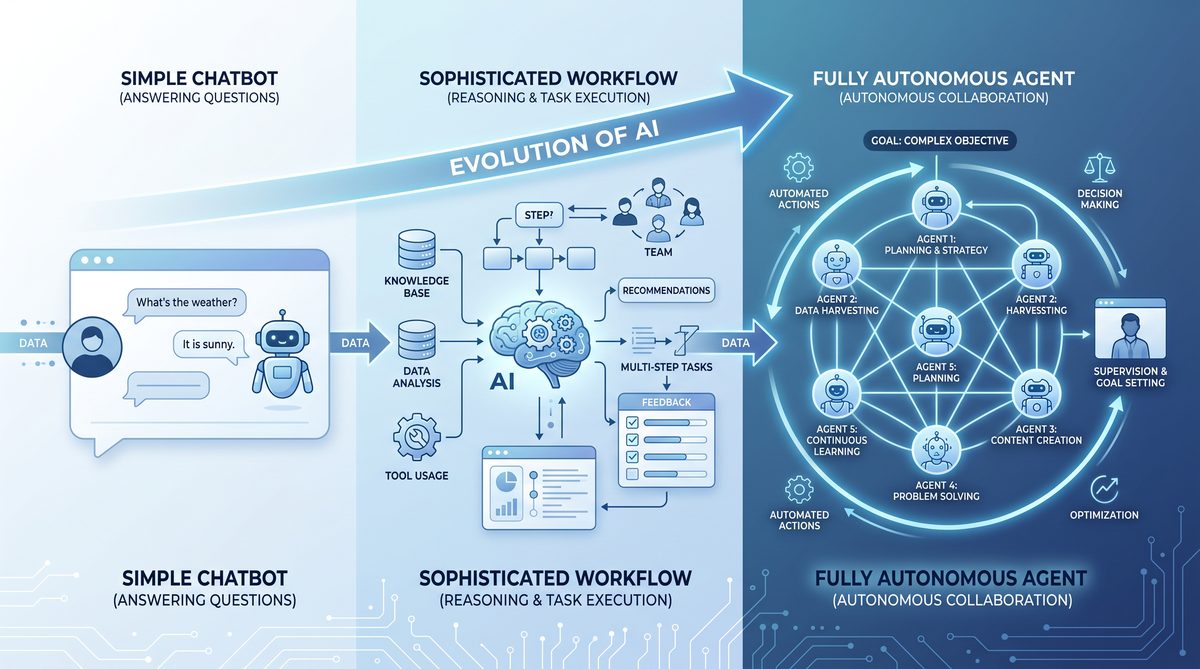
The landscape of artificial intelligence (AI) agents has undergone a remarkable transformation since their inception. From the rudimentary conversational bots of the 1960s to today’s complex autonomous systems capable of managing multi-step workflows, AI agents have evolved into indispensable components of modern technology ecosystems. The year 2026 marks a pivotal moment in this evolution, largely due to technological breakthroughs embodied in advanced models such as Claude Opus 4.7 and OpenAI Codex. These systems transcend traditional chatbot functionality, enabling autonomous decision-making, cross-modal interaction, and seamless orchestration of complex tasks.
This comprehensive article delves into the technical progression and paradigm shifts in AI agents, charting their journey from scripted conversational interfaces to multifaceted autonomous systems. We explore foundational architectures, innovations enabling agentic behavior, real-world applications, and the ethical considerations that underpin the deployment of autonomous AI. By analyzing transformative models like Claude Opus 4.7 and OpenAI Codex, readers will gain insights into the future trajectory of AI agents, their potential, and the challenges they present in the era of agentic AI.
1. The Early Era of AI Agents: Chatbots and Conversational Interfaces
1.1 Origins and Milestones
The genesis of AI agents traces back to pioneering systems in the mid-20th century, where early chatbots attempted human-like interaction using rigid, rule-based logic. ELIZA (1966), developed by Joseph Weizenbaum at MIT, is widely regarded as the first chatbot. ELIZA simulated a Rogerian psychotherapist by parsing input text and generating templated responses based on keyword-matching techniques. While ELIZA showcased the potential for human-computer dialogue, its underlying architecture was essentially a pattern-matching engine lacking true understanding.
Following ELIZA, ALICE (Artificial Linguistic Internet Computer Entity), developed in the 1990s by Richard Wallace, improved conversational capabilities through the use of AIML (Artificial Intelligence Markup Language), enabling more extensive rule sets. However, both ELIZA and ALICE represented what is now called “narrow AI,” with static programming restricting adaptability to unanticipated inputs.
The 2010s witnessed a significant shift: chatbots integrated statistical machine learning methods that allowed agents to learn patterns from large corpora rather than depending exclusively on handcrafted rules. Early deployed virtual assistants such as Apple’s Siri (launched 2011) and Amazon’s Alexa (2014) leveraged speech recognition and natural language understanding (NLU) modules to handle domain-specific requests, predominantly executing single-turn dialogues. These early chatbots automated rudimentary tasks like setting reminders or fetching weather updates but were constrained by limited context-awareness and shallow task complexity.
1.2 From Text-Based to Context-Aware Agents
The advent of deep learning precipitated a new wave of AI breakthroughs, particularly through the introduction of transformer architectures (Vaswani et al., 2017). Models like OpenAI’s GPT-2 and GPT-3 demonstrated unprecedented language generation abilities, moving beyond scripted responses to coherent and contextually relevant text outputs.
Transformers enabled neural networks to capture long-range dependencies in text by employing self-attention mechanisms, enhancing context retention over multiple conversational turns. For example:
- GPT-3: With 175 billion parameters, GPT-3 leveraged few-shot learning, generating varied, human-like text, enabling chatbots to engage in more dynamic conversations.
- Google Meena: Developed to create more natural and diverse dialogues by optimizing perplexity and sensitivity to conversational context.
Context retention was bolstered by techniques such as memory networks and token-level attention over previous dialogue history. Personalization also advanced, empowering agents to adapt responses based on user profiles and past interactions. Despite these improvements, text-based agents still operated largely reactively, with limited proactive decision-making or autonomy.
1.3 Challenges and Constraints
Despite the remarkable progress, several core limitations persisted with early AI agents:
- Single-turn vs Multi-turn Dialogue: Early models excelled in short exchanges but often failed to maintain coherent multi-turn conversations, resulting in context loss or irrelevant replies.
- Lack of Agency: Chatbots were primarily reactive, lacking the capability to plan or execute multi-step workflows autonomously beyond simple scripted sequences.
- Hallucination and Reliability Issues: Language models occasionally generated plausible but factually incorrect or nonsensical information, undermining user trust.
- Task Narrowness: Early agents were tailored for specific domains or conversational purposes, lacking generalizability and deep understanding across multiple contexts.
The limitations underscored the necessity for a paradigm shift towards agentic AI systems, which would be capable of more autonomous, contextually aware, and multi-modal interactions.
2. Paradigm Shift: Emergence of Agentic AI Models
2.1 Defining Agentic AI: Beyond Conversation
The transition from conventional chatbots to agentic AI models marks a fundamental change in artificial intelligence agent capabilities. Agentic AI is characterized by autonomous decision-making, goal-oriented behavior, and the ability to plan and execute complex tasks without explicit human intervention at every step.
Unlike traditional chatbots—designed primarily to generate conversational responses—agentic AI models possess a sense of ‘agency’, allowing them to:
- Interpret user intentions and contextual cues to map requests into actionable plans.
- Decompose tasks into discrete steps and dynamically adjust execution strategies.
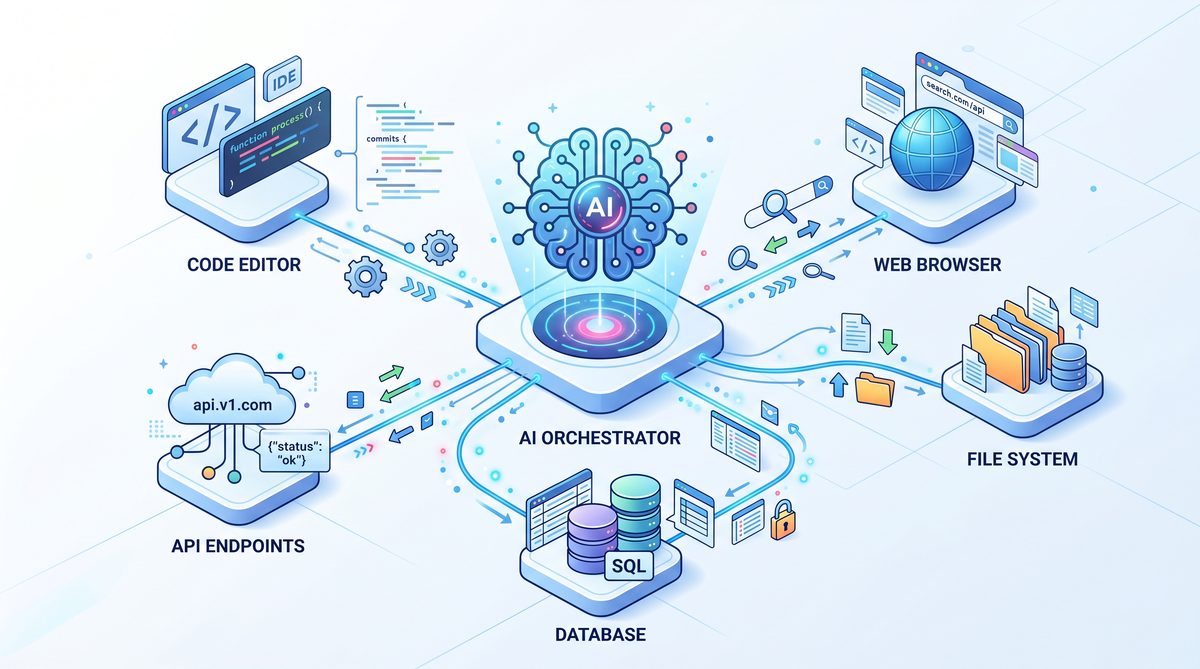
- Integrate with external tools, APIs, and data sources to gather information and perform functions across a broad ecosystem.
- Remember and update state information over extended interactions, enabling persistent knowledge of the task context.
This progression facilitates autonomous systems capable of performing end-to-end workflows, from analyzing documents to making decisions and taking actions, effectively blurring the line between AI assistants and AI agents.
2.2 Introduction to Key Models
Two groundbreaking models that epitomize the advancement to agentic AI in 2026 are Claude Opus 4.7 and OpenAI Codex. Each demonstrates unique architectural and functional innovations enabling unprecedented autonomous behavior.
| Model | Core Architecture | Primary Capabilities | Distinctive Features | Use Cases |
|---|---|---|---|---|
| Claude Opus 4.7 | Large-scale transformer with modular components | Natural language understanding, multi-step task planning, autonomous workflow execution | Advanced multi-modal integration, memory management, dynamic planning algorithms | Enterprise automation, customer support, complex decision-making |
| OpenAI Codex | Transformer-based code-centric LLM fine-tuned on extensive code repositories | Code generation, autonomous coding workflows, API orchestration | Deep semantic code understanding, interactive coding assistance, multi-step scripting | Software development, bug fixing, CI/CD automation |
Claude Opus 4.7 represents the latest iteration of Anthropic’s AI lineup, designed with an emphasis on ethical alignment and robust multi-modal inputs. Leveraging a modular architecture, it integrates various sensory modalities and external APIs to perform complex tasks that span multiple domains.
OpenAI Codex, a descendant of GPT-3 fine-tuned predominantly on coding datasets, specializes in translating natural language instructions into executable code sequences. Codex serves as the core engine behind GitHub Copilot and other AI-driven development tools, supporting autonomous workflows such as automated testing and refactoring.
2.3 Multi-Modal Inputs and Outputs
Agentic AI models surpass pure text interfaces by embracing multi-modal inputs and outputs. This capability enables more natural and efficient interaction paradigms. Key aspects include:
- Vision Integration: Using computer vision models in conjunction, agents can interpret images, scanned documents, graphs, and real-world scenes.
- Speech Processing: Speech-to-text and text-to-speech modules facilitate conversational interaction in voice-based contexts, enhancing accessibility.
- External API and Database Interaction: Direct integration with third-party services allows AI agents to pull structured data, execute commands, and synchronize with cloud infrastructure.
For example, Claude Opus 4.7 is deployed in scenarios where user inputs combine textual descriptions with uploaded screenshots or logs, enabling precise troubleshooting in IT support environments. Similarly, OpenAI Codex interprets spoken commands dictating software modifications and generates corresponding code autonomously.
These expanded modalities empower AI agents to function as multimodal bridges between users, machines, and data, thereby fostering productivity and innovation Enterprise AI Automation Case Studies 2026: How Companies Are Using AI Agents to Transform Operations.
3. Multi-Step Agentic Workflows: From Requests to Actions
3.1 Understanding Multi-Step Workflows
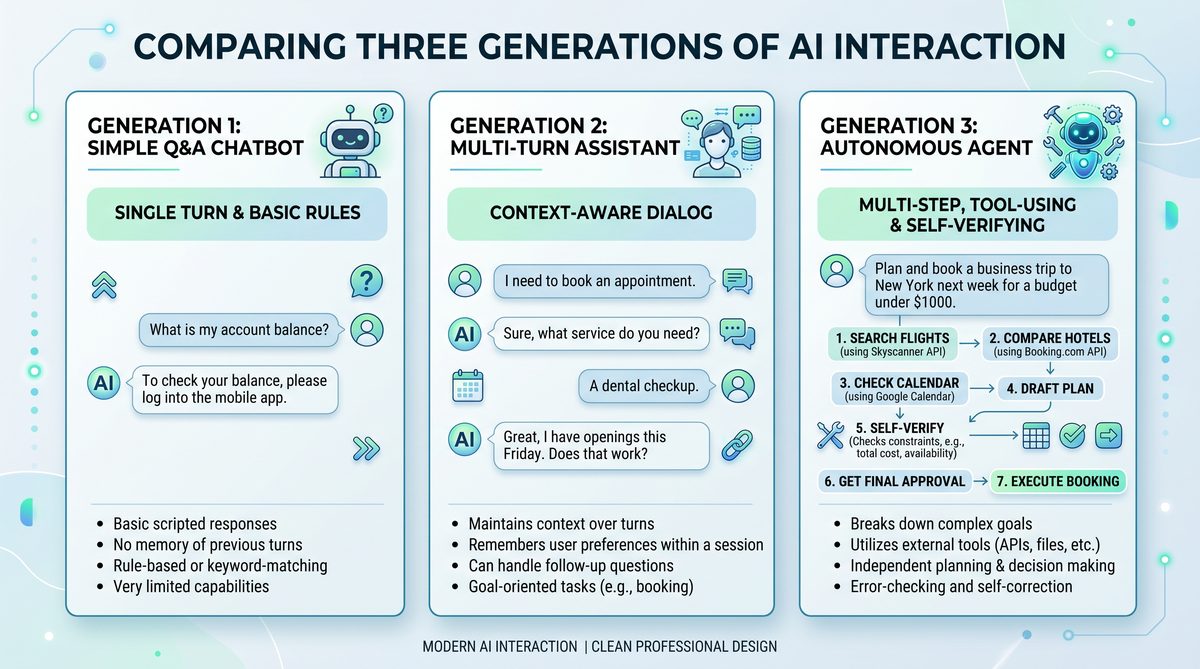
A defining characteristic of agentic AI is its capacity to manage multi-step workflows, moving beyond atomic responses to orchestrate complex sequences of actions. Multi-step workflows involve:
- Task Decomposition: Breaking down high-level objectives into logically ordered subtasks.
- Dynamic Planning: Formulating and revising workflows according to contextual feedback and intermediary results.
- Memory and State Tracking: Maintaining continuity and adapting to new information within workflow execution.
The complexity inherent in multi-step workflows necessitates sophisticated memory management and reasoning capabilities within AI agents, ensuring coherent progression and error handling.
3.2 Case Study: Claude Opus 4.7 in Enterprise Workflow Automation
One of the most transformative real-world utilizations of Claude Opus 4.7 is in enterprise workflow automation. Businesses often struggle with voluminous customer support inquiries, back-office processes, regulatory compliance, and knowledge management. Claude Opus 4.7 addresses such challenges by autonomously processing multi-turn interactions and coordinating diverse backend services.
Typical applications include:
- Intelligent Customer Support: Automating tier-1 through tier-3 support by interpreting ticket contents, fetching relevant knowledge base articles, suggesting remediation steps, and escalating when necessary.
- Document and Data Extraction: Parsing semi-structured documents (contracts, invoices) using embedded computer vision modules, converting unstructured text into actionable data.
- Decision-Making and Reporting: Synthesizing insights from extracted data, applying internal business rules, and generating performance or compliance reports.
Claude Opus 4.7’s ability to chain tasks adaptively—such as verifying user authenticity, extracting form data, validating entries against policy, and dispatching approval requests—illustrates how multi-step workflows are autonomously executed in high-stakes environments.
3.3 Case Study: OpenAI Codex in Software Development
OpenAI Codex represents a paradigm shift in software development workflows. Beyond code generation based on immediate prompts, Codex enables autonomous multi-step programming workflows where it can:
- Interpret complex user requirements given in natural language, translating them into functional code modules.
- Detect and autonomously fix bugs by generating code patches, running tests, and iterating based on outcomes.
- Automate continuous integration (CI) and deployment (CD) pipelines by generating scripting routines that orchestrate builds, tests, and releases.
This agentic capability transforms Codex from a simple coding assistant to an AI pair programmer that autonomously executes predefined logic chains, improving software reliability and accelerating development cycles. Additionally, Codex’s comprehension of APIs and third-party libraries enables it to orchestrate complex integrations and invoke external services directly How to Configure Codex Auto-Review Mode and Sandbox Rules for Secure AI-Assisted Development.
3.4 Orchestration of External Tools and APIs
Central to agentic AI autonomy is the ability to orchestrate external tools and APIs seamlessly. This involves:
- API Chaining: Agents invoke multiple APIs in sequence or in parallel, passing data between steps to fulfill complex user requests.
- Contextual Tool Selection: Dynamically choosing appropriate tools or services based on task requirements and available resources.
- Error Handling and Fallbacks: Monitoring responses from external endpoints and adapting strategy according to success or failure outcomes.
For instance, a customer support agent might access CRM APIs to retrieve user history, query databases for policy information, and trigger alerts via messaging platforms in a coordinated, autonomous manner. Both Claude Opus 4.7 and OpenAI Codex utilize modular adapter layers facilitating flexible integration with heterogeneous systems, unlocking true operational autonomy in diverse domains Case Study: How Law Firms Are Using Claude Cowork’s Legal Plugins to Automate Contract Review.
4. Architectural Innovations Powering Agentic AI
4.1 Advances in Large Language Models (LLMs)
Fundamental to agentic AI evolution are advances in Large Language Models, which continue to grow in parameter count, efficiency, and capability. Claude Opus 4.7 exemplifies key innovations:
- Parameter Scaling with Sparse Attention: Utilizing advanced sparse attention mechanisms reduces computational costs while preserving global contextual understanding, enabling models to scale beyond hundreds of billions of parameters with feasible latency.
- Modular Layer Design: Architectures separating linguistic understanding from task execution allow targeted fine-tuning, accelerating domain adaptation without wholesale retraining.
- Domain-Specific Fine-Tuning: Claude Opus 4.7 is fine-tuned on specialized corpora such as legal, medical, and enterprise process data, significantly enhancing task-centric expertise and accuracy.
Similarly, OpenAI Codex demonstrates how focused pretraining on programming languages, version control logs, and API documents refines the LLM’s understanding of software semantics and execution environments.
4.2 Incorporation of Reinforcement Learning and Feedback Loops
Another pivotal advancement is the incorporation of Reinforcement Learning from Human Feedback (RLHF), which enhances multi-step reasoning and decision accuracy. These feedback mechanisms iteratively align model behavior with human values and correctness criteria, driving continuous improvement.
Key mechanisms include:
- Reward Modeling: Defining scalar reward signals for steps in workflows, encouraging factual correctness, efficiency, and user satisfaction.
- Self-Play and Environment Interaction: Allowing models to simulate task executions and optimize policies through trial-and-error before real-world deployment.
- Human-in-the-Loop Corrections: Periodic expert interventions correct deviations and update reward models, ensuring ethical and performant behavior.
This iterative loop fosters AI agents capable of learning from their own experiences and adjusting strategies dynamically.
4.3 Memory and State Management Techniques
Effective handling of memory and state is imperative for sustaining multi-step workflows. Agentic AI models employ advanced memory techniques:
- Episodic Memory: Persistent storage of task-relevant data and prior interactions enabling recall over extended periods.
- Working Memory: Short-term attention mechanisms maintain contextual focus during immediate task execution.
- Memory Augmentation: Leveraging external key-value stores or knowledge graphs to supplement intrinsic memory and ensure scalability.
Claude Opus 4.7 incorporates hierarchical memory architectures prioritizing salient task information dynamically, while Codex integrates stateful buffers retaining code constructs and variable scopes during coding sessions.
4.4 Modular and Compositional Architectures
Architectures decomposing agentic AI into modules have been crucial for building flexible, extensible systems. These typically comprise:
- Planners: Components generating high-level task plans and decompositions based on user goals.
- Executors: Modules responsible for carrying out subtasks, interacting with APIs, or producing outputs.
- Verifiers: Subsystems that evaluate intermediate outcomes for correctness and compliance.
Such compositional designs facilitate adaptability, allowing new modules to be plugged in to support emerging use cases or modalities. They also enhance maintainability by isolating functionality and enabling parallel development. Claude Opus 4.7’s design embraces this modularity, forming a layered AI ecosystem tailored for enterprise-grade deployment.
5. Ethical, Safety, and Trust Considerations in Autonomous AI Agents
5.1 Risks of Autonomous Decision-Making
The empowerment of AI agents with autonomous decision-making introduces inherent risks:
- Potential for Cascading Failures: Errors in one step of a multi-step workflow can propagate downstream, compounding adverse effects.
- Amplification of Biases: Embedded biases in training data may lead to unfair or discriminatory outcomes, especially when agents operate at scale without oversight.
- Security Vulnerabilities: Autonomous agents’ API integrations increase attack surfaces, raising concerns about data breaches or malicious exploitation.
Addressing these risks requires rigorous testing, validation, and risk mitigation strategies throughout the AI lifecycle.
5.2 Transparency and Explainability
As complexity grows, the opacity of agentic AI decisions poses challenges for accountability and user trust. Explainability techniques are paramount:
- Interpretable Model Components: Designing modules whose intermediate outputs are observable and understandable.
- Real-Time Monitoring: Implementing dashboards and anomaly detection tools to track agent actions and flag suspicious behavior.
- User-Facing Explanations: Generating natural language rationales for AI decisions to help users comprehend AI reasoning.
Such transparency foundations enable organizations to comply with regulations and foster user confidence.
5.3 Governance and Regulatory Landscape
The rapid advancement of agentic AI has outpaced many regulatory frameworks. Emerging standards focus on:
- Ethical AI Deployment: Guidelines emphasizing fairness, privacy, and non-discrimination.
- Auditability: Mandates for comprehensive logs and traceability of autonomous agent decisions.
- Certification: Industry-specific certifications validating agent safety for critical sectors like healthcare, finance, and critical infrastructure.
Compliance challenges remain especially acute in scenarios where AI agents access personal or sensitive data, necessitating stringent data governance and continuous oversight mechanisms.
5.4 User Trust and Adoption Barriers
User trust is a critical determinant of autonomous AI adoption. Challenges include:
- Reliability: Users demand consistent, accurate results; early failures can erode confidence irreparably.
- User Control: Providing override capabilities and granular control over AI actions mitigates fears of loss of control.
- Resistance to Change: Cultural and organizational reluctance to entrust critical tasks to autonomous systems persists.
Successful deployment often entails hybrid human-AI collaboration models that balance autonomy with oversight, thereby easing trust concerns and facilitating smoother transitions to agentic systems.
6. The Future Outlook: Towards Hyper-Autonomous AI Ecosystems
6.1 Next-Gen Models and Emerging Trends
Looking past 2026, agentic AI research is focused on several promising directions:
- Extreme Scale and Efficiency: Models expanding into trillions of parameters while optimizing energy consumption and inference speed.
- Edge Computing Integration: Deploying agentic AI on edge devices to enable privacy-preserving, low-latency interactions without cloud dependency.
- Decentralized and Federated AI: Distributed learning frameworks facilitating collaborative multi-agent ecosystems while safeguarding data sovereignty.
Emerging trends also include the fusion of symbolic reasoning and neural networks, enhancing explainability and reasoning fidelity in agentic AI.
6.2 AI Agents in Industry 5.0 and Human-AI Collaboration
Industry 5.0 emphasizes symbiotic collaboration between humans and AI, fostering environments where agentic AI augment human creativity and productivity rather than replacing jobs outright. AI agents will function as:
- Collaborative Partners: Assisting with ideation, problem-solving, and decision support within workflows.
- Adaptive Coaches: Providing real-time guidance and feedback to human operators.
- Automated Executors: Handling routine or dangerous tasks, freeing humans to focus on strategic activities.
This blended autonomy model promises improved efficiency while preserving human agency and ethical responsibility.
6.3 Democratization and Accessibility
With the advent of versatile APIs, community-driven tools, and open-source initiatives, autonomous AI agents are becoming more accessible to businesses and individuals with limited AI expertise. Key enablers are:
- Low-Code/No-Code Platforms: Allowing users to assemble AI workflows through intuitive interfaces.
- Open Models and Frameworks: Encouraging innovation and transparency through shared resources and democratized model access.
- Education and Training: Growing AI literacy initiatives equipping the workforce to engage effectively with agentic AI technologies.
This democratization accelerates AI adoption across domains, fostering diverse applications and novel use cases.
6.4 Speculative Scenarios and Long-Term Implications
Looking further ahead, speculative scenarios depict agentic AI as foundational pillars of smart societies and global digital infrastructures. Potential impacts include:
- Economic Transformation: Productivity leaps coupled with workforce re-skilling challenges.
- Ethical Paradigm Shifts: New norms around AI autonomy, responsibility, and rights.
- Policy Evolution: Dynamic governance models adapting to rapidly changing AI capabilities and societal expectations.
Continued interdisciplinary research and inclusive dialogue will be essential to navigate these complex trajectories responsibly.
Conclusion
The journey of AI agents from simple rule-based chatbots to sophisticated autonomous systems spans decades of innovation and refinement. The year 2026 represents a watershed moment, as exemplified by the rise of transformative models such as Claude Opus 4.7 and OpenAI Codex. These agentic AI systems embody advanced capabilities including multi-modal understanding, autonomous multi-step workflow management, and integration with diverse tooling ecosystems.
As AI agents become ubiquitous across enterprise, software development, and consumer contexts, their power to augment human potential and automate complex processes grows exponentially. However, this transition also demands careful attention to ethical, safety, and governance concerns to build trust and ensure beneficial outcomes.
Developers, researchers, and organizations stand at the forefront of harnessing these agentic AI technologies to forge new paradigms of human-AI collaboration and autonomy. Embracing the challenges and opportunities of this evolution will shape the future of AI agent ecosystems and their profound impact on society.
References and Further Reading
- Vaswani, A., et al. (2017). Attention Is All You Need. https://arxiv.org/abs/1706.03762
- Anthropic. (2026). Claude Opus 4.7 Technical Overview and Safety Report. Anthropic Publications.
- OpenAI. (2022). OpenAI Codex: AI for Autonomous Code Generation. OpenAI Blog. https://openai.com/blog/openai-codex
- Google Research. (2020). Meena: Towards a Human-Level Conversational Agent. https://arxiv.org/abs/2001.09977
- Christian, B. (2020). The Alignment Problem: Machine Learning and Human Values. W. W. Norton & Company.
- Amershi, S., et al. (2019). Software Engineering for Machine Learning: A Case Study. IEEE ICSE Proceedings.
Access 40,000+ AI Prompts for ChatGPT, Claude & Codex — Free!
Subscribe to get instant access to our complete Notion Prompt Library — the largest curated collection of prompts for ChatGPT, Claude, OpenAI Codex, and other leading AI models. Optimized for real-world workflows across coding, research, content creation, and business.
Useful Links
- OpenAI ChatGPT Platform
- Anthropic Official Website
- GitHub Copilot powered by OpenAI Codex
- Transformer Models for Coding and AI Agents
- Recent arXiv Papers on Artificial Intelligence
- AAAI/ACM Conference on AI, Ethics, and Society
- AI Trends in Autonomous Systems
- Data Verses for AI Training and Evaluation
- NIST AI Standards and Guidelines
