
GPT-5.6 Is Coming: What the Leaked Routing Logs, Agentic Focus, and 1.5M Token Context Window Mean for Enterprise AI Strategy

GPT-5.6: What the Leaked Codex Routing Logs and Rumors Mean for Enterprise AI Strategy
Introduction
The machine learning and enterprise technology communities have been abuzz since a set of leaked routing logs associated with OpenAI’s Codex backend began circulating. Those logs, discussed alongside industry whispers and vendor briefings, have converged on a single tantalizing rumor: a forthcoming GPT-5.6 release with a heavy agentic-coding focus and a context window on the order of 1.5 million tokens. Whether the leak fully represents the production system or an experimental pathfinder, the implications are profound for developer tooling, knowledge work automation, systems architecture, and procurement strategies.
This article synthesizes the technical details visible in the leak, evaluates the engineering trade-offs that a 1.5M-token model imposes, summarizes likely pricing and commercial packaging scenarios, and provides a practical, prioritized roadmap for enterprises preparing to adopt or integrate GPT-5.6. The goal is to give CIOs, platform engineers, data security leads, product managers, and ML teams a reference-grade guide to the tactical and strategic choices ahead.
Scope and Purpose of This Analysis
We treat the leaked routing logs as a partial signal rather than definitive confirmation of product details. Our analysis separates observed artifacts from reasonable engineering inferences and plausible commercial behavior. Readers should treat any unconfirmed numeric claims—model size, context window, or pricing—as speculative, but actionable in planning terms because they change cost, performance, and integration trade-offs materially.
This document covers:
- What the leaked Codex routing logs reveal and the forensic interpretation of their structure.
- How an agentic-coding orientation reshapes developer experience and automation patterns.
- Technical approaches to achieving a 1.5 million token context window and their operational consequences.
- Expected pricing shapes and contract models.
- Concrete recommendations and a prioritized enterprise readiness checklist.
Section 1 — The Leak: Codex Routing Logs
The leaked artifacts are routing logs: primarily telemetry-level records describing how incoming requests to the Codex backend were directed to model endpoints, which internal augmentation services were invoked, the observed latencies, and sparse anonymized metadata about prompt sizes and downstream operations. Routing logs are not model weights or proprietary training data; they are operational traces that can reveal architecture, composition patterns, and service-level orchestration.
Key categories of information visible in the routing logs include:
- Endpoint names and namespaces that imply model families (e.g., codex-agent-5.6-inline).
- Invocation graphs showing which augmentations (e.g., code-execution microservices, retrieval caches, instruction transformers, and agent planners) were composed into a run-time pipeline.
- Latency distributions by prompt size and by augmentation type, allowing inference of the dominant cost drivers (embedding retrievals, long-context attention phases, or code sandboxing operations).
- Context window sizes indicated by token count fields associated with multi-stage invocations—some entries suggest upstream segments approaching the 1.5M-token range.
A sanitized excerpt helps ground the discussion. Below is a representative, cleaned example that mirrors the structure seen in the leak while eliding anything that could be sensitive:
{
  "timestamp":"2026-06-01T13:47:22Z",
  "request_id":"XXXX-YYYY-ZZZZ",
  "route":"codex-agent-5.6-inline",
  "stages":[
    {"name":"ingest","tokens_in":2400,"latency_ms":12},
    {"name":"planner","tokens_in":2400,"tokens_out":5600,"latency_ms":85},
    {"name":"retrieval","kb_hits":12,"retrieval_latency_ms":130,"tokens_attached":120000},
    {"name":"long_attend","tokens_in":125600,"tokens_windowed":1500000,"latency_ms":1300},
    {"name":"executor","exec_time_ms":420,"sandbox_calls":3}
  ],
  "cost_estimate_cents":432,
  "flags":["agentic","code-run"]
}
From that structure, a few forensic conclusions are reasonable: the runtime pipeline is multi-stage, retrieval plays a major role, and there is a discrete “long_attend” stage where the model sees a very large token window. The cost estimate item also hints that OpenAI or the service logged approximate internal chargebacks for the request—useful for later pricing inference.
The middle of this section includes a visual placeholder reflecting the logs and architecture diagrams widely circulated among industry researchers, illustrating stage sequencing and data flow.
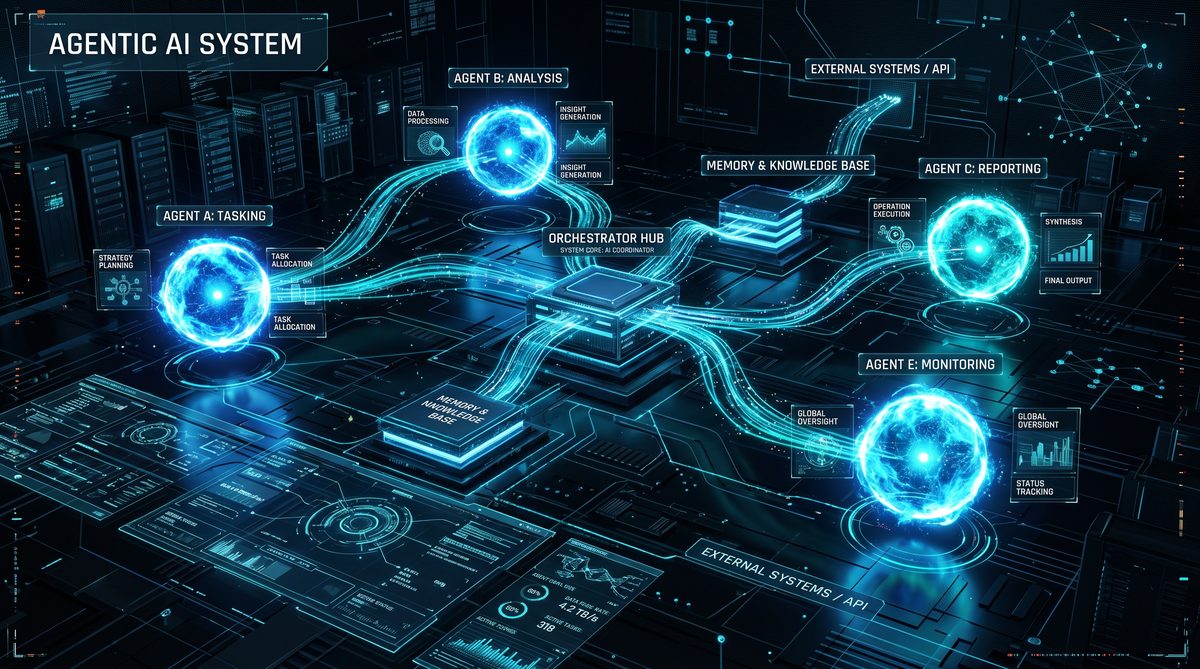
What Routing Logs Reveal About Service Composition
Routing logs do not reveal model weights, but they are highly informative about composition. Specifically:
- Service names with suffixes like “-planner” and “-executor” suggest a deliberate separation of agent planning and environment interaction.
- “tokens_attached” in retrieval entries indicates retrieval-augmented pipelines that attach large blocks of retrieved context before attention phases.
- Long-attend stage latencies on the order of seconds are consistent with models operating on very large contexts, possibly involving specialized attention kernels or chunked attention strategies.
For enterprises, these clues imply that integrating GPT-5.6 will not be a simple single-call replacement for prior GPT versions. Architecturally, services will be multi-component with stateful orchestration, retrieval caches, and execution sandboxes—which increases integration complexity and observability requirements.
Section 2 — Agentic-Coding Focus: What It Means
A repeated tag across multiple log entries is “agentic”. This aligns with public statements in the industry about “agentic” capabilities: models designed to plan, manage persistent tasks, invoke tools with I/O, and coordinate multi-step activities. OpenAI’s Codex lineage already focused on code generation; adding agentic orchestration elevates the model from an assistant that returns code to one that can autonomously drive development tasks end-to-end.
Agentic-coding capabilities typically imply:
- Planner modules that decompose user goals into sequenced subtasks.
- Tool invocation interfaces enabling code execution, live tests, and environment inspection.
- Stateful memory or context management for long-running sessions.
- Safety gates and sandboxing to control the risk of arbitrary code execution.
For developer productivity, the upside is clear: a capable agent can autonomously refactor, test, and integrate changes across repositories, handle multi-file reasoning, and maintain persistent project context across sessions. For enterprises, the new surface area includes orchestrator security, code provenance, auditability, and operational risk.
Embedded in the logs are explicit “sandbox_calls” and “executor” stages that imply production-grade code execution with resource accounting—an important operational safety signal. The orchestration evident in the logs indicates that any production integration must expect distributed state and side-effectful interactions rather than purely functional prompt-response behavior.
The middle of this section contains a visual placeholder to help architects visualize agentic orchestration patterns and the boundaries between model-internal planning and external tool invocation.

Agentic-Coding: Technical Building Blocks
Architecturally, agentic coding emerges from integrating several components:
- Planner/Reasoner: a model or module that translates a user intent into a task graph (e.g., “update API call” -> “locate callers”, “update tests”, “run CI checks”, “submit PR”).
- Tool Connectors: adapters that permit the model to call code execution sandboxes, CI systems, issue trackers, and repository APIs.
- Stateful Context Store: a session store retaining file diffs, test results, and intermediate artifacts across the agent’s run.
- Execution Sandbox: isolated runtime environments for running generated code, measuring behavior, and capturing traces.
- Verifier/Evaluator: components that check outputs against specifications and failure modes and filter or roll back unsafe changes.
Combining these pieces at scale is non-trivial and requires enterprise-level engineering investments in observability, feature-flagging for model decisions, and human-in-the-loop governance. The logs show that OpenAI’s internal pipeline includes many of these elements, and enterprises should expect the corresponding patterns when planning integrations.
Section 3 — The 1.5M-Token Context Window: How It Might Work
A 1.5 million token context window is an order-of-magnitude change from models with 100k–200k windows and represents both engineering innovation and significant infrastructure stress. There are several technically plausible approaches to delivering such a window; each has distinct implications for latency, throughput, cost, and developer experience.
Architectural Options and Trade-offs
The main strategies to achieve very long contexts fall into three categories:
- Monolithic Dense Attention with Optimizations: extend standard dense attention kernels but optimize memory and compute through fused kernels, activation compression, and GPU memory management. This preserves full global attention but incurs huge compute and memory costs proportional to square-of-length for naive attention (O(n^2)).
- Sparse / Sliding Window Attention: use locality-based attention patterns (sparse attention, chunking, sliding windows) to reduce complexity. These approaches often approximate global interactions and require supplementing with global tokens or cross-chunk summarizers to maintain coherence.
- Hierarchical / Retriever-Augmented Architectures: maintain a compressed representation of distant context (summaries, memories, or retrieved segments) and combine retrieval with attention to a smaller active window. Architectures like Retrieval-Augmented Generation (RAG), chunked retrieval with chunk embeddings, or memory-compressed attention fit here.
The leaked logs strongly suggest a hybrid approach: large retrieved blocks are attached to the prompt (tokens_attached values), and a “long_attend” phase then operates with specialized kernels. This pattern is consistent with a composition of retrieval + hierarchical attention where retrieval supplies most of the 1.5M tokens and specialized attention handles cross-chunk coherence.
Hardware and Systems Considerations
Serving large contexts requires advanced hardware provisioning:
- GPUs with large memory footprints (H100 with 80GB / multi-GPU partitioning) or custom inference accelerators with high-bandwidth memory.
- NVLink or equivalent high-bandwidth interconnects for cross-GPU attention kernels when contexts are sharded.
- Persistent memory strategies: memory-mapped storage, compression codecs, and streaming attention kernels to avoid copy overhead.
- Optimized kernels in lower-level libraries to handle attention over chunks with mixed precision and activation checkpointing.
The enterprise implication is that on-prem deployment for such a model is likely only viable for very large customers with specialized hardware and networking; most enterprises will rely on hosted APIs or managed private deployments.
Latency, Cost, and User Experience
Operating on 1.5M tokens increases end-to-end latency compared with small-context calls. Log entries showing long-attend latency ~1.3s are plausible for warmed-up GPU-backed requests, but cold-starts, heavy retrieval, or repeated planning loops can push that into multiple seconds. UX designers must consider progressive or streaming responses and UX patterns for long-running tasks. For example:
- Use streaming partial results for planner outputs while long-attend phases run in the background.
- Provide progress indicators for sandboxed execution and retrieval phases.
- Design asynchronous workflows for agentic tasks that can last minutes or hours rather than synchronous APIs for immediate responses.
Section 4 — Pricing Expectations and Commercial Packaging
Pricing is usually the most consequential operational consideration. Leaked routing logs included a “cost_estimate_cents” field and stagewise telemetry that imply internal cost models mapped to each stage (retrieval, long_attend, executor). From that, we can infer plausible public pricing models and enterprise contract structures.
Likely Pricing Dimensions
Expect pricing to be multidimensional:
- Per-token input and output charges (with a higher weight for tokens that traverse the long-attend stage).
- Context-window surcharges: very long contexts will attract premiums per token or a fixed per-request surcharge reflecting the O(n^2) cost profile of attention and the infrastructure overhead.
- Tooling and sandbox premiums for agentic features: code-execution minutes, number of sandbox invocations, and storage for artifacts may be metered separately.
- Tiered enterprise plans with committed spend discounts and private deployment options (VPC/private cloud) for customers wanting on-prem or dedicated hardware.
A plausible headline structure: a base per-1K-token rate for standard context sizes, a multiplied factor for tokens beyond a threshold (e.g., >100k tokens), and per-minute or per-execution charges for sandbox runs. Contract add-ons could include dedicated throughput, reserved instances, and SLAs for latency and availability.
Practical Pricing Scenario (Illustrative)
To make planning concrete, consider this illustrative (not official) pricing model:
| Charge Item | Unit | Illustrative Rate | Notes |
|---|---|---|---|
| Base token processing | per 1,000 tokens | $0.02 | Applies up to 100k tokens |
| Extended context surcharge | per 1,000 tokens beyond 100k | $0.10 | Reflects higher compute & memory |
| Agent execution (sandbox) | per minute | $0.50 | Charged for code execution time or external tool access |
| Retrieval readback | per retrieval call | $0.001 | Small per-call charge with data transfer considerations |
| Enterprise SLA / dedicated instance | monthly | $100k+ | Reserved hardware and higher availability |
The table above is illustrative and intended for cost modeling rather than precise budgeting. The important takeaway is that the effective cost of a multi-stage agentic request is cumulative across components: token processing, retrieval, long-attend attention, and execution. Enterprises must thus analyze real usage traces to understand price drivers.
Section 5 — How Enterprises Should Prepare
Adoption of GPT-5.6—especially if it provides agentic tooling with 1.5M context windows—will be transformative but requires deliberate preparation. The recommendations below are prioritized, practical, and technology-agnostic so organizations can adapt them to their stack.
1. Cost Modeling and Spend Controls
Before pilot rollout, build cost models that account for token consumption distribution, retrieval rates, and expected sandbox execution minutes. Simulate workloads by replaying representative logs through cost calculators and request quota managers. If you already use OpenAI products, revisit existing spend controls and quotas to incorporate the new metering dimensions anticipated for long contexts and agentic tasks. For teams that need to translate these operational needs into product or platform guardrails, the internal article about how to set up quotas, budgets, and automated overrides remains critical; see
For a deeper exploration of this topic, our comprehensive analysis on The Enterprise Guide to OpenAI Spend Controls and Usage Analytics: How to Monitor, Optimize, and Govern AI Costs Across Your Organization in 2026 provides detailed implementation strategies, real-world case studies, and actionable frameworks that complement the concepts discussed in this section.
for a detailed breakdown of spend control strategies and how they map to request-level metrics like those visible in the leaked routing logs. That resource explains how to map service-stage metrics (retrieval counts, long-attend token volume, sandbox minutes) into billing alerts and automated throttles so that engineers can protect budgets while exploring agentic automation.
2. Architect for Multi-Stage Pipelines
Do not assume the new model will be a drop-in replacement. Build integration patterns that separate concerns:
- Orchestration layer: route requests through an internal planner that decides whether to call the large-context model or a smaller model for routine tasks.
- Retrieval and cache tier: implement an LRU/TTL cache for retrieved chunks and embeddings to reduce repeated retrieval costs.
- Execution sandbox layer: isolate any agentic code execution and gate it with approval workflows for production changes.
These architectural patterns mirror the stages visible in the routing logs and reduce both risk and cost.
3. Security, Governance, and Observability
Agentic interactions and large contexts increase the attack surface. Enterprises should:
- Instrument full request-level logging with redaction and encryption at rest and in transit.
- Implement policy-driven tool access: which external systems an agent can call, under what conditions, and with what approval mechanisms.
- Enforce code provenance: record diffs, signatures, test results, and operator approvals for changes generated by an agent.
- Integrate model explainability and decision tracing: capture planner decisions and primary hallucination checks to support audits.
For teams contemplating intensive knowledge-work automation via Codex-like tools, the internal primer on using Codex within knowledge worker flows provides practical patterns and governance checklists. The article
For a deeper exploration of this topic, our comprehensive analysis on Codex for Knowledge Work: How OpenAI’s Productivity Platform Is Transforming Non-Technical Roles with AI-Powered Research, Analysis, and Automation provides detailed implementation strategies, real-world case studies, and actionable frameworks that complement the concepts discussed in this section.
covers how to attach enterprise knowledge bases, apply role-based access to code outputs, and design human-in-the-loop checkpoints—capabilities that will be central to a safe GPT-5.6 rollout.
4. Pilot Use Cases and Incremental Adoption
Prioritize pilots where the value of extended context and agentic behavior is clear:
- Large-scale codebase refactoring and migration tasks that require cross-file reasoning.
- Regulated-document summarization where a single coherent summary across many documents is required.
- Persistent agents for ticket triage and multi-step remediation that can provide measurable throughput gains.
Start with time-boxed experiments, measure ROI (time saved, defects reduced), and extend agents’ permissions gradually under controlled conditions.
5. Observability and Benchmarking
Install detailed telemetry to capture:
- Per-stage latencies (ingest, planner, retrieval, long-attend, execute).
- Token counts attached and attended.
- Sandbox execution time and resource utilization.
- Success/failure rates for automated changes, test pass/fail rates, and rework percentages.
Benchmarks should include both functional correctness and operational metrics. Replaying production traces against an internal performance model—simulating pricing and latency—will prevent unpleasant surprises.
6. Policy and Compliance Adjustments
Longer context windows will allow models to act on entire repositories, archived communications, and long logs. Compliance teams must update data-handling policies to define permissible data inputs, retention policies for model-internal artifacts, and procedures for subject access requests that interact with model-generated outputs.
7. Developer Enablement and UX Patterns
Adopt developer-facing abstractions that hide complexity while offering control:
Access 40,000+ AI Prompts for ChatGPT, Claude & Codex — Free!
Subscribe to get instant access to our complete Notion Prompt Library — the largest curated collection of prompts for ChatGPT, Claude, OpenAI Codex, and other leading AI models. Optimized for real-world workflows across coding, research, content creation, and business.
- Model selectors that choose small vs. long-context models based on task descriptors.
- High-level primitives for agentic tasks: plan(), execute(), verify() that map to the underlying multi-stage pipeline.
- SDKs that include budgeting knobs and automatic monitoring hooks to prevent runaway costs.
Section 6 — Integration Patterns and Reference Architectures
Below are integration archetypes that enterprise architects can use as starting points. Each pattern contains trade-offs regarding cost, latency, and risk.
1. Proxy Orchestrator Pattern
Route all agentic requests through an internal orchestrator service that analyzes intents and selects between: a lightweight model for simple tasks, a mid-sized model for moderate reasoning, and GPT-5.6 for complex, multi-file or multi-document tasks. The orchestrator applies pre-checks (quota, data policies), instrumentation, and human approval gates where necessary.
2. Retrieval-First Pattern
Use an internal retrieval system to pre-filter and compress context into dense summaries and embeddings. Only attach the minimal necessary retrieved chunks to the model and use the long-context model sparingly for cross-chunk reasoning. This pattern reduces cost by limiting the volume of tokens delivered to the long-attend stage.
3. Agent-as-Worker Pattern
Expose agents via a job queue where each job runs asynchronously. Agents can hold long sessions, perform multi-step tasks, and report artifacts back to a human reviewer. This pattern is appropriate for modifications to production systems where immediate synchronous changes are undesirable.
4. Hybrid Local/Dedicated Model Hosting
For customers with extremely sensitive data or latency requirements, a hybrid model where sensitive retrieval and some summarization happens on-prem, and the heavy long-attend stage runs in a dedicated cloud instance can strike a balance between data control and performance. Expect this architecture to be supported via enterprise SLAs and dedicated hardware instances at premium pricing.
Section 7 — Operational Playbook: Step-by-Step Rollout
The following playbook provides a practical sequence for piloting and scaling GPT-5.6 capabilities.
- Discovery and Use Case Prioritization — identify 2–3 high-value opportunities that justify longer context and agentic automation.
- Cost Modeling — run representative workloads against a simulated pricing model and obtain vendor clarification on metering.
- Security Review — extend threat models to include code execution, exfiltration via agents, and data leakage via retrieved context.
- Pilot Development — implement an orchestrator and a minimum viable agent with human-in-the-loop controls and limited permissions.
- Benchmark and Iterate — measure latency, cost, success rates, and developer satisfaction; iterate on caches and retrieval strategies.
- Governance Codification — convert pilot rules into policies, SLAs, and automated enforcement mechanisms.
- Gradual Rollout — increase agent permissions, expand user base, and add monitoring thresholds tied to spend controls and performance metrics.
Checklist
- Define success metrics (time saved, error reduction, ROI timeframe).
- Instrument per-stage telemetry and cost accounting.
- Build retrieval caches and embedding indexes.
- Set granular quotas and automated throttles.
- Implement sandboxing and CI checks for generated code.
- Ensure audit logs and retention policies comply with regulation.
Section 8 — Risk Profile and Mitigations
New capabilities bring new risks. Below are the primary risk categories and mitigations.
Safety and Unintended Actions
Risk: An agent executing code could make unintended changes or introduce vulnerabilities. Mitigation: Require approvals for production changes, sandbox outputs, and automated rollback hooks in the deployment pipeline.
Data Leakage
Risk: Long contexts may inadvertently surface sensitive data from archived documents. Mitigation: Pre-filter inputs, mask or redact sensitive content before inclusion, and maintain strict access controls on retrieval indices.
Cost Overruns
Risk: Agents can produce large contexts and repeated executions. Mitigation: Implement investment caps, throttles, and cost-alerting tied to stage-level metrics and quotas.
Regulatory and Compliance
Risk: Automated changes to regulated systems could create audit and compliance gaps. Mitigation: Maintain immutable records of agent decisions, approvals, test artifacts, and set policy-driven exclusions for regulated data and systems.
Section 9 — Benchmarks and Evaluation Framework
Measuring success requires benchmarks across three axes: functional quality, operational cost, and systemic safety. Example metrics:
- Functional: percentage of agent-generated PRs accepted without manual edits, test pass rates, accuracy on spec-based tasks.
- Operational: average tokens per request, percent of requests invoking long-attend, average cost per completed task, 95th percentile latency.
- Safety: number of unsafe actions prevented by gates, number of security incidents attributable to agent activity, human reviewer overrides.
Create a continuous evaluation pipeline that replays anonymized production tasks against model updates and captures regressions. Where possible, use adversarial inputs to quantify hallucination rates and tool-use vulnerabilities.
Comparison: GPT Generations and the Emerging GPT-5.6
The table below contextualizes GPT-5.6’s rumored characteristics relative to previous public generations. Note that GPT-5.6 figures reflect leaked and speculative material.
| Characteristic | GPT-4.x | GPT-5.0 (publicized) | GPT-5.6 (rumored) |
|---|---|---|---|
| Primary focus | Generalist large context & multi-modal | Higher reasoning, latency-optimized | Agentic coding, long-context knowledge work |
| Context window | 8k–300k (various models) | Up to 500k | ~1.5M tokens (rumored) |
| Agent tool-use | Basic plugin/tool support | Expanded tool interfaces | Planner+executor pipeline, production sandboxes |
| Typical latency | sub-second to seconds | optimized for low-latency | seconds for long-attend; multi-second for complex agents |
| Commercial packaging | API per token, subscription tiers | Tiered enterprise plans | Per-token + context surcharge + execution minutes |
| Primary deployment model | cloud-hosted | cloud & private instances | cloud-hosted with enterprise private/dedicated options |
Conclusion
The leaked Codex routing logs and accompanying industry rumors paint a picture of an evolutionary shift: models that are not only larger but architected to act—planning, invoking tools, and executing multi-step workflows on massive context. For enterprises, the pragmatic response is to prepare for greater orchestration complexity, to implement robust spend controls and observability, and to design pilots that capture ROI while controlling risk.
If the 1.5M-token window arrives in production-quality form, it will enable new classes of automation, particularly in software engineering, legal and regulatory document analysis, and long-form knowledge synthesis. The trade-offs in latency, cost, and governance are surmountable with careful engineering and disciplined rollout plans. Organizations that invest early in orchestration, sandboxing, and spend governance will capture outsized benefits while avoiding common pitfalls.
