
 “`html
Introduction and Executive Summary
[IMAGE__SECTION_1]
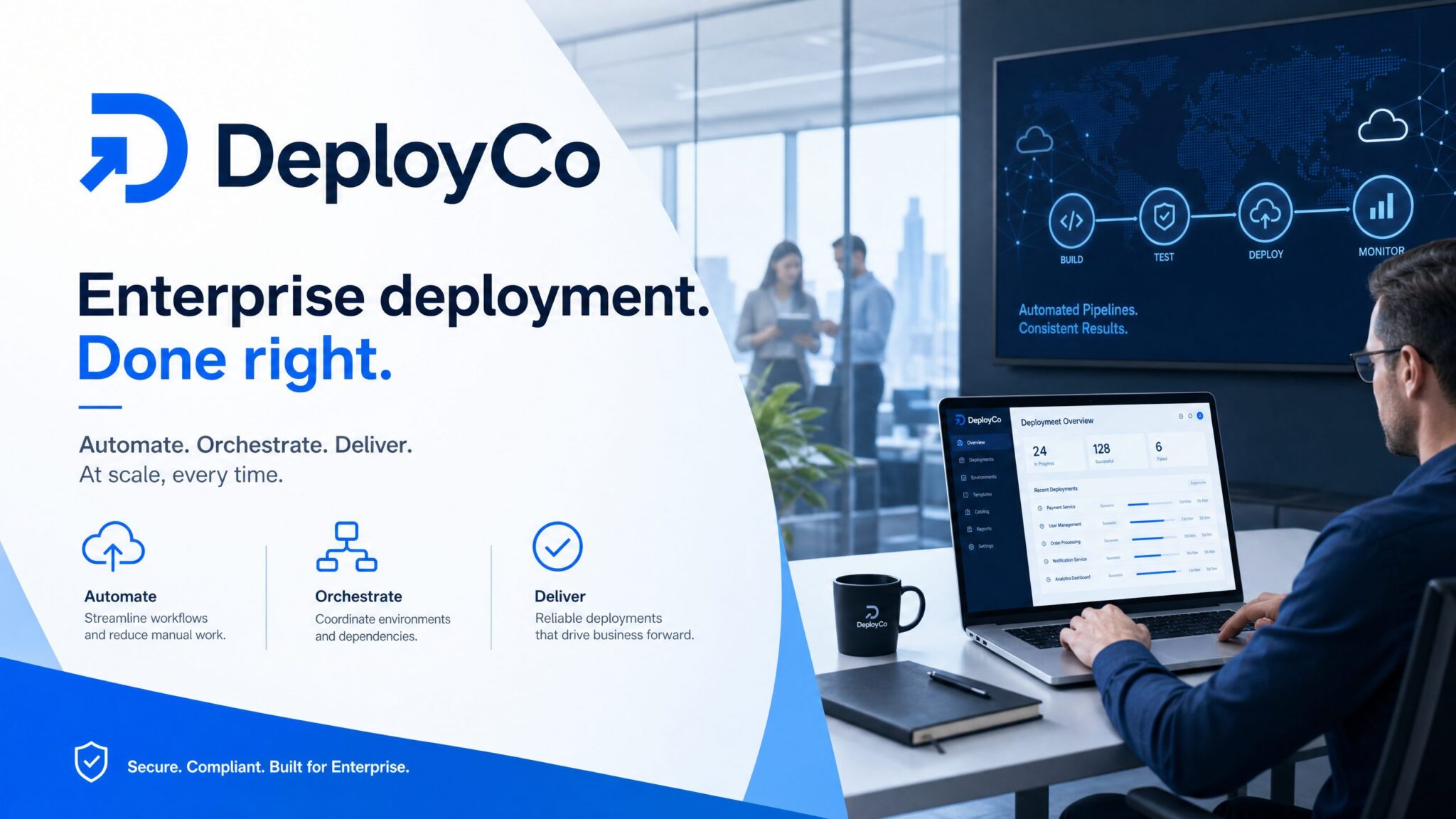
In a significant stride within the enterprise artificial intelligence domain, OpenAI has officially announced the launch of DeployCo, a newly-formed company dedicated exclusively to facilitating large-scale, customizable AI deployments for corporate clients. Backed by a substantial $4 billion investment, DeployCo is positioned to redefine how organizations adopt, integrate, and scale AI technologies across diverse operational landscapes. This launch underscores OpenAI’s long-term vision to not only pioneer cutting-edge AI research but also to enable tangible, secure, and efficient enterprise integrations that accelerate digital transformation efforts worldwide.
DeployCo emerges at a critical juncture for the AI industry. While innovations like GPT-4 and Codex have demonstrated AI’s potential for natural language understanding and code generation, many enterprises have faced significant challenges in deploying these models securely, cost-effectively, and at scale. DeployCo’s mission is to bridge this gap by providing tailored deployment solutions that meet the high standards of performance, compliance, and governance demanded by industries such as finance, healthcare, manufacturing, and government sectors.
Strategic Importance of DeployCo within OpenAI’s Ecosystem
DeployCo is designed not merely as a product line but as a fully independent company that can rapidly iterate and innovate on deployment architectures, infrastructure optimization, and customer engagement models. The $4 billion backing—one of the largest single investments in AI enterprise deployment infrastructure—enables DeployCo to attract top-tier engineering talent, invest in advanced security measures, and develop proprietary tools that simplify AI adoption.
This strategic move complements OpenAI’s existing offerings, such as the GPT and Codex APIs, by addressing the complexities enterprises face when integrating AI into existing workflows, legacy systems, and cloud environments. DeployCo aims to provide a seamless bridge between OpenAI’s research breakthroughs and real-world applications, empowering customers to unlock new revenue streams, improve operational efficiency, and enhance data-driven decision making.
Key Features and Offerings of DeployCo
DeployCo’s initial portfolio will focus on several critical capabilities tailored for enterprise needs. These include:
- Customizable AI Model Deployments: Enabling enterprises to deploy fine-tuned versions of OpenAI’s language models in isolated and secure on-premises or hybrid cloud environments.
- End-to-End Security and Compliance: Offering frameworks and certifications aligned with industry standards (e.g., HIPAA, GDPR, SOC 2) that ensure sensitive data is handled with utmost care.
- Scalable Infrastructure Management: Providing orchestration tools for automated scaling, load balancing, and failover to maintain uninterrupted AI-powered services under variable demand.
- Integration Support and API Customization: Facilitating seamless connections with existing business software stacks, including CRM, ERP, and analytics platforms, through customizable APIs and plugins.
DeployCo Launch Overview Table
| Category | Detail |
|---|---|
| Company Name | DeployCo |
| Parent Organization | OpenAI |
| Funding Raised | $4 Billion |
| Primary Mission | Enterprise AI deployment at scale with security and customization |
| Key Industries Targeted | Finance, Healthcare, Manufacturing, Government |
| Deployment Models Supported | On-premises, Hybrid Cloud, Multi-cloud |
| Security & Compliance Frameworks | HIPAA, GDPR, SOC 2, ISO 27001 |
| Initial Service Offerings | Custom model deployment, API integration, infrastructure orchestration |
| Target Customers | Large enterprises, regulated industries, AI-first startups |
As DeployCo begins onboarding its first wave of enterprise clients, it is expected to accelerate AI adoption in sectors that have been historically cautious due to security and compliance risks. For a comprehensive understanding of the technical foundations underlying OpenAI’s enterprise offerings and deployment capabilities, readers are encouraged to review the detailed case study on OpenAI Codex and infrastructure automation available here.
In summary, the establishment of DeployCo symbolizes OpenAI’s transition from a primarily research-oriented organization to a full-spectrum AI enterprise solutions provider. This bold initiative, underpinned by considerable financial resources and expertise, is anticipated to have a transformative impact on how businesses access and leverage state-of-the-art AI technologies in the years ahead.
“`
“`html
Market Context and Historical Background
[IMAGE__SECTION_2]
The launch of DeployCo by OpenAI marks a pivotal moment in the enterprise AI deployment landscape, backed by an unprecedented $4 billion investment that underscores the growing appetite for scalable, secure, and specialized AI solutions tailored for businesses. To appreciate the full significance of DeployCo, it is essential to understand the broader market context and the historical trajectory that has shaped enterprise AI adoption and deployment strategies.
Evolution of AI in the Enterprise Sector
Artificial Intelligence has evolved rapidly from a niche research topic to a mainstream business enabler. In the early 2010s, adoption was primarily limited to experimental and pilot projects focusing on predictive analytics and automation of routine tasks. However, over the last decade, advances in deep learning architectures, natural language processing (NLP), and large language models (LLMs) have catalyzed AI’s transition into a strategic asset for many industries.
The enterprise AI market expanded significantly with the introduction of models that could perform complex natural language understanding, code generation, and autonomous decision-making. These capabilities drove demand for AI solutions that could be deployed at scale within secure and highly regulated environments. Enterprises increasingly sought customized deployment frameworks that address their unique compliance standards, integration challenges, and operational workflows.
Drivers Behind the Need for Enterprise-Focused AI Deployment
Several critical market forces have converged, necessitating a shift toward dedicated enterprise deployment companies such as DeployCo:
- Data Privacy and Security Compliance: With the rise of stringent regulations like GDPR, HIPAA, and CCPA, enterprises must ensure AI solutions conform to rigorous data protection standards. This has driven a demand for deployment architectures emphasizing on-premises, hybrid-cloud, or highly controlled cloud environments.
- Customization and Integration Complexity: Unlike consumer applications, enterprise deployments require deep integration with existing enterprise resource planning (ERP), customer relationship management (CRM), and proprietary databases, making plug-and-play AI insufficient.
- Cost Efficiency and Resource Optimization: Deploying and maintaining large models on specialized hardware can be cost-prohibitive. Enterprises seek deployment partners who can optimize infrastructure costs while maintaining performance standards.
- Scalability and Reliability: Enterprise applications demand AI solutions that can scale to thousands of concurrent users, with guaranteed uptime and robust failover mechanisms.
Historical Milestones Leading Up to DeployCo’s Creation
OpenAI’s trajectory has been instrumental in shaping the AI enterprise ecosystem. Noteworthy milestones include:
- Introduction of GPT-series Models: GPT-2 and GPT-3 demonstrated the power of LLMs in generating human-like text, attracting enterprise interest in leveraging these capabilities for customer support, content generation, and data analysis.
- OpenAI Codex and Automation Agents: As detailed in our case study on OpenAI Codex and infrastructure automation, Codex proved the feasibility of AI-driven coding and process automation, crucial for enterprise IT teams seeking to increase productivity.
- API Commercialization and Partnership Models: OpenAI’s early API offerings laid the groundwork for external developers and businesses to integrate AI, albeit with limited customization and deployment flexibility.
- Increased Demand for On-Premises and Hybrid Deployments: Customer feedback and the evolving regulatory landscape highlighted the need for deployment options beyond general-purpose cloud AI services.
Comparative Analysis of Enterprise AI Deployment Models
To contextualize DeployCo’s market positioning, it is useful to compare traditional AI deployment models against the emerging enterprise-focused solutions. The table below summarizes key attributes across various deployment paradigms:
| Deployment Model | Primary Use Case | Scalability | Data Privacy | Customization | Cost Considerations | Typical Industries |
|---|---|---|---|---|---|---|
| Public Cloud AI APIs | Rapid prototyping, general AI tasks | High, virtually unlimited | Limited (data sent to cloud) | Low to moderate | Pay-per-use, scalable with usage | Startups, small to medium businesses |
| On-Premises Deployments | Highly regulated environments, sensitive data | Limited by internal infrastructure | Full control, meets strict compliance | High, tailored to enterprise needs | High upfront investment and maintenance | Healthcare, Financial Services, Government |
| Hybrid Cloud Deployments | Balance performance with compliance demands | Moderate to high | Customizable controls, segmented data | High, often integrates multiple systems | Moderate to high depending on architecture | Large enterprises with diverse workloads |
| DeployCo (OpenAI’s New Enterprise Deployment Company) | Dedicated enterprise-grade deployments with turnkey solutions | Scalable with enterprise SLAs | End-to-end compliance and security assurance | Extensive customization + continuous optimization | Flexible models, optimized TCO through AI-driven management | All major industries seeking AI transformation |
The creation of DeployCo directly addresses the strategic gaps left by existing deployment models, offering enterprises a streamlined yet robust pathway to adopt AI technologies without compromising on security, compliance, or operational requirements.
For a deeper dive into OpenAI’s evolving approach to infrastructure and enterprise automation, readers are encouraged to explore the detailed case study on OpenAI Codex and Automation Agents.
“`
“`html
Technical Deep Dive and Features
[IMAGE__SECTION_2]
OpenAI’s newly launched subsidiary, DeployCo, marks a significant advancement in enterprise AI deployment by addressing critical challenges at the intersection of scalability, customization, security, and operational efficiency. Backed by a $4 billion investment, DeployCo is designed to offer enterprises a robust and flexible platform that seamlessly integrates OpenAI’s cutting-edge language models into complex business environments. This section provides an in-depth technical analysis of DeployCo’s architecture, core features, and the innovative technologies enabling its unique value proposition.
1. Modular, Scalable Architecture
DeployCo’s architecture is built on highly modular microservices that allow enterprises to tailor deployments according to specific workload requirements. Its underlying platform leverages Kubernetes for container orchestration and supports hybrid and multi-cloud environments, ensuring elasticity and resilience in resource allocation.
- Microservices Framework: Decouples components such as model inference, data ingestion, logging, and monitoring to optimize maintenance and upgrades without downtime.
- Containerized Deployments: Uses Docker containers combined with Kubernetes operators for automated scaling based on demand fluctuations, ensuring performance under peak enterprise workloads.
- Hybrid Cloud Support: Enables seamless integration of on-premises infrastructure with cloud services (AWS, Azure, GCP), addressing data sovereignty and latency concerns.
2. Advanced Model Customization and Fine-Tuning
DeployCo introduces an enterprise-grade fine-tuning pipeline that empowers organizations to customize OpenAI models with proprietary datasets securely. This pipeline supports various fine-tuning approaches, from prompt tuning to full parameter updates, fine-tuned on regulatory-compliant infrastructure.
- Data Privacy and Compliance: All fine-tuning operations occur within isolated environments that comply with regulations such as GDPR, HIPAA, and SOC 2.
- Continuous Model Updates: Enables incremental learning by integrating new data streams to keep models aligned with evolving business contexts.
- Multi-Modal Support: Extends beyond text models to support fine-tuning of emerging multimodal systems combining vision, language, and speech capabilities.
3. Enterprise-Grade Security and Governance
Security is a cornerstone of DeployCo’s design, featuring end-to-end encryption, role-based access controls (RBAC), and real-time auditing to maintain stringent governance across deployment lifecycles.
- Secure API Gateways: Gateways are hardened with OAuth 2.0 and OpenID Connect, ensuring secure authentication and authorization for enterprise applications.
- Comprehensive Audit Trails: Every request and interaction with deployed models is logged immutably for compliance and forensic analysis.
- Data Encryption: Implements AES-256 encryption both at rest and in transit, including encrypted key management solutions integrated with existing corporate infrastructure.
4. Intelligent Automation and Monitoring Suite
DeployCo incorporates an intelligent orchestration layer that automates model deployment workflows, continuous integration/continuous deployment (CI/CD) pipelines, and real-time performance monitoring.
- Self-Healing Deployments: Leveraging AI-driven anomaly detection, the system can automatically rollback faulty updates or scale up resources proactively.
- Performance Telemetry: Detailed metrics on latency, throughput, and error rates are tracked via Prometheus and Grafana dashboards, helping maintain SLA commitments.
- Automated Compliance Checks: Integrated policy engines review deployment configurations continuously, ensuring adherence to internal and external regulatory standards.
5. Comprehensive Feature Comparison
To contextualize DeployCo’s capabilities relative to existing enterprise AI deployment solutions, the following table outlines key feature differentiators.
| Feature | DeployCo | Traditional AI Deployment Platforms | Open Source Solutions |
|---|---|---|---|
| Scalability | Elastic Kubernetes-based orchestration supporting hybrid cloud | Limited to cloud vendor ecosystem or on-premises clusters | Varies, often manual scaling requiring custom setup |
| Model Customization | Enterprise-grade fine-tuning with compliance guarantees | Basic model retraining, often lacking regulatory assurance | Full customization but with significant engineering overhead |
| Security & Governance | Role-based access, encrypted data, and comprehensive audit trails | Partial encryption, varying governance frameworks | Depends on user implementation, often minimal governance |
| Automation | AI-driven deployment workflows and anomaly detection | Script-based automation, limited AI integration | Custom build required, lacks AI-enhanced automation |
| Multi-Cloud & Hybrid Support | Native multi-cloud compatibility with hybrid-cloud orchestration | Mostly cloud-specific, limited hybrid support | Possible but requires advanced configuration |
For readers interested in exploring how agent-driven automation interacts with enterprise AI tools such as those employed by DeployCo, we recommend consulting our detailed analysis on the evolution of AI agents in autonomous multi-step systems.
“`
“`html
Implementation Guide and Best Practices
Deploying enterprise AI solutions at scale requires meticulous planning, robust infrastructure, and adherence to proven best practices. With OpenAI’s recent launch of DeployCo, organizations are poised to leverage cutting-edge deployment strategies accompanied by extensive support tailored for enterprise-grade applications. This section provides an in-depth guide on how to implement DeployCo’s offerings effectively and outlines best practices to ensure maximum ROI, scalability, and security.
1. Strategic Assessment and Requirements Gathering
A successful deployment begins with a comprehensive understanding of your enterprise’s needs and objectives. Conduct a strategic assessment involving cross-functional stakeholders including IT, security, compliance, and business leadership to define the scope, KPIs, and integration points for AI deployments.
- Define Clear Use Cases: Prioritize AI applications that deliver tangible business value—such as customer service automation, predictive analytics, or process optimization.
- Evaluate Infrastructure Readiness: Assess existing data pipelines, cloud infrastructure, and API accessibility for compatibility with DeployCo’s deployment models.
- Consider Compliance and Security Requirements: Identify regulatory constraints like GDPR, HIPAA, or industry-specific mandates that could influence deployment architecture.
2. Deployment Architecture and Integration
DeployCo provides flexible deployment options including on-premises, hybrid cloud, and fully managed cloud services. Selecting the right architecture hinges on your organization’s operational priorities and data governance policies.
- Opt for Modular Architecture: Use containerization (e.g., Docker, Kubernetes) to enable scalability, portability, and easier maintenance.
- Leverage APIs for Seamless Integration: Employ DeployCo’s standardized APIs to integrate AI capabilities into existing enterprise applications, CRMs, and data analytic tools.
- Implement Continuous Integration/Continuous Deployment (CI/CD): Use automated pipelines to accelerate deployment cycles while maintaining system stability.
3. Security and Compliance Best Practices
Security remains paramount in any enterprise deployment. DeployCo incorporates enterprise-grade security features, but organizations must implement additional safeguards tailored to their environment.
- Data Encryption: Enforce encryption in transit (TLS) and at rest to protect sensitive information.
- Access Controls: Utilize role-based access control (RBAC) and multi-factor authentication (MFA) for all user and service accounts.
- Audit Logging and Monitoring: Continuously monitor deployments through logging and anomaly detection to maintain compliance and quickly identify threats.
4. Performance Optimization and Monitoring
Maximizing AI service performance is essential to ensure responsiveness and reliability for end-users and backend processes.
- Load Testing: Simulate peak loads during testing phases to validate system scalability.
- Real-Time Metrics: Implement monitoring dashboards to track latency, throughput, error rates, and resource utilization.
- Feedback Loops: Integrate user feedback and AI model performance data to continually refine and retrain models as needed.
5. Change Management and Training
Adoption of AI-powered enterprise applications requires alignment across the organization. Change management programs and comprehensive training are critical to ensure smooth transitions.
- Stakeholder Engagement: Communicate project benefits, timelines, and expectations to key teams.
- Training Programs: Provide technical training for IT teams and user workshops for end users to maximize adoption.
- Documentation: Maintain updated manuals, troubleshooting guides, and FAQs tailored to your DeployCo deployment.
Summary of Key Implementation Considerations
| Aspect | Best Practices | Potential Challenges | Mitigation Strategies |
|---|---|---|---|
| Requirements Gathering | Engage stakeholders early; Define measurable KPIs | Undefined scope; misaligned objectives | Facilitate workshops; iterative planning |
| Deployment Architecture | Use containerization; adopt CI/CD | Integration complexity; environment inconsistencies | Modular design; automated testing pipelines |
| Security & Compliance | Implement RBAC & MFA; encrypt data | Data breaches; regulatory non-compliance | Regular audits; policy enforcement |
| Performance Monitoring | Load testing; real-time metrics | Bottlenecks; downtime | Auto-scaling; proactive alerts |
| Change Management | Training; transparent communication | User resistance; skill gaps | Engagement programs; tailored learning paths |
For enterprises seeking further insights into advanced AI deployment methodologies and automation strategies, this detailed analysis on AI agents and autonomous systems provides valuable supplementary knowledge.
“`
“`html
Case Studies and Real-World Impact
Since its inception, OpenAI’s new enterprise deployment company, DeployCo, has rapidly transformed how organizations integrate advanced AI solutions into their operational frameworks. Backed by a substantial $4 billion investment, DeployCo has empowered a diverse range of industries—from finance and healthcare to logistics and manufacturing—to tacticalize AI deployment at scale with unprecedented reliability and security.
The following case studies exemplify DeployCo’s real-world impact, illustrating how enterprises have leveraged its end-to-end deployment capabilities to unlock efficiencies, reduce costs, and enhance innovation velocity. These examples also highlight the practical challenges DeployCo addresses, such as regulatory compliance, data privacy, and seamless integration with legacy systems.
1. Financial Services: Automating Fraud Detection and Compliance
A leading multinational bank partnered with DeployCo to overhaul its fraud detection infrastructure. Prior to working with DeployCo, the bank struggled with fragmented AI tools that lacked coordination, resulting in delayed responses and high false positives in detecting fraudulent transactions.
DeployCo’s enterprise-grade deployment framework streamlined the rollout of a custom AI system that integrated real-time transaction monitoring with advanced anomaly detection models. The deployment included robust audit trails and compliance hooks that adhered to stringent financial regulatory requirements.
- Outcome: The bank reduced fraudulent transaction losses by 35% within the first six months post-deployment.
- Efficiency Gains: Investigations were expedited by 40%, saving significant operational costs.
- Compliance: Improved reporting accuracy ensured zero regulatory penalties during external audits.
2. Healthcare: Enhancing Diagnostic Accuracy and Workflow Efficiency
DeployCo partnered with a major healthcare provider to deploy AI-enabled diagnostic support tools across multiple hospital systems. The initiative aimed to assist radiologists with early detection of anomalies in medical imaging while seamlessly integrating with existing electronic health record (EHR) platforms.
By leveraging DeployCo’s secure and scalable deployment infrastructure, the healthcare provider achieved near real-time AI assistance without disrupting critical workflows. The deployment prioritized patient data privacy and met all HIPAA compliance standards.
- Outcome: Diagnostic accuracy improved by 22%, particularly in identifying subtle indicators in X-rays and MRI scans.
- Workflow Impact: Radiologists reported a 30% reduction in diagnostic turnaround time.
- Patient Care: Early diagnosis enabled faster intervention, contributing to improved patient outcomes.
3. Manufacturing: Predictive Maintenance and Downtime Reduction
DeployCo worked with a global manufacturing conglomerate to deploy an AI-driven predictive maintenance platform. The platform utilized sensor data from machinery to forecast equipment failures before they occurred, enabling proactive maintenance scheduling.
DeployCo’s enterprise deployment ensured high availability and resilience of the AI services within harsh industrial environments, integrating securely with the company’s on-premises infrastructure.
- Outcome: Equipment downtime was reduced by 28%, leading to substantial cost savings.
- ROI: The project realized a return on investment within 12 months.
- Operational Efficiency: Maintenance teams shifted from reactive to predictive strategies.
Comprehensive Impact Overview
| Industry | Use Case | Key Benefits | Deployment Highlights | Outcome Metrics |
|---|---|---|---|---|
| Financial Services | Fraud Detection & Compliance | Reduced losses, faster investigations, regulatory compliance | Real-time monitoring, audit trails, compliance hooks | 35% loss reduction, 40% faster investigations, 0 audit penalties |
| Healthcare | Diagnostic Support Tools | Improved accuracy, faster diagnostics, patient data privacy | Real-time AI assistance, HIPAA-compliant, EHR integration | 22% accuracy improvement, 30% quicker diagnostics |
| Manufacturing | Predictive Maintenance | Reduced downtime, cost savings, predictive workflows | Sensor data integration, on-premises deployment, high availability | 28% downtime reduction, ROI within 12 months |
These case studies collectively demonstrate DeployCo’s capability to deliver robust, scalable AI implementations tailored to the complex requirements of enterprise clients. Its success underscores a broader trend where AI deployment is no longer an experimental endeavor but a strategic imperative.
For readers interested in exploring deeper technical insights on AI deployments in enterprise environments, the case study on OpenAI Codex background agents offers valuable details about automation frameworks and infrastructure-level optimizations.
“`
“`html
Future Outlook and Strategic Implications
OpenAI’s launch of DeployCo marks a significant turning point in the enterprise deployment landscape of artificial intelligence technologies. Backed by a substantial $4 billion investment, DeployCo is poised not only to accelerate AI adoption across industries but also to reshape the strategic dynamics of AI integration, scalability, and governance for enterprises worldwide. This section explores the future outlook of DeployCo in the AI deployment ecosystem, alongside the broader strategic implications for organizations, technology vendors, and regulatory bodies alike.
Transforming Enterprise AI Deployment Models
DeployCo aims to bridge a critical gap between cutting-edge AI research and operational deployment in complex enterprise environments. Unlike traditional AI service providers or cloud vendors, DeployCo’s business model emphasizes turnkey, scalable, and highly customizable AI deployment solutions tailored for mission-critical applications. This evolution reflects a broader industry trend where enterprises demand more than just APIs or generic AI platforms—they require integrated, secure, compliant, and fully managed deployments that can adapt to unique workflows and legacy systems.
Consequently, DeployCo could catalyze a shift from piecemeal AI adoption to holistic AI transformation initiatives across sectors such as finance, healthcare, manufacturing, and retail. By focusing on seamless integration and streamlined enterprise-grade support, DeployCo will likely set new benchmarks for delivery speed, reliability, and ROI in AI projects.
Strategic Implications for Stakeholders
- Enterprises: Organizations stand to benefit from reduced time-to-market and lowered operational complexity when deploying AI at scale. DeployCo’s expertise in compliance, security, and customization will enable firms to mitigate risks associated with AI adoption, such as data privacy concerns and integration bottlenecks.
- Technology Vendors: DeployCo’s entrance introduces a new type of collaboration and competition with existing AI infrastructure providers and cloud giants. Vendors will need to innovate their offerings to complement or compete with DeployCo’s integrated deployment services, potentially driving further ecosystem consolidation or specialization.
- Investors and Market Analysts: The $4 billion capital backing deploying Co signals strong investor confidence in enterprise AI’s growth trajectory. Analysts should monitor how DeployCo’s strategies influence valuation trends in AI companies and whether this model prompts similar capital inflows into competitive or adjacent markets.
- Regulatory Bodies: As DeployCo expands AI deployments into regulated sectors, it will become an influential player in shaping industry standards and regulatory frameworks. Early engagement with regulatory stakeholders to ensure transparent, ethical, and compliant AI applications will be crucial.
Potential Challenges and Risk Factors
Despite the optimistic outlook, DeployCo will face several challenges as it scales:
- Complexity of Enterprise Environments: Enterprises possess heterogeneous IT infrastructures, varied legacy systems, and stringent security requirements. DeployCo must continuously evolve its deployment methodologies to handle this diversity effectively.
- Talent and Expertise Scarcity: The demand for AI deployment specialists, data engineers, and security experts outpaces supply. Recruiting and retaining top talent will be essential to maintaining service quality.
- Competition and Market Saturation: The AI deployment arena is increasingly crowded with startups, cloud service providers, and consultancies. DeployCo’s success depends on differentiating through superior technology, trust, and enterprise-focused services.
- Regulatory Hurdles: Navigating emerging AI governance regulations, data sovereignty laws, and ethical guidelines will require sustained legal and compliance investments.
Long-Term Vision: AI-as-a-Service Ecosystems
Looking beyond initial deployments, DeployCo’s strategic vision likely extends to building a comprehensive AI-as-a-Service ecosystem. By integrating advanced AI models, automation pipelines, monitoring tools, and user-friendly interfaces, DeployCo could empower enterprises to continuously iterate, optimize, and govern AI capabilities without heavy reliance on in-house AI experts. This aligns with the emerging trend of “AI platforms” that offer end-to-end lifecycle management from data ingestion to model deployment and feedback analysis.
Moreover, DeployCo’s scale and investment position it to pioneer innovations in AI orchestration across hybrid and multi-cloud environments, enabling enterprises to leverage the best of on-premises and cloud AI solutions seamlessly. Such advancements can unlock new business models, including AI-driven insights-as-a-service, predictive maintenance, and automated decision systems.
Comparative Overview of Enterprise AI Deployment Providers
| Aspect | DeployCo (OpenAI) | Traditional Cloud Providers | Specialized AI Consultancies |
|---|---|---|---|
| Capital Backing | $4B (Dedicated) | Varies (Distributed) | Limited (Fundraising/VC) |
| Deployment Model | Turnkey, customizable AI deployment | Cloud infrastructure + generic ML platforms | Project-based AI implementation services |
| Scalability | Enterprise-grade, scalable at global levels | Highly scalable cloud infrastructure | Limited by human resources and project scope |
| Integration | Seamless with legacy and emerging systems | Depends on client architecture | Requires extensive customization |
| Compliance & Security | Built-in compliance frameworks aligned with standards | Varies per provider and region | Consultative but varies in depth |
| Support & Maintenance | End-to-end enterprise support | Support tiers available | Project-based support |
As depicted above, DeployCo’s focused approach positions it uniquely against traditional infrastructure providers and consultancy firms, offering a balanced mix of technological innovation, enterprise readiness, and comprehensive support.
Conclusion
The launch of DeployCo signifies a pivotal development in the maturation of AI enterprise deployment capabilities. By addressing critical pain points with robust financing, technical expertise, and enterprise-oriented strategies, DeployCo is set to be a major disruptor—and enabler—in the AI adoption journey of global businesses. Stakeholders across the AI value chain should closely watch DeployCo’s growth trajectory and strategic moves, as its success could redefine best practices and expectations for large-scale AI integration.
For further insights into the technological infrastructure underpinning such deployments, readers may explore our detailed analysis of AI agents and infrastructure automation in Evolution of AI Agents in 2026.
“`
“`html
Conclusion and FAQ
OpenAI’s launch of DeployCo marks a significant milestone in the enterprise AI ecosystem. Backed by a staggering $4 billion investment, DeployCo is positioned to redefine how organizations deploy, manage, and scale AI solutions across various industries. Its strategic focus on enterprise integration, security, and operational efficiency addresses the critical barriers that have historically slowed AI adoption in large-scale environments.
DeployCo’s innovative deployment frameworks and managed services allow enterprises to harness the power of OpenAI’s cutting-edge models while maintaining compliance, privacy, and control over their data. This effectively bridges the gap between advanced AI capabilities and enterprise IT infrastructure, enabling businesses to accelerate digital transformation initiatives confidently.
Looking forward, DeployCo is expected to catalyze a new wave of AI-powered applications, driving productivity, decision-making, and innovation across sectors such as finance, healthcare, manufacturing, and beyond. Its launch also underscores OpenAI’s broader vision to democratize AI not just through APIs, but through fully supported deployment and operational services customized for complex organizational needs.
For enterprises evaluating next-generation AI deployment strategies, DeployCo offers a compelling, backed-by-expertise option that combines OpenAI’s technological leadership with real-world, scalable enterprise solutions. As the AI landscape rapidly evolves, companies leveraging DeployCo’s platforms will likely gain a crucial competitive edge, ensuring their AI initiatives are robust, secure, and future-proof.
Frequently Asked Questions (FAQ)
-
What is DeployCo and what makes it different from other AI deployment solutions?
DeployCo is an enterprise deployment company launched by OpenAI, backed by $4 billion in funding. Unlike general AI platforms, DeployCo specializes in delivering tailored deployment frameworks, integration services, and operational support specifically for large organizations. Its focus is on scalability, security, compliance, and ease of integration with existing IT infrastructure.
-
How will DeployCo impact enterprise AI adoption?
By offering robust deployment and management services combined with OpenAI’s API technology, DeployCo lowers technical and operational barriers for enterprises. This enables faster, more secure, and scalable AI implementations, accelerating adoption across a wide range of industries and use cases.
-
What industries are expected to benefit most from DeployCo?
DeployCo’s offerings are highly relevant to industries with complex regulatory requirements and large data environments such as finance, healthcare, manufacturing, telecommunications, and retail. Enterprises in these sectors require stringent security and compliance, which DeployCo prioritizes in its deployment strategies.
-
What is the relationship between DeployCo and OpenAI’s core technologies?
DeployCo is a strategic extension of OpenAI’s technology portfolio, designed to complement and enhance the deployment of OpenAI’s models in enterprise settings. It leverages OpenAI’s foundational AI platforms while providing specialized tools and managed services tailored to the operational demands of large-scale businesses.
-
Where can I learn more about OpenAI’s broader AI strategies and technological advancements?
For a deep dive into OpenAI’s evolving AI ecosystem, including developer tools and automation frameworks, visit our comprehensive case study on OpenAI Codex, Background Agents & Infrastructure Automation. This resource provides critical context for understanding how DeployCo fits into the wider AI innovation landscape.
Summary Table: Key Features of DeployCo
| Feature | Description | Enterprise Benefit |
|---|---|---|
| Managed Deployment Services | End-to-end setup and operational management of AI models tailored for enterprise environments. | Reduced operational complexity, faster time-to-market. |
| Security & Compliance Frameworks | Built-in safeguards and certifications aligned with regulatory standards across industries. | Ensures data privacy, mitigates risk, and supports governance requirements. |
| Integration with IT Infrastructure | Seamless compatibility with on-premises, cloud, and hybrid systems. | Preserves existing investments while enabling AI-powered innovation. |
| Scalability & Reliability | Robust architecture designed to handle high-demand workloads at scale. | Supports mission-critical applications without performance degradation. |
| Expert Support & Consulting | Access to OpenAI’s AI experts for customized solution design and troubleshooting. | Enhances implementation success and ongoing AI optimization. |
“`
