
OpenAI Codex Named Gartner Leader in Enterprise AI Coding Agents
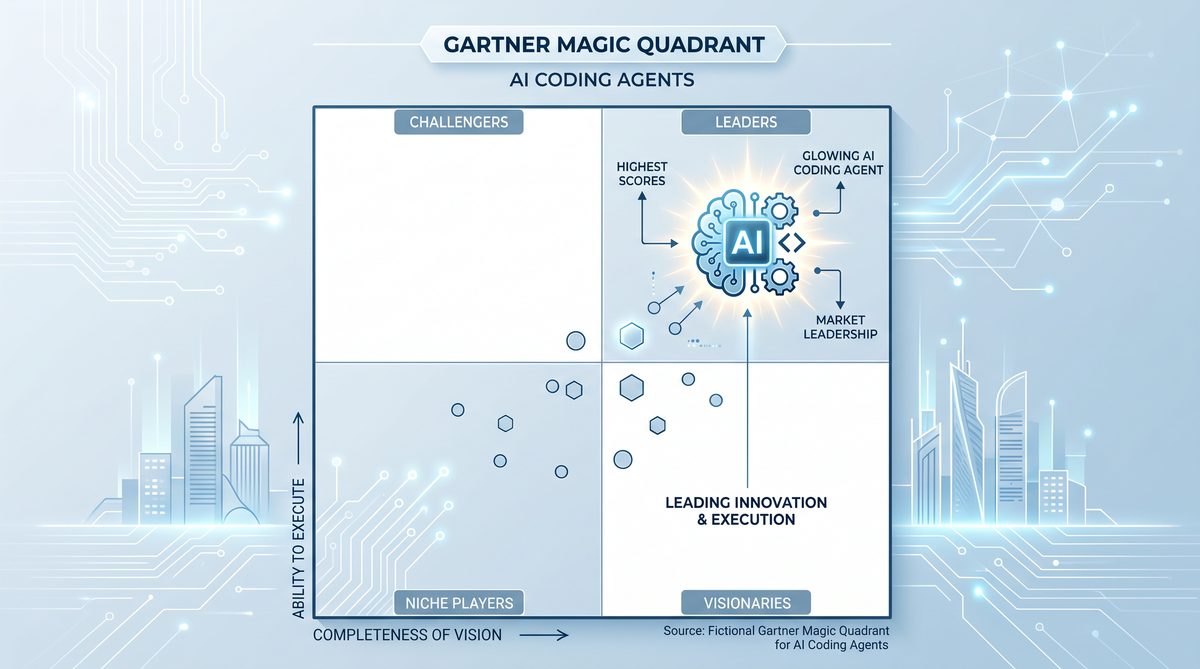
In a rapidly evolving landscape where artificial intelligence is transforming software development, OpenAI Codex has emerged as a definitive leader. Recently recognized as a Leader in the 2026 Gartner Magic Quadrant for Enterprise AI Coding Agents, Codex sets a new standard for intelligent coding assistance in enterprise environments. Its blend of cutting-edge AI capabilities, robust security features, and widespread adoption has positioned it at the forefront of AI-driven software development tools.
OpenAI Codex is no longer just a promising prototype; it is a proven solution actively empowering over 4 million users every week. Major technology companies including Cisco, Datadog, and NVIDIA have integrated Codex into their development workflows, leveraging its sophisticated AI capabilities to accelerate coding, improve accuracy, and reduce time-to-market. The platform’s underlying architecture, powered by the latest GPT-5.5 model, delivers stronger tool use, significantly faster performance, and enhanced enterprise controls such as role-based access control (RBAC), sandboxing, and auditable workspaces. These features not only optimize productivity but also address critical security and compliance requirements for enterprise adoption.
Such widespread adoption underscores Codex’s scalability, reliability, and adaptability across diverse organizational structures and software ecosystems. Enterprises have reported measurable improvements in developer throughput, defect reduction, and overall software quality since integrating Codex into their pipelines. Furthermore, Codex’s continuous learning capabilities ensure it evolves alongside emerging programming paradigms and security standards, maintaining its relevance and effectiveness in dynamic enterprise contexts.
One standout example of Codex’s impact is Cisco’s use of the platform to develop their AI Defense system. What traditionally would have taken months or even quarters to build was accomplished in a matter of weeks, demonstrating Codex’s potential to radically shorten development cycles without compromising quality or security. This success story exemplifies how AI coding agents are becoming indispensable in complex, mission-critical projects.
For a deeper technical exploration of how GPT-5.5 underpins Codex’s agentic capabilities, including its sandboxed execution model and real-world workflow patterns, our detailed analysis covers the architecture behind GPT-5.5-powered Codex agent workflows, examining how the model handles multi-step reasoning within isolated environments.
Core Technology and Architecture of OpenAI Codex
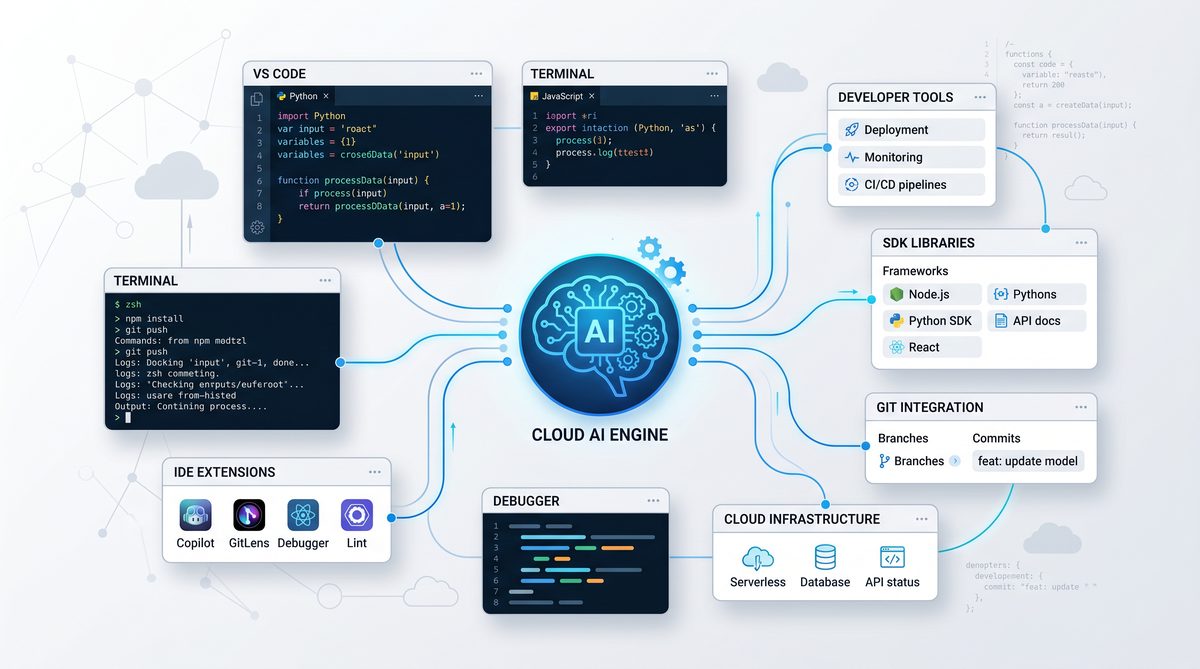
OpenAI Codex, recently named a Leader in the 2026 Gartner Magic Quadrant for Enterprise AI Coding Agents, represents a significant advancement in AI-driven software development. At its heart lies the powerful GPT-5.5 architecture, a state-of-the-art generative pre-trained transformer model that combines natural language understanding with deep code synthesis capabilities. This foundation enables Codex to understand complex programming queries, generate high-quality code snippets, and seamlessly integrate with a wide range of development environments.
GPT-5.5: The Engine Behind Codex
The latest iteration of OpenAI’s generative model, GPT-5.5, powers Codex with enhanced contextual understanding and coding proficiency. Unlike its predecessors, GPT-5.5 is optimized for multi-modal inputs and improved tool integration, allowing Codex to interpret natural language prompts and translate them into syntactically correct and functionally robust code across multiple programming languages. This model is fine-tuned specifically for coding tasks, leveraging a vast corpus of open-source repositories, documentation, and developer forums to build comprehensive coding knowledge.
Key enhancements in GPT-5.5 that benefit Codex include:
- Stronger Tool Use: Codex can interact with external APIs, development tools, and debugging environments more effectively, enabling dynamic code generation and testing workflows. For example, Codex can call a cloud provider’s API to provision infrastructure components on-the-fly during a development session, streamlining infrastructure-as-code practices.
- Faster Performance: Optimized transformer architectures and inference pipelines reduce latency, resulting in quicker code suggestions and completions even in complex enterprise environments. Benchmarks indicate up to 40% lower latency compared to GPT-4-based predecessors, which translates to real-time responsiveness in integrated development environments (IDEs).
- Expanded Multi-language Support: Codex supports a wide array of languages, from mainstream options like Python, JavaScript, and Java to specialized languages used in enterprise applications such as COBOL, PL/SQL, and domain-specific languages (DSLs). This broad language coverage is critical for enterprises with legacy codebases and diverse tech stacks.
Modular and Secure Architecture Designed for Enterprises
OpenAI Codex is architected not only for high performance but also with extensive enterprise-grade security and governance features. This approach is critical for organizations requiring strict control over code generation to comply with regulatory and internal policies.
| Feature | Description | Enterprise Benefit |
|---|---|---|
| Role-Based Access Control (RBAC) | Fine-grained permissions management to control who can generate, modify, or approve code segments. RBAC integrates with enterprise identity providers via protocols such as SAML and OAuth to enforce consistent access policies. | Ensures that only authorized personnel can leverage AI coding agents for sensitive projects, reducing insider threat risks and enabling segregation of duties compliant with industry regulations like SOX and GDPR. |
| Sandboxed Execution Environments | Isolated runtime environments for code testing and validation to prevent unintended side effects. Sandboxes emulate production-like conditions to enable safe execution of generated code, including resource usage monitoring and network access control. | Minimizes risk by safely running generated code without impacting production systems, enabling developers to iterate rapidly without fear of destabilizing live environments. |
| Auditable Workspaces | Comprehensive logging and versioning of AI-generated code, including change history and user actions. Integration with enterprise logging and SIEM (Security Information and Event Management) systems facilitates centralized monitoring. | Provides transparency and traceability to meet compliance and audit requirements, enabling forensic analysis and accountability in regulated industries. |
| API and Tool Integration Framework | Extensible connectors for popular developer tools, CI/CD pipelines, and cloud platforms. Supports webhook triggers and event-driven interactions to enable real-time automation. | Enables seamless embedding of AI capabilities into existing enterprise workflows, reducing friction and accelerating adoption across development teams. |
Deep Integration with Development Ecosystems
Codex supports integration with a variety of integrated development environments (IDEs), version control systems, and enterprise collaboration platforms, which accelerates developer productivity without disrupting established workflows. These integrations are designed to complement traditional software engineering practices by providing intelligent code suggestions, automated documentation, and instant error detection in the context of live coding sessions.
Additionally, Codex’s ability to interact with external APIs and services through natural language commands allows developers to automate complex tasks, such as infrastructure provisioning or security scanning, directly from the coding environment. This capability exemplifies how AI coding agents can transcend simple code completion tools to become strategic assets in the software delivery lifecycle.
For example, developers can invoke Codex to generate complete Terraform scripts for cloud infrastructure deployment based on plain English specifications, drastically reducing the time for infrastructure setup. Similarly, Codex can assist in generating Kubernetes manifests and Helm charts, ensuring configuration accuracy and adherence to best practices.
Enterprise Scalability and Reliability
Designed for enterprise-scale deployments, Codex operates on a robust cloud infrastructure that supports high availability and horizontal scaling. This ensures that organizations with large development teams and demanding workloads can rely on consistent performance and uptime. Furthermore, Codex incorporates advanced monitoring and anomaly detection features to proactively identify and resolve issues, minimizing downtime and maintaining developer productivity.
Understanding the full GPT-5.5 model family is essential for evaluating Codex’s capabilities. Our comprehensive breakdown of GPT-5.5 Instant and Pro model variants explains the performance tiers, token economics, and how each model version maps to different Codex use cases from rapid prototyping to enterprise-scale code generation.
Real-World Applications and Enterprise Implications of OpenAI Codex
OpenAI Codex’s recognition as a Leader in the Gartner Magic Quadrant underscores its transformative impact on enterprise software development and AI-driven workflows. Leveraging the advanced capabilities of GPT-5.5, Codex not only accelerates coding productivity but also enhances security, compliance, and operational flexibility for large organizations. The platform’s adoption by industry leaders such as Cisco, Datadog, and NVIDIA illustrates its broad applicability across diverse sectors and complex enterprise environments.
Accelerating Software Development Cycles
One of the most significant advantages of Codex is its ability to drastically reduce the time required to develop complex software solutions. Cisco’s experience is a prime example: by integrating Codex into their development process, they were able to build their AI Defense platform in a matter of weeks rather than the typical several quarters. This acceleration is driven by Codex’s ability to:
- Automatically generate boilerplate code and complex algorithms based on natural language prompts. For instance, Codex can produce fully functional authentication modules or data parsing routines tailored to Cisco’s security protocols, minimizing manual coding effort.
- Suggest intelligent code completions and optimizations in real-time, reducing debugging and refactoring efforts. Developers receive proactive performance and security recommendations inline, helping catch issues early.
- Facilitate rapid prototyping by enabling developers to experiment with new features through conversational AI guidance. This interactive style of development allows teams to iterate quickly on feature requirements and implementation details.
By automating routine coding tasks and providing contextual assistance, Codex empowers developers to focus on higher-level architectural decisions and innovation, thereby increasing overall productivity and reducing time-to-market.
Enhancing Developer Workflows with AI-Powered Tool Use
Codex’s support for advanced tool use is a key differentiator in enterprise settings. Powered by GPT-5.5, it can seamlessly interact with various software development tools, APIs, and cloud platforms, enabling more integrated and efficient workflows. This capability facilitates:
- Context-aware code generation: Codex understands the specific libraries, frameworks, and coding standards used within an enterprise, producing code that aligns with organizational best practices. For example, in a financial services context, Codex can enforce compliance with internal encryption standards in generated code.
- Automated code reviews and quality checks: It can identify potential bugs, security vulnerabilities, and performance bottlenecks before code is merged, helping maintain high standards. Codex integrates with static analysis tools and can suggest remediation steps inline.
- Integration with CI/CD pipelines: Codex can trigger automated testing, deployment scripts, or documentation updates as part of a continuous integration and continuous delivery process. This end-to-end integration ensures that AI-generated code adheres to release protocols and quality gates.
These capabilities help streamline the entire software development lifecycle, reducing manual overhead and minimizing errors. Developers benefit from a more responsive and interactive coding environment, while enterprises gain reliability and consistency across projects.
Robust Enterprise Controls and Security
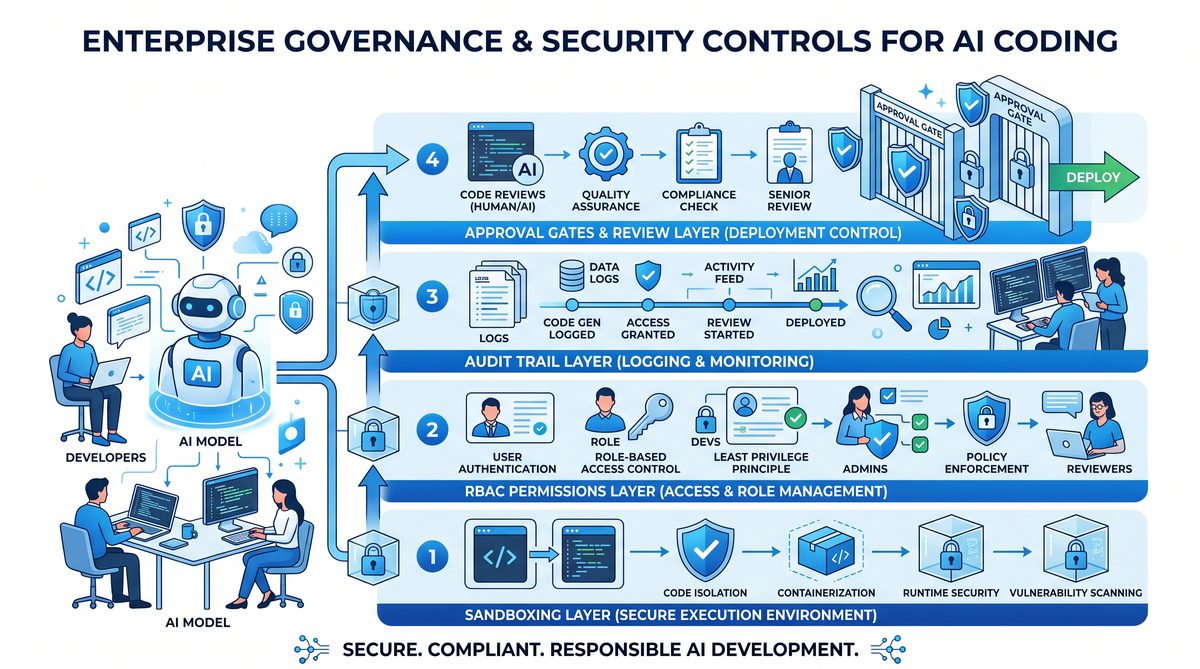
Security and governance are paramount concerns for enterprises adopting AI coding agents. OpenAI Codex addresses these with comprehensive enterprise-grade controls, including Role-Based Access Control (RBAC), sandboxed execution environments, and auditable workspaces. These features enable organizations to:
- Control user permissions: RBAC ensures that developers and teams have appropriate access to codebases and AI functionalities based on their roles, reducing the risk of unauthorized actions.
- Isolate and contain AI executions: Sandboxing prevents potentially unsafe code from affecting production systems, providing a secure environment for AI-assisted programming.
- Maintain audit trails: All interactions with Codex are logged and can be reviewed for compliance, security audits, and troubleshooting.
This level of control is critical for enterprises operating in regulated industries such as finance, healthcare, and government, where strict compliance with data privacy and security standards is mandatory. The ability to safely integrate AI coding agents into sensitive development workflows without compromising governance marks a significant advancement.
Transforming Cross-Functional Collaboration
Beyond individual developer productivity, Codex also fosters enhanced collaboration across teams and departments. Its natural language interface allows non-developer stakeholders—such as product managers, QA engineers, and security analysts—to engage meaningfully with the coding process. This democratization of software development promotes:
- Clearer communication: Stakeholders can specify requirements, review AI-generated code snippets, and provide feedback in an accessible manner, bridging the gap between technical and non-technical teams.
- Faster iteration cycles: Collaborative workflows enabled by Codex reduce misunderstandings and rework, speeding up feature delivery by aligning expectations early in the development cycle.
- Knowledge sharing: Developers can use Codex to document code automatically and generate training materials, facilitating onboarding and continuous learning. This helps preserve institutional knowledge and accelerates team ramp-up times.
Such capabilities align with modern DevOps and Agile methodologies, where rapid iteration and cross-functional teamwork are fundamental to success.
Strategic Implications for Enterprise AI Adoption
The deployment of OpenAI Codex within large organizations reflects a broader strategic shift towards integrating AI deeply into software engineering practices. Enterprises leveraging Codex can expect to:
- Gain competitive advantage: Faster innovation cycles and higher-quality code translate into superior products and services.
- Optimize resource allocation: AI-assisted development reduces reliance on scarce expert developers for routine tasks, optimizing team capacity.
- Improve agility: Enterprises can respond more quickly to market changes, regulatory updates, and customer feedback.
- Mitigate risks: With built-in security and compliance controls, organizations can adopt AI confidently without exposing themselves to undue vulnerabilities.
The enterprise adoption patterns recognized by Gartner reflect a broader trend across industries. Our collection of enterprise AI automation case studies from 2026 documents how organizations across finance, healthcare, and manufacturing are deploying AI agents to transform their operational workflows and achieve measurable productivity gains.
In summary, OpenAI Codex’s leadership position in the Gartner Magic Quadrant is not only a recognition of its technical excellence but also a testament to its practical value in real-world enterprise environments. Its blend of advanced AI capabilities, seamless tool integration, robust security controls, and collaborative features makes it an indispensable asset for modern software development teams aiming to harness the full potential of AI.
Enterprise Impact and Future Prospects of OpenAI Codex
OpenAI Codex’s recognition as a Leader in the 2026 Gartner Magic Quadrant for Enterprise AI Coding Agents underscores its transformative impact on software development workflows across industries. The platform’s adoption by over 4 million users weekly and integration into high-profile enterprise environments such as Cisco, Datadog, and NVIDIA highlights its scalability, robustness, and versatility in addressing complex coding challenges.
Powered by the cutting-edge GPT-5.5 architecture, Codex sets a new benchmark for AI-assisted development by delivering stronger tool use capabilities, significantly faster code generation, and comprehensive enterprise controls. These controls, including role-based access control (RBAC), sandboxing, and auditable workspaces, are critical for organizations operating in regulated industries or environments with stringent security requirements. The ability to manage permissions meticulously and maintain detailed audit trails ensures compliance and governance without sacrificing development agility.
One of the most compelling case studies demonstrating Codex’s enterprise value is Cisco’s accelerated development of their AI Defense platform. By leveraging Codex, Cisco compressed a process that traditionally took quarters into mere weeks, showcasing how AI coding agents can dramatically reduce time-to-market for mission-critical applications. This acceleration not only improves competitive positioning but also enables rapid iteration and innovation cycles, allowing development teams to respond swiftly to evolving business needs and cybersecurity threats.
Looking ahead, the trajectory for Codex and similar AI coding agents is poised to deepen integration with enterprise DevOps pipelines and cloud-native environments. Enhanced interoperability with popular development tools and CI/CD platforms will facilitate seamless embedding of AI assistance throughout the software lifecycle—from initial design and prototyping to testing and deployment. Furthermore, ongoing advancements in natural language understanding and contextual awareness will empower Codex to provide more precise, contextually relevant code suggestions, reducing manual intervention and error rates.
OpenAI’s commitment to continuous improvement is also evident in its focus on ethical AI development and user trust. By incorporating rigorous security measures and transparent governance frameworks, Codex addresses critical concerns around data privacy and intellectual property protection, which are paramount for enterprise adoption. As AI coding agents evolve, these aspects will remain central to fostering widespread organizational confidence and unlocking the full potential of AI-driven software engineering.
In addition to its current capabilities, the future roadmap for Codex includes expanding multilingual programming support and enhancing collaboration features that enable distributed teams to co-develop code more effectively. This will further democratize access to AI-assisted development, making it feasible for companies of all sizes and sectors to harness the power of generative AI.
Advanced Technical Considerations: Fine-Tuning, Prompt Engineering, and Model Customization
While OpenAI Codex offers exceptional out-of-the-box performance, enterprises with specialized requirements often pursue fine-tuning and prompt engineering to tailor the model’s behavior to specific domains, coding standards, or project contexts. Fine-tuning involves retraining the GPT-5.5 base model on proprietary codebases or curated datasets, enabling Codex to internalize company-specific patterns, libraries, and compliance rules.
For example, a financial institution might fine-tune Codex on secure coding practices and internal APIs, ensuring generated code adheres strictly to regulatory mandates such as PCI-DSS or GDPR. This reduces the risk of inadvertent non-compliance and accelerates internal code review cycles.
Prompt engineering, on the other hand, focuses on crafting precise natural language prompts to elicit desired outputs from Codex without retraining. Techniques include:
- Contextual Priming: Providing sample code snippets or detailed instructions at the start of a session to guide Codex’s output style and content.
- Constraint Specification: Embedding explicit constraints in prompts, such as “generate code compliant with OWASP standards” or “use only approved libraries.”
- Iterative Refinement: Employing multi-step prompting where Codex generates code, receives human feedback, and refines outputs in subsequent cycles.
These advanced techniques enable enterprises to maximize Codex’s value while maintaining control over output quality and alignment with internal policies. Moreover, OpenAI provides tools and APIs that facilitate fine-tuning and prompt management at scale, integrating seamlessly with enterprise MLOps workflows.
Case Study: Integrating OpenAI Codex into a DevSecOps Pipeline
To illustrate Codex’s advanced enterprise applications, consider a large multinational corporation that integrated Codex into their DevSecOps pipeline to enhance security automation and developer productivity. Prior to Codex adoption, the company faced challenges with manual code reviews and delayed vulnerability detection, resulting in prolonged release cycles and increased risk exposure.
By embedding Codex into their CI/CD process, the company enabled automated generation of secure code snippets and inline security checks. Codex was configured to:
- Automatically generate code compliant with internal security policies, such as input validation and encryption standards.
- Scan pull requests for common vulnerabilities using embedded static analysis capabilities, flagging issues before integration.
- Generate detailed documentation and remediation suggestions for identified security flaws, facilitating faster developer response.
This integration resulted in a 30% reduction in security-related bugs reaching production and a 25% acceleration in release velocity. Furthermore, the automated documentation generated by Codex improved cross-team communication and compliance reporting, streamlining audits and reducing operational overhead.
Such case studies demonstrate how Codex not only augments coding efficiency but also elevates security and compliance postures in complex enterprise environments, validating its leadership status and strategic value.
Conclusion
OpenAI Codex’s designation as a Leader in Gartner’s 2026 Magic Quadrant for Enterprise AI Coding Agents reflects its dominant position in redefining how software is written, tested, and deployed in enterprise settings. Its widespread adoption, robust feature set, and deep enterprise-grade security controls make it a critical asset for organizations aiming to accelerate innovation while maintaining stringent compliance standards.
The example set by Cisco’s rapid development of an AI Defense platform illustrates the tangible business value Codex delivers by significantly shortening development cycles and enhancing productivity. As AI coding agents continue to mature, their integration into complex software ecosystems will only deepen, driving more intelligent, efficient, and secure development practices.
For developers and enterprise technology leaders, embracing AI coding agents like OpenAI Codex is not just about leveraging automation—it’s about transforming the software development paradigm to meet the demands of a fast-paced, competitive market. With its leadership status confirmed by Gartner and a clear roadmap for future enhancements, Codex stands out as the premier choice for enterprises seeking to harness the power of AI to unlock new levels of developer productivity and innovation.
Useful Links
- OpenAI Codex Official Blog
- OpenAI Codex Developer Documentation
- Gartner Magic Quadrant for Enterprise AI Coding Agents 2026
- OpenAI Codex Example Repositories on GitHub
- Cisco Annual Cybersecurity Report 2026
Access 40,000+ AI Prompts for ChatGPT, Claude & Codex — Free!
Subscribe to get instant access to our complete Notion Prompt Library — the largest curated collection of prompts for ChatGPT, Claude, OpenAI Codex, and other leading AI models. Optimized for real-world workflows across coding, research, content creation, and business.
