
PLAYBOOK: Voice-First AI Workflows with GPT-Live
By Markos Symeonides
Table of Contents
- Introduction: Why Voice-First with GPT-Live
- GPT-Live Reasoning Modes and Best-Fit Table
- 1. Voice-First Design (2 prompts)
- 2. Full-Duplex Conversation (2 prompts)
- 3. Live Translation (2 prompts)
- 4. Voice + Visual (2 prompts)
- 5. Enterprise Voice (2 prompts)
- Conclusion: Deployment Checklist and Next Steps
- Resources and Further Reading
Introduction: Why Voice-First with GPT-Live
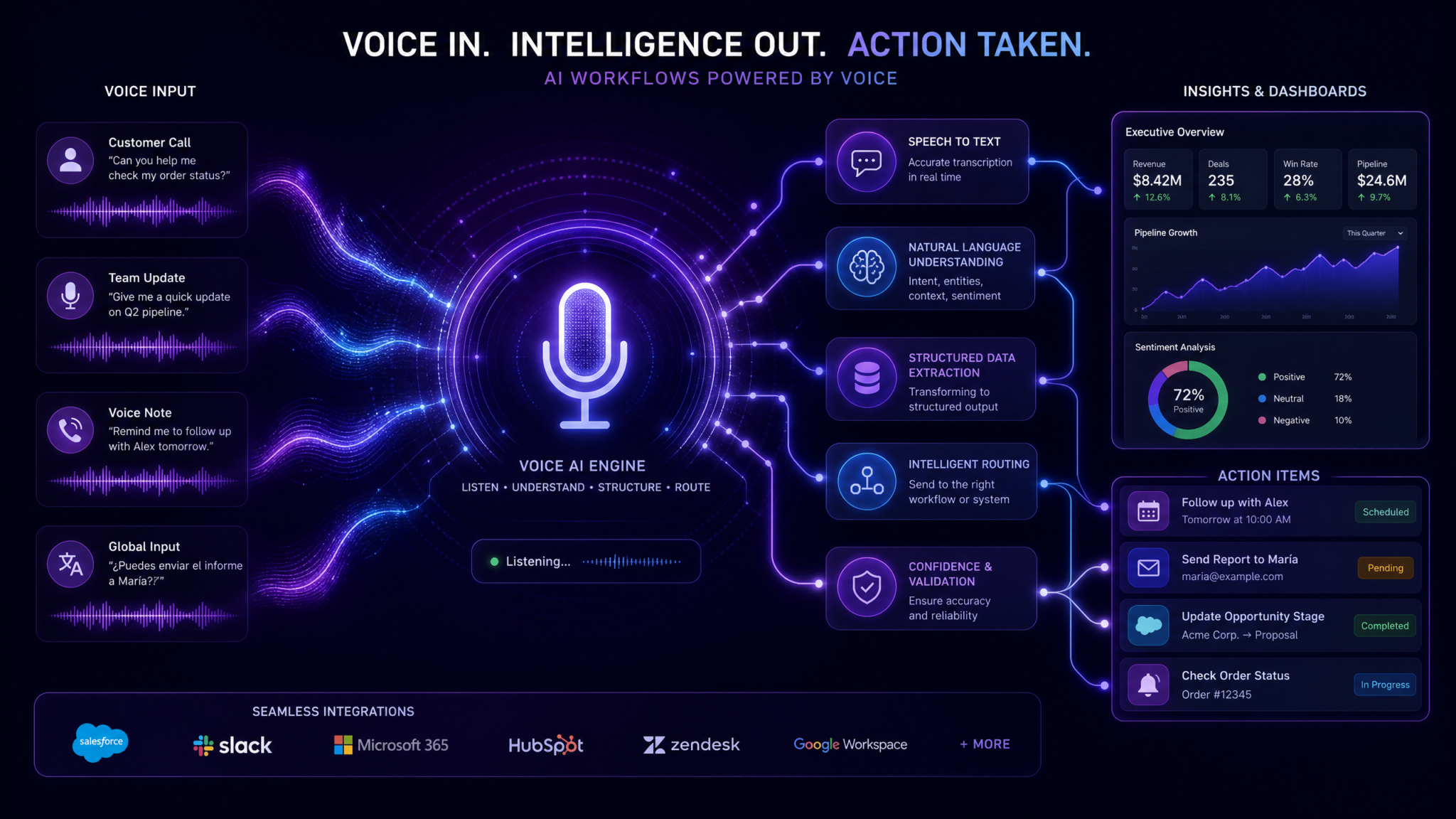
GPT-Live has shifted the design space for conversational AI by enabling full-duplex audio streams, visual card rendering, and direct access to the next-generation GPT-5.5 model with three distinct reasoning modes: Instant, Medium, and High. With more than 150M weekly users relying on real-time interactions, product and engineering teams must architect workflows that are latency-aware, context-rich, and ergonomically tuned for human conversation.
This playbook distills production-tested approaches into ten concrete prompts and detailed integration notes. Each prompt is structured for GPT-Live’s capabilities: it prescribes an instruction payload, specifies the recommended reasoning mode, and outlines both expected outputs and implementation tips for robust voice-first experiences.
Enterprise teams deploying voice workflows alongside code generation capabilities should understand how Codex handles complex technical tasks. Our Codex enterprise deployment playbook covers team onboarding, access control, and usage governance prompts that complement voice-first workflow design with proper organizational controls.
GPT-Live Reasoning Modes and Best-Fit Table
GPT-Live exposes three reasoning modes intended to balance latency and cognitive depth. Selecting the appropriate mode is fundamental to the user experience in voice-first workflows.
| Mode | Latency Profile | Strengths | When to Use |
|---|---|---|---|
| Instant | Ultra low (tens to low hundreds ms) | Short-turn answers, quick confirmations, safety-pattern checks | Interrupts, short clarifications, UI microinteractions |
| Medium | Balanced (hundreds ms to ~1s) | Multi-step reasoning, context summarization, simple synthesis | Follow-up responses, summarization, light inference |
| High | Higher latency (seconds) | Complex synthesis, deep analysis, critical decision support | Final deliverables, compliance checks, detailed planning |
Use Instant for conversational glue and turn-taking heuristics; Medium for coherent multi-turn behavior; High for any task where output correctness, chain-of-thought, or compliance justification is required. Architect your system to dynamically select modes based on intent detection and session state.
1. Voice-First Design
Voice-first design is not just moving UI to audio. It is rethinking conversation architecture, context persistence, and progressive disclosure. The two prompts below focus on high-level architecture and multi-turn context handling tailored for GPT-Live.
Prompt 1 — Conversation Flow Architecture
Context / Use Case
Designing the conversation flow for a consumer-facing voice assistant integrated into a productivity app. The assistant must orchestrate calendar actions, summarize emails, and escalate to human support. It will run on GPT-Live with real-time audio input and should use Instant for prompts that control flow, Medium for summaries, and High for escalation justification.
Full Prompt (to GPT-Live):
System: You are a senior voice UX architect advising on a production conversation flow for a voice assistant embedded in a productivity suite. The environment supports GPT-Live full-duplex audio, visual cards, and the three reasoning modes: Instant, Medium, High. Produce a modular conversation flow spec that includes: (A) user intents and slot sets for calendar, email-summary, and support-escalation; (B) state machine transitions with gating conditions; (C) recommended reasoning mode per transition and rationale; (D) a fallback and re-prompt policy optimized for low latency and high accuracy; (E) card display triggers for visual confirmation with payload prototypes (title, lines, actions). Output the spec as JSON with human-readable comments and a sequential example trace of a user asking to “summarize my unread emails and schedule a follow-up next week”. Prioritize real-time constraints: keep Instant decisions under 300ms, Medium under 1s, High reserved for final confirmations. End with a short checklist for monitoring key telemetry (latency, misrecognition rate, user interruption frequency).
Expected Deliverable
- JSON-formatted conversation flow spec including intents, states, transitions, and reasoning-mode assignments.
- Example trace illustrating tokens, decisions, and card payloads for the sample user request.
- Monitoring checklist with actionable metrics and thresholds.
Implementation Notes
- Request Instant mode for turn-taking decisions and quick slot confirmations. Configure Medium for intermediate summarization tasks created from partial transcripts, and use High when generating legal or compliance-sensitive messages (e.g., data sharing confirmations).
- Implement a light-weight intent classifier on the client to pre-route audio to the appropriate reasoning mode. Use a confidence threshold to determine whether to escalate from Instant to Medium for more context.
- Schema for visual cards should be normalized. Keep card payloads minimal to avoid over-rendering; include action identifiers that map back to voice intents.
- Instrument event IDs for each transition to feed back into telemetry; correlate with audio latency and recognition confidence to tune thresholds.
Voice Considerations
- Design prompts to confirm ambiguous slots with brief, explicit audio confirmations (e.g., “Did you mean February 28th?”). These confirmations should be Instant-mode responses.
- Support partial hypotheses from ASR as intermediate confirmation tokens. For example, if ASR confidence is low (<70%), add a short confirmation step before executing actions.
- When a task will take longer to compute (Medium/High), use an immediate Instant-mode acknowledgment: “Got it — I’ll review your unread emails and prepare a summary. This may take a few seconds.” This preserves conversational continuity.
Prompt 2 — Multi-Turn Context Management
Context / Use Case
Managing multi-turn context for an enterprise meeting assistant that must maintain speaker-attribution, transient context windows, and long-term context memory (policies, user preferences). The assistant must operate efficiently across short interactive turns and extended post-meeting analysis.
Full Prompt (to GPT-Live):
System: You are a conversation systems engineer designing a context strategy for a meeting assistant running on GPT-Live (full-duplex). Provide an explicit policy for: (A) ephemeral context (last N minutes/utterances), (B) persistent memory (user preferences and permissions), (C) speaker-attribution and pronoun resolution, and (D) summarization windows and roll-up frequency. For each policy item, indicate data retention semantics, recommended storage model (client encrypted cache, server-side session store, or long-term memory service), and when to call Medium vs High reasoning. Produce pseudocode for maintaining context windows, pruning strategies, and techniques to prevent hallucination across turns (e.g., provenance tagging). Finally, include an example of how to merge partial transcripts from the full-duplex stream into the context store while preserving causal order and speaker confidence.
Expected Deliverable
- Policy document with concrete retention periods (e.g., ephemeral = last 10 utterances or 60s), storage model recommendations, and mode mapping.
- Pseudocode for context window management, including pruning and provenance metadata.
- Operational guidance to prevent cross-session leakage and to support auditability for enterprise requirements.
Implementation Notes
- Ephemeral context should be stored on the client or edge to minimize exposure; only summarized tokens or metadata should be sent server-side when necessary.
- Apply provenance tags to each piece of context:
{source: "ASR", confidence: 0.92, speaker: "user_3", timestamp: 1680000000}. When the model produces assertions, append model-confidence and provenance to each factual claim. - When merging partial transcripts from full-duplex audio, use sequence numbers and timecodes provided by the audio stream to place fragments into causal order. Resolve conflicts by speaker-confidence heuristics and last-writer-wins for overlapping segments with lower confidence.
- For expensive long-term summarization, schedule High-mode passes off the critical real-time path and notify users that detailed summaries are available once processed.
Voice Considerations
- Use explicit audio signals to indicate context resets (e.g., a short tone when persistent context is cleared by user command) and to indicate when the assistant is switching reasoning modes that may add noticeable latency.
- Provide short progressive audio updates when the model is performing background High-mode processing: “Working on your meeting digest now — I’ll alert you when it’s ready.”
- When the assistant relies on low-confidence transcript fragments, voice responses should show hedge language and prompt verification: “I heard ‘project kickoff’ but I’m not sure — did you mean the product kickoff?”
2. Full-Duplex Conversation
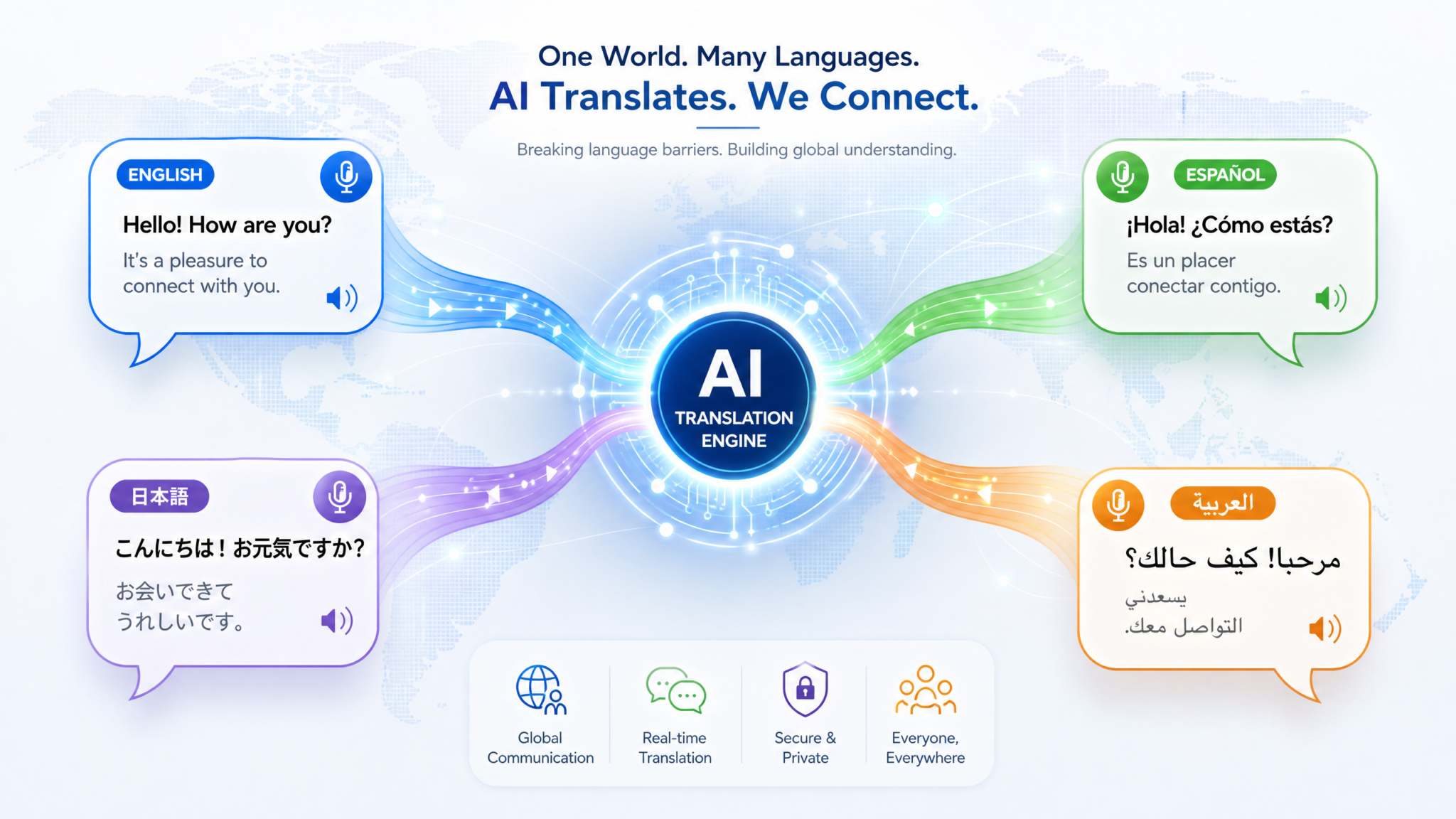
Full-duplex fundamentally changes turn-taking: the assistant can react while the user is speaking and can interleave confirmations and interruptions. The next two prompts address active listening and interruption handling for systems that need to appear attentive without being disruptive.
Prompt 3 — Active Listening Patterns
Context / Use Case
A telemedicine application where the assistant provides summarization and clinical prompts while the patient speaks. The assistant should surface clarifying questions in short audio while avoiding cutting off the patient or mis-attributing words.
Full Prompt (to GPT-Live):
System: You are a dialogue strategist for a telemedicine assistant running on GPT-Live full-duplex. Produce an active-listening policy that includes: (A) micro-confirmations and their timing constraints; (B) non-intrusive audio cues for empathic acknowledgement; (C) rules to generate clarifying utterances without truncating the speaker; (D) heuristics to detect emotional state and escalate to human triage. For each rule, specify the recommended reasoning mode and an example audio phrase (under 3 seconds) suitable for the context. Provide a short decision tree that maps ASR confidence, speech duration, and detected sentiment to an action (e.g., listen longer, inject micro-confirmation, escalate).
Expected Deliverable
- Actionable active-listening policy with timed micro-confirmations, audio phrase library, and decision tree mapping signals to actions.
- Examples of audio utterances tailored for varying emotional states and clinical contexts.
Implementation Notes
- Micro-confirmations should be Instant-mode utterances and must be constrained to short durations (≤ 1.5s). Examples: “Hmm,” “I see,” “Go on—”.
- Use an on-device sentiment detector to trigger empathy templates. If sentiment is strongly negative and vocabulary contains crisis terms, route to human triage and use a High-mode justification to record the rationale.
- Insert micro-confirmations on phrase boundaries identified by prosodic markers rather than arbitrary time windows. This reduces perception of interruptions.
- For privacy, ensure micro-confirmation reasoning is handled in a privacy-preserving way when it involves sensitive contents; minimal context and hashed identifiers only.
Voice Considerations
- Timbre and prosody of micro-confirmations matter: prefer neutral, short prosodic contours rather than rising intonation which may signal a question. Keep micro-confirmation volume slightly lower than the primary voice to reduce perceived intrusiveness.
- For empathetic acknowledgements, use slower cadence and slightly lower pitch, but limit frequency to avoid patronizing repetition.
- Allow users to configure interaction style (concise, neutral, empathic), stored in persistent memory as a preference.
Prompt 4 — Interruption Handling
Context / Use Case
A smart assistant in a car that must interject safety-critical prompts (e.g., collision warnings) while minimizing interference with navigation or conversation. The assistant must differentiate between high-priority interrupts and low-priority clarifications and handle user interruptions directed at the assistant mid-utterance.
Full Prompt (to GPT-Live):
System: You are a safety-critical interaction designer for an in-vehicle voice assistant using GPT-Live full-duplex. Provide an interruption policy that covers: (A) classification of interrupt priority levels and mapping to audio behaviors; (B) rules for assistant-initiated interrupts versus user-initiated interrupts; (C) a preemption model for when the assistant should cut off itself; (D) recommended reasoning mode for priority detection and a short example of a safety prompt. Output a state diagram and a short snippet of pseudocode that demonstrates how to cancel output audio in-flight and surface a higher-priority utterance with under 300ms switch-over.
Expected Deliverable
- Interruption priority taxonomy and audio behavior mapping (urgency, tone, channeling).
- State diagram and pseudocode for audio preemption, including how to select Instant mode for preemption decisions.
- Examples of safety and courtesy prompts with suggested voice profile.
Implementation Notes
- Assign priorities: Critical (safety hazards) > High (system errors, timeouts) > Medium (clarifications) > Low (nonessential suggestions). Critical events must use an interrupt audio channel with guaranteed preemptive rights.
- Implement a preemption API in the client audio stack that can stop ongoing TTS frames and immediately switch to the new audio payload. The preemption decision should be run through Instant reasoning mode.
- Use a small on-device classifier to detect user-initiated interruptions (e.g., keyword + voice activity) and signal the server to cancel ongoing High-mode output generation. Because GPT-Live is full-duplex, you must ensure the server can accept the interruption stream and respond within the designed latency budget.
- When an assistant cuts itself off, it should announce the reason briefly: “Stopping — urgent alert from vehicle sensors.” Provide a brief summary if needed afterward.
Voice Considerations
- Use distinct acoustic profiles for priorities. Critical messages should be prominent, short, and repeatable. Avoid long, complex sentences in interrupt channels.
- Consider multimodal redundancy: when interrupting in a vehicle, flash dashboard LEDs or haptic feedback in addition to voice to ensure awareness.
- Test interruption collisions across different network conditions and ensure fallbacks (on-device canned prompts) for worst-case scenarios.
3. Live Translation
Real-time translation is one of the most compelling uses of full-duplex voice AI. The two prompts below enable fast translation pipelines and orchestration for multilingual meetings.
Prompt 5 — Real-Time Translation Engine
Context / Use Case
A conference application requires low-latency voice translation between several language pairs. Requirements: maintain speaker identity, provide inline cards for key phrase translation, and allow automatic toggling between literal and gist translation styles. Service must choose Instant for streaming phrase-level translation and Medium/High for generated minutes or transcripts.
Full Prompt (to GPT-Live):
System: You are an engineer designing a real-time translation engine using GPT-Live full-duplex and GPT-5.5. Generate a translation orchestration design that includes: (A) streaming pipeline for phrase-level translation with word-level timestamp alignment and speaker attribution; (B) toggles for literal vs gist translation, with example output formats; (C) fallback strategies if ASR confidence is low; (D) visual card schema to surface translated key phrases with original text, transliteration, and phonetics. Specify which reasoning modes to use at each stage and provide a sample mapping for an English→Mandarin micro-translation of the sentence: “Let’s reschedule the demo to next Tuesday morning.”
Expected Deliverable
- Streaming pipeline design with data flows, latency targets, and mode assignments.
- Card schema for translated phrases and sample translation outputs for the example sentence.
Implementation Notes
- Phrase-level Instant translations should operate on short segments (300–1200ms). Implement a segmentation heuristic that uses punctuation and prosodic pauses to create safe boundaries.
- Speaker attribution must be preserved by tagging segments with speaker IDs before sending to translation. Use Speaker-ID confidence to decide whether to attach the tag or mark it as uncertain.
- Store both original and translated tokens with timestamps; this enables accurate rewind and phrase relive functionality in the UI.
- For low ASR confidence segments, offer both literal and gist options and flag the card with a confidence badge. Allow users to request the other style through a voice shortcut (e.g., “Translate that literally”).
Voice Considerations
- Localization of voice synthesis: select TTS voices that match the target language and avoid voices with heavy accent in the output which can reduce intelligibility.
- Include short preambles when switching languages to prime the listener: “Now auto-translating to Mandarin.” Keep preambles short and allow users to disable them.
- When transliteration is necessary, limit the syllable-by-syllable playback; instead, present transliteration visually and speak a phonetic approximation only on request.
Prompt 6 — Multilingual Meetings Orchestration
Context / Use Case
An enterprise video-conference product supports simultaneous interpretation channels and summarized meeting minutes in multiple target languages. The assistant must coordinate channel selection, post-meeting translation passes, and provide live cue cards for attendees in their selected language.
Full Prompt (to GPT-Live):
System: You are an interpreter-engineer architecting multilingual meeting orchestration using GPT-Live. Produce a design that covers: (A) per-participant language preferences and channel mapping; (B) live cue card triggers and timing policies; (C) a batching strategy for high-quality post-meeting translations and minutes; (D) data retention and consent flows when multilingual transcripts cross regional privacy boundaries. Include a sample orchestration timeline for a 45-minute meeting with three languages and a decision matrix that determines when to switch from streaming Instant translation to a Medium/High background pass for final minutes.
Expected Deliverable
- Channel orchestration plan, consent and compliance artifacts, and a timeline sample mapping streaming vs. batch processes.
- Decision matrix for streaming-to-batch escalation, including thresholds for ASR errors, participant count, and regulatory constraints.
Implementation Notes
- Map each participant’s language preference at join time and assign them a channel that receives only their translated audio. This minimizes cross-talk and reduces cognitive load.
- Cue cards should be triggered at semantic boundaries (agenda items, speaker changes). For live translation, trigger cards immediately on detection of an agenda phrase and refine them in a Medium-mode update once the utterance completes.
- Post-meeting High-mode passes should take the full transcript plus ASR provenance to produce polished minutes and legally-stable translations. Store raw audio and transcripts only with explicit consent; implement per-region retention rules.
Voice Considerations
- Enable voice mixing controls so participants can hear their original language faintly alongside the translated channel if desired. Provide clear settings to reduce confusion.
- Allow participants to flag problematic translations via a short voice command to queue content for High-mode retranslation for the minutes.
- When multiple translations occur, maintain a consistent TTS voice per language to build user familiarity.
4. Voice + Visual
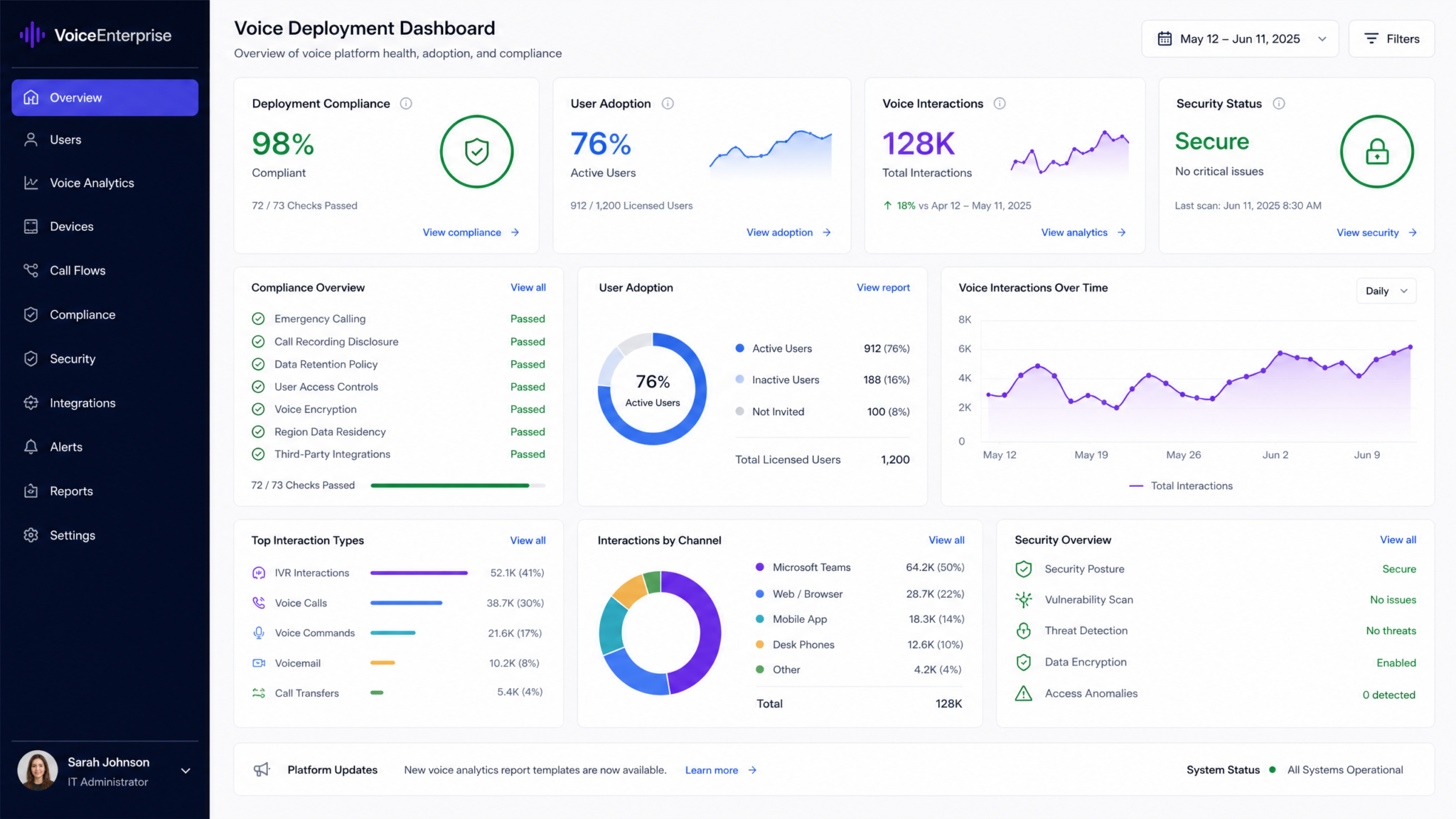
Combining voice with visual cards or dashboards creates powerful multimodal experiences. The two prompts below focus on card-triggered displays and voice-driven dashboards that use GPT-Live’s visual card rendering.
Prompt 7 — Card-Triggered Displays
Context / Use Case
A retail support assistant uses voice to guide in-store personnel. When a user asks about product details the assistant should display a card with image, key specs, inventory counts, and suggested upsells. Cards must be triggered by voice intents and support follow-up voice operations (e.g., “Show me alternatives”).
Full Prompt (to GPT-Live):
System: You are a product designer for a retail voice assistant using GPT-Live with visual cards. Design card-trigger rules and a JSON card schema that includes: title, subtitle, image URL, bullet specs, inventory status, CTAs (voice and tap), and telemetry hooks. For each rule, provide sample voice utterances that trigger the card and suggested voice follow-ups. Add fallback card states for quick network failures and low-confidence entity matches. Finally, provide a short UX rubric for balancing visual density and audio brevity.
Expected Deliverable
- Card-trigger rules and JSON schema with sample payloads for a product query.
- Fallback card variants and a UX rubric that guides the number of bullets and CTAs.
Implementation Notes
- Keep visual card payloads limited to a 3-line digest for mobile and a 5-item spec list for kiosk/desktop. Include action identifiers for voice commands that map exactly to backend endpoints (e.g., “order_more_sku_12345”).
- Attach telemetry to both card opens and follow-up voice intents. Track which triggered a conversion to optimize card layout.
- For low-confidence entity matches, present a disambiguation card that uses Instant-mode micro-confirmations to quickly validate the selection.
- Cache high-frequency images locally to avoid card stutter when toggling frequently accessed SKUs.
Voice Considerations
- When a card is displayed, provide a single short audio summary that matches the card title. Avoid repeating full spec lists via TTS; instead invite follow-up: “I pulled up the Luma 3000 — would you like the battery specs or review highlights?”
- Design voice CTAs that mirror tap CTAs to reduce cognitive mismatch. Example: card CTA “Reserve” → voice command “Reserve this now”.
- For shared displays (store kiosks), include a short audio privacy notice when showing cards that include customer-specific data.
Prompt 8 — Voice-Guided Dashboards
Context / Use Case
An operations command center uses voice to query KPI dashboards. The assistant should surface multi-part visualizations on demand and provide voice-led drilldowns. Dashboards must support voice filters and provide printable export options on High-mode confirmation.
Full Prompt (to GPT-Live):
System: You are a data product lead building voice-guided dashboards with GPT-Live. Create a design for voice-driven dashboard interactions that covers: (A) voice filter grammar for time windows, dimensions, and KPIs; (B) visualization templates and card payload formats for charts; (C) drilldown voice flows and their reasoning mode mapping; (D) a confirmation flow for exporting or sharing dashboard snapshots. Include a sample voice session that queries “Show last quarter revenue by region and drill into EMEA marketing spend,” and produce expected visual payloads and voice responses.
Expected Deliverable
- Design for voice filter grammar, visualization templates, and export confirmation flows.
- Sample visual payloads for the example voice session and recommended reasoning modes for each step.
Implementation Notes
- Map voice grammar to a declarative query language (e.g., simplified ADQL-like schema) and pass normalized queries to the visualization service. Use Medium reasoning for query normalization and High reasoning for export justification and redaction checks.
- The dashboard card schema should include multiple chart tiles with metadata: chart_type, data_series, filters, time_range, and an action map for voice drilldowns.
- On drilldown, send only the delta filters to GPT-Live to minimize context size. For complex drilldowns requiring data joins, schedule a High-mode pass before sharing or exporting.
- Implement previews in Instant mode: a short summary “I can show revenue by region — ok to proceed?” before launching the visualization rendering for users who prefer confirmations.
Voice Considerations
- When discussing numeric KPIs, use consistent speaking rates and group digits for clarity (e.g., “one point two billion”).
- Provide a quick audio hint for multi-chart cards that guides where to drill: “Tap the left chart to expand region-level detail, or say ‘drill EMEA’.”
- For export confirmations containing sensitive metrics, require a spoken passphrase or a role-based confirmation to avoid accidental sharing.
5. Enterprise Voice
Enterprise deployments introduce requirements for onboarding, governance, security, and compliance. The final two prompts address voice agent onboarding and compliance-aware workflows.
Prompt 9 — Voice Agent Onboarding
Context / Use Case
Large enterprises require a standardized onboarding flow for voice agents that enforces corporate voice brand, sensitivity filters, role-based permissions, and knowledge-base alignment. Onboarding must be scriptable and auditable.
Full Prompt (to GPT-Live):
System: You are an enterprise voice architect creating an onboarding playbook for voice agents built on GPT-Live. Produce: (A) a step-by-step onboarding checklist covering voice persona, TTS voice selection, knowledge source connectors, and role-based permission mapping; (B) templated JSON manifests that define an agent (persona, voice, allowed intents, blacklisted phrases, data retention policy); (C) automated tests and probes to validate behavior under low-network and noisy audio conditions; (D) audit logging schema for traceability. Include a sample agent manifest for a “HR Assistant” that can answer policy questions and schedule interviews while obeying privacy constraints.
Expected Deliverable
- Onboarding checklist, agent manifest templates, test plan, and audit logging schema.
- Sample HR Assistant manifest JSON with explicit permission mappings and blacklists.
Implementation Notes
- Agent manifests should be declarative and include: persona_id, tts_profile, allowed_intents[], prohibited_entities[], retention_policy, escalation_endpoints[], and audit_policy. Keep manifests versioned and signed.
- Automated test harness should simulate ASR noise models and run intent coverage tests across representative utterances. Tests should include adversarial queries to detect policy violations.
- Audit logs must include immutable event IDs, timestamps, reasoning mode used, prompt hash (for reproducibility), and the output snapshot. Store logs in an append-only store with encryption at rest.
- Provide a revocation mechanism to disable agents quickly if they violate policy; propagate revocations to edge caches.
Voice Considerations
- Design persona TTS carefully for enterprise audiences; prefer neutral, clear voices and avoid overly casual prosody unless the organization specifically requires it.
- For sensitive queries (HR, legal), add an Intermediate voice formalization step: use Instant to acknowledge, then Medium to fetch, and High to generate any content with redaction and justification metadata.
- Support a spoken onboarding checklist that walks administrators through the manifest and allows voice-based confirmation for non-privileged steps.
GPT-Live’s voice capabilities represent one pillar of OpenAI’s broader platform convergence. The complete guide to OpenAI’s superapp vision explains how ChatGPT, Codex, and Agents are being unified into an integrated experience where voice, text, and autonomous execution work together seamlessly.
Prompt 10 — Compliance-Aware Workflows
Context / Use Case
A regulated financial services firm must ensure voice interactions comply with recordkeeping, redaction rules, and supervisory review. Voice agents must automatically redact PII from transcripts, detect potential suitability violations, and generate audit-ready explanations for decisioning events.
Full Prompt (to GPT-Live):
System: You are a compliance engineer designing voice workflows for regulated interactions on GPT-Live. Produce a compliance workflow that includes: (A) PII detection and redaction pipeline with confidence thresholds and manual review flags; (B) suitability and fair-practice detectors with rule sets that trigger mandatory High-mode explanations; (C) an audit trail format that ties utterances to decisions, model reasoning mode, and redaction operations; (D) a sample post-interaction report for supervisory review that includes timestamps, redacted excerpts, and model-supplied justification. Provide a template for the manual review UI and the exact fields required for regulatory submission.
Expected Deliverable
- PII redaction pipeline, suitability detectors, audit trail schema, and review UI template.
- Sample supervisory report including redacted text, decision metadata, and timestamps.
Implementation Notes
- Run an on-device PII detector first to avoid sending raw PII upstream. Use a confidence threshold to determine whether to redact or blur and to flag for manual review.
- When a suitability rule is triggered, immediately log the event with the relevant portion of the transcript (redacted), the model reasoning mode, and a hashed copy of the full prompt and response for reproducibility.
- High-mode is mandatory for any automated decision that materially affects a customer (credit decisions, investment recommendations). Generate an auditable explanation and a summary of evidence used (provenance tokens) and store them in the audit trail.
- For regulatory submissions, include both redacted and encrypted full transcripts with controlled access policies and retention metadata. Provide export in common archival formats (WARC/JSONL) with signed manifests.
Voice Considerations
- For compliance-critical interactions, announce audit logging at the start: “This call may be recorded and reviewed for compliance purposes.” Follow local legal requirements for notification.
- Use a neutral voice for compliance messages and avoid emotive prosody which can influence user responses.
- Offer voice-first overrides for customers who do not want recording but require service, routing them to human-assisted channels documented in the manifest.
Conclusion: Deployment Checklist and Next Steps
Deploying voice-first workflows with GPT-Live requires orchestration across audio pipelines, reasoning-mode selection, provenance-aware context management, and robust telemetry. Below is a concise checklist to operationalize the playbook features described above.
- Design: Create modular conversation flow specs and agent manifests with versioning and auditable changes.
- Latency Architecture: Implement a triage layer that selects Instant/Medium/High modes based on intent and confidence.
- Context Strategy: Maintain ephemeral and persistent stores with provenance tags; implement pruning and summarization strategies.
- Full-Duplex Handling: Implement preemption APIs, interruption heuristics, and micro-confirmation patterns with Instant-mode enforcement.
- Multimodal UX: Normalize visual card schema and ensure voice-card parity for CTAs and follow-ups.
- Privacy & Compliance: Embed PII detection at the edge, produce audit trails, and use High-mode for decisions with mandatory explanations.
- Monitoring & Metrics: Track latency by reasoning mode, ASR confidence, misrecognition rates, interruption frequency, and user satisfaction (NPS/CSAT).
- Testing: Run adversarial test suites and noise-resilience simulations for production readiness.
- Governance: Implement revocation flows and role-based access to agent manifests and logs.
- Continuous Improvement: Use weekly telemetry to refine mode thresholds and retrain small local classifiers for pre-routing.
Resources and Further Reading
For organizations evaluating multi-vendor voice AI strategies, understanding competitive positioning is valuable. Our walkthrough of setting up Gemini 3.1 Pro for enterprise deployments provides a comparison point for teams considering how GPT-Live stacks up against Google’s enterprise voice and multimodal offerings.
If you are building a compliance-forward deployment and want a prescriptive checklist that maps regulatory obligations to technical controls for voice systems, we maintain an extended checklist and example audit templates: The Complete Guide to ChatGPT and Codex Shared Context
Appendix: Example Pseudocode Snippets
Below are targeted snippets you can adapt to implement key functions discussed above.
Context Window Management (Pseudocode)
class ContextStore:
    def __init__(self, max_turns=10, max_seconds=60):
        self.turns = deque()
        self.max_turns = max_turns
        self.max_seconds = max_seconds

    def add_turn(self, utterance):
        now = time.time()
        self.turns.append({
            "text": utterance.text,
            "speaker": utterance.speaker,
            "confidence": utterance.confidence,
            "timestamp": now,
            "provenance": utterance.provenance
        })
        self.prune()

    def prune(self):
        # remove oldest by counts
        while len(self.turns) > self.max_turns:
            self.turns.popleft()
        # remove by time window
        cutoff = time.time() - self.max_seconds
        while self.turns and self.turns[0]['timestamp'] < cutoff:
            self.turns.popleft()

    def as_prompt(self):
        # attach provenance metadata inline or as JSON tokens
        return "\n".join([f"[{t['speaker']}|{t['confidence']}] {t['text']}" for t in self.turns])
Audio Preemption (Pseudocode)
def preempt_audio(current_tts_stream, new_tts_payload):
    # signal client audio stack to stop current frames
    current_tts_stream.cancel()
    # flush buffers & immediately start new payload
    client_audio.play(new_tts_payload)
Mode Selection Heuristic (Pseudocode)
def select_mode(intent, confidence, user_pref):
    if intent in ['safety_alert', 'system_error']:
        return 'Instant'
    if confidence < 0.5:
        return 'Instant'  # confirm quickly
    if intent in ['summarize', 'translate']:
        return 'Medium'
    if intent in ['final_report', 'regulatory_explanation']:
        return 'High'
    # user override
    if user_pref == 'low_latency':
        return 'Instant'
    return 'Medium'
Access 40,000+ AI Prompts for ChatGPT, Claude & Codex — Free!
Subscribe to get instant access to our complete Notion Prompt Library — the largest curated collection of prompts for ChatGPT, Claude, OpenAI Codex, and other leading AI models. Optimized for real-world workflows across coding, research, content creation, and business.
Final Words
GPT-Live’s full-duplex capability and GPT-5.5 reasoning power enables a new class of voice-first applications — but these systems require careful orchestration across modes, context, and UX. Use the ten prompts in this playbook as starting points: adapt the JSON templates, refine the heuristics with telemetry, and validate voice profiles with real users in real environments. For teams building production-grade voice agents, focus first on the mode-selection triage layer and provenance-driven context management to minimize hallucinations and meet enterprise constraints.
If you’d like a downloadable kit that includes agent manifest templates, sample telemetry dashboards, and voice phrase libraries referenced in this playbook, contact the author team at Chat GPT AI Hub for an implementation bundle.
