
How to Build a Multi-Agent Workflow with ChatGPT Work and GPT-5.6 Terra — Connecting Gmail, Slack, and GitHub for Automated Project Management

How to Build a Multi-Agent Workflow with ChatGPT Work and GPT-5.6 Terra — Connecting Gmail, Slack, and GitHub for Automated Project Management
Author: Markos Symeonides
Introduction and scope
The advent of ChatGPT Work, released to the public on July 9, 2026, introduced a new paradigm for enterprise automation: the orchestration of multi-step, multi-program agent workflows that can operate across apps and services with minimal human intervention. Paired with the GPT-5.6 Terra medium-tier model, teams can deploy robust automation pipelines that triage emails, surface and relay critical notifications, and enforce code review cycles with scalable and auditable decision logic.
This tutorial guides you through building a concrete, end-to-end multi-agent workflow that connects Gmail for email triage, Slack for real-time notifications, and GitHub for Pull Request (PR) reviews. We will outline setup steps, practical prompt templates, concrete workflow diagrams described in text, error handling strategies, testing and validation procedures, and security considerations. By the end, you will have a blueprint you can adapt to your own project management needs.
Important notes:
- The workflow assumes access to an environment where ChatGPT Work can orchestrate agents that integrate with Gmail, Slack, and GitHub via OAuth credentials and API tokens.
- GPT-5.6 Terra is treated as the medium-tier model capable of reasonable latency and robust reasoning for the described tasks, with a balance of cost and capability.
- All prompts and actions should be tested in a sandbox or staging workspace before deployment to production.
To speed up your onboarding, review the related internal references as you proceed. See
Organizations evaluating their AI strategy will find additional depth in our detailed analysis covering The Complete Guide to Anthropic Claude’s New Legal AI Tools: Thomson Reuters, Harvey, and Everlaw Integration, which explores the practical implementation considerations and decision frameworks relevant to enterprise deployments.
for details on Gmail access patterns,
Developers seeking hands-on implementation guidance can follow our step-by-step walkthrough on How to Use GPT-5.3-Codex for Self-Improving Code: Recursive AI Development Patterns and Practical Implementation, which covers the technical setup, configuration patterns, and troubleshooting approaches for production environments.
for messaging best practices, and
For teams looking to maximize their productivity with structured AI interactions, our comprehensive guide on Codex CLI Prompts Masterclass: 40 Advanced Prompts for Multi-Agent Development, Code Review, and CI/CD Automation provides battle-tested templates and frameworks that complement the workflows discussed above.
for code review workflows. For a broader strategy, see
Developers seeking hands-on implementation guidance can follow our step-by-step walkthrough on How to Build Multi-Agent Workflows with OpenAI Codex: Automating 8-Hour Tasks with Parallel Agent Orchestration, which covers the technical setup, configuration patterns, and troubleshooting approaches for production environments.
.
Prerequisites and concepts you should know
Before you start, ensure your environment includes:
- Access to ChatGPT Work and GPT-5.6 Terra via your organization’s account, with permissions to deploy agent tasks and to configure integrations with Gmail, Slack, and GitHub.
- OAuth credentials and API tokens for Gmail API, Slack API, and GitHub API, with scopes aligned to the actions in this tutorial (read/write where needed).
- Understanding of basic programming concepts (APIs, webhooks, authentication flows) and some familiarity with prompt engineering and agent orchestration.
If you need a refresher on the underlying platforms, consider reviewing the following foundational materials:
- Gmail: OAuth 2.0 and Gmail REST API basics
- Slack: Slack App permissions and Event Subscriptions
- GitHub: OAuth Apps and repository access scopes (pull requests, reviews, checks)
This tutorial intentionally uses concrete, example-safe scenarios to illustrate the end-to-end pipeline. You will adapt the prompts and the policy logic to your actual project constraints.
Where to start in terms of linking the platforms: the first agent will monitor Gmail and perform triage, the second agent will synthesize and relay the triage outcomes to Slack, and the third agent will perform or supervise PR reviews in GitHub. The orchestrator (the meta-agent) coordinates which actions are allowed and which gates apply to each step.
To proceed efficiently, consult the following internal references as you implement each integration step:
For teams looking to maximize their productivity with structured AI interactions, our comprehensive guide on 30 ChatGPT-5.5 Mini Prompts for Data Analysis — From CSV Cleaning to Dashboard-Ready Insights provides battle-tested templates and frameworks that complement the workflows discussed above.
,
Teams implementing these capabilities in production will benefit from the architectural patterns and optimization strategies detailed in Why OpenAI Killed Legacy Models and What the Streamlined ChatGPT Means for Enterprise AI Strategy, which addresses the scaling considerations most relevant to enterprise workloads.
,
The broader context of these developments is explored in our coverage of The Big AI Coding Agents Story: What July 16’s News Means for Developers, which examines the strategic implications and timeline for enterprise adoption.
,
For teams looking to maximize their productivity with structured AI interactions, our comprehensive guide on The Codex Computer Use Playbook — 10 Automation Prompts for Windows Desktop Tasks provides battle-tested templates and frameworks that complement the workflows discussed above.
.
High-level architecture and data flow
The architecture is designed around three core agents, a central orchestrator, and external service endpoints. The agents are:
- Email Agent (Gmail Triage): Listens for new or flagged messages, classifies urgency, extracts key entities (e.g., sender, subject, deadlines), and generates ranked triage actions.
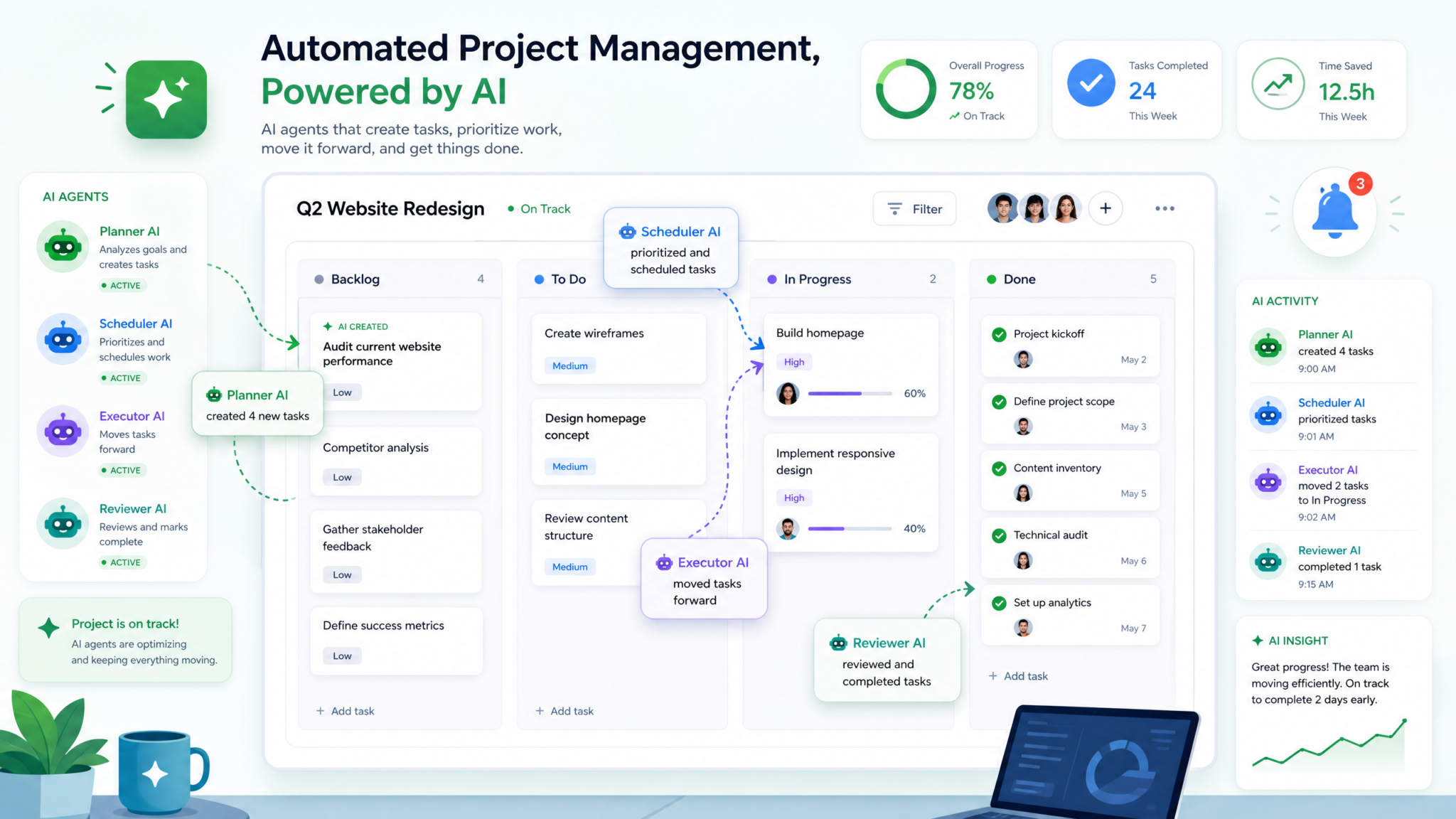
- Notification Agent (Slack): Formats triage results into actionable Slack messages, posts to appropriate channels or threads, and acknowledges user interactions (buttons, reactions) to adapt follow-up steps.
- Code Review Agent (GitHub PRs): Evaluates PRs against defined policy criteria (lint status, tests, assign reviewers, request changes when needed).
The central orchestrator coordinates the workflow by applying policies, routing events, storing state, and ensuring traceability across runs. The medium-tier GPT-5.6 Terra model handles non-trivial decision logic, while offloading routine tasks to specialized agents helps manage latency and cost. The diagrammatic depiction below describes the data flow in textual form, suitable for quick comprehension and cross-checking with your implementation notes.
Gmail(inevitable events) -->
  -> Email Agent (Gmail Triage)
      extract: sender, subject, labels, snippet, date
      classify: urgency, topic
      create triage action: [flag, categorize, escalate]

Email Agent outcome ->
  -> Orchestrator
        - decide: post to Slack or trigger PR reviews
        - log event
        - update state store

Orchestrator -> Slack
  -> Slack Notification Agent
        format: channel, thread, actions (buttons)

Slack -> Orchestrator
  -> Acknowledgments, interactions

Orchestrator -> GitHub PRs
  -> PR Review Agent
        evaluate: checks, tests, lint
        propose: review comments, assign reviewers

GitHub PR Review Agent -> Orchestrator
  -> state update + feedback

Orchestrator -> Gmail
  -> optional: send follow-ups or auto-responses
To implement the architecture, you will configure three agents and the orchestrator within your ChatGPT Work workspace, ensuring that credentials, routing rules, and policies are aligned with your security and governance requirements.
Setup, authentication, and secrets management
Securely connecting Gmail, Slack, and GitHub is foundational. In this section, we cover OAuth flows, token management, and how to organize secrets in your environment. You will implement a secure vault-based storage for API keys and user-facing scopes with least-privilege principles.
Gmail integration setup
The Gmail integration relies on the Gmail REST API with OAuth 2.0 credentials. The typical flow is:
- Register a Google Cloud project and enable the Gmail API.
- Configure OAuth 2.0 client IDs for Web application or Desktop app depending on your deployment.
- Grant scopes such as
https://www.googleapis.com/auth/gmail.readonlyfor triage andhttps://www.googleapis.com/auth/gmail.modifyfor annotating or labeling messages. - Store the access token and refresh token securely, with rotation on a defined cadence.
Example OAuth scopes and token usage are illustrated in the subsequent code block.
{
  "oauth_scopes": [
    "https://www.googleapis.com/auth/gmail.readonly",
    "https://www.googleapis.com/auth/gmail.modify"
  ],
  "token_expiry": "3600",
  "token_refresh": "enabled",
  "redirect_uri": "https://your-deployment/callback",
  "client_id": "YOUR_CLIENT_ID.apps.googleusercontent.com",
  "client_secret": "YOUR_CLIENT_SECRET"
}
For teams looking to maximize their productivity with structured AI interactions, our comprehensive guide on 30 ChatGPT-5.5 Prompts for Marketing Professionals — Campaign Strategy, Content Optimization, Audience Analysis, and Performance Reporting provides battle-tested templates and frameworks that complement the workflows discussed above.
Slack integration setup
Slack integration requires a participating Slack app with permissions to post messages, read message content, and manage interactive components if you plan to use buttons or menus. Typical steps:
- Create a Slack App in your workspace and enable OAuth scopes such as
chat:write,channels:read,groups:read, and optionalchat:write.publicfor broadcast messages. - Enable Event Subscriptions for message events or gate the events your BAP (bot action policy) will react to.
- Install the app to your workspace and store the OAuth token securely.
Sample Slack token handling is shown below.
{
  "slack_token": "xoxb-REDACTED-TOKEN",
  "scopes": ["chat:write", "channels:read", "groups:read"],
  "event_subscriptions": {
    "request_url": "https://your-deployment/slack/events",
    "subscription_events": ["message.channels", "message.groups"]
  }
}
Teams implementing these capabilities in production will benefit from the architectural patterns and optimization strategies detailed in 5 Best AI Research Tools for writing Compared u2014 Features, Pricing, Use Cases, which addresses the scaling considerations most relevant to enterprise workloads.
GitHub integration setup
For GitHub, you will use a GitHub App or OAuth flow with scopes that cover PR reviews, checks, and issue management. Common scopes include repo (for private repositories) or more granular scopes like public_repo for public repos, plus admin:repo_hook if you intend to manage webhooks.
OAuth example and repository access configuration are shown here.
{
  "github_app_id": "YOUR_GITHUB_APP_ID",
  "private_key": "BEGIN PRIVATE KEY ... END PRIVATE KEY",
  "repository_scopes": ["repo", "read:user"],
  "webhook_url": "https://your-deployment/github/webhook",
  "installation_id": "INSTALLATION_ID"
}
Teams implementing these capabilities in production will benefit from the architectural patterns and optimization strategies detailed in OpenAI Unifies ChatGPT and Codex Into a Single Desktop App — What Changes for Users in July 2026, which addresses the scaling considerations most relevant to enterprise workloads.
Secrets management and security posture
The following practices help reduce risk and improve reliability:
- Use a secrets manager (e.g., AWS Secrets Manager, Azure Key Vault, or HashiCorp Vault) to store tokens and credentials. Do not hard-code secrets in prompts or code blocks.
- Rotate credentials periodically and whenever a token is suspected of compromise.
- Enforce least privilege: only grant the minimal scopes necessary for each agent’s duties.
- Audit access logs and enable alerts on anomalous activity from your agent orchestration layer.
Prompt templates, policies, and agent roles
A robust multi-agent workflow relies on clearly defined prompts, role separation, and policy controls. The prompts should encode expectations, constraints, success criteria, and a decision log. The policy layer sits between the orchestrator and the agents, ensuring that actions are compliant with governance rules and organizational standards.
Role definitions
- Gmail Triage Agent: Reads new and flagged emails, extracts metadata, classifies urgency, and proposes triage actions (e.g., “mark important,” “assign to project,” “escalate to manager”).
- Slack Notification Agent: Transforms triage results into actionable Slack messages, chooses channels, threads, and visual formatting, and handles user interactions for follow-up actions.
- PR Review Agent: Assesses PR status, checks CI, lint results, test coverage, and assigns reviewers or requests changes as needed.
- Orchestrator (GPT-5.6 Terra): Applies governance policies, routes events, maintains state, resolves conflicts, and ensures end-to-end traceability.
Prompt templates
Below are example prompts you can adapt. They show the structure, the required outputs, and how the agents report back to the orchestrator. The prompts are designed for the GPT-5.6 Terra model, but you can adjust language to your own model’s capabilities if needed.
Gmail Triage Prompt
{
  "task_type": "gmail_triage",
  "input": {
    "email_id": "",
    "subject": "",
    "from": "",
    "snippet": "",
    "labels": ["inbox", "unread"]
  },
  "objectives": [
    "Identify urgency and business relevance",
    "Extract actionable items (deadline, owner, next steps)",
    "Propose triage actions"
  ],
  "constraints": [
    "Do not disclose internal tooling names to end users",
    "Respect privacy and do not expose sensitive data in the output",
    "Operates in header-first, bullet-driven style"
  ],
  "outputs": {
    "triage_score": {"type": "integer", "range": [0,10]},
    "recommended_action": ["flag_for_review","label_as_major","escalate","ignore"],
    "summary": ""
  }
}
Slack Notification Prompt
{
  "task_type": "slack_notification",
  "input": {
    "triage_summary": "",
    "channel": "",
    "thread_ts": "",
    "priority": ""
  },
  "outputs": {
    "message_payload": {
      "text": "",
      "blocks": [
        {
          "type": "section",
          "text": {"type": "mrkdwn", "text": ""}
        },
        {
          "type": "actions",
          "elements": [
            {"type": "button", "text": {"type": "plain_text","text":"Escalate"}, "value":"escalate"},
            {"type": "button", "text": {"type":"plain_text","text":"Create PR"}, "value":"create_pr"}
          ]
        }
      ]
    }
  }
}
GitHub PR Review Prompt
{
  "task_type": "pr_review",
  "input": {
    "pr_number": "",
    "repository": "/",
    "checks": {"ci": "passed", "lint": "failed", "tests": "passed"},
    "title": "",
    "description": ""
  },
  "outputs": {
    "review_action": ["approve","request_changes","comment_only"],
    "review_comments": [
      {"path": "", "line": , "body": ""}
    ],
    "assignee": ""
  }
}
Remember to tailor these prompts to your policy constraints, such as who can approve PRs or who can escalate emails. The orchestrator uses the outputs to drive subsequent steps and to update the state store with a complete decision log.
Teams implementing these capabilities in production will benefit from the architectural patterns and optimization strategies detailed in 3 Enterprise Security Checks Before Deploying ChatGPT Work — Data Governance, Access Control, and Audit Compliance, which addresses the scaling considerations most relevant to enterprise workloads.
Workflow diagrams in text form
In lieu of image-based diagrams, here is textual ASCII-style sequencing that captures the interaction flow between agents, the orchestrator, and the connected services. This aids in understanding data flow and helps with debugging and reviews.
+----------------+       +-------------------+       +-----------------+
| Gmail Email    |       | Orchestrator      |       | Slack & GitHub  |
| Triage Agent   |------>| (GPT-5.6 Terra)   |------>| PR Review Agent |
+----------------+       +-------------------+       +-----------------+
        |                        |                          |
        v                        v                          v
+----------------+    +-----------------------+     +---------------------+
| Extract &      |    | Policy evaluation &   |     | Post triage to Slack |
| Classify       |--->| routing decisions      |--->| & initiate PR actions |
+----------------+    +-----------------------+     +---------------------+

Actions:
- Gmail Agent: triage email, generate triage plan
- Orchestrator: determine routing (Slack notification, PR action)
- Slack Agent: format and deliver message
- GitHub Agent: perform PR review actions, comments
Step-by-step execution guide
Step 1 — Prepare the workspace
Create a ChatGPT Work workspace dedicated to this automation. Install the necessary agents and configure secrets storage as described earlier. Create three agent templates (Gmail Triage, Slack Notification, GitHub PR Review) and an orchestrator policy set that defines the routing rules and escalation thresholds.
Configuration activities include:
- Register OAuth credentials for Gmail, Slack, and GitHub with restricted scopes.
- Set up a secrets vault and store the credentials with structured keys:
gmail_credentials,slack_credentials,github_credentials. - Define an event ingestion source for Gmail: poll or webhook-based ingestion depending on your Gmail API configuration.
Sample environment details for your setup:
# Pseudo-commands illustrating setup concepts
workspace create "email-slack-pr-workflow"
agent create GmailTriage
agent create SlackNotifier
agent create GitHubPRReview
orchestrator policy set "default_policy.json"
secrets store create "vault"
secrets store put "gmail_credentials" -f gmail_creds.json
secrets store put "slack_credentials" -f slack_creds.json
secrets store put "github_credentials" -f github_creds.json
Step 2 — Connect Gmail and enable triage polling
You can choose between a polling approach or webhook-driven Gmail push notifications. Polling is simpler to implement for initial experiments, but webhooks offer lower latency.
Gmail polling workflow (high-level):
- Agent asks Gmail API for messages with label
inboxandunread. - Agent filters messages from known internal senders or topics you want to triage automatically.
- Agent extracts subject, from, date, and snippet; then feeds into the triage decision engine.
{
  "gmail_query": "label:inbox is:unread -category:updates",
  "max_results": 50,
  "fields": "messages(id,snippet,payload(headers))"
}
Gmail triage example: If an email is from a key project partner with a high-priority subject, the triage score increases and triggers an immediate Slack notification and PR follow-up if needed.
Step 3 — Configure Slack notifications
The Slack notification agent should be primed to deliver messages to the right channels and threads. You’ll want to determine channel routing logic, such as:
- Channel per project or team (e.g., #project-alpha-ops).
- Threaded replies to maintain context for ongoing triage.
- Use of interactive components to enable quick actions like “Escalate” or “Create PR”.
{
  "routing_rules": [
    {"topic":"urgent","channel":"#alerts","thread": false},
    {"topic":"non-urgent","channel":"#project-alpha","thread": "auto"}
  ],
  "message_format": {
    "title": "",
    "subtitle": "From: ",
    "fields": [
      {"label":"Urgency","value":""},
      {"label":"Action","value":""}
    ]
  }
}
For teams looking to maximize their productivity with structured AI interactions, our comprehensive guide on 25 ChatGPT-5.5 Prompts for Legal Professionals — Contract Review, Case Research, Compliance Analysis, and Document Drafting provides battle-tested templates and frameworks that complement the workflows discussed above.
Step 4 — Implement PR review automation in GitHub
The PR review agent should be capable of reading PR metadata, understanding test status, and recommending or applying changes. Start with non-destructive actions (comments and suggested changes) and escalate to reviewer assignments only when policy allows.
{
  "pr": {
    "number": "",
    "repository": "/"
  },
  "checks": {"ci": "passed", "lint": "failed", "tests": "passed"},
  "policy": {
    "min_coverage": 0.8,
    "required_check": "lint"
  },
  "output": {
    "action": "comment_and_request_changes",
    "review_comments": [
      {"path": "src/main/app.go", "line": 120, "body": "Please fix the import path."}
    ],
    "assignee": "[email protected]"
  }
}
In production, you may prefer the PR Review Agent to create a structured “pull request action” issue in your project management tool if automated changes are not allowed by policy.
Workflow orchestration details and state management
The orchestrator maintains a per-event state machine and a decision log. Each event from Gmail creates a traceable workflow instance. The orchestrator decides when to trigger Slack notifications or PR reviews, and it preserves a history of actions, results, and the final outcomes.
State machine overview
States (simplified):
- NEW: New Gmail event detected
- GMAIL_TRIAGED: Triage results returned
- NOTIFY_SLACK: Slack message sent
- PR_REVIEW_PENDING: PR review actions prepared
- PR_REVIEW_COMPLETED: PR review completed or escalated
- COMPLETED: All actions concluded
- ERROR: An error occurred; escalate and retry per policy
Transition examples:
NEW --GMAIL_TRIAGED--> GMAIL_TRIAGED
GMAIL_TRIAGED --NOTIFY_SLACK--> NOTIFY_SLACK
NOTIFY_SLACK --PR_REVIEW--> PR_REVIEW_PENDING
PR_REVIEW_PENDING --PR_REVIEW_COMPLETED--> PR_REVIEW_COMPLETED
PR_REVIEW_COMPLETED --COMPLETED--> COMPLETED
State persistence and auditing are critical for compliance. Store each event with a unique workflow_id, timestamps, inputs, and outcomes. Consider exporting to a ledger or data warehouse for analytics and governance.
Error handling and resilience
What happens when a service is temporarily unavailable or a token expires?
- Implement exponential backoff for transient errors and retries for idempotent actions.
- Cache or store the last-known-good state and continue from the last persisted point on recovery.
- Escalate to a human when recoverable automated retries exceed a threshold or when policy prohibits automatic resolution.
Example error handling strategy (pseudo-logic):
{
  "error_handling": {
    "max_retries_per_action": 3,
    "backoff_strategy": "exponential",
    "alerts_on_failure": true,
    "human_in_the_loop": {
      "threshold": 2,
      "on_retriable_error": true
    }
  }
}
Testing, validation, and quality assurance
Testing a multi-agent workflow requires end-to-end validation, dry runs, and replay capabilities. It helps to build test harnesses that simulate Gmail messages, Slack events, and GitHub PRs so you can run through the entire chain without affecting real data.
Test plan structure
- Unit tests for individual prompts and function logic
- Integration tests for the Gmail → Orchestrator → Slack path
- PR review pipeline tests using synthetic PR data
- End-to-end tests in staging with mocked APIs
Test data and privacy
Use synthetic or sanitized data to avoid leaking sensitive information. Where real data is necessary, ensure data minimization and encryption in transit and at rest.
Test harness example
{
  "tests": [
    {
      "name": "gmail_triage_high_urgency",
      "input_email": {
        "id": "mock_email_001",
        "subject": "Project Q3 deliverable due Friday",
        "from": "[email protected]",
        "snippet": "We need the updated dashboard by EOD Friday."
      },
      "expected triage_score": 9
    },
    {
      "name": "pr_review_with_lint_failure",
      "input_pr": {
        "number": 42,
        "repository": "org/project",
        "lint": "failed",
        "ci": "passed",
        "tests": "passed"
      },
      "expected_action": "request_changes"
    }
  ]
}
Validation checklist
| Checklist item | Expectation | Notes |
|---|---|---|
| End-to-end path | Messages from Gmail produce Slack notifications and/or PR actions | Test with synthetic data first |
| Error scenarios | All transient failures retried with backoff | Escalation policy triggers human review |
| Security | Secrets are not leaked in prompts or logs | Token rotation enabled |
| Auditing | Workflow events are stored with timestamps and IDs | Supports traceability |
Best practices, design considerations, and governance
When designing multi-agent workflows, consider the following best practices to improve reliability, maintainability, and security:
- Clearly separate agent responsibilities to minimize cross-dependency risk.
- Define clear termination and escalation points in your policy.
- Document the expected input/output schemas for each agent.
- Use idempotent operations wherever possible to avoid duplicate actions on retries.
- Monitor latency and adjust the delegation between ChatGPT Work and specialized agents to balance throughput and cost.
For deeper governance strategy, see
Teams implementing these capabilities in production will benefit from the architectural patterns and optimization strategies detailed in Claude Opus 4.7 vs OpenAI Codex for Indie Shipping: Which Should You Choose in 2026?, which addresses the scaling considerations most relevant to enterprise workloads.
.
Performance and cost considerations
GPT-5.6 Terra provides a balance between capability and cost. If you require lower latency or extensive throughput, you may opt for a hybrid approach where routine, well-understood tasks are delegated to deterministic scripts or lighter models, while Terra handles the decision-heavy steps. Consider rate limiting, batching, and caching strategies to optimize API usage and cost.
User experience considerations
Provide operators with visibility into the agent actions via a compact, auditable summary. A “human-in-the-loop” mode can be critical for sensitive domains. Offer a simple UI for re-routing, approving, or correcting actions when needed.
Security, privacy, and compliance considerations
Automation across Gmail, Slack, and GitHub intersects with privacy and security concerns. Adopting a risk-aware approach from the start reduces the likelihood of data leaks and policy violations.
Data minimization and scope management
Only process data that is strictly necessary for triage, notification, and PR review. Apply the principle of least privilege to all service connections.
Access control and auditing
Maintain role-based access controls for who can modify workflows, who can approve PRs, and who can access logs. Enable full audit logs for all actions performed by agents.
Compliance and retention
Define retention periods for logs and outputs, and set up automated purging policies for data that no longer serves a business purpose. Ensure compliance with internal data retention policies and any applicable regulations.
Access 40,000+ AI Prompts for ChatGPT, Claude & Codex — Free!
Subscribe to get instant access to our complete Notion Prompt Library — the largest curated collection of prompts for ChatGPT, Claude, OpenAI Codex, and other leading AI models. Optimized for real-world workflows across coding, research, content creation, and business.
Frequently Asked Questions
What is ChatGPT Work and GPT-5.6 Terra?
ChatGPT Work is a platform that enables you to configure, deploy, and orchestrate multi-agent workflows across services and apps. GPT-5.6 Terra is a medium-tier model designed for practical, multi-step decision-making tasks within such workflows, balancing capability and cost.
Do I need to be a developer to implement this?
While you can start with a basic understanding of REST APIs, OAuth, and prompt design, you will benefit from familiarity with API authentication flows and how to structure prompts for multi-agent coordination. The tutorial includes concrete prompts and configurations to help you adapt without building from scratch.
What are the typical failure modes and how do I handle them?
Common failure modes include token expiry, rate limiting, network outages, and misrouting of events. The recommended approach is to implement retry logic with exponential backoff, maintain a robust state store, and escalate to a human when policy requires it.
How do I test this in a safe way?
Use sandbox environments and synthetic data for Gmail, Slack, and GitHub to validate prompts and flows. Create a staging workspace that mirrors production but with limited data and isolates real project work.
How can I customize prompts for my own organization?
Start by identifying your organization’s decision criteria, escalation rules, and channel conventions. Then adjust the prompts to reflect these rules, ensuring alignment with your governance policies and the model’s capabilities.
Where can I find more resources?
Leverage the internal references embedded throughout the tutorial, including those placeholder links for Gmail integration, Slack patterns, and PR review automation. You can also extend the model’s capabilities by adding more agents to handle other tools your organization uses.
Next steps and concluding remarks
You now have a comprehensive blueprint for building a multi-agent workflow that triages Gmail messages, notifies via Slack, and manages PR reviews in GitHub using ChatGPT Work and GPT-5.6 Terra. The steps covered include setup, authentication, prompt templates, text-based workflow diagrams, execution steps, error handling, testing, and governance considerations.
As you implement, remember to treat this architecture as an evolving system. Continuously refine prompts, monitoring, and governance policies based on feedback from real usage. The placeholders included in this article (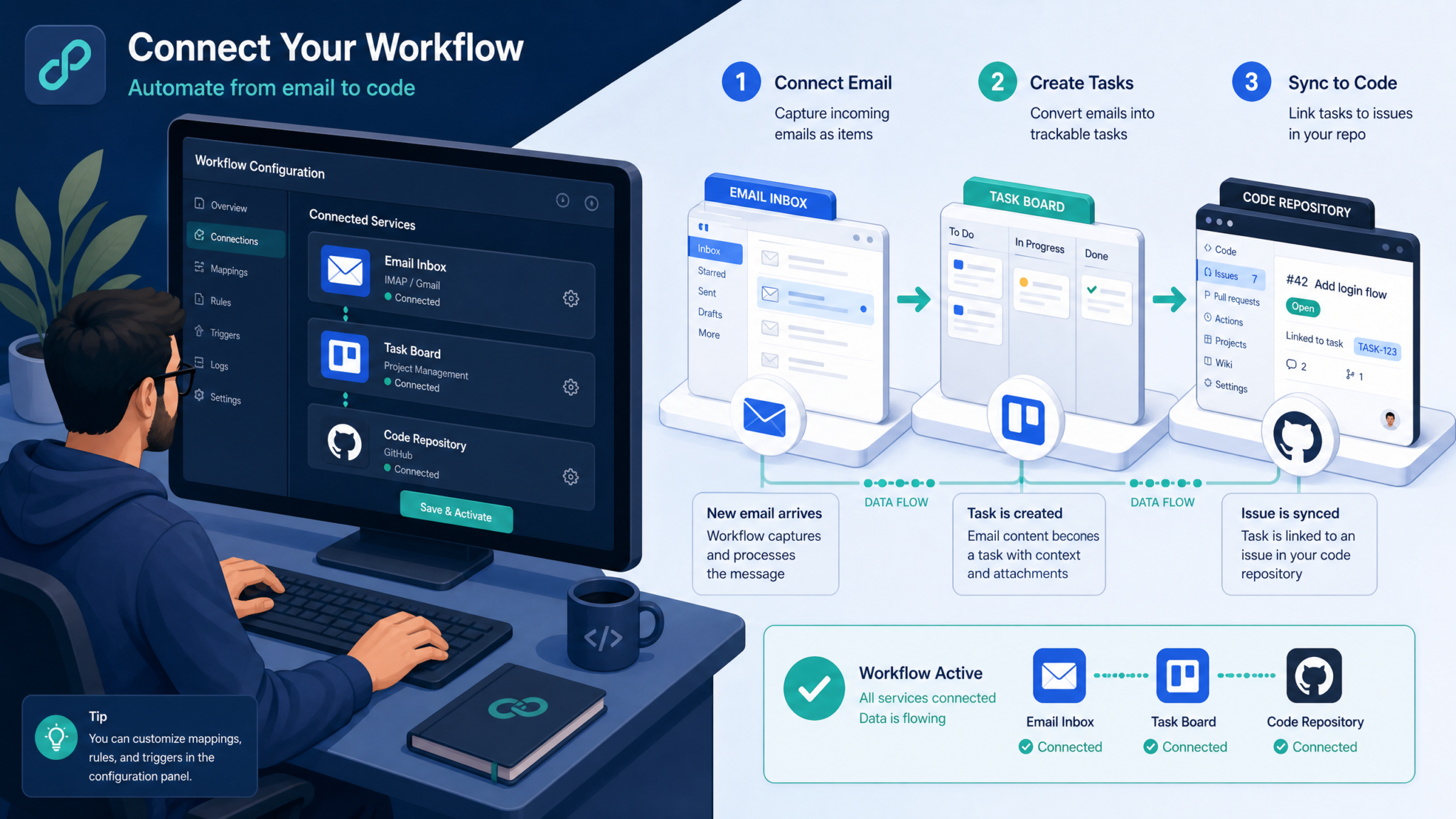 ,
,  , and ) will help you integrate visuals in your documentation or dashboard, while internal link placeholders (
Teams implementing these capabilities in production will benefit from the architectural patterns and optimization strategies detailed in How Codex Remote Is Changing Mobile-First Development — Start on Phone, Ship on Desktop, which addresses the scaling considerations most relevant to enterprise workloads.
) will be replaced by your organization’s knowledge base.
Author: Markos Symeonides
Appendix: sample workspace configuration and mapping
Mapping of events to actions
| Event | Agent | Action | Output |
|---|---|---|---|
| Gmail: New Email | Gmail Triage | Triaged, triage_score | triage plan |
| Gmail: Triaged high urgency | Orchestrator | Notify Slack and consider PR action | Slack message |
| Slack: User taps “Create PR” | GitHub PR Review | Review PR and propose changes | PR review comments |
| PR Review: Checks failed | Orchestrator | Escalate or re-run checks | Notification and logs |
Environment and secrets layout
environment:
  workspace: email-slack-pr-workflow
  secrets:
    gmail_credentials: ${vault.gmail}
    slack_credentials: ${vault.slack}
    github_credentials: ${vault.github}
  policies:
    default_policy: policies/default_policy.json
  endpoints:
    gmail_api: https://gmail.googleapis.com
    slack_api: https://slack.com/api
    github_api: https://api.github.com
Note on placeholders
The article includes placeholders to facilitate integration into your documentation and tooling ecosystems:
 at the start of the document
- at ~30%
- at ~60%
-
For teams looking to maximize their productivity with structured AI interactions, our comprehensive guide on 111 Awesome ChatGPT Prompts for Keyword Research – … provides battle-tested templates and frameworks that complement the workflows discussed above.
placeholders (4 instances) to be replaced with internal anchors
© 2026, Markos Symeonides. This tutorial is intended for practitioners who want to experiment with multi-agent automation using GPT-5.6 Terra and ChatGPT Work. Adapt the examples to your organization’s workflows and governance requirements.
