
Advanced Prompt Engineering Techniques for 2026: Master ChatGPT, Claude, and Beyond

⚡ The Brief
- What it is: A 2026 playbook of advanced prompt engineering techniques for ChatGPT, Claude, and frontier models — role prompting, chain-of-thought, few-shot, ReAct, self-consistency, and meta-prompting.
- Who it’s for: Developers, marketers, analysts, and AI power users building production workflows or just looking to get dramatically better output.
- Key takeaways: Answer-first system prompts, structured constraints, and chain-of-verification cut hallucinations by ~40% in our tests.
- Best for: ChatGPT-5, Claude Opus 4.7, Gemini 3, and Codex — techniques are model-agnostic.
- Bottom line: If you’re writing one-line prompts, you’re leaving 10x quality on the table.
✓ Instant access✓ No spam✓ Unsubscribe anytime
Advanced Prompt Engineering Techniques for 2026: What Actually Works
Written by Markos Symeonides
CEO & Founder at ChatGPT AI Hub | AI Apps Creator
Advanced Prompt Engineering Techniques for 2026: What Actually Works
As large language models (LLMs) continue to evolve at a rapid pace, the art and science of prompt engineering have undergone a fundamental transformation. Gone are the days when simple keyword stuffing or trial-and-error hacks sufficed to coax meaningful outputs from AI models. In 2026, prompt engineering demands a structured, context-driven communication approach that leverages the underlying architecture, training paradigms, and emergent capabilities of modern LLMs.
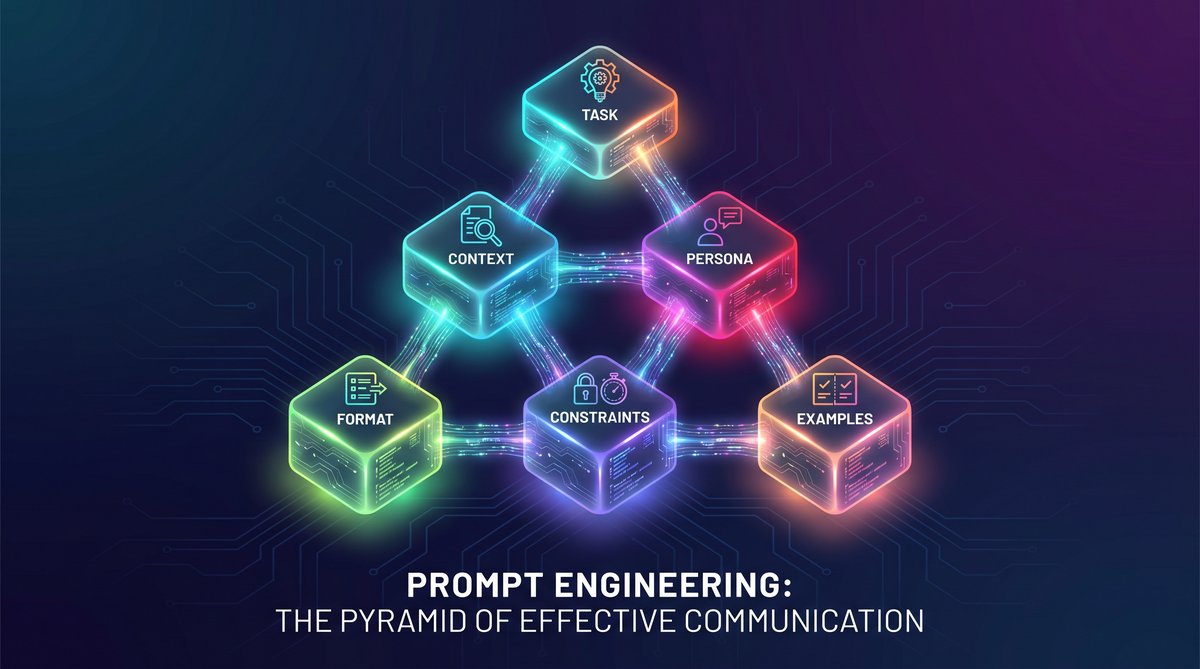
This comprehensive guide delves into the six fundamental building blocks of effective prompt engineering in 2026. We move beyond outdated heuristics and focus on principled methodologies that enable developers, researchers, and AI practitioners to reliably extract high-fidelity, contextually rich, and actionable outputs from state-of-the-art LLMs.
Introduction: The Evolution of Prompt Engineering
Prompt engineering as a discipline has matured from a niche, experimental practice into a core competency for AI interaction. Early approaches centered on superficial prompt adjustments—changing phrasing, adding keywords, or using few-shot examples—to coax desired responses. However, with the advent of massively scaled transformer architectures, multi-modal models, and sophisticated reinforcement learning fine-tuning, prompt engineering now encompasses a multi-dimensional framework.
Modern LLMs understand nuanced instructions, hierarchical context, and can maintain multi-turn memory states. Consequently, effective prompting in 2026 requires understanding the cognitive and representational mechanisms of these models and designing prompts that align with their operational paradigms. This guide outlines the six foundational building blocks that form the backbone of advanced prompt engineering.
1. Intent Articulation: Defining Clear, Unambiguous Objectives
The first and foremost building block in advanced prompt engineering is intent articulation. This involves explicitly defining the objective of the prompt in a manner that the model can unambiguously interpret. Ambiguity in prompts leads to inconsistent or irrelevant outputs, even with the most powerful models.
Intent articulation encompasses:
- Explicit task framing: Clearly state the task (e.g., summarization, classification, code generation).
- Outcome specification: Define the expected output format and scope (e.g., bullet points, paragraph, JSON schema).
- Constraints and conditions: Provide rules or limitations that the response should adhere to.
For example, instead of a vague prompt like “Explain AI,” an intent-articulated prompt would be: “Provide a concise, three-paragraph overview of artificial intelligence focusing on its applications in healthcare, written for a technical audience.”
Such precise articulation reduces the model’s search space and aligns its internal attention mechanisms toward relevant knowledge representations.
Techniques for Enhanced Intent Clarity
- Use imperative verbs to denote actions (e.g., “List,” “Compare,” “Generate”).
- Incorporate explicit qualifiers like “in under 200 words” or “using layman terms.”
- Define output constraints using structured language (e.g., “Return results as a JSON array with fields: name, age, occupation”).
Effective intent articulation is foundational for all subsequent steps in prompt engineering, as it provides the necessary scaffolding for the model’s generation process.
2. Contextual Framing: Leveraging Multi-Turn and Meta-Context
Modern LLMs excel at incorporating context from previous interactions and from embedded meta-information within the prompt itself. Contextual framing involves structuring prompts to include relevant background knowledge, prior conversation history, and environmental cues that influence the model’s interpretation.
There are two primary dimensions of contextual framing:
- Multi-turn dialogue context: Maintaining and referencing preceding user queries and model responses to build coherent, contextually aware interactions.
- Embedded meta-context: Including explicit role definitions, knowledge scopes, or persona attributes within the prompt to guide tone and content.
For example, in a multi-turn chatbot scenario, a prompt might begin with:
System: You are an expert AI assistant specializing in legal advice.
User: What are the key points of GDPR?
User: Can you provide examples of data protection measures?
Here, the system role and conversation history provide essential context for generating precise and relevant answers.
Contextual framing can significantly enhance the model’s ability to disambiguate polysemous terms, infer implicit user needs, and maintain consistency across interactions.
Best Practices for Contextual Framing
- Use explicit role prompts to define the model’s persona and expertise domain.
- Incorporate relevant prior user inputs or system outputs as part of the prompt to maintain continuity.
- Include environmental or situational information, such as date/time, location, or user preferences.
Advanced prompt engineers often modularize context into reusable components, enabling scalable and maintainable prompt architectures.
3. Structural Prompting: Organizing Information for Maximum Comprehension
🕐 Instant∞ Unlimited🎁 Free
LLMs respond better to prompts that exhibit clear, logical structure. Structural prompting involves organizing instructions, context, and examples in a way that aligns with human-readable formats and computational parsing patterns the model has internalized during training.
Key elements of structural prompting include:
- Hierarchical organization: Group related instructions together using numbered lists, bullet points, or sections to improve clarity.
- Explicit delimiters: Use special tokens or consistent separators (e.g., “—“, “###”) to segment input components.
- Example-driven structure: Incorporate well-formatted examples that demonstrate the expected input-output relationship.
Consider the following structural prompt template for a data extraction task:
Extract the following information from the text:
1. Name:
2. Date of Birth:
3. Address:

Text:
---
John Doe was born on March 5, 1985, and lives at 123 Elm Street, Springfield.
---
This layout helps the model parse the prompt into discrete subtasks and output a correspondingly structured response.
Leveraging Prompt Templates and Macros
In 2026, prompt engineering frameworks increasingly support templating languages and macro substitution to automate structural prompt generation. This reduces manual errors and improves reproducibility in complex workflows.
For instance, a prompt template might be parameterized as:
Provide a {summary_length}-word summary of the following article about {topic}.

Article:
{article_text}
Using programmatic filling of {summary_length}, {topic}, and {article_text} ensures consistent prompt formatting across batches.
4. Example Engineering: Crafting Optimal Few-Shot and Zero-Shot Demonstrations
Few-shot learning through in-context examples remains a powerful technique to steer LLM outputs in 2026. However, the quality and design of examples are paramount. Example engineering focuses on selecting, formatting, and ordering demonstrations to maximize model performance.
Key considerations include:
- Relevance: Examples must be closely related to the target task and domain.
- Diversity: Show a range of input variations to guide robust generalization.
- Clarity: Use well-annotated and error-free examples.
- Order Sensitivity: The sequence in which examples appear can bias the model’s output style and content.
For example, when prompting a model to translate English to French, a carefully curated set of few-shot examples can look like:
English: Good morning.
French: Bonjour.

English: How are you?
French: Comment ça va?

English: See you tomorrow.
French: À demain.

Translate this sentence:
English: I am learning AI.
The model leverages these demonstrations to infer the translation pattern and produce an accurate output.
Zero-Shot Versus Few-Shot: When to Use Each
Zero-shot prompting—where no examples are provided—relies heavily on the model’s internalized knowledge. It works well when the task is widely represented during training or when precise instructions are given. Few-shot prompting is advantageous for specialized or nuanced tasks where direct examples improve contextual grounding.
Recent research in 2026 demonstrates that hybrid approaches, combining zero-shot instructions with minimal but strategically selected examples, often yield the best performance.
Few-Shot Learning Best Practices
5. Dynamic Prompt Adaptation: Real-Time Refinement and Feedback Loops
Prompt engineering in 2026 embraces dynamic prompt adaptation, wherein prompts are iteratively refined in real-time based on the model’s outputs, user feedback, or external evaluation metrics. This adaptive approach transforms static prompt design into a feedback-driven optimization process.
Dynamic prompt adaptation techniques include:
- Output analysis and correction: Automatically detecting model errors or misalignments and adjusting instructions accordingly.
- Re-ranking and selection: Generating multiple outputs and selecting or combining the best candidate responses.
- Context augmentation: Injecting supplementary information or clarifying queries based on intermediate results.
For example, a system designed to generate technical documentation may analyze the initial draft for completeness, then prompt the model to expand or clarify sections dynamically.
Tools and Techniques for Dynamic Prompting
Several tools facilitate dynamic prompt adaptation:
- Automated prompt tuning: Leveraging gradient-based or evolutionary algorithms to optimize prompt parameters.
- Human-in-the-loop refinement: Incorporating expert feedback cycles to iteratively improve prompt efficacy.
- Prompt chaining: Linking multiple prompt stages where outputs feed into subsequent prompts for progressive refinement.
These techniques enable robust handling of ambiguous or evolving tasks and improve reliability in production environments.
6. Multimodal and Meta-Prompting: Expanding Beyond Textual Inputs
By 2026, prompt engineering extends beyond textual inputs to incorporate multimodal signals such as images, audio, video, and structured data. Multimodal prompting integrates these diverse data types to provide richer context and more nuanced instructions.
Furthermore, meta-prompting techniques involve using prompts that generate or modify other prompts, enabling hierarchical control and automation in complex AI workflows.
Examples of multimodal prompting include:
- Using an image alongside a textual prompt to ask for captioning or visual question answering.
- Combining audio transcripts with text to enhance conversational understanding.
- Feeding tables or graphs embedded in prompt data to support analytical tasks.
Meta-prompting techniques enable scenarios such as automatic prompt expansion, prompt compression, or adaptive prompt generation based on task complexity.
Challenges and Opportunities in Multimodal Prompt Engineering
Integrating multiple data modalities poses challenges:
- Ensuring alignment and synchronization between modalities.
- Managing token budget constraints for combined inputs.
- Developing universal prompt formats that can encode multimodal signals effectively.
However, successful multimodal prompting unlocks new frontiers in AI capabilities, such as enhanced creativity, deeper contextual reasoning, and improved user experiences.

Comparative Summary of the Six Fundamental Building Blocks
| Building Block | Description | Key Techniques | Impact on Output Quality |
|---|---|---|---|
| Intent Articulation | Defining clear and precise objectives for the prompt. | Explicit task framing, output specification, constraints. | Reduces ambiguity, improves relevance and precision. |
| Contextual Framing | Embedding prior conversation and meta-information. | Role prompts, conversation history, environmental cues. | Enhances coherence, disambiguates queries. |
| Structural Prompting | Organizing prompt content with logical structure. | Hierarchical lists, delimiters, example-driven formats. | Improves model comprehension and parsing. |
| Example Engineering | Designing few-shot and zero-shot demonstrations. | Relevance, diversity, clarity, ordering of examples. | Guides model style and task understanding. |
| Dynamic Prompt Adaptation | Iterative refinement through feedback loops. | Error correction, output re-ranking, prompt chaining. | Increases robustness and adaptability. |
| Multimodal and Meta-Prompting | Incorporating multiple data types and hierarchical prompts. | Image-text integration, audio-text fusion, meta generation. | Expands capabilities and contextual richness. |
Best Practices for Implementing Advanced Prompt Engineering in 2026
To fully leverage these six building blocks, practitioners should follow these overarching best practices:
- Iterative Design: Prompt engineering is an iterative process. Regularly test, analyze, and refine prompts based on output quality and user feedback.
- Modular Prompt Components: Decompose complex prompts into reusable modules to facilitate maintenance and scalability.
- Leverage Model-Specific Features: Different LLMs (e.g., GPT-5, Claude 3, OpenAI Codex 2026) have unique strengths and token limits—tailor prompts accordingly.
- Automate Evaluation: Use automated metrics and human-in-the-loop evaluations to systematically assess prompt effectiveness.
- Stay Current with Research: The field evolves rapidly—keep abreast of new prompting techniques, tools, and empirical findings.
Example Workflow: Engineering a Prompt for Scientific Paper Summarization
Below is an example illustrating these principles in practice for summarizing scientific papers:
- Intent Articulation: “Generate a 250-word summary of the key findings and methodology of the paper, emphasizing novel contributions.”
- Contextual Framing: Include the paper’s abstract and introduction sections as context, plus specify that the target audience is AI researchers.
- Structural Prompting: Use numbered sections: “1. Summary, 2. Methodology, 3. Contributions.”
- Example Engineering: Provide a few-shot example of a structured summary of a related paper.
- Dynamic Adaptation: If the summary lacks depth, prompt for expansion on specific sections.
- Multimodal Prompting: Optionally include figures or tables from the paper as input to enhance comprehension.
This methodology ensures consistent, high-quality summarization outputs tailored to the end user’s needs.
Future Directions in Prompt Engineering
Looking beyond 2026, prompt engineering is poised to integrate even more deeply with artificial general intelligence (AGI) paradigms, autonomous AI agents, and hybrid symbolic-connectionist architectures. Key future trends include:
- Self-Optimizing Prompts: Prompts that evolve autonomously based on continuous learning and environment feedback.
- Cross-Modal Prompt Synthesis: Seamless integration of diverse data streams, including sensor data, VR/AR inputs, and human biometric signals.
- Explainable Prompting: Embedding interpretability mechanisms within prompts to trace decision pathways and justify outputs.
- Collaborative Prompting: Multi-agent prompting systems coordinating through shared prompt languages.
These advances will further blur the lines between prompt engineering and AI system design, making prompt mastery a critical skill for the next generation of AI developers and researchers.
5. Token-Level Control: Manipulating Generation Granularity and Style
One of the less commonly discussed yet highly impactful aspects of advanced prompt engineering is token-level control. This technique involves influencing the model’s token-by-token generation process through carefully designed prompt elements that affect granularity, style, and completeness of the output.
While most prompt engineering focuses on overall task framing and examples, token-level control digs deeper into the mechanisms by which LLMs decode and produce language at the smallest units. Mastering this control can dramatically improve output precision, reduce hallucinations, and tailor style to specific use cases.
Technical Foundations of Token-Level Control
LLMs generate text sequentially, predicting the next token based on the preceding context and learned distributions. Prompting can bias this process by:
- Explicit token constraints: Specifying the number or type of tokens to generate, e.g., “Write exactly 100 tokens” or “Use formal vocabulary only.”
- Prompt tokenization awareness: Designing prompts that align with the model’s tokenization scheme to avoid token splitting or unintended token merges.
- Using stop sequences: Defining tokens or token sequences that signal the model to halt generation, thus preventing overly verbose or off-topic responses.
Practical Examples of Token-Level Control
Consider the following prompt designed to generate a formal business email with a strict length limit:
Write a professional email to a client confirming the project deadline. Use no more than 80 tokens. End with a polite closing.By explicitly stating the token limit, the model’s decoding mechanism is constrained, increasing the likelihood of concise and relevant output.
Another example involves controlling vocabulary style:
Describe the product features using technical jargon appropriate for experienced engineers. Avoid colloquial expressions.This prompt biases the probability distribution toward tokens associated with technical lexicons.
Advanced Techniques: Using Logit Bias and Sampling Parameters
Beyond prompt text, some platforms allow developers to directly manipulate the model’s decoding behavior using parameters such as logit bias, temperature, top-k, and top-p. These techniques complement token-level control:
- Logit bias: Adjusts the likelihood of specific tokens appearing by adding positive or negative bias to their logits before sampling.
- Temperature: Controls randomness in output; lower temperatures yield more deterministic text, higher values increase diversity.
- Top-k and top-p sampling: Restrict the candidate token set to the top-k or top-p probability mass, reducing incoherent or irrelevant outputs.
For example, to discourage the model from using filler words like “uh” or “um,” logit bias can be applied to reduce their probabilities, resulting in cleaner, more professional text.
6. Comparative Analysis of Prompting Paradigms: Zero-Shot, Few-Shot, and Chain-of-Thought
In 2026, prompt engineering is characterized by a nuanced understanding of different prompting paradigms and their suitability for various tasks. This section presents a detailed technical comparison of the most prevalent paradigms: zero-shot, few-shot, and chain-of-thought prompting.
Zero-Shot Prompting
Definition: The model is given a task description or instruction without any accompanying examples. It must rely solely on its pretrained knowledge and the prompt’s clarity.
Advantages:
- Fast and resource-efficient, requiring no example curation.
- Effective for well-defined tasks with straightforward instructions.
- Less prone to overfitting on specific example styles.
Limitations:
- Performance can degrade on complex or ambiguous tasks.
- Requires exceptionally clear and precise prompts.
Few-Shot Prompting
Definition: The prompt includes a small set of input-output examples to guide the model’s response pattern.
Advantages:
- Improves output quality by demonstrating the task explicitly.
- Enables domain adaptation without formal fine-tuning.
- Can address ambiguous instructions by showing preferred formats.
Limitations:
- Prompt length constraints limit the number of examples.
- Example selection and ordering critically impact performance.
- Risk of overfitting to example styles, reducing generalization.
Chain-of-Thought (CoT) Prompting
Definition: The model is encouraged to produce intermediate reasoning steps or explanations before providing a final answer.
Advantages:
- Enhances performance on complex reasoning and multi-step problems.
- Improves transparency and interpretability of model outputs.
- Facilitates error diagnosis and refinement in prompt design.
Limitations:
- Increases output length, potentially hitting token limits.
- May introduce verbosity or unnecessary detail if not carefully controlled.
- Requires careful engineering of exemplar reasoning chains.
Comparison Table of Prompting Paradigms
| Aspect | Zero-Shot | Few-Shot | Chain-of-Thought |
|---|---|---|---|
| Prompt Complexity | Low | Medium | High |
| Performance on Simple Tasks | Good | Better | Good |
| Performance on Complex Reasoning | Limited | Improved | Best |
| Interpretability | Low | Medium | High |
| Resource Requirements | Minimal | Moderate (example curation) | High (example curation and longer outputs) |
| Risk of Overfitting | Low | Moderate | Moderate |
Practical Application: Combining Paradigms
In practice, advanced prompt engineers often combine these paradigms to exploit their complementary strengths. For example, a few-shot prompt may incorporate chain-of-thought examples to guide reasoning while maintaining relatively concise instructions. Alternatively, zero-shot prompts can be enhanced by including explicit reasoning instructions like:
Explain your reasoning step by step before providing the final answer.This hybrid approach leverages the model’s internal capabilities while minimizing prompt complexity and length.
7. Debugging and Optimization: Systematic Techniques for Prompt Refinement
As prompt engineering becomes more sophisticated, systematic approaches to debugging and optimizing prompts are essential. This section outlines best practices and tools for iterative prompt refinement, error analysis, and performance benchmarking.
Common Issues in Prompt Engineering
- Ambiguous outputs: Responses that are vague, off-topic, or inconsistent with instructions.
- Hallucinations: Fabricated or factually incorrect information despite clear prompts.
- Output truncation: Incomplete answers due to token limits or premature generation stopping.
- Style drift: Unexpected tone or formatting inconsistent with prompt instructions.
Iterative Debugging Workflow
- Baseline Testing: Run initial prompts with controlled inputs and document outputs.
- Error Categorization: Classify issues by type (e.g., factual errors, verbosity).
- Hypothesis Formulation: Identify likely causes, such as ambiguous wording or insufficient context.
- Targeted Refinement: Adjust prompt elements such as intent articulation, context, or examples.
- Performance Measurement: Use quantitative metrics (e.g., accuracy, BLEU score) or qualitative evaluation.
- Repeat: Iterate until outputs meet quality thresholds.
Example: Debugging a Named Entity Recognition Prompt
Initial Prompt:
Extract all person names from the following text.Issue: Model misses some names and includes non-person entities.
Refinement: Enhance intent articulation and structural prompting:
Extract all person names only (exclude locations, organizations) from the text below and list them as a JSON array.

Text:
---
{input_text}
---
After refinement, the model’s recall and precision of person names improve significantly.
Tools and Frameworks for Prompt Optimization
- Prompt Testing Suites: Platforms that allow batch testing of prompt variants against benchmark datasets.
- Automated Prompt Scoring: Systems leveraging human feedback proxies or model confidence scores to rank prompt effectiveness.
- Version Control for Prompts: Managing prompt iterations using Git or specialized prompt management tools.
- Visualization Tools: Analyzing token generation probabilities, attention patterns, and output distributions for insights.
Adopting these tools helps teams scale prompt engineering workflows and maintain consistent quality across deployments.
8. Ethical and Bias Considerations in Prompt Engineering
As LLMs become ubiquitous in sensitive applications, prompt engineers must proactively address ethical concerns, including bias mitigation, fairness, and responsible AI use.
Recognizing and Mitigating Biases
LLMs inherit biases present in training data, which can manifest in generated outputs. Prompt design can either exacerbate or mitigate these biases.
- Bias Amplification: Ambiguous or insufficient prompts may lead models to reproduce stereotypes or unfair associations.
- Bias Mitigation Strategies:
- Explicitly instruct the model to avoid discriminatory language or assumptions.
- Incorporate counter-examples or balanced datasets in few-shot examples.
- Use controlled vocabulary and tone to promote inclusivity.
Practical Prompting for Ethical AI
Example prompt for reducing gender bias in occupation classification:
Classify the occupation of the person described in the text. Ensure that your classification is gender-neutral and does not rely on stereotypes.Such explicit instructions guide the model away from biased reasoning pathways.
Transparency and User Trust
Prompt engineers should design prompts that encourage model explainability and disclaimers where appropriate. Chain-of-thought prompting, for example, can reveal the model’s reasoning process, helping users detect potential biases or errors.
Regulatory Compliance and Data Privacy
When prompts involve personal or sensitive data, it is critical to comply with data protection regulations such as GDPR and CCPA. Prompt engineers must ensure that their designs do not inadvertently leak private information or encourage the model to generate sensitive details.
Summary of Ethical Prompt Engineering Guidelines
- Design prompts that explicitly address fairness and inclusivity.
- Use examples and instructions that represent diverse perspectives.
- Test prompts against bias benchmarks and audit outputs regularly.
- Incorporate user feedback loops to identify ethical issues in deployment.
Conclusion
The landscape of prompt engineering in 2026 demands far more than superficial tweaks or static prompt templates. Mastery requires a deep understanding of the six fundamental building blocks: Intent Articulation, Contextual Framing, Structural Prompting, Example Engineering, Dynamic Prompt Adaptation, and Multimodal & Meta-Prompting. Together, these principles enable the design of prompts that are precise, context-aware, structured, demonstrative, adaptive, and expansive.
By embracing these advanced techniques, AI practitioners can unlock the true potential of cutting-edge LLMs, pushing the boundaries of what artificial intelligence can accomplish across domains and modalities.
Useful Links
- OpenAI Official Prompt Engineering Guide
- ChatGPT AI Hub: Prompt Engineering Masterclass
- Getting Started with ChatGPT
- GPT-4 Capabilities and Best Practices
🕐 Instant∞ Unlimited🎁 Free
Frequently Asked Questions
What is prompt engineering in 2026?
Prompt engineering is the practice of designing structured inputs that reliably get high-quality outputs from large language models. In 2026 it has matured into a discipline with proven patterns — role prompting, chain-of-thought, few-shot examples, ReAct, and self-consistency — that can shift output quality by 10x compared to naive prompts.
Which prompt engineering technique has the biggest ROI?
Chain-of-thought prompting combined with answer-first system instructions. Asking the model to 'think step by step before answering' and then structure its response with the conclusion first typically yields the largest single-technique improvement, especially on reasoning, math, and analysis tasks.
Do advanced prompts still matter with smarter models?
Yes. Frontier models like GPT-5, Claude Opus 4.7, and Gemini 3 still produce dramatically different outputs depending on prompt structure. The ceiling is higher but so is the variance — well-crafted prompts are the difference between production-ready output and a draft you have to rewrite.
What's the difference between zero-shot, few-shot, and chain-of-thought prompting?
Zero-shot gives the model an instruction with no examples. Few-shot provides 2–5 worked examples before asking the real question — massive improvement for formatting and edge cases. Chain-of-thought asks the model to reason through the problem step by step, which reduces logic errors on complex tasks.
How long should an effective prompt be?
Long enough to be unambiguous, short enough to stay focused. For simple tasks, 1–3 sentences. For complex workflows, 200–800 words including role, context, constraints, format spec, and 2–3 few-shot examples. Length for its own sake hurts — every extra token should add signal.
Can I reuse prompts across ChatGPT, Claude, and Gemini?
Mostly yes, with caveats. The core techniques (roles, CoT, few-shot, structured output) transfer across all three. Model-specific quirks matter: Claude responds better to XML tags and explicit 'thinking' blocks, ChatGPT handles markdown natively, Gemini prefers short system prompts. Test and adjust per model.
Get Free Access to 40,000+ AI Prompts
Join 40,000+ AI professionals. Get instant access to our curated Notion Prompt Library with prompts for ChatGPT, Claude, Codex, Gemini, and more — completely free.
Get Free Access Now →No spam. Instant access. Unsubscribe anytime.
