
⚡ The Brief
- What it is: Claude Opus 4.7 and OpenAI Codex are advanced AI models designed to enhance software development through sophisticated capabilities, including code generation and environmental control.
- Who it’s for: These AI tools are tailored for developers and software engineers seeking to leverage AI for complex coding tasks, architectural design, and enhanced productivity.
- Key takeaways: Claude Opus 4.7 excels in multimodal capabilities, while OpenAI Codex offers unprecedented desktop control, redefining developer interactions with their environments.
- Pricing/Cost: Pricing details for Claude Opus 4.7 and OpenAI Codex vary based on usage and subscription models, typically available through enterprise agreements or developer licenses.
- Bottom line: Both AI models represent significant advancements in AI-assisted development, each offering unique features that cater to different aspects of the software engineering process.
✓ Instant access✓ No spam✓ Unsubscribe anytime
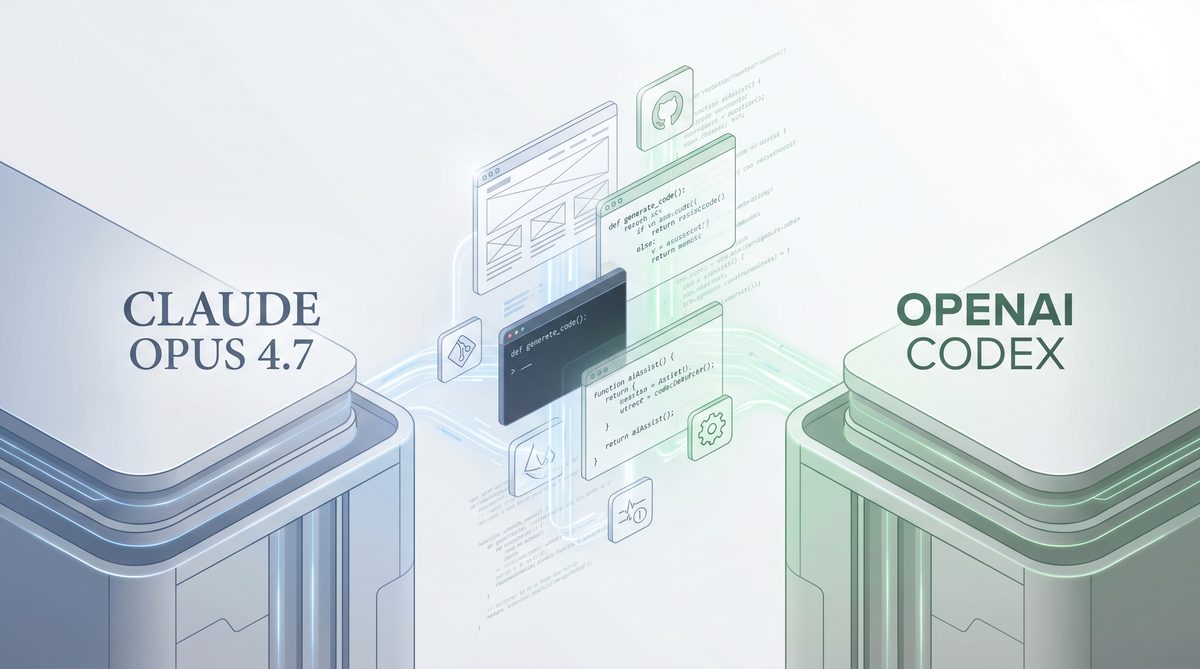
April 2026. A date that will likely be etched into the annals of artificial intelligence history as the “Double Launch Day.” On one side, Anthropic, unveiling its much-anticipated Claude Opus 4.7, a model rumored to push the boundaries of software engineering capabilities and integrate a vision model of unprecedented sophistication. On the other, OpenAI, dropping a bombshell with the public release of its next-generation Codex, not merely a coding assistant but a full-fledged desktop agent designed to interact with and control computer environments with startling autonomy. The AI community, particularly developers and software engineers, watched with bated breath. This wasn’t just another incremental update; it was a declaration of war for the developer desktop, a contest to define the future of human-computer interaction in the realm of software creation. This article delves deep into the capabilities, implications, and potential trajectories of these two titans, dissecting their strengths, weaknesses, and the profound impact they are set to have on the software development landscape.
The stakes are incredibly high. For Anthropic, Opus 4.7 represents the culmination of their constitutional AI philosophy, aiming to create powerful yet inherently safe and steerable models. Their focus on advanced software engineering goes beyond mere code generation, venturing into architectural design, complex debugging, and even refactoring of legacy systems. The integration of a top-tier vision model further broadens its utility, allowing Opus to interpret UI/UX mockups, understand diagrams, and even analyze screenshots of error messages or application states. This multimodal capability positions Opus 4.7 as a truly comprehensive development partner.
OpenAI’s Codex, however, is playing a different game. While its coding prowess is undeniable, the “desktop agent” aspect is its true differentiator. Imagine an AI that doesn’t just suggest code but can open your IDE, navigate your file system, interact with your browser, run tests, and even deploy applications, all through natural language commands. This level of environmental control blurs the lines between AI assistant and autonomous co-worker, promising a paradigm shift in how developers interact with their machines. It’s a bold move, pushing the boundaries of what’s considered safe and practical for AI in a production environment.
Anthropic’s Claude Opus 4.7: The Master Engineer and Visionary
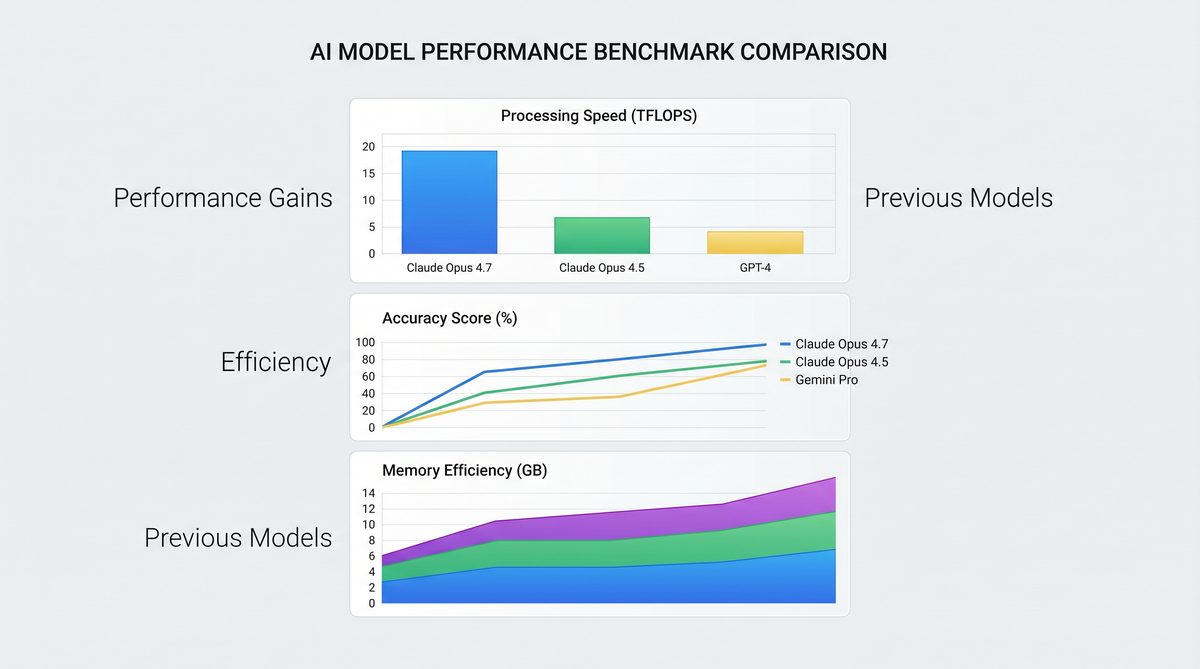
Anthropic’s approach with Claude Opus 4.7 is deeply rooted in their commitment to developing highly capable yet robustly safe AI systems. Opus 4.7 isn’t just an evolution; it’s a revolution in AI-driven software engineering. Its core strength lies in its profound understanding of software architecture, design patterns, and intricate code logic, far surpassing previous iterations and even many contemporary models. Developers have long clamored for AI that can do more than generate boilerplate; they need a partner that can truly reason about complex systems, and Opus 4.7 aims to deliver precisely that.
Advanced Software Engineering Capabilities
The “advanced software engineering” claim for Opus 4.7 is not mere marketing jargon. It signifies a leap in the model’s ability to handle the full lifecycle of software development. Previous models, while impressive for generating snippets or simple functions, often struggled with larger, interconnected systems. Opus 4.7, however, demonstrates an uncanny ability to:
- Architectural Design: Given high-level requirements, Opus 4.7 can propose robust and scalable system architectures, detailing microservices, database schemas, API contracts, and even deployment strategies. It can articulate trade-offs between different architectural styles (e.g., monolith vs. microservices, event-driven vs. request-response) and justify its choices based on factors like scalability, maintainability, and cost. This capability is a game-changer for lead developers and architects, transforming initial brainstorming into concrete design proposals.
- Complex Code Generation and Refactoring: Beyond simple functions, Opus 4.7 can generate entire modules, classes, and even small applications from detailed specifications. Its understanding of idiomatic code in various languages (Python, Java, C++, JavaScript, Go, Rust, etc.) is exceptional, producing code that is not only functional but also clean, readable, and adheres to best practices. More impressively, it can take existing, poorly structured code and refactor it into more maintainable, performant, and secure forms, identifying anti-patterns and suggesting improvements with precision. This includes converting monolithic components into modular structures or optimizing database queries.
- Sophisticated Debugging and Error Analysis: One of the most time-consuming aspects of software development is debugging. Opus 4.7 excels here, capable of analyzing complex stack traces, log files, and even runtime behavior descriptions to pinpoint the root cause of issues. It can suggest specific code changes, explain why those changes are necessary, and even propose tests to validate the fix. Its ability to reason about concurrent programming issues, memory leaks, and complex dependency conflicts sets it apart.
- Intelligent Test Generation: Writing comprehensive unit, integration, and end-to-end tests is crucial for software quality. Opus 4.7 can generate highly effective test suites based on function signatures, class definitions, and even user stories. It can identify edge cases and boundary conditions that human developers might overlook, significantly improving test coverage and software reliability.
- Legacy System Modernization: Many enterprises grapple with aging codebases. Opus 4.7 offers substantial assistance in understanding, documenting, and incrementally modernizing legacy systems. It can translate older programming paradigms into modern equivalents, identify components suitable for migration, and even assist in rewriting parts of the system while maintaining business logic integrity.
The underlying mechanism for these capabilities is a vastly improved contextual understanding and a deeper integration of formal verification techniques within its training. Anthropic has likely invested heavily in curating datasets that include not just code, but also architectural diagrams, design documents, bug reports with detailed resolutions, and refactoring examples from large open-source projects and proprietary codebases. This rich, structured data, combined with advanced reasoning capabilities, allows Opus 4.7 to move beyond pattern matching to genuine understanding.
The Top Vision Model Integration
The integration of a “top vision model” into Opus 4.7 is not just an add-on; it’s a synergistic enhancement that profoundly expands its utility for developers. This multimodal capability allows Opus 4.7 to interpret and act upon visual information, bridging the gap between abstract code and concrete user interfaces or operational states.
- UI/UX Mockup Interpretation: Developers often work from design mockups (e.g., Figma, Adobe XD, even hand-drawn sketches). Opus 4.7 can take these visual inputs and translate them into front-end code (HTML, CSS, React, Vue, Angular components), complete with responsive design considerations. It can identify UI elements, understand their intended interactions, and generate the corresponding code, significantly accelerating the front-end development process.
- Diagram and Flowchart Analysis: Complex systems are often described using UML diagrams, sequence diagrams, flowcharts, and architectural blueprints. Opus 4.7 can ingest these images, understand the relationships and processes depicted, and use this information to inform code generation, identify potential bottlenecks, or even suggest improvements to the design. This moves beyond simple OCR; it’s about semantic understanding of visual representations of logic.
- Error Message and Application State Analysis: When an application crashes or behaves unexpectedly, developers often rely on screenshots or video recordings of the issue. Opus 4.7 can analyze these visual cues, combining them with log data or stack traces, to provide a more holistic diagnosis. For instance, it could see an error dialog on screen, correlate it with a specific line in a log file, and suggest a fix. This dramatically streamlines the debugging of visual bugs or user-reported issues.
- Code Visualization and Documentation: Opus 4.7 can also work in reverse, generating visual representations from code. Given a codebase, it could produce architecture diagrams, dependency graphs, or flowcharts, making complex systems easier to understand and document. This is invaluable for onboarding new team members or maintaining comprehensive documentation.
The power of this vision model lies in its ability to not just “see” but to “understand” the context and meaning of visual data within a development workflow. It’s trained on vast datasets of UI components, software diagrams, and real-world application interfaces, allowing it to accurately map visual elements to programmatic concepts. This multimodal understanding makes Opus 4.7 a truly versatile and intuitive development partner.
Anthropic’s constitutional AI principles are particularly relevant here. The integration of such powerful capabilities, especially in sensitive areas like architectural design and complex debugging, necessitates strong safety guardrails. Opus 4.7 is designed to be highly steerable, allowing developers to set constraints, review its suggestions, and provide feedback to refine its behavior. Its explanations are expected to be transparent, allowing developers to understand the reasoning behind its code or architectural choices, fostering trust and collaboration rather than blind acceptance.
In essence, Claude Opus 4.7 is positioned as the ultimate reasoning engine for software development, a highly intelligent and multimodal partner that can tackle the most intellectually demanding aspects of engineering. Its strength lies in its depth of understanding and its ability to act as a true collaborator in complex problem-solving. This makes it particularly attractive for high-stakes projects, intricate system design, and environments where code quality and architectural integrity are paramount.
| Feature | Description | Impact on Developers |
|---|---|---|
| Advanced Software Engineering | Profound understanding of system architecture, design patterns, complex debugging, and refactoring. | Accelerates complex problem-solving, improves code quality, reduces technical debt. |
| Top Vision Model | Interprets UI/UX mockups, diagrams, screenshots, and application states. | Streamlines front-end development, aids in visual debugging, enhances documentation. |
| Constitutional AI Principles | Emphasis on safety, steerability, and transparent reasoning. | Fosters trust, allows for human oversight, ensures ethical AI use in critical tasks. |
| Multimodal Reasoning | Combines textual code understanding with visual interpretation. | Provides a more holistic development experience, bridging design and implementation. |
| High-Level Abstraction | Capable of operating at architectural and system design levels. | Empowers lead developers and architects, facilitates strategic planning. |
The potential for Opus 4.7 to fundamentally alter how software is conceived, designed, and maintained is immense. It moves the AI assistant from a mere helper to a true intellectual partner, capable of engaging with the most challenging aspects of software creation. The focus here is on augmenting the developer’s cognitive abilities, providing insights and solutions that might otherwise take considerable human effort and time.
While this article delves into the broader comparison, for developers eager to leverage Claude Opus 4.7’s full potential in their daily workflows, our comprehensive guide on how to use Claude Opus 4.7 for advanced software engineering offers a deep dive into practical applications and advanced techniques that can significantly enhance productivity and code quality.
OpenAI’s Codex: The Autonomous Desktop Agent
Get Free Access to 40,000+ AI Prompts
Join 40,000+ AI professionals. Get instant access to our curated Notion Prompt Library with prompts for ChatGPT, Claude, Codex, Gemini, and more — completely free.
Get Free Access Now →No spam. Instant access. Unsubscribe anytime.
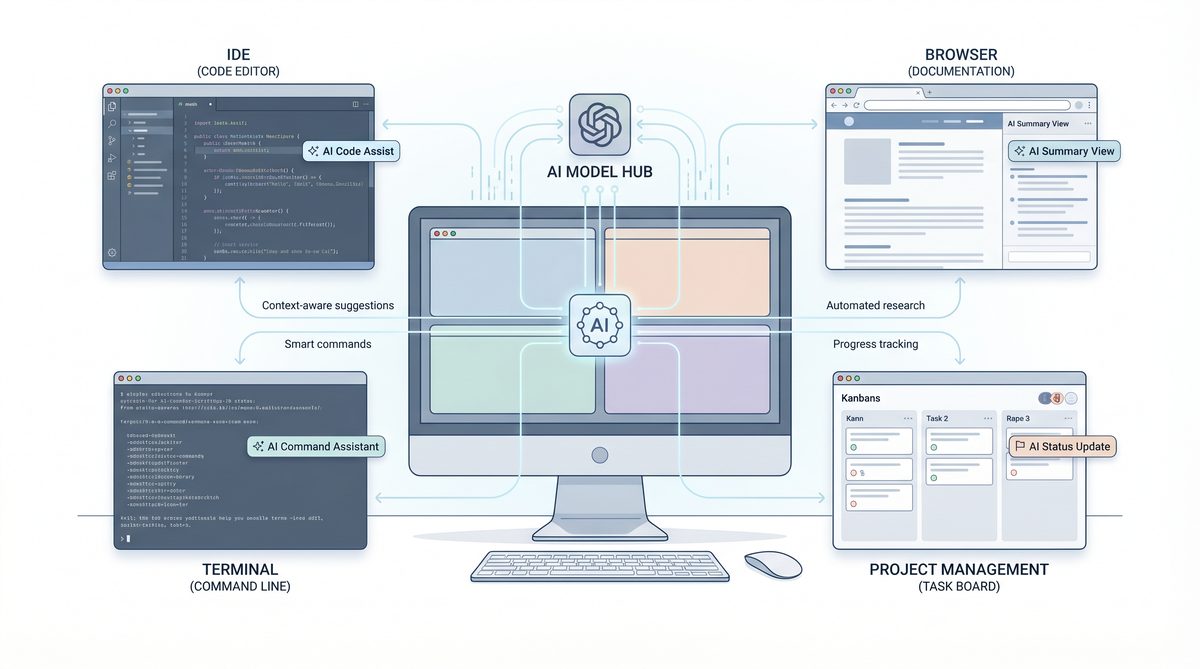
OpenAI’s Codex, particularly in its latest iteration unveiled on “Double Launch Day,” represents a radically different vision for AI in software development. While its lineage is firmly rooted in code generation, this new version transcends the traditional role of a coding assistant to become a full-fledged “desktop agent.” This is not just about generating code; it’s about executing complex, multi-step tasks across the entire operating system environment, blurring the lines between human and AI interaction with the computer itself.
The Evolution from Code Generator to Desktop Agent
The original Codex models, while groundbreaking, primarily functioned as sophisticated text-to-code engines. Developers would type a natural language request, and Codex would return code. The new Codex, however, operates on a much broader canvas:
- Environmental Control: This is the core differentiator. Codex can open applications (IDEs, browsers, terminals, file explorers), navigate through them, interact with their UI elements (clicking buttons, typing into fields, scrolling), and execute commands. It effectively gains a programmatic interface to the entire desktop, turning natural language instructions into a sequence of GUI and CLI actions.
- Contextual Awareness: Far beyond just the code in an IDE, Codex is aware of the current state of the desktop. It knows which applications are open, what’s displayed on the screen, and the contents of various files. This allows it to respond to commands like “Find the bug in the authentication module, which I just saw fail in the browser,” and then proceed to open the relevant files, search logs, and suggest fixes.
- Multi-Tool Orchestration: Developers use a multitude of tools – IDEs, version control systems, bug trackers, CI/CD pipelines, documentation, communication platforms. Codex can orchestrate these tools seamlessly. For example, a command like “Implement a new API endpoint for user profiles, push the changes, and create a pull request” could involve opening the IDE, writing code, committing to Git, and interacting with a platform like GitHub or GitLab.
- Autonomous Problem Solving: While still under human supervision, Codex can attempt to solve problems autonomously. If a test fails, it could identify the error, propose a fix, apply it, and re-run the tests, all without explicit step-by-step human intervention for each action. This moves beyond mere suggestions to active execution.
The technical underpinnings of this capability are likely a combination of advanced large language models (LLMs) with sophisticated reinforcement learning from human feedback (RLHF) specifically tailored for desktop interaction. OpenAI has probably trained Codex on vast datasets of human-computer interactions, including screen recordings, command-line histories, and GUI automation scripts, allowing it to learn the common sequences of actions required for various development tasks. Furthermore, robust API integrations with popular IDEs, version control systems, and operating system shells are crucial for its seamless operation.
The Implications for Developer Workflow
The shift to a desktop agent model has profound implications for how developers work:
- Hyper-Automation of Repetitive Tasks: Many aspects of development are repetitive: setting up new projects, running tests, deploying to staging, merging branches, generating documentation. Codex can automate these multi-step processes with a single natural language command, freeing up developers for more creative and complex problem-solving.
- Enhanced Productivity: By reducing context switching and manual intervention, Codex can significantly boost developer productivity. Imagine being able to say, “Set up a new React component with Redux integration for user authentication,” and have Codex scaffold the entire structure, including files, boilerplate code, and basic tests, all within your existing project.
- Lowering the Barrier to Entry: Novice developers often struggle with the sheer complexity of tools and workflows. Codex, by abstracting these interactions through natural language, could make development more accessible, allowing them to focus on logic rather than toolchain mechanics.
- New Modes of Interaction: Developers might move beyond keyboard and mouse for many tasks, relying more on voice commands and natural language prompts. This could lead to more fluid and intuitive interactions with the development environment.
- Continuous Integration/Deployment on the Desktop: Codex effectively brings CI/CD concepts closer to the individual developer’s desktop, allowing for rapid iteration, testing, and deployment cycles directly from their local environment.
Challenges and Safety Concerns
While the potential of Codex is exhilarating, the concept of an autonomous desktop agent also raises significant challenges and safety concerns:
- Security Risks: Granting an AI agent control over the desktop environment inherently introduces security risks. Malicious prompts or vulnerabilities in the AI could lead to unauthorized access, data deletion, or system compromise. Robust sandboxing, permission controls, and continuous monitoring are paramount.
- Reliability and Error Handling: Autonomous agents need to be incredibly reliable. What happens if Codex misinterprets a command or encounters an unexpected state? How does it recover? How does it communicate failures to the human user? Graceful error handling and clear communication are critical.
- Loss of Control/Opacity: As Codex performs complex multi-step actions, there’s a risk of developers losing a clear understanding of what’s happening “under the hood.” This opacity could hinder debugging and make it difficult to verify the correctness of the agent’s actions. Transparency and explainability are crucial.
- Ethical Considerations: Who is responsible when an autonomous agent introduces a bug or a security vulnerability? The developer? OpenAI? The line blurs when the AI takes active control.
- Over-reliance and Skill Erosion: There’s a concern that over-reliance on such an agent could lead to a degradation of fundamental developer skills. If the AI handles all the mundane tasks, will developers lose proficiency in those areas?
OpenAI’s strategy for Codex likely involves extensive safety testing, user feedback loops, and robust control mechanisms. Features like “undo” for AI actions, detailed logging of all executed commands, and explicit confirmation for sensitive operations would be essential. The goal is to create a powerful assistant that enhances, rather than replaces, human agency.
Codex is a bold bet on the future of huma
While this article focuses on the immediate impact and desktop integration of these powerful models, for a deeper dive into the long-term trajectory and technical nuances of their code generation capabilities, be sure to explore our comprehensive analysis in Claude Code vs OpenAI Codex: The Complete 2026 Comparison Guide for AI-Powered Development, where we project their evolution and potential impact on software engineering over the coming years.
raction, pushing the boundaries of AI autonomy directly into the developer’s most sacred space: their desktop. Its success will hinge not just on its technical prowess, but on OpenAI’s ability to build trust, ensure safety, and provide developers with clear control over its powerful capabilities. This is an ambitious step towards a future where AI isn’t just a tool, but an active, intelligent partner in the digital workspace.While OpenAI’s Codex has long been a benchmark for AI-powered code generation, the emergence of Claude Opus 4.7 introduces a formidable contender, prompting a critical examination of which model truly offers the superior developer experience in terms of code quality, efficiency, and integration; for a deeper dive into harnessing its potential, explore our complete developer tutorial on leveraging Claude Opus 4.7 for advanced software engineering tasks.
| Feature | Description | Impact on Developers |
|---|---|---|
| Desktop Agent Functionality | Controls OS, applications, UI elements, and CLI via natural language. | Automates multi-step workflows, reduces manual intervention, hyper-productivity. |
| Environmental Awareness | Understands current state of desktop, open apps, screen content. | Context-rich problem solving, seamless integration with existing tools. |
| Multi-Tool Orchestration | Coordinates actions across IDEs, VCS, browsers, terminals, etc. | Streamlines entire development lifecycle from coding to deployment. |
| Autonomous Task Execution | Can execute complex tasks and even attempt problem resolution independently. | Frees developers from repetitive tasks, accelerates iteration cycles. |
| Natural Language Interface | Primary interaction is through spoken or typed natural language commands. | Intuitive interaction, lowers barrier to entry for complex operations. |
The vision for Codex is clear: to transform the computer from a passive tool into an active, intelligent partner that anticipates needs and executes complex tasks seamlessly. It’s a move towards a more conversational and intuitive computing experience, particularly tailored for the demanding environment of software development.
The Double Launch Day: A Strategic Showdown
The simultaneous launch of Claude Opus 4.7 and OpenAI Codex on that fateful April day in 2026 was no mere coincidence; it was a strategic showdown, a clear signal from both Anthropic and OpenAI about their distinct visions for the future of AI in software development. While both aim to enhance developer productivity, their approaches diverge significantly, catering to different aspects of the software engineering process and appealing to different developer mindsets.
Anthropic’s Depth vs. OpenAI’s Breadth
Anthropic, with Opus 4.7, is playing the long game of “depth.” Their focus is on mastering the intellectual core of software engineering. They aim to provide an AI that truly understands complex systems, can reason about design choices, and can produce high-quality, architecturally sound code. This is an AI that augments the developer’s cognitive abilities, helping them solve harder problems, design better systems, and maintain higher code standards. It’s about elevating the craft of engineering.
OpenAI, with Codex as a desktop agent, is pursuing “breadth.” Their objective is to automate the entire workflow, making the computer itself a more intelligent and responsive partner. Codex is about reducing friction, eliminating repetitive tasks, and orchestrating tools to achieve a desired outcome. It’s an AI that augments the developer’s operational efficiency, allowing them to move faster and focus on the “what” rather than the “how” of interacting with their tools.
| Feature/Aspect | Claude Opus 4.7 | OpenAI Codex (Desktop Agent) |
|---|---|---|
| Primary Focus | Advanced software engineering, architectural design, complex problem-solving, code quality, multimodal understanding. | Desktop automation, multi-tool orchestration, autonomous task execution, operational efficiency. |
| Interaction Model | Primarily conversational (text/voice) for reasoning, design, code generation, and visual interpretation. More collaborative. | Conversational (text/voice) for issuing commands and delegating tasks; AI takes active control of the desktop. More autonomous. |
| Core Strength | Deep understanding of code logic, system architecture, and ability to reason through complex problems. Multimodal input (vision). | Ability to interact with and control the entire operating system and all installed applications. Environmental awareness. |
| Key Value Proposition | Elevates engineering quality, assists with complex intellectual tasks, provides architectural insights. | Hyper-automates workflows, eliminates repetitive tasks, boosts speed and productivity across the toolchain. |
| Safety/Control Paradigm | Constitutional AI: focus on steerability, transparency, human oversight in decision-making. | Robust sandboxing, explicit permissions, “undo” functionality, clear logging, human supervision. |
| Target User Persona | Architects, senior engineers, lead developers, teams focused on complex systems and high-quality code. | All developers seeking productivity gains, automation of routine tasks, and streamlined workflows. |
| Potential Risks | Over-reliance on architectural suggestions, potential for subtle biases in complex reasoning. | Security vulnerabilities, loss of control, opacity of autonomous actions, skill erosion. |
Who is Winning the AI Coding Race?
The question of “who is winning” is complex and depends entirely on the metric. There isn’t a single winner because they are, in many ways, competing in different races, albeit with overlapping territories.
- For Pure Intellectual Prowess and Code Quality: Anthropic’s Opus 4.7 seems to be in the lead. Its ability to reason at a high level, understand complex architectural nuances, and integrate visual information for comprehensive problem-solving positions it as the superior intellectual partner. For organizations where system integrity, maintainability, and sophisticated design are paramount, Opus 4.7 is likely the preferred choice. It represents the pinnacle of AI as a cognitive augmenter for the most challenging aspects of software engineering.
- For Operational Efficiency and Workflow Automation: OpenAI’s Codex appears to be the frontrunner. Its desktop agent capabilities promise a transformative leap in how developers interact with their machines, automating entire sequences of actions that currently require manual effort. For teams focused on rapid iteration, streamlined deployment, and eliminating the drudgery of repetitive tasks, Codex offers unparalleled productivity gains. It represents the cutting edge of AI as an active, autonomous assistant in the digital workspace.
It’s also crucial to consider the broader context. Anthropic’s constitutional AI approach might resonate more with enterprises concerned about safety, ethics, and control, especially in highly regulated industries. Their emphasis on explainability and steerability offers a more predictable and auditable AI partner. OpenAI, while also prioritizing safety, is pushing the boundaries of AI autonomy, which might be perceived as higher risk but also higher reward in terms of sheer output and speed.
The Convergence and Future Landscape
The long-term trajectory will likely see a convergence of these capabilities. It’s not hard to imagine a future where Opus 4.7’s profound engineering intelligence is integrated into a Codex-like desktop agent. An AI that can not only design a flawless microservice architecture but also autonomously scaffold, implement, test, and deploy it across a cloud environment, all from a natural language prompt, would be the ultimate developer tool.
Conversely, OpenAI might integrate more of the deep architectural reasoning and multimodal understanding seen in Opus 4.7 into future iterations of Codex, making its aut
While this article focuses on the direct competition between Claude Opus 4.7 and OpenAI Codex for developer-centric tasks, the broader landscape of AI models is constantly evolving, with new capabilities emerging that impact various user groups; for a comprehensive look at how these advancements might shape the future, including detailed predictions for how Claude and ChatGPT will stack up across different use cases for developers, writers, and business users by 2026, be sure to read our in-depth analysis on Claude vs ChatGPT 2026: The Ultimate Comparison for Developers, Writers, and Business Users.
not just efficient but also intellectually sound and robust. The vision capabilities, in particular, could significantly enhance Codex’s ability to interpret UI elements and visual debugging cues directly from the screen it controls.This “Double Launch Day” marks a significant inflection point. It signals a future where AI is not just a tool for code generation but a true partner across the entire software development lifecycle, from initial concept and design to deployment and maintenance. The battle for the developer desktop is just beginning, and its outcome will shape the very nature of software engineering for decades to come. The competition between Anthropic and OpenAI is a powerful catalyst, driving innovation at an unprecedented pace, ultimately benefiting the entire developer community. The next few years will be fascinating as these two giants continue to refine their offerings and push the boundaries of what’s possible with AI.
As Claude Opus 4.7 and OpenAI Codex vie for supremacy in the realm of AI-powered coding, this article delves into their respective strengths, weaknesses, and potential impact on developer workflows, building upon our comprehensive analysis of the broader landscape in our complete 2026 comparison guide for AI-powered development, Claude Code vs OpenAI Codex.
Ethical Considerations and the Human Element
Get Free Access to 40,000+ AI Prompts
Join 40,000+ AI professionals. Get instant access to our curated Notion Prompt Library with prompts for ChatGPT, Claude, Codex, Gemini, and more — completely free.
Get Free Access Now →No spam. Instant access. Unsubscribe anytime.
As Claude Opus 4.7 and OpenAI Codex usher in a new era of AI-powered software development, it’s imperative to address the profound ethical considerations and the evolving role of the human developer. The immense power and autonomy these models possess necessitate careful thought about their impact on jobs, skill sets, security, and the very nature of creative problem-solving in engineering.
The Evolving Role of the Developer
The most immediate question on many minds is: will AI replace developers? The consensus among experts, and indeed the stated goals of Anthropic and OpenAI, is that these tools are designed to augment, not replace. However, “augmentation” itself implies a significant shift in responsibilities and required skills.
- Shift from Coder to Architect/Overseer: Developers may spend less time on routine coding tasks and more time on high-level architecture, system design, and strategic problem-solving. Their role will evolve into that of an orchestrator, guiding AI agents, validating their output, and ensuring the overall integrity and alignment with business goals.
- Emphasis on Prompt Engineering and AI Management: The ability to effectively communicate with and manage AI tools will become a critical skill. Crafting precise prompts, understanding AI limitations, debugging AI-generated solutions, and integrating AI into existing workflows will be paramount.
- Focus on Unique Human Skills: Creativity, critical thinking, empathy (for user needs), ethical reasoning, and complex inter-team communication will become even more valuable. AI can generate code, but it still struggles with nuanced human understanding, innovative problem identification, and navigating organizational complexities.
- Continuous Learning: The pace of technological change will accelerate. Developers will need to continuously learn new AI tools, understand their underlying principles, and adapt their workflows to leverage these advancements effectively.
The fear of job displacement is real, particularly for entry-level positions or those focused on highly standardized coding tasks. However, history suggests that technological advancements often create new roles and opportunities, even as old ones diminish. The key will be for individuals and organizations to adapt and embrace these new paradigms.
Safety, Security, and Accountability
The capabilities of Opus 4.7 and Codex introduce significant safety and security challenges:
- Code Vulnerabilities: Even the most advanced AI can generate code with subtle bugs or security vulnerabilities. If an AI autonomously deploys such code, the impact could be widespread. Rigorous testing, static analysis, and human code review remain crucial, perhaps even more so when AI is involved.
- Supply Chain Attacks: If AI models become deeply integrated into development pipelines, they could become targets for adversaries. Compromising an AI agent that controls a desktop or repository could lead to widespread malicious code injection.
- Data Privacy and Confidentiality: AI models require access to sensitive codebases, internal documentation, and potentially production data for debugging. Ensuring robust data governance, encryption, and access controls is paramount to prevent data leaks or misuse.
- Accountability and Liability: When an AI makes a mistake that leads to a system failure, data breach, or financial loss, who is ultimately accountable? Is it the developer who used the AI, the company that deployed the AI, or the AI developer? Clear frameworks for accountability will be necessary.
- Bias and Fairness: AI models trained on vast datasets can inadvertently perpetuate or amplify biases present in the training data. This could manifest in code that is less performant for certain demographics, or systems that make biased decisions. Ensuring fairness and mitigating bias in AI-generated code and architectural decisions is a continuous challenge.
Both Anthropic and OpenAI are acutely aware of these challenges. Anthropic’s constitutional AI emphasizes inherent safety and steerability, aiming to make their models predictable and controllable. OpenAI is investing heavily in safety research, red-teaming, and developing robust control mechanisms for its desktop agent. However, the complexity of these systems means that vigilance and continuous improvement will always be necessary.
The Future of Creativity and Innovation
A deeper philosophical question revolves around creativity. Will AI-driven development stifle human creativity, or will it free developers to explore more innovative solutions? If AI handles routine implementation, developers can potentially focus on truly novel problem-solving, inventing new algorithms, designing groundbreaking user experiences, or exploring entirely new paradigms of computing.
However, there’s also a risk that over-reliance on AI could lead to a homogenization of solutions, where AI-generated code tends towards common patterns, potentially limiting true innovation. The challenge will be to leverage AI’s efficiency without sacrificing the spark of human ingenuity. The best outcome is a synergistic relationship where AI handles the tedious, and humans provide the vision, creativity, and ethical compass.
The “Double Launch Day” of Claude Opus 4.7 and OpenAI Codex marks not just a technological milestone, but a pivotal moment in the ongoing dialogue about the future of work, the ethics of AI, and the evolving partnership between humans and intelligent machines. Navigating this future successfully will require not only continued technological advancement but also thoughtful societal adaptation and robust ethical frameworks.
Access 40,000+ AI Prompts for ChatGPT, Claude & Codex — Free!
Subscribe to get instant access to our complete Notion Prompt Library — the largest curated collection of prompts for ChatGPT, Claude, OpenAI Codex, and other leading AI models. Optimized for real-world workflows across coding, research, content creation, and business.
Access Free Prompt LibraryUseful Links
- Anthropic’s Official Claude Opus Information – Explore the capabilities and principles behind Anthropic’s flagship models.
- OpenAI’s Official Blog – Stay updated on the latest developments from OpenAI, including new models and research.
- arXiv.org – A vast repository of preprints in AI, computer science, and other fields, often featuring early research on models like Codex and Claude.
- Nature Article on AI in Software Development – A scientific perspective on the impact of AI on coding.
- IEEE Spectrum on AI Coding Assistants – Insights from the engineering community on the practical applications and challenges of AI in development.
- Wired Magazine on AI in Coding – General news and analyses on the intersection of AI and software engineering.
- TechCrunch on AI Developer Tools – Business and industry perspectives on emerging AI tools for developers.
- ZDNet on Artificial Intelligence – Broad coverage of AI news, trends, and enterprise adoption.
Frequently Asked Questions
What are the main features of Claude Opus 4.7?
Claude Opus 4.7 offers advanced software engineering capabilities, including architectural design, complex debugging, and legacy system refactoring. It also integrates a sophisticated vision model for interpreting UI/UX mockups and analyzing screenshots.
How does OpenAI Codex enhance developer productivity?
OpenAI Codex acts as a desktop agent, capable of navigating file systems, interacting with browsers, and deploying applications through natural language commands. This autonomy allows developers to streamline workflows and focus on higher-level tasks.
What sets Claude Opus 4.7 apart from other AI models?
Claude Opus 4.7 is distinguished by its constitutional AI philosophy, aiming for safe and steerable models. Its multimodal capabilities, including vision model integration, offer comprehensive support for software development tasks.
Can OpenAI Codex be used for tasks beyond coding?
Yes, OpenAI Codex extends beyond coding by acting as a desktop agent. It can manage various tasks such as opening IDEs, running tests, and deploying applications, providing a seamless integration into the developer's environment.
Is Claude Opus 4.7 suitable for UI/UX design tasks?
Claude Opus 4.7 is well-suited for UI/UX design tasks due to its vision model, which can interpret mockups and diagrams. This capability allows developers to integrate design considerations directly into the development process.
What are the safety considerations for using these AI models?
Both Claude Opus 4.7 and OpenAI Codex emphasize safety, with Claude focusing on steerable models and OpenAI ensuring practical use in production environments. Developers should assess the models' autonomy and control features to align with their safety protocols.
🕐 Instant∞ Unlimited🎁 Free
