
How Enterprise Teams Are Using Claude Dreaming to Build Self-Improving Customer Support Agents
Introduction
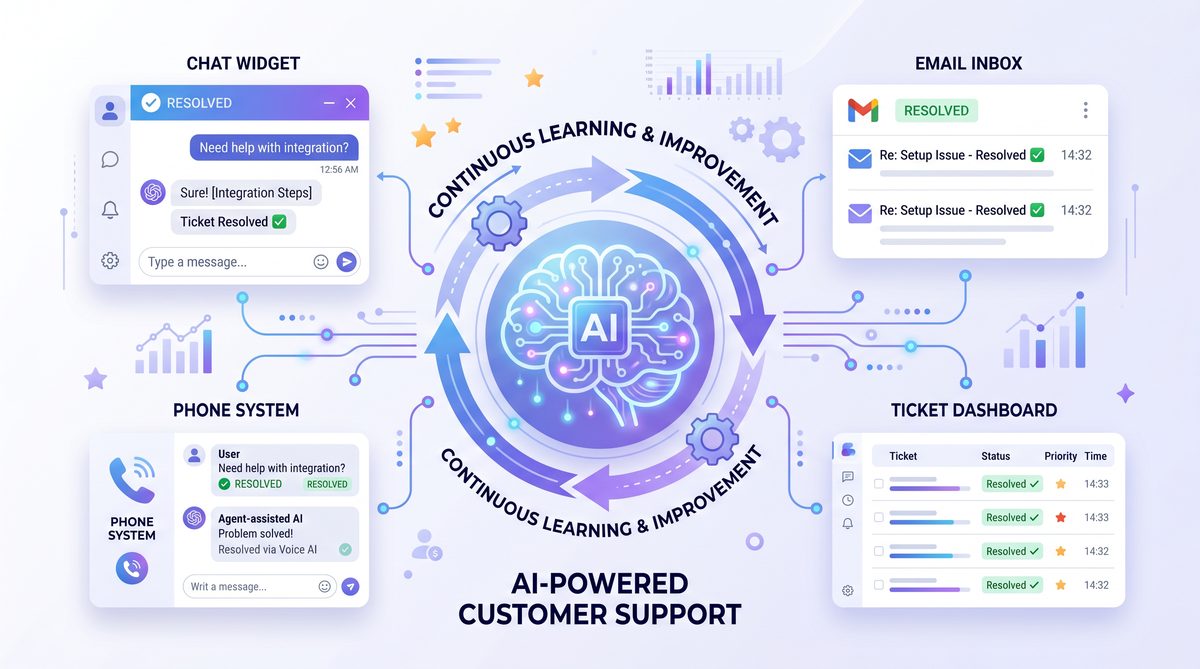
In the rapidly evolving landscape of customer support, enterprises are constantly seeking innovative solutions to enhance service quality, reduce response times, and improve overall customer satisfaction. One of the most transformative advancements emerging in this space is the application of Claude Dreaming—a cutting-edge AI methodology that empowers customer support agents to autonomously learn, adapt, and refine their interactions over time. By leveraging this technology, enterprise teams are pioneering the development of self-improving customer support agents that not only handle queries efficiently but also continuously evolve to meet complex and dynamic customer needs.
At its core, Claude Dreaming is an advanced framework inspired by the cognitive processes of human dreaming, where the AI system simulates various scenarios and internal dialogues to optimize its understanding and responses. This approach allows the AI to internally reflect on past interactions, identify areas for improvement, and generate novel strategies for problem-solving without requiring constant human supervision. Unlike traditional AI models that rely heavily on static training data and periodic manual updates, Claude Dreaming introduces an iterative learning cycle where the agent actively refines its capabilities in real time.
The relevance of Claude Dreaming to customer support cannot be overstated. Customer service environments are inherently dynamic, with diverse queries ranging from straightforward requests to highly nuanced and context-specific issues. Conventional AI chatbots often struggle to maintain consistency and relevance across such varied interactions, leading to frustration and reduced customer loyalty. Claude Dreaming addresses these challenges by enabling support agents to “dream” through hypothetical customer interactions, thereby enhancing their contextual awareness and decision-making processes.
Enterprise teams integrating Claude Dreaming into their customer support infrastructure benefit from a range of advantages. These self-improving agents can autonomously detect patterns in customer behavior, learn from uncommon or previously unseen issues, and adapt their communication styles to better align with individual customer preferences. This results in faster resolution times, higher accuracy in problem diagnosis, and a more personalized customer experience. Furthermore, the reduced dependency on manual retraining and updates significantly lowers operational costs and accelerates the deployment of improvements.
As organizations scale and customer expectations rise, the demand for intelligent, adaptable support systems becomes increasingly critical. Claude Dreaming represents a paradigm shift by combining the power of advanced AI modeling with the flexibility of continuous learning. In this article, we will explore how enterprise teams are harnessing Claude Dreaming to build these next-generation customer support agents, the technical underpinnings of the methodology, and the tangible benefits realized across various industries.
The Evolution of Customer Support Automation
From Rule-Based Chatbots to Intelligent Agents
Customer support automation has undergone significant transformation over the past decade. Initially, enterprises deployed rule-based chatbots that operated on predefined scripts and keyword matching. These early systems were designed to handle simple, repetitive inquiries such as account balance checks, password resets, or order status updates. While they reduced the volume of routine queries handled by human agents, their limitations quickly became apparent. They struggled with understanding ambiguous customer intents, contextual variations, and complex problem-solving.
In contrast, Claude Dreaming agents represent a new generation of customer support automation powered by advanced AI models and continuous learning frameworks. Unlike static chatbots, these agents are capable of self-improvement through iterative analysis of past interactions, feedback loops, and proactive scenario testing. This evolution enables enterprises to deliver more personalized, accurate, and context-aware support that adapts dynamically to customer needs.
Key Differences Between Traditional Chatbots and Claude Dreaming Agents
To better understand the advancements brought by Claude Dreaming, it is useful to examine a detailed comparison between traditional chatbots and these intelligent agents. The table below highlights critical dimensions including learning capability, contextual understanding, adaptability, and operational efficiency.
| Feature | Traditional Chatbots | Claude Dreaming Agents |
|---|---|---|
| Learning Capability | Static, rule-based; requires manual updates to scripts and dialogue flows. | Dynamic self-learning through continual feedback, conversation analysis, and dream simulations to improve responses. |
| Contextual Understanding | Limited to keyword matching; minimal ability to maintain conversation context. | Deep contextual awareness enabling multi-turn dialogue and nuanced understanding of customer intent. |
| Adaptability | Rigid; struggles with unanticipated queries or evolving product offerings. | Highly adaptable; autonomously updates knowledge base and response strategies based on new data. |
| Personalization | Basic personalization through user profile data integration. | Advanced personalization by analyzing historical interactions and preferences to tailor conversations. |
| Error Handling | Fallback to generic error messages or human agents when confused. | Proactively identifies gaps and generates improvement plans to reduce future errors. |
| Scalability | Scalable but requires proportional manual maintenance effort. | Scales efficiently with minimal human intervention due to self-optimizing mechanisms. |
| Operational Efficiency | Reduces repetitive workload but limited in complex scenario handling. | Significantly improves resolution rates and reduces escalation by handling complex queries autonomously. |
Real-World Scenarios Illustrating the Evolution
Consider a telecommunications company that initially deployed a traditional chatbot to manage customer inquiries regarding billing and network outages. While the bot successfully handled straightforward questions, customers frequently reported frustration when the bot failed to understand nuanced problems such as intermittent connectivity issues or billing discrepancies involving multiple accounts. The bot’s reliance on scripted responses meant the company had to continuously invest in manual updates and training sessions to keep the system relevant.
After adopting Claude Dreaming agents, the company noticed a significant shift in customer support dynamics. The AI-powered agents began autonomously reviewing past conversations to identify recurring failure points. For example, the agents recognized that many customers asked about outage impacts during international travel, a scenario not previously accounted for. Through “dreaming” simulations—internal scenario generation and testing—the agents developed new dialogue pathways tailored to explain roaming coverage and temporary service limitations.
In another instance, an e-commerce enterprise leveraged Claude Dreaming to enhance its post-purchase support. The traditional chatbot struggled with handling complex return policies that varied by product category, region, and promotional terms. With Claude Dreaming agents, the system continuously updated its knowledge base by analyzing support tickets and customer feedback. The agents proactively suggested clarifications on return eligibility and dynamically adapted responses based on the customer’s purchase history and local regulations, significantly reducing customer confusion and return-related support calls.
The Impact on Customer Experience and Support Teams
The evolution from rule-based chatbots to self-improving Claude Dreaming agents has profound implications for both customers and support teams. Customers benefit from faster, more accurate, and contextually relevant responses that reduce wait times and improve satisfaction. They experience a more conversational and empathetic interaction that mirrors human support, but with the added advantage of 24/7 availability and instant access to information.
For support teams, Claude Dreaming agents act as intelligent collaborators rather than simple ticket filters. By autonomously identifying knowledge gaps and generating improvement strategies, these agents reduce the cognitive load on human agents and free them to focus on high-value tasks such as complex problem resolution and relationship building. Furthermore, the continuous learning capabilities ensure that the support ecosystem evolves in sync with product changes, customer expectations, and emerging market trends without requiring exhaustive manual intervention.
Conclusion
The journey from traditional chatbots to Claude Dreaming agents marks a pivotal advancement in customer support automation. Through self-improving AI, enterprises can now deploy adaptive, context-aware agents that not only respond to queries but continuously enhance their own capabilities. This evolution is redefining the boundaries of customer experience, operational efficiency, and strategic support innovation across diverse industries. As AI technologies mature, the integration of dreaming agents will become increasingly essential for enterprises aiming to deliver world-class, scalable customer support.

Understanding Claude Dreaming in the Enterprise Context
The Role of Claude Dreaming in Modern Enterprise Workflows
Claude Dreaming represents a significant evolution in artificial intelligence applications tailored for enterprise environments. Unlike traditional AI models that focus solely on straightforward task execution, Claude Dreaming incorporates advanced generative capabilities combined with contextual understanding, enabling enterprises to unlock novel levels of productivity and creativity. This technology empowers teams to automate complex problem-solving processes, generate detailed reports, and create innovative content, all while maintaining a high degree of accuracy and relevance. Enterprises leverage Claude Dreaming not just as a tool, but as an intelligent collaborator that adapts to organizational needs and business goals.
In practical terms, enterprise teams use Claude Dreaming to streamline workflows that would otherwise demand extensive human effort. For example, in sectors such as finance, healthcare, and legal services, Claude Dreaming can analyze large volumes of unstructured data, identify patterns, and produce comprehensive summaries or predictive insights. This capability reduces the time spent on manual research and enhances decision-making quality. Furthermore, the ability to generate human-like text allows customer service departments to deploy virtual assistants that handle intricate queries, freeing human agents to focus on more strategic tasks.
Deployment Strategies for Enterprise Teams
When deploying Claude Dreaming within enterprise infrastructures, teams must first focus on integration and customization to align the AI’s capabilities with specific business objectives. Deployment often begins with pilot programs that test the model’s performance on representative datasets and workflows. These pilots help identify areas where Claude Dreaming can add the most value, such as automating internal documentation or generating dynamic marketing content.
A key consideration during deployment is the customization of the model’s training and fine-tuning. Enterprises frequently augment Claude Dreaming with proprietary datasets to ensure outputs reflect domain-specific knowledge and terminology. This fine-tuning process enhances both the accuracy and contextual relevance of the AI’s responses. Additionally, teams implement robust feedback mechanisms that allow continuous learning and improvement, using human-in-the-loop approaches to correct errors and refine output quality.
Security and compliance are paramount concerns in the enterprise deployment of AI technologies like Claude Dreaming. Teams must ensure that data privacy protocols, regulatory requirements, and internal governance policies are strictly enforced. This often involves deploying Claude Dreaming within private cloud environments or on-premises servers, rather than relying on public cloud services. Such deployment models give enterprises full control over sensitive data and reduce exposure to external risks.
Integration with Existing Enterprise Systems
Successful enterprise deployment of Claude Dreaming depends heavily on seamless integration with existing IT infrastructure and business applications. This includes connecting the AI model to customer relationship management (CRM) systems, enterprise resource planning (ERP) platforms, content management systems (CMS), and communication tools such as email and chat platforms. By embedding Claude Dreaming into these systems, enterprises can automate routine tasks, generate insights from operational data, and provide intelligent recommendations directly within the user’s workflow.
For instance, a sales team might use Claude Dreaming integrated with their CRM to automatically draft personalized outreach emails based on customer history and preferences. Similarly, human resources departments can leverage the AI to create tailored training materials or generate employee performance summaries. The flexibility of Claude Dreaming’s API and its support for multiple programming languages facilitate smooth integration with diverse technology stacks prevalent in large enterprises.
Enhancing Collaboration and Innovation with Claude Dreaming
Beyond automation, Claude Dreaming serves as a catalyst for innovation and collaboration within enterprises. Teams harness its generative capabilities to brainstorm new ideas, draft project proposals, and simulate various business scenarios. The AI’s ability to produce coherent, context-aware narratives enables cross-functional teams to visualize complex concepts and align on strategic initiatives more effectively.
Moreover, Claude Dreaming supports multilingual communication, which is critical for global enterprises operating across diverse regions. It can translate documents, generate localized content, and assist in drafting communications that resonate with different cultural contexts. This multilingual proficiency fosters better collaboration among international teams and helps enterprises maintain a consistent brand voice worldwide.
Related Technologies Enhancing Claude Dreaming Deployments
To maximize the benefits of Claude Dreaming, enterprises often combine it with complementary technologies such as natural language understanding (NLU) modules, knowledge graphs, and advanced analytics platforms. These integrations enrich the AI’s comprehension of domain-specific contexts, enabling more nuanced and actionable outputs. For example, incorporating a knowledge graph can help Claude Dreaming access structured information about products, services, or regulatory frameworks, thereby improving response accuracy and relevance.
For teams interested in how AI models like Claude Dreaming are being integrated alongside these technologies to create comprehensive enterprise solutions, it is worthwhile to explore the evolving landscape of enterprise AI orchestration. This area focuses on the coordination of multiple AI services and tools to deliver end-to-end automation and intelligence. You can find an in-depth exploration of this topic here: Mastering Multi-Agent Orchestration with Claude: A Comprehensive Prompting Guide. Understanding these orchestration frameworks is essential for enterprise architects and AI strategists aiming to design scalable, efficient, and resilient AI ecosystems.
Challenges and Best Practices in Enterprise Deployment
Deploying Claude Dreaming at scale is not without challenges. Enterprises must address issues related to model bias, explainability, and managing AI-generated content quality. Ensuring that the AI outputs align with corporate ethics and compliance standards requires ongoing monitoring and governance. Additionally, educating employees on how to effectively collaborate with AI tools is crucial to maximize adoption and avoid misuse.
Best practices for overcoming these challenges include establishing clear AI usage policies, creating cross-functional AI oversight committees, and investing in continuous training programs for staff. Robust testing environments and simulation exercises can help anticipate potential pitfalls before full-scale deployment. By adopting these strategies, enterprises can harness the full potential of Claude Dreaming while mitigating risks and fostering a culture of responsible AI use.

Extracting Patterns: How Dreaming Analyzes Past Sessions
Dreaming, as an advanced AI-driven technology, leverages sophisticated pattern extraction techniques to analyze past sessions and generate meaningful insights. This process is foundational to improving user interactions, adapting responses, and ensuring that the AI continually evolves based on historical data. By meticulously examining previous conversations, Dreaming identifies recurring themes, user preferences, and behavioral trends, enabling a more personalized and contextually relevant experience.
Understanding the Importance of Pattern Extraction
Pattern extraction is crucial because it transforms raw session data into actionable intelligence. Without this analysis, the AI would treat each interaction in isolation, missing valuable context and the opportunity to refine its responses. Through pattern extraction, Dreaming can detect common questions, typical user concerns, and areas where the AI’s performance can be enhanced. This leads to better anticipation of user needs, quicker problem resolution, and a more seamless conversational flow.
Step 1: Data Collection and Preprocessing
The first step in analyzing past sessions involves comprehensive data collection. Dreaming aggregates data from various touchpoints, including chat logs, voice transcripts, and user feedback forms. Once collected, this data undergoes rigorous preprocessing. This involves cleaning the text, removing personally identifiable information (PII) to ensure privacy, and standardizing the format. Preprocessing is essential to reduce noise and ensure that the subsequent analysis is accurate and reliable.
Step 2: Natural Language Processing (NLP) and Semantic Analysis
After preprocessing, Dreaming employs advanced Natural Language Processing (NLP) algorithms to conduct semantic analysis. This step goes beyond simple keyword matching; it involves understanding the intent, sentiment, and context behind user inputs. By analyzing the semantic structure of sentences, the AI can categorize interactions into specific topics or issues. For instance, it can distinguish between a user asking for a refund and a user inquiring about a product feature, even if similar words are used.
Step 3: Identifying Recurring Themes and Anomalies
With the data semantically analyzed, Dreaming utilizes machine learning models, such as clustering algorithms, to group similar interactions. This grouping helps in identifying recurring themes or frequent issues that users face. Simultaneously, the system is trained to detect anomalies—unusual patterns or rare queries that deviate from the norm. Identifying these anomalies is just as important as finding common themes, as it highlights areas where the AI might need additional training or where new user needs are emerging.
Step 4: Creating Actionable Insights and Feedback Loops
The ultimate goal of pattern extraction is to generate actionable insights. Dreaming translates the identified patterns into structured reports or direct updates to its knowledge base. This creates a continuous feedback loop. For example, if the AI detects a sudden spike in queries related to a specific software bug, it can alert human operators or automatically update its responses to provide the latest troubleshooting steps. This dynamic adaptation ensures that the AI remains relevant and effective.
Step 5: Application of Extracted Patterns
Once validated, the extracted patterns empower Dreaming to enhance future interactions. For example, the AI can proactively suggest relevant topics, anticipate user questions, or tailor responses based on previously observed preferences. This results in a more intelligent, responsive, and user-centric experience.
Furthermore, the insights derived from pattern extraction can inform broader improvements in AI design, such as refining dialogue strategies, expanding knowledge bases, or developing specialized modules for handling complex queries.
Related Insights: Leveraging Historical Data for AI Enhancement
Understanding how Dreaming analyzes past sessions to extract patterns naturally leads to a broader exploration of how historical data can be leveraged to improve AI systems. For instance, incorporating long-term user behavior trends and feedback loops ensures that AI models remain dynamic and context-aware over time. This topic is closely connected to methods of data-driven personalization and adaptive learning strategies that optimize AI performance across various domains. For a deep dive into these techniques and their impact on conversational AI, visit this comprehensive guide on adaptive AI architectures How Harvey Achieved Dramatic Legal AI Breakthroughs Using Anthropic’s Claude Dreaming Feature.
Implementing Self-Improving Feedback Loops
Self-improving feedback loops are critical components in modern AI systems and software applications that aim to enhance their performance dynamically over time. These loops enable systems to learn from their own outputs and adjust internal parameters or strategies without direct human intervention. Implementing such feedback mechanisms requires careful design to ensure that the system not only adapts but does so in a stable, scalable, and transparent manner.
Understanding the Core Components of Feedback Loops
A self-improving feedback loop typically involves three primary stages: data collection, evaluation, and adaptation. The process begins with data collection, where the system gathers relevant information from its environment or internal outputs. Next, the evaluation stage assesses this data against predefined metrics or objectives to determine performance. Finally, the adaptation phase uses the evaluation results to modify the system’s behavior or parameters, thereby improving future outcomes. This cycle then repeats continuously, fostering incremental improvements.
Stage 1: Data Collection and Monitoring
The foundation of any effective feedback loop is robust data collection. Systems must be equipped with sensors or logging mechanisms that capture high-quality, relevant data. This includes user interactions, system performance metrics, error rates, and environmental variables. The data collected must be comprehensive enough to provide a clear picture of the system’s current state and performance. Real-time monitoring tools are often employed to ensure that data is captured continuously and accurately, forming the basis for subsequent analysis.
Stage 2: Evaluation and Metric Analysis
Once data is collected, it must be evaluated to determine how well the system is performing. This involves comparing the collected data against established benchmarks or key performance indicators (KPIs). Evaluation can be straightforward, such as measuring response times, or complex, involving sophisticated algorithms to assess the quality of AI-generated content. The goal is to identify discrepancies between actual performance and desired outcomes. This stage often utilizes statistical analysis and machine learning models to detect patterns, anomalies, and areas requiring improvement.
Stage 3: Adaptation and System Updates
The adaptation stage is where the actual “self-improvement” occurs. Based on the insights gained during evaluation, the system automatically adjusts its parameters, algorithms, or operational strategies. For instance, an AI model might update its weights to reduce prediction errors, or a load balancer might redistribute traffic to optimize resource usage. These adaptations must be implemented carefully to avoid introducing instability. Techniques such as reinforcement learning or automated hyperparameter tuning are frequently used to guide the adaptation process effectively.
Summary of Feedback Loop Stages
To provide a clear overview of the process, the following table summarizes the key stages of a self-improving feedback loop, detailing the primary activities and objectives of each phase.
| Stage | Primary Activities | Objective |
|---|---|---|
| Data Collection | Logging user interactions, monitoring system metrics, capturing error rates. | To gather comprehensive and accurate data reflecting the system’s current performance and environment. |
| Evaluation | Comparing data against KPIs, statistical analysis, anomaly detection. | To assess performance, identify areas for improvement, and determine the effectiveness of previous adaptations. |
| Adaptation | Updating model weights, adjusting operational parameters, deploying new strategies. | To modify system behavior automatically to enhance future performance and achieve desired outcomes. |
Practical Considerations and Best Practices
When implementing self-improving feedback loops, it is important to start with well-defined objectives and measurable success criteria. Establishing clear goals helps in selecting the right data sources, evaluation metrics, and adaptation strategies. Transparency and explainability should also be prioritized, especially when feedback loops impact critical decisions or user experiences.
Another best practice is to incorporate human-in-the-loop mechanisms where appropriate. While automation is the goal, human oversight can catch anomalies and validate system changes before they propagate. This hybrid approach balances efficiency with safety and accountability.
Continuous monitoring and logging are essential to detect performance trends and identify potential issues early. Visualization tools and dashboards can aid stakeholders in understanding how feedback loops influence system behavior over time.
Related Topics: Enhancing AI Adaptability Through Continuous Learning
For a deeper dive into mechanisms that complement self-improving feedback loops, exploring continuous learning techniques in AI is highly valuable. Continuous learning focuses on enabling AI models to absorb new knowledge incrementally, without forgetting previously acquired information. It addresses challenges like catastrophic forgetting and adapts AI systems to evolving environments or data distributions. Understanding how continuous learning frameworks operate and integrate with feedback loops will provide a comprehensive perspective on building resilient and adaptive AI solutions. Complete Guide to Claude Managed Agents: Dreaming, Outcomes, and Multiagent Orchestration
Useful Links
- Anthropic Official Documentation
- Anthropic Blog and Updates
- Anthropic Enterprise AI Solutions
- Gartner Report on AI in Enterprise
- Harvard Business Review: How Enterprises are Using AI
- Claude AI Models on Papers with Code
- OpenAI Research Papers
- Forbes: AI Driving Enterprise Innovation
- TechRepublic Enterprise AI Case Studies
Conclusion
Claude Dreaming represents a groundbreaking advancement in the realm of enterprise support, fundamentally transforming how organizations manage customer interactions, streamline workflows, and enhance overall operational efficiency. By leveraging state-of-the-art natural language processing and deep learning architectures, Claude Dreaming empowers enterprises to deliver more personalized, responsive, and contextually aware support experiences than ever before.
One of the most significant impacts of Claude Dreaming lies in its ability to understand and interpret complex customer queries with remarkable accuracy. Unlike traditional support systems that rely heavily on predefined scripts or keyword matching, Claude Dreaming’s sophisticated language comprehension enables it to grasp subtleties in user intent, sentiment, and context. This leads to faster resolution times, reduced dependency on human agents for routine inquiries, and improved customer satisfaction. Enterprises benefit from a scalable support model that can handle large volumes of requests without compromising quality.
Moreover, Claude Dreaming’s integration capabilities facilitate seamless interfacing with existing enterprise software and databases, allowing it to retrieve relevant information and provide actionable insights in real time. This not only accelerates problem-solving but also enhances decision-making processes within support teams. By automating repetitive tasks and intelligently routing complex issues to specialized agents, Claude Dreaming optimizes resource allocation and reduces operational costs.
In addition to improving customer-facing interactions, Claude Dreaming offers substantial advantages internally by supporting knowledge management and training initiatives. Its ability to aggregate, analyze, and synthesize vast amounts of data helps organizations identify common pain points, emerging trends, and opportunities for service improvement. Consequently, enterprises can proactively refine their support strategies, foster continuous learning, and maintain a competitive edge in dynamic markets.
Ultimately, Claude Dreaming exemplifies the future of enterprise support—one where artificial intelligence not only augments human capabilities but also redefines service paradigms through intelligent automation and empathetic communication. As more organizations adopt this transformative technology, the landscape of customer support will evolve into a more efficient, responsive, and human-centric domain, driving long-term business growth and customer loyalty.
Access 40,000+ AI Prompts for ChatGPT, Claude & Codex — Free!
Subscribe to get instant access to our complete Notion Prompt Library — the largest curated collection of prompts for ChatGPT, Claude, OpenAI Codex, and other leading AI models. Optimized for real-world workflows across coding, research, content creation, and business.
