
Table of Contents
- Technological Advancements in AI Content Creation
- Next-Generation Language Models
- Multimodal Content Generation
- Real-Time Adaptive Content Creation
- Industry Applications of AI Content Creation
- Marketing and Advertising
- Journalism and Media
- Education and E-Learning
- Creative Arts and Entertainment
- Ethical and Regulatory Considerations
- Content Authenticity and Misinformation
- Copyright and Ownership
- Bias and Fairness in AI-Generated Content
- Advancements in AI Content Creation Tools
- No-Code and Low-Code Platforms
- Collaborative AI Workspaces
- AI-Driven Content Optimization
- Impact of AI Content Creation on the Job Market
- Job Displacement and Creation
- Skills for the AI-Era Content Creator
- Personalization and Audience Engagement
- Hyper-Personalized Content at Scale
- Interactive and Immersive Content
- Challenges and Limitations of AI Content Creation
- Quality Control and Human Supervision
- Data Privacy and Security Concerns
- Creative Limitations and Originality Questions
- Emerging Trends Shaping AI Content Creation in 2026
- Explainable AI and Transparency
- Integration with Blockchain for Content Verification
- AI-Powered Content Curation
- Voice and Multilingual Content Generation
- Frequently Asked Questions
- Conclusion
The rapid evolution of artificial intelligence (AI) has transformed the landscape of content creation dramatically. As we approach 2026, AI content generation tools are poised to become more sophisticated, intuitive, and integral to digital communication strategies worldwide. The convergence of natural language processing, machine learning, and creative AI algorithms is enabling unprecedented levels of automation, personalization, and efficiency in producing written, visual, and multimedia content. This comprehensive guide dives deep into the future of AI content creation in 2026, exploring technological breakthroughs, industry impacts, ethical considerations, and strategic best practices that both creators and businesses must understand to thrive in this new era.
Technological Advancements in AI Content Creation
Next-Generation Language Models
By 2026, language models powering AI content creation will have evolved far beyond current capabilities. Models like GPT-4 and its successors will exhibit significantly enhanced contextual understanding, creativity, and multi-modal integration. These next-generation language models will be trained on vastly larger and more diverse datasets, incorporating real-time knowledge updates and domain-specific expertise. This will enable AI to generate content that is not only coherent and engaging but also factually accurate and contextually aware.
Moreover, models will integrate improved reasoning abilities, allowing AI to produce complex argumentative essays, creative storytelling, and technical documentation with minimal human intervention. The rise of foundation models with modular architectures will facilitate customization for various industries, languages, and content formats.
[IMAGE: futuristic AI language model architecture illustration]Multimodal Content Generation
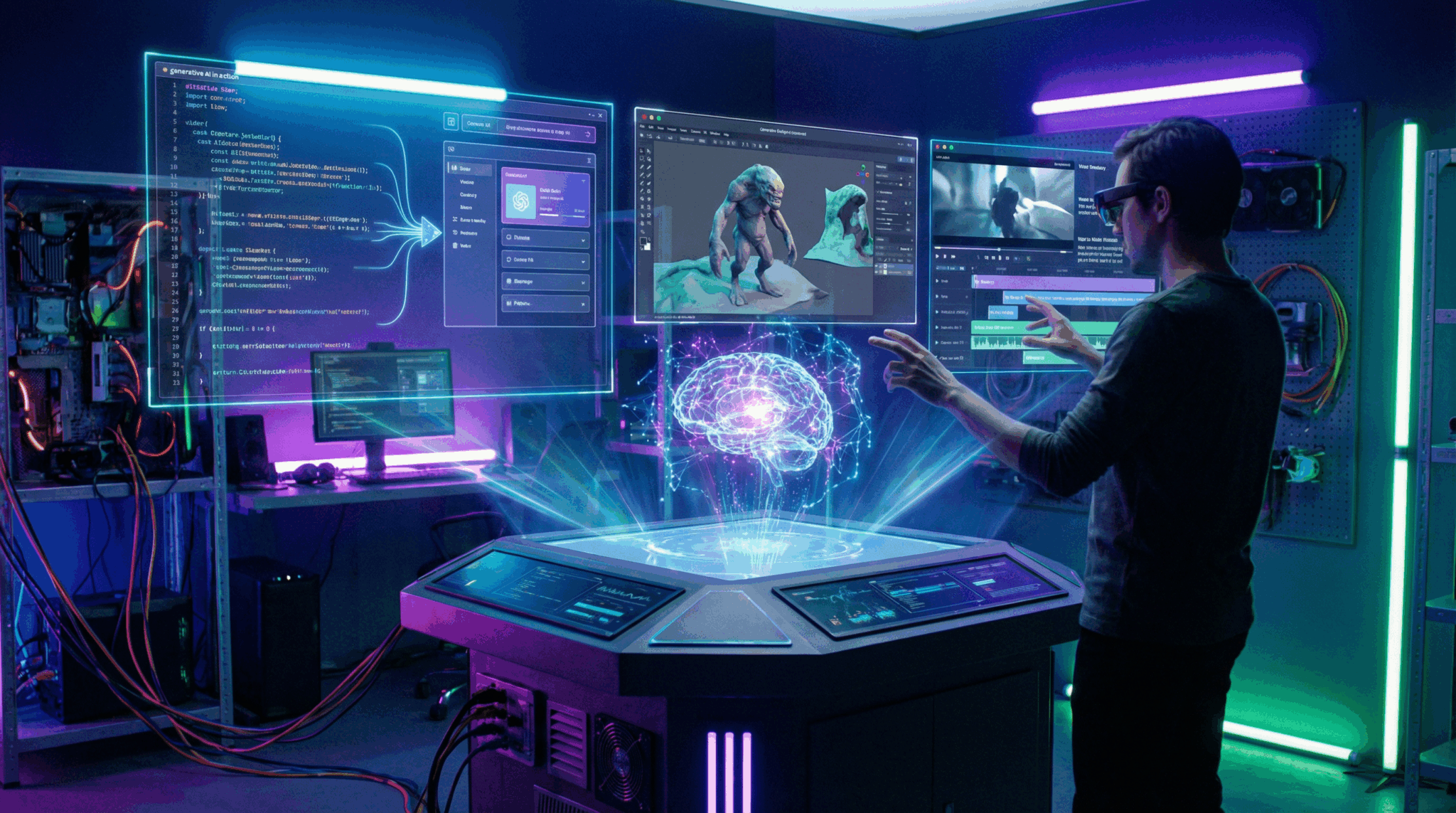
A defining trend for 2026 will be the seamless combination of text, images, audio, and video generation within unified AI systems. Multimodal AI will empower creators to produce rich, interactive content by simply providing high-level prompts. For example, an AI system could generate a blog post accompanied by custom illustrations, embedded audio narrations, and video summaries in one workflow.
This capability will be driven by advances in neural networks that understand and generate across multiple data types simultaneously. The integration of generative adversarial networks (GANs) for image and video synthesis, alongside natural language generation, will redefine creative workflows.
[IMAGE: example of AI-generated multimedia article]Real-Time Adaptive Content Creation
AI content generators in 2026 will increasingly offer real-time adaptation based on audience feedback and engagement metrics. By analyzing user interaction data, AI tools will dynamically tailor content tone, complexity, and format to maximize impact and relevance. This will be particularly valuable in marketing, education, and entertainment sectors where personalization drives engagement.
For instance, live streaming platforms may use AI to instantly generate subtitles, summaries, or follow-up content that caters to viewer preferences, languages, and accessibility needs.
[IMAGE: dashboard showing AI-driven content adaptations based on analytics]Industry Applications of AI Content Creation
Marketing and Advertising
AI content creation is revolutionizing marketing by automating the generation of personalized ads, product descriptions, email campaigns, and social media posts. In 2026, marketers will rely heavily on AI to produce high volumes of tailored content optimized for different platforms and audiences, reducing costs and turnaround times.
AI’s ability to analyze massive consumer datasets combined with creative generation will enable hyper-targeted campaigns with measurable ROI improvements. For example, AI-generated video commercials customized per demographic segment will become commonplace.
[IMAGE: AI-generated personalized marketing content on multiple devices]Journalism and Media
Newsrooms are adopting AI to assist with fact-checking, summarizing breaking news, and generating routine reports such as financial earnings or sports results. By 2026, AI will be capable of drafting nuanced investigative articles and opinion pieces under human editorial supervision.
AI’s integration will help media outlets scale content production while maintaining accuracy and ethical standards. This will support 24/7 news cycles and multilingual global reporting.
[IMAGE: newsroom with AI-powered content generation tools]Education and E-Learning
AI content creation will personalize educational materials to suit individual learning styles and progress. In 2026, AI tutors will generate customized lesson plans, interactive quizzes, and explanatory videos tailored to each student’s needs.
Additionally, AI will produce adaptive textbooks and training manuals that update dynamically as curricula evolve, ensuring learners always access the most relevant and engaging content.
[IMAGE: AI-generated personalized e-learning content displayed on tablet]Creative Arts and Entertainment
The creative industry will benefit from AI-generated scripts, music, digital art, and game narratives, accelerating the creative process and expanding artistic possibilities. By 2026, AI will collaborate with human artists to co-create immersive experiences in virtual and augmented reality.
AI-powered content creation tools will also enable independent creators to produce professional-quality work without extensive technical expertise, democratizing creative expression.
[IMAGE: artist collaborating with AI to create digital artwork]Ethical and Regulatory Considerations
Content Authenticity and Misinformation
With AI’s increasing ability to generate highly realistic content, concerns about misinformation, deepfakes, and fake news will intensify. Ensuring content authenticity in 2026 will require robust verification systems, watermarking techniques, and transparent AI disclosure practices.
Platforms and regulators will collaborate to develop standards that identify AI-generated content and prevent malicious use, balancing innovation with societal responsibility.
[IMAGE: infographic illustrating AI content verification process]Copyright and Ownership
The legal landscape around ownership of AI-generated content will be clearer by 2026 but remain complex. Questions about intellectual property rights when AI assists or autonomously creates content will necessitate updated laws and licensing frameworks.
Creators, businesses, and AI developers must navigate these evolving rules carefully to protect their interests and foster ethical AI use.
[IMAGE: legal scales symbolizing copyright issues in AI content]Bias and Fairness in AI-Generated Content
AI content creators will continue to grapple with inherent biases present in training data. In 2026, greater emphasis will be placed on developing fair, inclusive AI systems that minimize stereotyping and discriminatory outputs.
This will involve diverse data sourcing, ongoing auditing, and transparent algorithmic governance to ensure equitable representation across all AI-generated content.
[IMAGE: diverse group of people symbolizing fairness in AI]Advancements in AI Content Creation Tools
No-Code and Low-Code Platforms
The rise of no-code and low-code AI content creation platforms will empower non-technical users to harness AI’s capabilities fully by 2026. These platforms will feature intuitive interfaces, drag-and-drop functionality, and customizable AI modules for various content types.
Businesses and individuals will accelerate content workflows without needing specialized programming skills, increasing adoption and innovation.
[IMAGE: screenshot of a no-code AI content creation platform]Collaborative AI Workspaces
Future AI tools will support real-time collaboration between multiple users and AI assistants. These workspaces will facilitate brainstorming, iterative editing, and content optimization with AI suggestions integrated seamlessly.
Such environments will enhance team creativity, reduce bottlenecks, and maintain content quality.
[IMAGE: team collaborating on AI-generated content in cloud workspace]AI-Driven Content Optimization
AI will not only create content but also optimize it for SEO, readability, and audience engagement automatically. By 2026, optimization features will include sentiment analysis, keyword integration, and adaptive formatting tailored to specific platforms and user preferences.
This will allow marketers and publishers to maximize content performance with minimal manual intervention.
[IMAGE: analytics dashboard showing AI content optimization metrics]Impact of AI Content Creation on the Job Market
Job Displacement and Creation
The proliferation of AI content creation tools will inevitably disrupt traditional content jobs by automating routine writing and design tasks. However, 2026 will also see the creation of new roles focusing on AI oversight, prompt engineering, content strategy, and ethical compliance.
Human creativity and critical thinking will remain essential, with AI serving as a powerful augmentation tool rather than a replacement.
[IMAGE: infographic comparing jobs lost vs. jobs created due to AI]Skills for the AI-Era Content Creator
Content professionals will need to develop hybrid skills combining creativity, data literacy, and AI fluency. Understanding how to craft effective AI prompts, interpret AI outputs critically, and integrate AI-generated content into broader strategies will be crucial by 2026.
Continuous learning and adaptability will define career success in this evolving landscape.
[IMAGE: person learning AI content creation skills on laptop]Personalization and Audience Engagement
Hyper-Personalized Content at Scale
AI will enable brands to deliver hyper-personalized content experiences tailored to individual preferences, behaviors, and contexts. In 2026, AI algorithms will analyze user data in real-time to generate customized newsletters, product recommendations, and interactive stories.
Such personalization will drive higher engagement, loyalty, and conversion rates across industries.
[IMAGE: example of personalized content feed on smartphone]Interactive and Immersive Content
Advancements in AI will facilitate creation of interactive content such as chatbots, quizzes, and gamified narratives that respond intelligently to user input. Combined with AR/VR technologies, AI-generated immersive content will transform how audiences consume and participate in media.
This shift will deepen emotional connections and provide memorable brand experiences.
[IMAGE: user engaging with AI-powered interactive content in VR]Challenges and Limitations of AI Content Creation
Quality Control and Human Supervision
Despite tremendous progress, AI content still requires human oversight to ensure accuracy, coherence, and ethical standards. In 2026, hybrid workflows combining AI generation with expert editing will remain the norm.
Relying solely on AI risks propagating errors, bias, or irrelevant output.
[IMAGE: editor reviewing AI-generated content on computer]Data Privacy and Security Concerns
AI content creation depends heavily on large datasets, raising privacy and data security issues. Protecting user information and complying with regulations like GDPR and CCPA will be critical considerations for AI developers and users in 2026.
[IMAGE: padlock symbolizing data security in AI]Creative Limitations and Originality Questions
While AI can generate vast amounts of content, it may struggle with truly original ideas or deep emotional nuance. The debate about AI’s role in creativity will continue, emphasizing the complementary relationship between human imagination and machine assistance.
[IMAGE: human brain and AI circuit board juxtaposition]Emerging Trends Shaping AI Content Creation in 2026
Explainable AI and Transparency
As AI content becomes ubiquitous, explainable AI technologies will gain importance to clarify how content is generated and why certain decisions are made. Transparency will build trust with users and stakeholders.
[IMAGE: flowchart explaining AI decision process]Integration with Blockchain for Content Verification
Blockchain technology will be increasingly used to verify AI-generated content provenance and authenticity, preventing forgery and misuse.
[IMAGE: blockchain ledger representing content verification]AI-Powered Content Curation
Beyond creation, AI will excel at curating and recommending relevant content, helping users navigate overwhelming information volumes.
[IMAGE: personalized content curation interface]Voice and Multilingual Content Generation
AI will offer fluent multilingual content generation and voice synthesis, enabling global brands to communicate seamlessly across languages and cultures.
[IMAGE: AI-generated content displayed in multiple languages]Frequently Asked Questions
- How will AI content creation evolve by 2026?
AI content creation will become more context-aware, multimodal, and personalized, generating high-quality text, images, audio, and video integrated seamlessly with human collaboration. - Will AI replace human content creators?
AI will augment human creativity and automate routine tasks but not replace human originality, critical thinking, and emotional nuance. - What industries will benefit most from AI content creation?
Marketing, journalism, education, entertainment, and e-commerce will see significant impacts from AI-driven content innovation. - How is ethical use of AI content creation ensured?
Through transparent disclosure, bias mitigation, content verification, and updated legal frameworks addressing ownership and misuse. - What skills should content creators develop for the AI future?
Hybrid skills including AI fluency, prompt engineering, data literacy, and ethical awareness will be essential. - Can AI create multilingual content?
Yes, by 2026 AI will generate fluent, culturally relevant content in multiple languages with voice synthesis capabilities. - What are the main challenges of AI content creation?
Quality control, data privacy, originality limits, and managing misinformation remain key challenges.
Conclusion
The future of AI content creation in 2026 promises transformative opportunities and complex challenges. AI will empower creators and businesses to produce more personalized, engaging, and diverse content at scale while shifting traditional workflows and job roles. Embracing technological advancements alongside ethical principles and human creativity will be critical to harness AI’s full potential responsibly. As AI content generation becomes deeply embedded in digital ecosystems, staying informed about emerging trends, regulations, and best practices will position stakeholders for sustained success in this dynamic environment.
For further insights on AI technologies and content innovation, explore our Evolution of AI up to 2026, Overview of GPT-5.2 and Sora, and Latest Trends in AI 2026: Setting the Stage. Learn how to optimize your content strategy with 99+ Powerful ChatGPT Prompts for Marketing Plan to Boost … and discover future trends in Overview of GPT-5.2 and Sora.
Published by ChatGPT AI Hub, 2026
🚀 Ready to Supercharge Your ChatGPT Skills?
Join 25,000+ professionals and get FREE access to our complete library of 40,000+ ChatGPT prompts across 41+ categories.

