
The Complete Guide to OpenAI Partner Network: How to Join, Benefits, Certification, and Enterprise AI Deployment Support
The Complete Guide to OpenAI Partner Network: How to Join, Benefits, Certification, and Enterprise AI Deployment Support
By Markos Symeonides — June 20, 2026
OpenAI’s $150 million Partner Network investment is reshaping how enterprises adopt AI at scale. This comprehensive guide breaks down everything technology consultants, system integrators, and software vendors need to know about joining the network, navigating certification paths, and leveraging partner benefits to accelerate real-world AI deployment.
What Is the OpenAI Partner Network and Why Does It Matter?
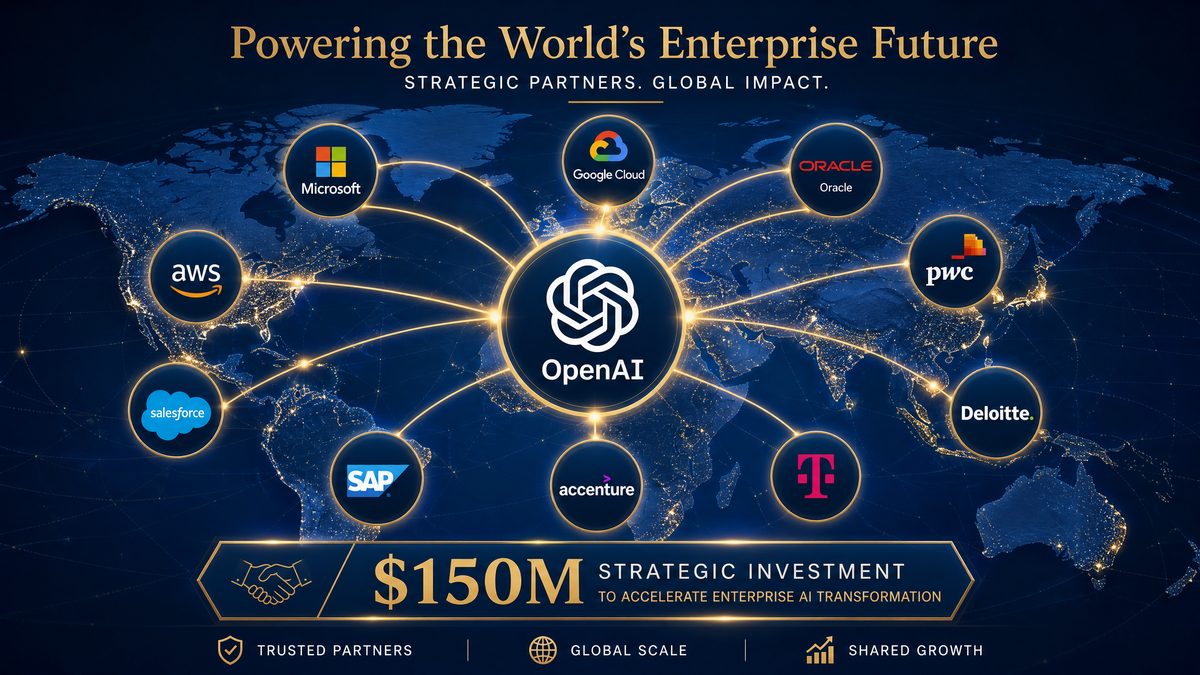
The OpenAI Partner Network is a structured ecosystem program designed to extend OpenAI’s enterprise reach through vetted third-party organizations. Unlike informal API reseller arrangements that existed in earlier years, the Partner Network represents a formalized, tiered alliance structure backed by a $150 million investment commitment that includes co-marketing funds, technical enablement resources, and direct engineering support for qualified partners.
At its core, the program solves a fundamental scaling problem. OpenAI’s direct sales and customer success teams can realistically support only a fraction of the thousands of enterprises seeking to deploy GPT-4o, o3, and future models in production environments. Partners—whether they are global systems integrators, boutique AI consultancies, cloud-native software vendors, or regional managed service providers—fill that gap by carrying OpenAI’s technical and commercial capabilities into markets and verticals where OpenAI itself lacks deep presence.
The significance of the $150 million figure extends beyond marketing optics. The investment is structured to flow through the partner ecosystem in three primary ways: a Partner Development Fund (PDF) that reimburses qualified go-to-market activities, a Technical Enablement Budget that subsidizes certification training and sandbox API credits, and a Co-Innovation Grant Program that funds joint solution development between OpenAI engineers and select partners building industry-specific AI applications.
For enterprises evaluating AI adoption, the Partner Network provides a quality signal. A company displaying OpenAI Partner status—particularly at the higher tiers—has demonstrated technical competency, met data-handling standards, and committed to ongoing training requirements. This matters enormously in regulated industries like financial services, healthcare, and government contracting, where procurement teams need assurance that their AI implementation partner has been vetted by the model provider itself.
The Strategic Context: Why OpenAI Launched the Program Now
The Partner Network launch did not happen in a vacuum. Several converging factors made 2026 the inflection point for this kind of structured ecosystem investment. First, enterprise AI adoption moved decisively from pilot to production. Organizations that spent 2024 and 2025 running internal proofs of concept are now deploying AI agents, automated workflows, and customer-facing applications at scale—and they need implementation support that exceeds what OpenAI’s direct team can provide.
Second, competitive pressure from Anthropic’s partner program, Google’s Gemini ecosystem, and Microsoft Azure’s AI partner tracks forced OpenAI to formalize what had been an ad hoc partner community. Enterprise buyers increasingly evaluate AI vendors partly on the depth and quality of their partner ecosystems, making the Partner Network a competitive necessity as much as a growth strategy.
Third, the emergence of agentic AI—systems where multiple AI models collaborate autonomously on multi-step tasks—created a new category of implementation complexity that demands certified expertise. Deploying a single GPT-4o API call for text summarization is fundamentally different from orchestrating a multi-agent workflow where an o3 reasoning model, a specialized code interpreter, and a real-time data retrieval system interact across dozens of decision nodes. Partners with formal training and certification in these architectures become essential to enterprise success.
Who the Program Is Designed For
OpenAI has been explicit about the target partner profiles. The network is designed to accommodate four primary partner archetypes, each with distinct value propositions and engagement models:
- Global Systems Integrators (GSIs): Firms like Accenture, Deloitte, Infosys, and Wipro that manage large-scale enterprise transformation programs. These partners typically engage at the Solutions Partner or Premier tier and leverage OpenAI technology as a component within broader digital transformation offerings.
- Independent Software Vendors (ISVs): Companies building SaaS products, vertical applications, or platform extensions that embed OpenAI models as core functionality. An ISV building an AI-powered contract review tool for legal teams, for example, would benefit from the Build track certification and co-innovation grant access.
- Managed Service Providers (MSPs) and Cloud Resellers: Organizations that manage IT infrastructure and increasingly AI workloads for mid-market and enterprise customers. These partners often operate through the Service track and focus on deployment, monitoring, and optimization of OpenAI-powered applications.
- Boutique AI Consultancies: Specialized firms with deep expertise in specific verticals or technical domains—prompt engineering, fine-tuning, AI safety, or industry-specific model customization. These partners often punch above their size at the Solutions tier due to specialized technical certifications.
Partner Tiers: Understanding the Hierarchy and Requirements
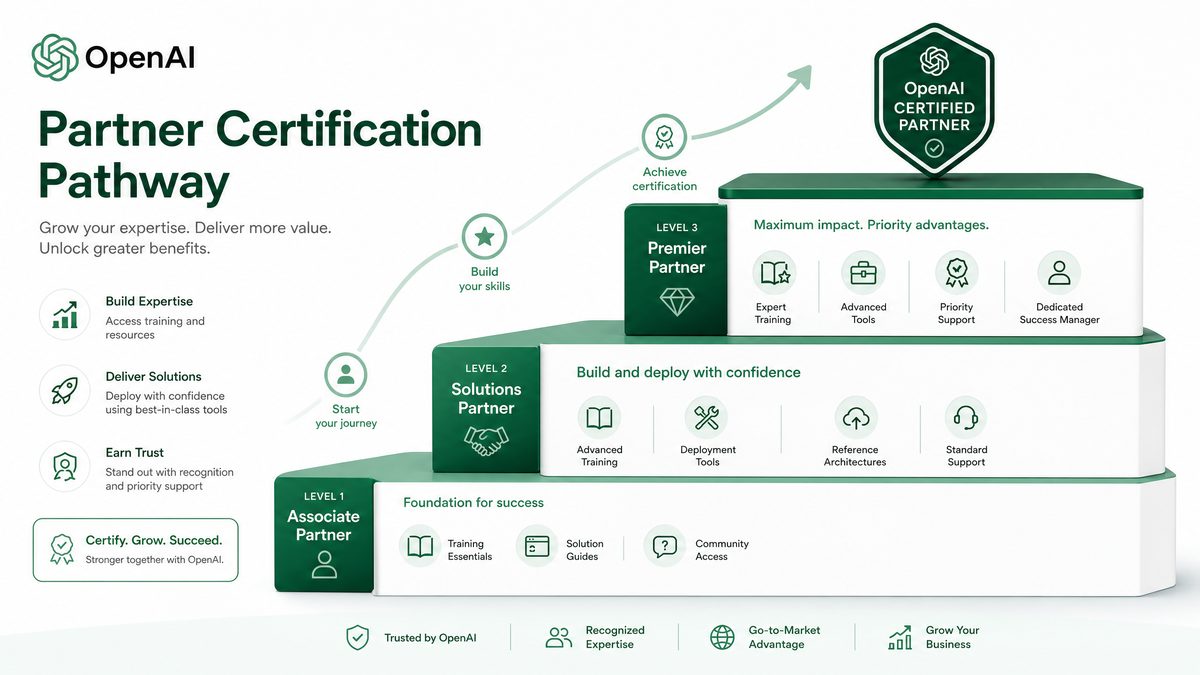
The OpenAI Partner Network operates on a four-tier structure, with each level representing a progressively deeper commitment to technical capability, customer success outcomes, and commercial performance. Understanding the distinctions between tiers is critical both for organizations applying to the program and for enterprises selecting a partner.
Tier 1: Registered Partner
The Registered tier is the entry point into the OpenAI Partner Network and serves as the foundation from which organizations build toward higher designations. Requirements at this level are intentionally accessible to allow a broad base of qualified organizations to establish formal affiliation with OpenAI.
Eligibility requirements include:
- Completion of the OpenAI Partner onboarding assessment, which tests foundational knowledge of the API, model capabilities, and responsible AI practices
- Acceptance of the Partner Program Agreement, including data handling obligations and brand usage guidelines
- Designation of at least one individual as an OpenAI Certified Associate (the entry-level certification credential)
- Demonstrated at least one production deployment using OpenAI APIs within the preceding 12 months
- Annual program fee of $2,500 (waived for qualifying startups with less than $5M ARR)
Benefits at the Registered tier:
- Access to the Partner Portal, which includes early product announcements, technical documentation previews, and partner-exclusive webinars
- $5,000 in annual API credits for development and demonstration purposes
- Listing in the OpenAI Partner Directory (visible to enterprise customers searching for implementation support)
- Access to the Partner Development Fund at a 20% reimbursement rate for approved marketing activities
Tier 2: Select Partner
The Select tier represents organizations that have moved beyond initial deployment and can demonstrate consistent delivery of AI solutions across multiple customer engagements. This tier is where the majority of serious mid-market AI consultancies and regional MSPs will operate.
Eligibility requirements include:
- Minimum of three Certified Associate credentials within the organization, plus at least one OpenAI Certified Professional
- Documentation of at least five distinct customer deployments using OpenAI technology in the preceding 12 months, with verifiable customer references
- Annual API consumption of at least $50,000 (across the partner’s own and customer environments)
- Completion of the OpenAI Partner Business Review, a structured assessment conducted by an OpenAI Partner Success Manager
- Annual program fee of $7,500
Benefits at the Select tier:
- $25,000 in annual API credits
- Dedicated Partner Success Manager with quarterly business reviews
- Access to the Partner Development Fund at a 35% reimbursement rate
- Priority access to new model previews and beta programs
- Co-branded case study development support
- Inclusion in OpenAI-led customer referral programs for mid-market accounts
Tier 3: Solutions Partner
Solutions Partners represent the top tier of the standard partner hierarchy—organizations with proven enterprise-scale delivery capability, significant technical depth, and a track record of complex AI deployments. This designation carries meaningful weight in enterprise procurement processes and unlocks substantially enhanced support resources.
Eligibility requirements include:
- Minimum of eight Certified Professional credentials, including at least two in specialized tracks (Enterprise Architecture, Agentic Systems, or Industry Specialization)
- Documented delivery of at least 15 enterprise deployments with annual API consumption exceeding $500,000
- Dedicated OpenAI practice with named practice lead, dedicated sales resources, and defined go-to-market strategy
- Completion of the Solutions Partner Technical Validation, a hands-on assessment conducted by OpenAI’s Partner Engineering team
- Annual program fee of $25,000 (offset by PDF reimbursements for qualifying partners)
Benefits at the Solutions tier:
- $100,000 in annual API credits
- Named Partner Account Manager plus access to OpenAI’s Partner Engineering team for technical escalations
- Partner Development Fund at 50% reimbursement rate with an annual cap of $150,000
- Access to the Co-Innovation Grant Program (grants ranging from $50,000 to $500,000 for joint solution development)
- Joint go-to-market opportunities including co-selling motions with OpenAI’s enterprise sales team
- Featured placement in the Partner Directory and eligibility for OpenAI-produced partner spotlights
- Early access to model fine-tuning capabilities and custom model programs
Tier 4: Premier Partner
The Premier tier is an invitation-only designation reserved for a small number of global organizations—typically fewer than 20 worldwide—that demonstrate exceptional scale, strategic alignment with OpenAI’s enterprise roadmap, and the capacity to drive transformational AI adoption across large enterprises and public sector organizations. Premier Partners are effectively treated as strategic extensions of OpenAI’s own enterprise organization.
Requirements at this tier are not publicly published in full, as they are negotiated bilaterally between OpenAI and the prospective Premier Partner. However, known thresholds include annual API consumption in excess of $5 million, a dedicated OpenAI practice with 50+ certified practitioners, and a joint business plan with specific revenue and customer success commitments.
Benefits include direct access to OpenAI’s executive team, participation in the OpenAI Partner Advisory Council (which provides input into product roadmap decisions), access to custom model development programs, and co-investment opportunities in joint ventures targeting specific enterprise verticals.
Certification Paths: What You Need to Know
The OpenAI certification program is the technical backbone of the Partner Network. Certifications serve multiple purposes: they validate individual competency, they satisfy partner tier requirements, and they provide enterprises with a standardized way to assess the technical capability of their AI implementation partners. The certification structure has three levels and four specialization tracks.
OpenAI Certified Associate
The Associate certification is designed for practitioners who work with OpenAI APIs in development or consulting roles but may not be responsible for end-to-end enterprise architecture decisions. The exam covers API fundamentals, prompt engineering principles, model selection, token management, and basic safety and moderation practices.
Exam format: 90-question multiple choice and scenario-based assessment, 120 minutes, passing score of 72%. Available in proctored online format year-round.
Preparation resources: OpenAI provides a free 20-hour self-paced learning path through the Partner Portal, covering all exam domains. The learning path includes hands-on labs using a sandboxed API environment with $500 in pre-loaded credits for practical exercises.
A typical Associate-level practitioner should be comfortable with tasks like constructing effective system prompts for customer service applications, implementing streaming responses for latency-sensitive use cases, and applying content filtering and moderation endpoints appropriately. The certification does not require deep knowledge of model internals or training processes.
OpenAI Certified Professional
The Professional certification targets senior practitioners—solution architects, AI engineers, and technical leads—who design and oversee enterprise AI deployments. This is the credential that unlocks the most significant partner tier benefits and is the primary technical credential evaluated in enterprise procurement processes.
Exam format: A two-part assessment consisting of a 60-question scenario-based written exam (90 minutes) and a practical lab component where candidates must complete a real-world deployment task within a proctored environment (180 minutes). Passing requires a score of 75% on the written component and a “Meets Standard” evaluation on the practical lab.
The practical lab component is worth understanding in detail. Candidates are given a business scenario—for example, building an automated document processing workflow for a financial services firm—and must architect and partially implement a solution using OpenAI APIs within the allotted time. Evaluators assess not just whether the solution works, but whether it applies appropriate safety controls, handles edge cases, manages costs effectively, and follows OpenAI’s usage policies.
Core domains covered:
- Enterprise architecture patterns for AI integration (API gateway design, authentication, rate limiting)
- Retrieval-Augmented Generation (RAG) architecture and vector database integration
- Fine-tuning strategy and dataset preparation
- Agentic system design with function calling and tool use
- Cost optimization and token management at scale
- AI governance, audit logging, and compliance frameworks
- Multi-model orchestration and fallback strategies
OpenAI Certified Expert
The Expert certification is the highest individual credential in the program and is required for partner organizations pursuing the Solutions or Premier tiers. It targets practitioners who are responsible for defining AI strategy at the organizational level, leading complex multi-workstream deployments, and advising C-suite stakeholders on AI transformation programs.
Unlike the Associate and Professional exams, the Expert certification includes a portfolio review component. Candidates must submit documentation of at least three enterprise deployments they led, including architecture diagrams, outcome metrics, and a written case study demonstrating their decision-making process. The portfolio is reviewed by a panel of OpenAI’s Partner Engineering team before the candidate is eligible to sit the written and practical examinations.
Specialization Tracks
Beyond the tiered certifications, OpenAI offers four specialization tracks that allow certified professionals to demonstrate deep expertise in specific domains. Specialization credentials are additive—they build on existing Professional or Expert certifications and are particularly valuable for partners targeting specific verticals or technical niches.
Enterprise Architecture Track: Focuses on large-scale deployment patterns, multi-tenant AI infrastructure, enterprise integration (ERP, CRM, legacy systems), and AI operations (AIOps) practices. This track is most relevant for GSIs and large MSPs.
Agentic Systems Track: Covers the design and deployment of autonomous AI agents, multi-agent orchestration frameworks, tool and function design, agent memory architectures, and safety controls for agentic workflows. Given the explosive growth of AI agents in enterprise settings, this is currently the most in-demand specialization.
Industry Specialization Tracks: Currently available for Financial Services, Healthcare & Life Sciences, and Legal & Compliance. Each track covers domain-specific regulatory requirements, data handling obligations, model selection considerations, and use case patterns specific to that industry.
Partners who hold specialization credentials in regulated industries gain a significant advantage in enterprise sales processes. A healthcare CIO evaluating AI implementation partners will weigh Healthcare & Life Sciences specialization heavily, as it signals the partner understands HIPAA implications, clinical workflow integration, and the specific risks associated with AI in patient-facing applications. As discussed in
Partners deploying enterprise AI solutions can leverage autonomous CI/CD agents built with GPT-5.5 and Codex. Our complete pipeline implementation guide demonstrates how certified partners can deliver automated development workflows that reduce deployment time by up to 70 percent for their enterprise clients. How to Build Autonomous CI/CD Agents with GPT-5.5 and Codex.
, the regulatory landscape for AI in healthcare and financial services is evolving rapidly, making specialized expertise increasingly critical for successful deployments.
The Application Process: A Step-by-Step Walkthrough
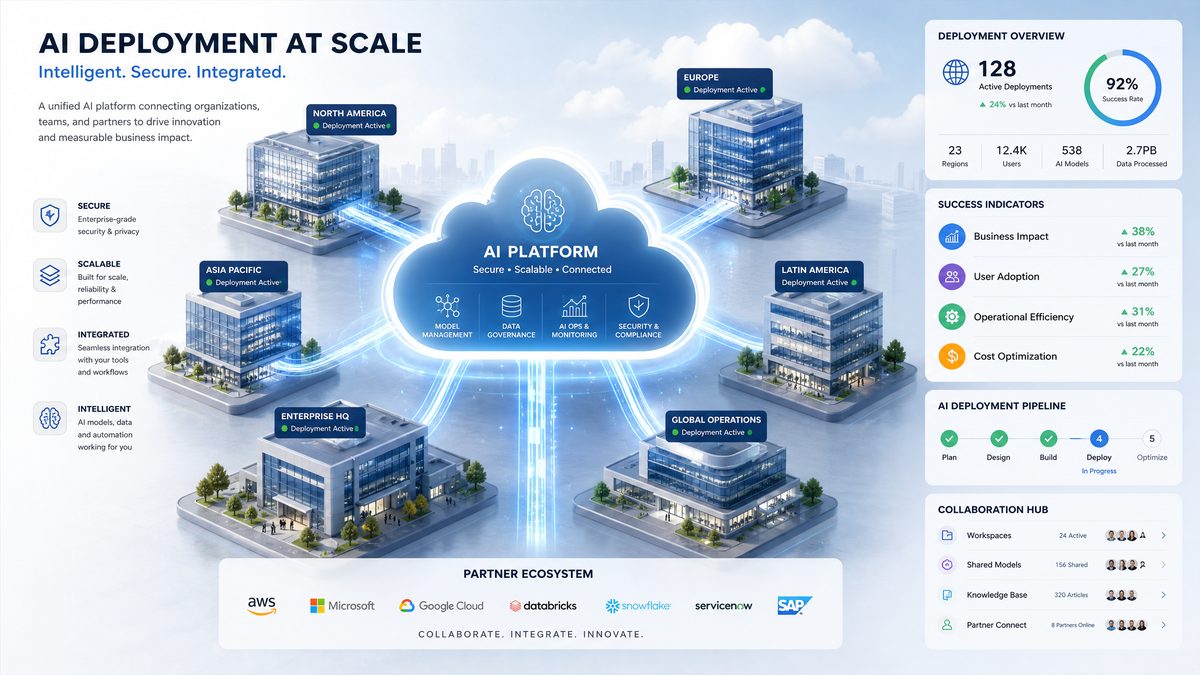
Applying to the OpenAI Partner Network is a structured process that typically takes between four and twelve weeks depending on the target tier and the applicant’s preparation. The process is designed to be rigorous enough to maintain quality standards while remaining accessible to organizations with genuine technical capability.
Step 1: Pre-Application Self-Assessment
Before submitting a formal application, OpenAI strongly recommends completing the Partner Readiness Assessment, a free self-service tool available on the Partner Program landing page. The assessment takes approximately 45 minutes and evaluates your organization across five dimensions: technical capability, customer delivery track record, go-to-market alignment, compliance posture, and team certification status.
The assessment output is a readiness score and a gap analysis that identifies specific areas requiring attention before application. Organizations that skip this step and apply directly frequently encounter delays when OpenAI’s partner team identifies the same gaps during the formal review process.
Step 2: Gather Required Documentation
The application requires substantial documentation. Preparing this in advance significantly accelerates the review timeline. Required materials include:
- Company profile: Legal entity information, founding date, employee count, revenue range, and geographic markets served
- Technical capability statement: A 2-4 page document describing your organization’s AI development capabilities, technology stack, and OpenAI-specific expertise
- Customer deployment evidence: For each qualifying deployment, you’ll need a customer reference contact, a brief description of the use case and technical architecture, and quantifiable outcome metrics (cost reduction, time savings, accuracy improvements, etc.)
- Certification transcripts: Official transcripts from the OpenAI Certification platform for all team members holding OpenAI credentials
- Security and compliance documentation: SOC 2 Type II report (or equivalent), data handling policies, and evidence of employee AI ethics training
- Go-to-market plan: A brief document outlining your target customer segments, OpenAI-specific service offerings, and planned marketing and sales activities for the coming year
Step 3: Submit the Application
Applications are submitted through the Partner Portal. The portal guides applicants through a structured form that maps directly to the documentation requirements above. Ensure all uploaded documents are clearly named and that customer reference contacts have been pre-briefed—OpenAI’s partner team will reach out to references directly as part of the review process, and unprepared references can significantly delay approval.
Step 4: Partner Team Review
OpenAI’s Partner Operations team conducts an initial completeness review within five business days of submission. If documentation is complete, the application moves to a substantive review conducted by a regional Partner Manager. This review typically takes two to three weeks for Registered and Select tier applications, and four to six weeks for Solutions tier applications due to the additional technical validation requirement.
During the review period, applicants should expect at least one call with an OpenAI Partner Manager to discuss the application, clarify any ambiguities, and assess cultural and strategic alignment. This conversation is also an opportunity to ask questions about program specifics and negotiate aspects of the partnership agreement.
Step 5: Technical Validation (Solutions Tier and Above)
Organizations applying for the Solutions tier must complete a Technical Validation session with OpenAI’s Partner Engineering team. This is a two-hour working session—not a formal exam—where your technical leads discuss a recent complex deployment in detail, walk through architectural decisions, and demonstrate competency in areas like security implementation, cost management, and responsible AI practices.
Preparation for the Technical Validation should include reviewing OpenAI’s enterprise deployment best practices documentation, preparing a detailed architecture diagram of your most sophisticated recent deployment, and ensuring your technical lead can speak fluently about model selection rationale, safety controls implemented, and lessons learned.
Step 6: Agreement Execution and Onboarding
Upon approval, partners receive a formal acceptance notification and are directed to execute the Partner Program Agreement through DocuSign. The agreement covers brand usage rights, data handling obligations, revenue reporting requirements (for PDF reimbursement), and the terms governing API credit allocation.
Following agreement execution, partners are assigned an onboarding specialist who guides them through Partner Portal setup, API credit activation, and scheduling of the initial Partner Success Manager meeting. The onboarding process typically takes one to two weeks and concludes with a Partner Kickoff Call that establishes the joint business plan and key performance indicators for the first year.
The $150 Million Investment: How Partner Funding Actually Works
The $150 million investment headline requires unpacking to understand its practical implications for partners. The investment is not a single pool of cash distributed to all partners equally—it is a structured commitment allocated across three distinct programs over a three-year period, with specific eligibility criteria and reimbursement mechanics for each.
Partner Development Fund (PDF)
The PDF is the most broadly accessible component of the investment and is available to all partner tiers above Registered. It operates on a reimbursement model: partners submit claims for approved marketing and sales activities after the fact, and OpenAI reimburses a percentage of the documented costs up to the annual tier cap.
Eligible activities for PDF reimbursement include:
- Customer-facing events and workshops focused on OpenAI use cases (venue, catering, speaker fees)
- Digital marketing campaigns promoting OpenAI-powered solutions (paid media, content production, SEO)
- Proof-of-concept development costs for prospective customers (API costs, developer time at a capped hourly rate)
- Certification training costs for team members pursuing OpenAI credentials
- Co-branded collateral development (case studies, solution briefs, demo videos)
Claims must be submitted through the Partner Portal within 90 days of the activity and require supporting documentation (invoices, screenshots, attendance records). OpenAI’s Partner Operations team reviews claims within 15 business days, and approved reimbursements are processed via ACH transfer within 30 days of approval.
A common mistake partners make is treating the PDF as guaranteed revenue. Reimbursement is contingent on activity approval and documentation quality. Partners should develop a PDF tracking process from day one, maintaining organized records of all potentially reimbursable activities and their associated costs.
Technical Enablement Budget
The Technical Enablement Budget funds the API credits and training resources available to partners. The credit allocations described in the tier breakdown above represent the minimum guaranteed allocation. Partners who are actively building new solutions or pursuing certifications can apply for supplemental credits through the Partner Portal, with requests evaluated on a case-by-case basis by the Partner Engineering team.
API credits allocated through the partner program are specifically designated for development, demonstration, and training purposes—not for production customer workloads. Partners who attempt to use partner-allocated credits to subsidize customer API costs risk program suspension. Customer production workloads should be billed through standard API pricing or through negotiated enterprise agreements.
Co-Innovation Grant Program
The Co-Innovation Grant Program is the most significant and most selective component of the $150 million investment. Grants are available exclusively to Solutions and Premier Partners and fund joint development projects where OpenAI engineers and partner developers collaborate to build novel AI applications targeting specific enterprise verticals or technical challenges.
Grant applications are accepted on a rolling basis with quarterly review cycles. The application requires a detailed project proposal including technical architecture, timeline, target customer segment, and expected outcomes. Proposals are evaluated by a joint committee of OpenAI’s product, engineering, and partner teams.
Grant amounts range from $50,000 to $500,000 and are disbursed in tranches tied to project milestones. In addition to direct funding, grant recipients receive dedicated engineering support from OpenAI’s partner engineering team—typically 20-40 hours of senior engineer time per month for the duration of the project.
The competitive nature of the grant program means that successful proposals typically combine genuine technical innovation with clear commercial viability. A proposal to build a generic “AI chatbot for enterprises” is unlikely to succeed. A proposal to build a specialized AI system for automating FDA 510(k) submission review—with a specific partner who has existing relationships with medical device manufacturers—stands a much stronger chance.
Enterprise AI Deployment: Real-World Scenarios and Partner Roles
Understanding how partner network members actually accelerate enterprise AI adoption requires looking at concrete deployment scenarios. The following examples illustrate the types of engagements where certified OpenAI partners add genuine value beyond what enterprises can achieve independently.
Scenario 1: Intelligent Document Processing for Financial Services
A regional bank with $40 billion in assets wants to automate the processing of commercial loan applications. Currently, credit analysts spend 60% of their time extracting data from financial statements, tax returns, and legal documents—work that is structured enough to automate but complex enough that earlier RPA approaches failed.
An OpenAI Solutions Partner with the Financial Services specialization brings several specific capabilities to this engagement. They understand the regulatory context (OCC guidance on model risk management, SR 11-7 model validation requirements) and can architect a solution that satisfies the bank’s model risk management framework from day one. They have pre-built prompt templates for financial document extraction, validated across thousands of documents, that significantly reduce the development timeline. And they have experience implementing the audit logging and explainability features that the bank’s internal audit team will require.
The technical architecture for this deployment might look like this:
# Simplified architecture for loan document processing pipeline
# Partner implements full production version with error handling,
# logging, and compliance controls

import openai
from typing import Optional
import json

client = openai.OpenAI()

FINANCIAL_EXTRACTION_SYSTEM_PROMPT = """
You are a specialized financial document analyst. Extract structured data
from the provided financial document with high precision.

Rules:
- Extract only data explicitly present in the document
- Flag any figures that appear inconsistent or require analyst review
- Use null for fields not found in the document
- Include confidence scores (0.0-1.0) for each extracted field
- Note any discrepancies between stated figures and calculated values

Output format: Valid JSON matching the provided schema.
"""

def extract_financial_data(
    document_text: str,
    document_type: str,
    extraction_schema: dict,
    model: str = "gpt-4o"
) -> dict:
    """
    Extract structured financial data from document text.

    Args:
        document_text: Raw text content of the financial document
        document_type: Type of document (e.g., "balance_sheet", "tax_return_1120")
        extraction_schema: JSON schema defining expected output structure
        model: OpenAI model to use for extraction

    Returns:
        Structured extraction result with confidence scores and flags
    """

    user_prompt = f"""
Document Type: {document_type}

Document Content:
{document_text}

Required Output Schema:
{json.dumps(extraction_schema, indent=2)}

Extract all available fields from the document according to the schema.
"""

    response = client.chat.completions.create(
        model=model,
        messages=[
            {"role": "system", "content": FINANCIAL_EXTRACTION_SYSTEM_PROMPT},
            {"role": "user", "content": user_prompt}
        ],
        response_format={"type": "json_object"},
        temperature=0.1,  # Low temperature for consistent extraction
        max_tokens=4096
    )

    extracted_data = json.loads(response.choices[0].message.content)

    # Log extraction for audit trail (partner implements full audit logging)
    log_extraction_event(
        document_type=document_type,
        model_used=model,
        tokens_used=response.usage.total_tokens,
        extraction_id=extracted_data.get("extraction_id")
    )

    return extracted_data

def log_extraction_event(
    document_type: str,
    model_used: str,
    tokens_used: int,
    extraction_id: Optional[str] = None
):
    """
    Audit logging implementation - required for SR 11-7 compliance.
    Partner implements full persistence to audit database.
    """
    audit_record = {
        "timestamp": "2026-06-20T00:00:00Z",
        "document_type": document_type,
        "model_used": model_used,
        "tokens_consumed": tokens_used,
        "extraction_id": extraction_id,
        "reviewer_required": False  # Set based on confidence thresholds
    }
    # Persist to audit database
    print(f"Audit log: {json.dumps(audit_record)}")
The partner’s value in this scenario is not just writing the code—it is knowing that the extraction pipeline needs human-in-the-loop review triggers for low-confidence extractions, that the audit log must capture specific fields to satisfy model risk management requirements, and that the prompt needs to be validated against a holdout set of documents before production deployment.
Scenario 2: Multi-Agent Customer Service Automation for Retail
A national retailer with 500 stores and a high-volume contact center wants to automate 70% of customer service interactions without degrading customer satisfaction scores. The challenge is that customer inquiries span dozens of categories—order status, returns, product questions, loyalty program issues, store information—each requiring access to different backend systems and different response strategies.
An OpenAI partner specializing in Agentic Systems designs a multi-agent architecture where a routing agent classifies incoming inquiries and delegates to specialized sub-agents, each equipped with the tools and context relevant to their domain. This architecture allows each sub-agent to be optimized independently—the returns agent, for example, uses a more conservative model with explicit policy constraints, while the product recommendation agent uses a more creative configuration.
Access 40,000+ AI Prompts for ChatGPT, Claude & Codex — Free!
Subscribe to get instant access to our complete Notion Prompt Library — the largest curated collection of prompts for ChatGPT, Claude, OpenAI Codex, and other leading AI models. Optimized for real-world workflows across coding, research, content creation, and business.
The partner’s Agentic Systems certification is directly relevant here: they understand the failure modes of multi-agent systems (infinite loops, agent disagreement, tool call failures), the importance of designing clear agent boundaries and escalation paths, and the monitoring requirements for production agentic deployments. They also bring pre-built evaluation frameworks for testing agent behavior across thousands of synthetic customer interactions before go-live.
Scenario 3: Clinical Documentation Assistance for Healthcare
A regional health system wants to reduce physician documentation burden by deploying an AI assistant that drafts clinical notes from ambient conversation recordings. This is technically sophisticated and regulatory sensitive—the deployment must comply with HIPAA, satisfy state medical record laws, integrate with the existing Epic EHR, and meet the health system’s clinical governance requirements.
A partner with the Healthcare & Life Sciences specialization brings knowledge that a generalist AI consultant simply cannot match. They understand that ambient clinical documentation requires specific consent workflows, that the AI output must be clearly labeled as AI-generated in the medical record, and that the health system’s medical staff committee will need to approve the clinical governance framework before deployment. They also have pre-negotiated Business Associate Agreement templates and data processing addenda that satisfy OpenAI’s enterprise data handling requirements in healthcare contexts.
The deployment timeline for this type of engagement is typically 16-24 weeks—significantly longer than a standard enterprise software deployment—because clinical workflow integration, physician training, and governance approval processes add substantial time. A partner who has done this before knows to front-load the governance work and run physician training in parallel with technical development, rather than sequentially. For organizations exploring how AI is transforming clinical workflows,
The OpenAI Partner Network equips partners to navigate a competitive AI landscape. Our analysis of how GLM-5.2 compares to GPT-5.5 on enterprise benchmarks provides the competitive intelligence that certified partners need when advising clients on model selection strategies. GLM-5.2 Beats GPT-5.5 on Key Benchmarks.
provides important context on both the technical and regulatory dimensions of these deployments.
Maximizing Partner Benefits: Practical Strategies
Joining the OpenAI Partner Network is the beginning, not the end, of the value creation process. Partners who extract maximum value from the program approach it strategically, treating it as a genuine business development platform rather than a badge to display on their website.
Build Your Certification Pipeline Early
The single most common mistake new partners make is underinvesting in certifications. Organizations that join at the Registered tier with a single Certified Associate frequently find themselves stuck there for 12-18 months because they lack the certified headcount to advance. The solution is to treat certification as a continuous program, not a one-time project.
Establish a certification calendar at the start of each year identifying which team members will pursue which credentials in which quarter. Use the PDF to reimburse certification exam fees and training costs. Build certification completion into performance reviews and compensation structures for technical staff. Organizations that do this consistently find that certification investment pays back in multiple ways: improved delivery quality, enhanced sales credibility, and accelerated tier advancement that unlocks higher PDF reimbursement rates.
Leverage the Partner Directory Strategically
The OpenAI Partner Directory receives significant traffic from enterprise buyers researching implementation partners. Your directory listing is effectively a sales asset, and most partners dramatically underinvest in it. A compelling directory listing should include specific industry verticals served, concrete outcome metrics from past deployments, and clear differentiation from other listed partners.
Regularly update your listing to reflect new certifications, specializations, and notable customer outcomes. Directory entries that include specific metrics (“reduced document processing time by 73% for a Fortune 500 financial services firm”) consistently outperform generic capability descriptions in generating qualified inbound inquiries.
Activate the Co-Selling Motion
Select and Solutions Partners have access to co-selling opportunities where OpenAI’s enterprise sales team actively refers and co-presents with partners in customer opportunities. This motion is underutilized by many partners because it requires proactive engagement—you need to register your active opportunities in the Partner Portal, keep your Partner Success Manager updated on deal progress, and be prepared to respond quickly when OpenAI’s team identifies a mutual opportunity.
The co-selling motion is most effective when partners have clearly defined solution offerings that complement OpenAI’s direct enterprise sales. A partner that sells a “custom AI implementation” is harder for OpenAI’s sales team to position than a partner that sells a specific product—”AI-powered contract review for legal teams” or “automated financial reporting for mid-market CFOs.” Specificity in your solution portfolio makes you easier to refer and easier for enterprise buyers to evaluate.
Invest in Customer Success Documentation
Every successful customer deployment is an asset that compounds over time. Document outcomes rigorously—capture baseline metrics before deployment, measure results at 30, 90, and 180 days post-deployment, and build formal case studies for your top three to five deployments each year. Submit your best case studies to OpenAI’s partner team for co-branded publication—these carry significantly more credibility than partner-only case studies and generate inbound leads from the OpenAI website and partner directory.
Customer references are the currency of the partner ecosystem. Enterprises evaluating AI implementation partners consistently cite reference calls with existing customers as the most influential factor in partner selection. Maintain a reference library of willing customers organized by industry, use case, and company size so you can rapidly provide relevant references during sales cycles.
Compliance, Data Handling, and Responsible AI Requirements
Participation in the OpenAI Partner Network carries specific obligations around data handling, responsible AI practices, and compliance that partners must understand thoroughly. These are not bureaucratic formalities—violations can result in partner program suspension and, in regulated industries, significant legal exposure for both the partner and their customers.
Data Handling Obligations
Partners are responsible for ensuring that customer data processed through OpenAI APIs is handled in accordance with both OpenAI’s data processing terms and applicable data protection regulations (GDPR, CCPA, HIPAA, etc.). The Partner Program Agreement includes specific provisions requiring partners to:
- Obtain appropriate customer consent before submitting personal data to OpenAI APIs
- Execute Data Processing Addenda (DPAs) with customers where required by applicable law
- Implement appropriate technical controls to prevent unauthorized data submission (PII scrubbing, data classification, access controls)
- Maintain records of data processing activities sufficient to respond to regulatory inquiries
- Notify OpenAI within 72 hours of becoming aware of any security incident involving OpenAI-processed data
Responsible AI Practices
OpenAI requires all partners to implement responsible AI practices in customer deployments and to educate their customers on appropriate AI use. Practically, this means partners must:
- Implement content moderation and output filtering appropriate to the deployment context
- Design human-in-the-loop review processes for high-stakes decisions (medical, legal, financial)
- Disclose AI involvement to end users in customer-facing applications
- Maintain documentation of AI system behavior and known limitations for customer-facing systems
- Conduct regular bias and fairness assessments for systems making consequential decisions
Partners who deploy AI systems that generate harmful outputs, facilitate deceptive practices, or violate OpenAI’s usage policies—even inadvertently—face program suspension. Building responsible AI review into your development and deployment process from the start is both an ethical obligation and a business risk management necessity.
The Road Ahead: Partner Network Evolution and Future Opportunities
The OpenAI Partner Network is not a static program—it will evolve substantially as AI capabilities advance and enterprise adoption matures. Several developments on the near-term horizon will create significant opportunities for partners who are positioned to capitalize on them.
Agentic AI as the Next Major Wave
The shift from AI as a tool to AI as an autonomous agent is the most significant architectural transition in enterprise AI since the introduction of the GPT API. Enterprises are beginning to deploy AI agents that can autonomously manage workflows, make decisions within defined parameters, and interact with external systems—not just respond to human queries.
Partners who invest now in Agentic Systems certification and develop proven methodologies for safe, effective agent deployment will be positioned at the leading edge of the next wave of enterprise AI spending. The technical complexity of agentic systems—and the governance challenges they introduce—means that the partner value-add in this space is even greater than in conventional AI application development.
Vertical AI Models and Industry-Specific Opportunities
OpenAI’s roadmap includes expanded support for fine-tuned and specialized models targeting specific industries. As these capabilities mature, partners with deep vertical expertise will be positioned to build proprietary fine-tuned model offerings that combine OpenAI’s base models with domain-specific training data and evaluation frameworks. This creates a potential product revenue stream—not just services—for partners who invest in vertical specialization now.
International Expansion
The OpenAI Partner Network is currently strongest in North America and Western Europe. As OpenAI expands its enterprise presence in Asia-Pacific, Latin America, and the Middle East, partner opportunities in these regions will grow substantially. Organizations with existing market presence in these geographies and OpenAI technical certifications are well-positioned to become the first-mover Solutions Partners in markets where competition is currently limited.
The Evolving Certification Landscape
OpenAI has signaled that the certification program will expand to include new specialization tracks as new model capabilities mature. Upcoming tracks under development include a Multimodal Applications track (covering vision, audio, and video model integration), a Custom Model Development track (covering fine-tuning and RLHF processes), and a Public Sector track (covering FedRAMP compliance, government procurement, and security requirements for federal deployments).
Partners who monitor the certification roadmap and invest in emerging track certifications before they become required for tier advancement will maintain a competitive advantage over partners who wait until certifications become mandatory.
Frequently Asked Questions
Can startups with no existing OpenAI deployments apply to the Partner Network?
Yes, with important caveats. The Registered tier requires at least one production deployment in the preceding 12 months, so a startup with zero deployments cannot apply immediately. However, OpenAI offers a Partner Incubation Program for early-stage AI companies (under $5M ARR) that provides a structured path to Registered tier status. The Incubation Program includes mentorship from OpenAI’s partner team, $10,000 in API credits for building a qualifying deployment, and a streamlined application process once the deployment is complete. The annual program fee is also waived for Incubation Program participants who successfully advance to Registered status.
How long does it take to advance from one tier to the next?
Tier advancement is evaluated annually during the Partner Business Review. Partners who meet the requirements for a higher tier can apply for advancement at any point during the year, but the formal evaluation occurs during the annual review cycle. In practice, most partners advance from Registered to Select within 12-18 months, and from Select to Solutions within 24-36 months. The bottleneck is almost always certification headcount and documented customer deployments rather than technical capability.
Is the Partner Network exclusive to OpenAI, or can partners also be certified in competing programs?
The OpenAI Partner Network is non-exclusive. Partners are explicitly permitted to participate in competing programs (Anthropic, Google, Microsoft Azure AI, etc.) and many do. OpenAI does not require exclusivity at any tier, though Premier Partners are expected to treat OpenAI as a primary strategic partner and make commitments that reflect that priority. In practice, many enterprise AI consultancies maintain certifications across multiple AI vendor programs to serve customers who use multiple AI platforms.
What happens if a partner fails to maintain tier requirements?
Partners who fall below tier requirements during the annual review period enter a 90-day remediation period during which they must address the gaps identified. If requirements are not met within the remediation period, the partner is downgraded to the appropriate tier. Downgrading affects benefit levels (API credits, PDF reimbursement rates) but does not affect existing customer relationships or the partner’s ability to continue using OpenAI APIs. Partners who are downgraded can re-apply for advancement in the next annual cycle.
