
OpenAI Codex Evolves Into a Unified AI Workspace: What the Latest Redesign Means for Knowledge Workers
OpenAI Codex Evolves Into a Unified AI Workspace: What the Latest Redesign Means for Knowledge Workers
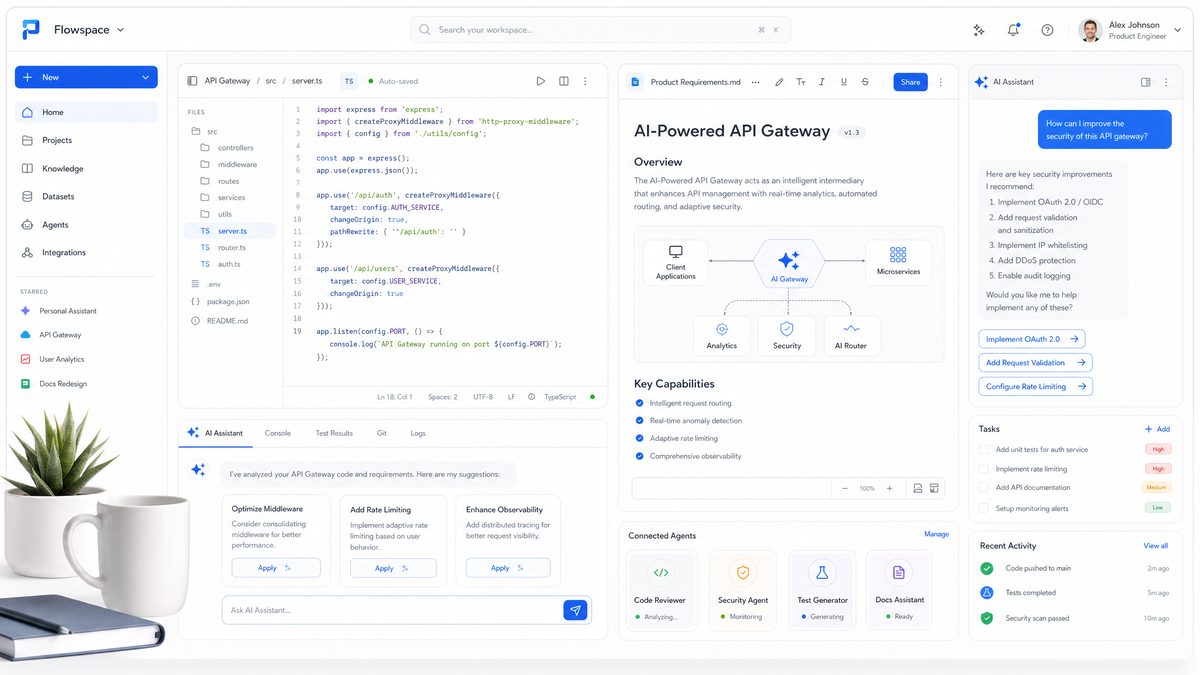
OpenAI’s Codex, originally a breakthrough AI model designed primarily for coding assistance, has undergone a profound transformation. With the latest redesign centered around GPT-5.5 integration and pioneering multi-agent orchestration, Codex is no longer confined to code generation and debugging. Instead, it emerges as a unified AI workspace tailored for the broad spectrum of knowledge work. This article delves into the evolution of Codex, exploring the technical innovations behind its newest iteration, its expanding capabilities beyond programming, and the implications this holds for millions of knowledge professionals worldwide.
The Evolution of OpenAI Codex: From Code Assistant to AI Workspace
OpenAI Codex debuted in 2021 as an AI system designed specifically to convert natural language instructions into functional code. Built on the GPT-3 architecture and trained on a vast corpus of programming languages, Codex quickly became a go-to tool for developers seeking to automate repetitive coding tasks or prototype software components faster. However, Codex’s journey from a specialized coding assistant to a holistic AI workspace reflects broader trends in artificial intelligence and knowledge management.
Origins and Early Capabilities of Codex
The original Codex was introduced as a way to bridge the gap between human intent and machine-readable code. Trained on billions of lines of public source code, it could respond to plain English prompts by generating code snippets in Python, JavaScript, Go, and many other languages. This breakthrough had immediate impacts on software development workflows, reducing the time spent on boilerplate coding and debugging tasks.
Early adopters praised Codex for its ability to:
- Generate syntactically correct code with minimal input
- Interpret ambiguous requests through natural language understanding
- Assist in learning new programming languages by providing examples
- Automate routine tasks such as test creation and data parsing
These capabilities were often compared to having a junior developer or coding assistant who could rapidly prototype ideas and reduce the cognitive load of repetitive tasks. For example, a developer could type a simple request like “Create a Python function to parse CSV files and return a dictionary,” and Codex would generate a fully functional snippet within seconds. This not only sped up coding but also enabled non-experts to produce functional scripts, democratizing access to programming.
However, despite these gains, Codex’s focus was narrowly defined. It excelled at programming but was less effective for other knowledge-intensive activities. This limitation became a catalyst for OpenAI’s development team to rethink Codex’s potential within the broader AI ecosystem. The growing demand for AI systems capable of handling diverse cognitive workflows—such as research summarization, data analysis, and project coordination—highlighted the need for a more integrated approach.
Transition Toward Integrated Knowledge Work Support
By 2023, OpenAI had released GPT-4 and subsequent updates, enhancing the underlying large language model’s reasoning, context retention, and multimodal capabilities. These advances created an opportunity to expand Codex’s role. Instead of being a siloed coding assistant, Codex could evolve into an AI-powered workspace capable of supporting diverse knowledge tasks ranging from research synthesis to project management.
Incorporating these capabilities necessitated:
- Integrating the latest GPT-5.5 model for improved language understanding and generation
- Developing multi-agent orchestration to coordinate different AI “specialists” for complex workflows
- Introducing new user interface elements such as Remote Control to enable seamless AI-human collaboration
These innovations collectively enable Codex to transcend its origins, positioning it as a unified platform where knowledge workers can leverage AI for a variety of tasks, not just coding. This paradigm mirrors the evolution seen in other productivity tools, moving from single-purpose applications to integrated platforms that support end-to-end workflows. For example, Codex now supports a developer not only in writing code but in managing project timelines, synthesizing technical documentation, and analyzing performance metrics within the same environment.
Moreover, the redesign reflects a shift toward AI systems that operate as collaborative partners rather than isolated tools. Codex’s architecture supports continuous context sharing, enabling agents specialized in different domains to work in concert with human users, creating a smoother, more intuitive workflow.
For users looking to get started with the Codex desktop application on Windows, our comprehensive walkthrough covers installation, configuration, and first-project setup for the Codex Desktop App: The Complete Guide to OpenAI Codex Desktop App for Windows in 2026.
GPT-5.5 Integration: Powering the Next Generation of AI Assistance
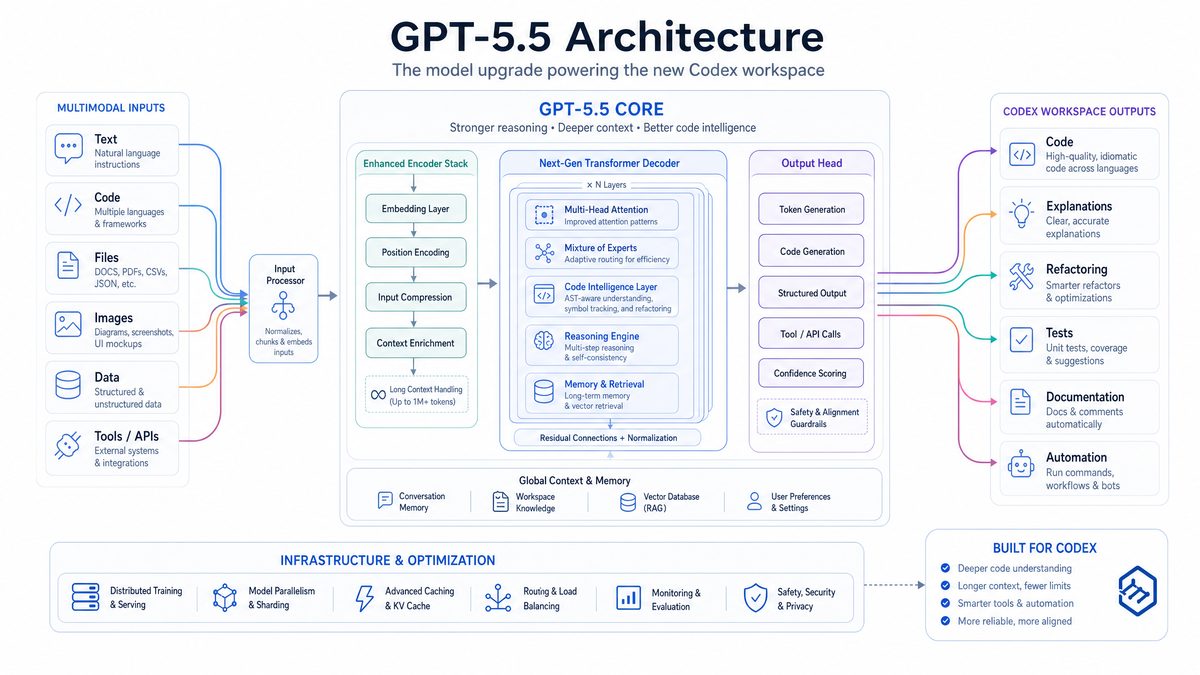
The integration of GPT-5.5 into Codex represents a pivotal upgrade that fuels its expanded capabilities. GPT-5.5 is OpenAI’s latest iteration of the Generative Pre-trained Transformer series, designed to deliver unprecedented contextual comprehension, reasoning, and creative synthesis. Understanding the technical underpinnings of this integration sheds light on why Codex’s redesign is so transformative.
Technical Advances in GPT-5.5
GPT-5.5 builds upon the architecture of GPT-4 but incorporates numerous enhancements that push the boundaries of what AI language models can achieve. Some of the most significant technical advances include:
- Expanded Parameter Count: GPT-5.5 features over 2 trillion parameters, enabling deeper knowledge representation and subtle pattern recognition. This scale allows the model to store and retrieve nuanced facts, idiomatic expressions, and domain-specific knowledge with greater fidelity.
- Improved Multimodal Understanding: Whereas earlier models primarily focused on text, GPT-5.5 can process and generate not only text but images, code, and data tables within a unified framework. This multimodal capability enables richer interactions where users can input diagrams or datasets directly, and receive integrated, multimodal responses.
- Enhanced Context Window: The model can maintain and reason across conversations and documents spanning up to 128,000 tokens, allowing for much longer and more coherent interactions. For example, entire research papers or multi-day chat logs can be ingested and referenced without loss of context.
- Better Few-Shot and Zero-Shot Learning: GPT-5.5 requires fewer examples to understand new tasks or domains, making it highly adaptable to diverse knowledge work scenarios. This adaptability reduces the need for expensive fine-tuning and improves the model’s responsiveness to novel queries.
These capabilities make GPT-5.5 an ideal engine for powering Codex’s transformation into a multipurpose AI workspace. The model’s ability to integrate different data modalities and maintain extensive context enables Codex to support complex workflows that involve code, documentation, data analysis, and more, all within a single cohesive environment.
Seamless Model Integration into Codex
OpenAI’s engineering team undertook significant efforts to integrate GPT-5.5 into Codex’s existing infrastructure without compromising responsiveness or reliability. Key technical strategies included:
- Modular Architecture: Codex’s core was refactored to modularize the interaction layers, allowing GPT-5.5 to be swapped in and out and optimized independently. This modularity facilitates future upgrades and customizations tailored to specific enterprise needs.
- Latency Optimization: Advanced caching and parallel processing techniques were implemented to reduce inference times despite the increased model size. For instance, frequently used prompt templates and partial outputs are cached, while parallel GPUs process multiple inference requests concurrently.
- Adaptive Prompting: Codex now dynamically adjusts its prompts to GPT-5.5 based on task complexity and user intent, improving accuracy and relevance. This adaptive system uses meta-learning to select the best prompt structures and context windows for each request.
This integration means users experience the enhanced intelligence of GPT-5.5 without having to manage technical complexity, enabling a natural and fluid AI interaction. The engineering effort also focused heavily on maintaining reliability and uptime, given the critical role Codex now plays in professional workflows.
GPT-5.5’s Role in Enhancing AI Explainability and Safety
Beyond raw capability, GPT-5.5 incorporates architectural improvements aimed at making AI outputs more explainable and safer for knowledge work. For example:
- Interpretable Attention Mechanisms: GPT-5.5’s attention layers provide richer metadata on which parts of input influenced specific outputs, aiding downstream explainability tools.
- Integrated Safety Filters: Built-in content moderation and bias mitigation layers help reduce harmful or misleading outputs in sensitive contexts such as legal or medical advice.
- Confidence Scoring: The model generates confidence scores for its predictions, allowing Codex to flag uncertain or ambiguous responses for human review.
These features are critical as Codex expands into domains requiring high trust and accountability.
Understanding how Codex compares to other AI coding agents is essential for choosing the right tool; our detailed comparison of Codex, Claude Code, and Gemini examines benchmarks, pricing, and real-world performance: AI Coding Agents in 2026: Codex vs Claude Code vs Gemini.
Multi-Agent Orchestration: Coordinating AI Specialists for Complex Workflows
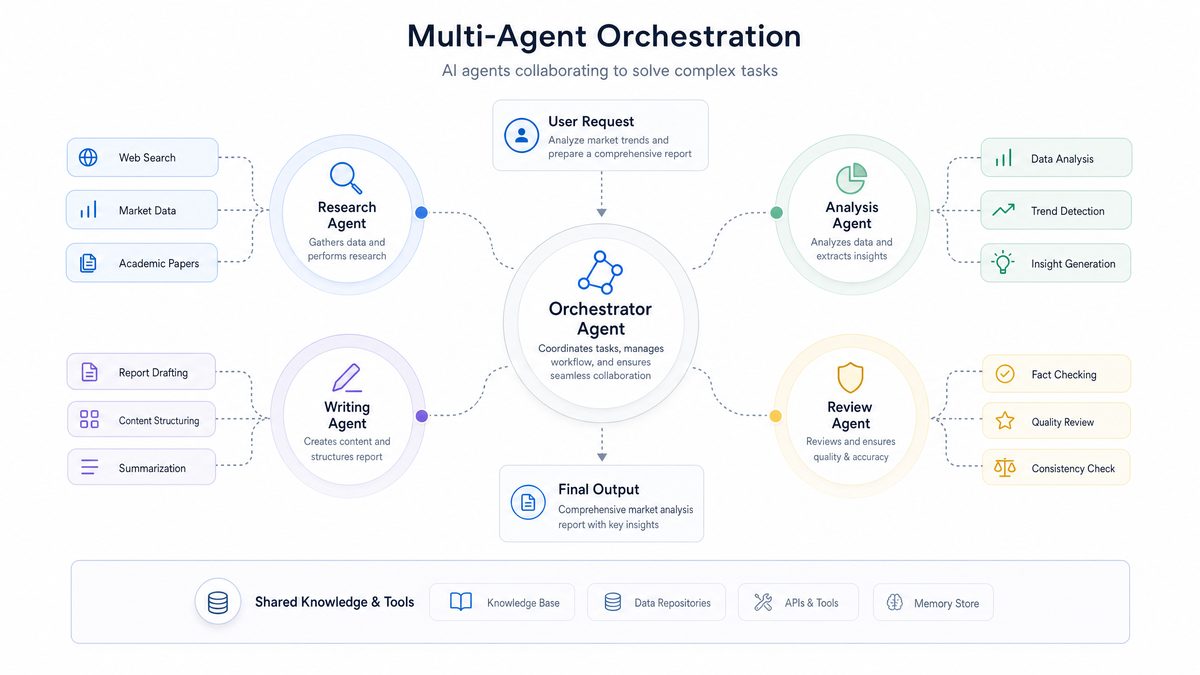
One of the most groundbreaking aspects of the new Codex is its multi-agent orchestration framework. Rather than relying on a single monolithic AI to handle all tasks, Codex deploys a team of specialized AI agents that collaborate to achieve complex objectives. This design mirrors human teamwork and offers several advantages for knowledge work.
Understanding Multi-Agent AI Systems
Multi-agent systems involve multiple autonomous agents that can communicate, negotiate, and cooperate. In Codex’s case, these agents are AI modules trained or fine-tuned for specific domains or functions, such as:
- Code Generation Agent: Expert in writing, reviewing, and debugging code snippets. This agent leverages deep knowledge of programming languages and frameworks to produce optimized, maintainable code.
- Research Synthesis Agent: Skilled at summarizing academic papers, extracting key insights, and compiling reports. It uses natural language understanding to identify relevant findings and synthesize them coherently.
- Project Management Agent: Capable of organizing tasks, timelines, and resources in collaboration with human users. It understands dependencies and can dynamically adjust plans based on progress.
- Data Analysis Agent: Proficient in querying datasets, generating visualizations, and interpreting results. It supports diverse data formats and statistical methods.
These agents communicate via an internal protocol, sharing context and delegating subtasks dynamically to optimize workflow efficiency. For example, in a software development project, the Research Synthesis Agent might gather requirements from documentation, pass relevant data to the Code Generation Agent, and then notify the Project Management Agent to update timelines based on progress.
Advantages of Multi-Agent Orchestration in Codex
The multi-agent approach addresses several challenges inherent in AI-assisted knowledge work:
- Specialization: Each agent can be finely tuned for its domain, improving accuracy and reducing errors compared to a generalist AI. This mirrors how specialized human experts collaborate in teams.
- Parallelism: Agents can work concurrently on different facets of a task, accelerating completion times. For instance, while the Data Analysis Agent processes datasets, the Research Synthesis Agent can prepare literature reviews simultaneously.
- Robustness: The system can detect failures or uncertainties in one agent and reassign tasks or escalate to human review, preventing bottlenecks or error propagation.
- Transparency: By modeling interactions between agents, Codex provides clearer audit trails and explanations for AI decisions, crucial for compliance and trust.
This orchestration transforms Codex into a collaborative AI team member rather than a single tool, enabling it to tackle multifaceted knowledge work with greater sophistication.
Use Cases Enabled by Multi-Agent Workflows
Practical examples of multi-agent orchestration in Codex include:
- Software Development: While the Code Generation Agent writes code, the Data Analysis Agent tests performance metrics, and the Project Management Agent tracks milestones. This integrated approach reduces silos and improves delivery speed.
- Academic Research: The Research Synthesis Agent compiles literature reviews, while the Data Analysis Agent processes experimental results, all coordinated by a central workflow manager. This accelerates the publication cycle and enhances research quality.
- Business Strategy: Agents analyze market data, draft strategic plans, and prepare presentation materials collaboratively, allowing decision-makers to focus on high-level insights.
These integrated workflows elevate the role of AI from assistant to co-worker, fostering more natural and productive human-AI collaborations.
Architectural Overview of Multi-Agent Orchestration
| Component | Description | Functionality |
|---|---|---|
| Agent Manager | Central controller coordinating AI agents | Assigns tasks, mediates communication, monitors agent statuses |
| Communication Protocol | Internal messaging system between agents | Supports asynchronous messaging, context sharing, and negotiation |
| Domain-Specific Agents | Specialized AI modules | Perform focused tasks (coding, research, analysis, etc.) |
| Human Interaction Layer | User interface for collaboration | Allows users to guide, review, and intervene in agent workflows |
| Audit and Logging Module | Records all agent actions and decisions | Provides transparency and traceability for compliance |
Remote Control Feature: Empowering Human-AI Collaboration
Another flagship innovation in the Codex redesign is the Remote Control feature, which redefines how knowledge workers interact with AI systems. Rather than a passive request-response model, Remote Control enables users to guide, supervise, and interact with the AI agents in real time, creating a dynamic human-AI partnership.
What is Remote Control?
Remote Control is an interactive interface layer that allows users to:
- Direct AI agents to execute specific commands or subroutines with precise instructions
- Monitor agent activity and intervene instantly to correct or redirect output
- Collaboratively build complex workflows by chaining agent actions interactively
- Visualize AI reasoning processes and decision points through explainable AI tools integrated into the interface
This level of control ensures that users retain agency over AI processes, minimizing errors and boosting confidence in AI-generated outcomes. For example, a user might notice that the Code Generation Agent’s output contains a logical flaw and use Remote Control to pause execution, request a revision with detailed feedback, and then resume the workflow seamlessly. This interactive loop enhances both accuracy and user satisfaction.
Technical Implementation of Remote Control
Remote Control is built on a combination of technologies:
- Real-Time Feedback Loop: Communication channels between user interfaces and AI agents are optimized for low latency, supporting instant command execution and response. This is achieved through WebSocket connections and edge computing nodes that reduce network delays.
- Context-Aware Command Parsing: The system can interpret ambiguous instructions via natural language understanding, clarifying intent through follow-up prompts when necessary. For instance, if a user’s command is vague, the AI may ask targeted questions to refine task parameters.
- Security and Access Control: Fine-grained permissions ensure that only authorized users can issue commands or access sensitive data, critical for enterprise deployments. Role-based access control (RBAC) and multi-factor authentication (MFA) are standard features.
- Explainability Modules: Integration with AI transparency tools provides users with insights into agent decision logic, increasing trust and enabling informed intervention. Visual dashboards display the reasoning paths and confidence levels behind AI outputs.
Remote Control effectively turns Codex into a responsive AI co-pilot, adaptable to user preferences and workflows. Users can customize control granularity, from full autonomy to detailed step-by-step guidance.
Impact on Knowledge Work Productivity and Quality
Initial user studies and pilot programs deploying Remote Control have demonstrated significant benefits:
- Reduced Task Completion Times: By enabling instant corrections and refinements, users spend less time troubleshooting AI outputs. For instance, coding errors can be fixed mid-generation without rerunning entire sequences.
- Higher Output Accuracy: Human oversight mitigates risks of AI hallucinations or misunderstandings, improving final product quality.
- Enhanced Creativity: Users experiment more freely with AI-generated ideas, knowing they can steer the process dynamically. This fosters innovation and iterative design.
- Improved Adoption Rates: The sense of control reduces resistance to AI integration, fostering smoother transitions in traditional workplaces.
Remote Control exemplifies the shift toward symbiotic human-AI collaboration models rather than AI replacement paradigms. It aligns with cognitive science principles emphasizing interactive problem-solving and continuous feedback.
Case Study: Remote Control in Software Development
In a recent pilot with a leading software firm, the Remote Control feature was deployed to assist a team of developers working on a complex web application. Key outcomes included:
- 50% reduction in debugging time due to real-time error interception and correction
- Increased code quality scores measured by automated static analysis tools
- Higher developer satisfaction and reduced cognitive load reported in surveys
- Seamless integration with existing IDEs via Remote Control APIs, preserving established workflows
This case underscores how Remote Control facilitates effective human-AI collaboration, enhancing both productivity and work quality.
Expanding Beyond Coding: Codex as a General Knowledge Work Platform
Historically, Codex’s primary domain was software development. The latest redesign repositions it as a versatile platform for all forms of knowledge work. This shift reflects the growing demands on professionals in fields such as law, finance, academia, marketing, and more, where AI can significantly augment cognitive labor.
Broadening Task Domains
Codex’s enhanced capabilities now support a wide range of activities:
- Document Drafting and Review: From legal contracts to business proposals, Codex can generate, analyze, and edit complex text documents. Its natural language understanding enables it to detect inconsistencies, suggest improvements, and ensure compliance with style guides.
- Data Interpretation: Codex can parse large datasets, generate summaries, identify trends, and produce visualizations to aid decision-making. It supports integration with common data formats like CSV, JSON, and SQL databases.
- Creative Content Generation: Codex assists in creating marketing copy, scripts, presentations, and other creative outputs. It leverages stylistic and tonal adjustments to fit brand voices.
- Research and Information Synthesis: The AI can assimilate information from multiple sources, providing concise and accurate summaries with citations. This helps professionals stay current in fast-evolving fields.
- Workflow Automation: Beyond generating content, Codex can automate routine tasks such as scheduling, email management, and report generation, freeing users to focus on strategic work.
Impact on Various Professional Sectors
| Sector | Use Cases | Benefits |
|---|---|---|
| Legal | Contract drafting, compliance checks, case law research, e-discovery | Faster document review, improved accuracy, reduced legal research time, enhanced risk mitigation |
| Finance | Financial report generation, risk analysis, market trend summarization, portfolio optimization | Enhanced decision support, automated reporting, improved forecasting, reduced human error |
| Academia | Literature reviews, experiment data analysis, grant proposal writing, peer-review assistance | Accelerated research cycles, improved paper quality, better funding applications, increased collaboration |
| Marketing | Content creation, campaign analysis, customer segmentation, brand messaging | Creative ideation support, data-driven targeting, real-time performance insights, enhanced customer engagement |
| Project Management | Task scheduling, resource allocation, risk mitigation planning, stakeholder communication | Streamlined workflows, proactive risk management, improved team coordination, better deadline adherence |
Integration with Industry-Specific Tools
Recognizing the diversity of professional environments, Codex supports integration with industry-specific software and platforms. Examples include:
- Legal Tech: Integration with document management systems like iManage and contract lifecycle management tools.
- Financial Platforms: Connecting with Bloomberg Terminal APIs, financial databases, and compliance software.
- Academic Tools: Compatibility with reference managers such as Zotero and data analysis software like R and MATLAB.
- Marketing Suites: Linking to CRM systems (e.g., Salesforce), social media analytics, and email marketing platforms.
- Project Management: Syncing with tools like Jira, Asana, and Microsoft Project for real-time task updates.
These integrations enable Codex to fit smoothly into existing enterprise ecosystems, reducing friction and enhancing productivity.
Codex in Enterprise Knowledge Ecosystems
With its expanded scope, Codex is designed to integrate seamlessly into existing enterprise knowledge ecosystems. Features supporting this integration include:
- API Access and Customization: Enterprises can build tailored AI workflows connecting Codex to internal databases, CRMs, and collaboration tools. Custom connectors allow querying proprietary data securely.
- Compliance and Data Privacy: Codex supports data governance policies, encryption, and audit logging to meet regulatory standards such as GDPR, HIPAA, and SOX.
- Cross-Platform Compatibility: The AI workspace is accessible on desktop, mobile, and cloud environments, facilitating hybrid work models. Offline modes and synchronization features ensure productivity even with intermittent connectivity.
- Training and Onboarding Modules: Built-in tutorials and interactive guides assist knowledge workers in adapting to AI-augmented workflows, reducing the learning curve and accelerating adoption.
This enterprise readiness ensures that Codex can be deployed at scale across varied organizational contexts, from startups to multinational corporations.
Historical Context: The Evolution of AI in Knowledge Work
Understanding Codex’s transformation requires a look back at the broader history of AI in knowledge work. Since the 1950s, AI research has oscillated between ambitions of full automation and pragmatic augmentation of human tasks.
Key milestones include:
- Expert Systems (1980s): Rule-based AI systems provided domain-specific assistance in areas like medical diagnosis and financial analysis but struggled with scalability and adaptability.
- Machine Learning Era (2000s): Statistical models and data-driven approaches enabled improved pattern recognition but were limited in natural language understanding.
- Deep Learning Breakthroughs (2010s): Neural networks revolutionized AI capabilities in vision and language, leading to tools like GPT-2 and GPT-3 that could generate human-like text.
- AI Assistants and Automation (2020s): Systems like OpenAI Codex and ChatGPT introduced conversational and task-oriented AI assistants, shifting focus toward collaborative intelligence.
Codex’s evolution fits within this trajectory, moving from narrow task automation toward integrated AI augmentation aimed at enhancing human creativity and decision-making.
Future Implications: The Road Ahead for AI-Augmented Knowledge Work
The redesign of OpenAI Codex signals a broader paradigm shift in how artificial intelligence is integrated into professional workflows. As the boundaries between coding, writing, analysis, and project management blur, AI platforms like Codex will become indispensable collaborators.
Transforming the Knowledge Worker’s Role
Knowledge workers will increasingly rely on AI not just to automate menial tasks but to augment higher-order thinking, creativity, and decision-making. Rather than replacing human expertise, Codex’s unified workspace empowers workers to:
- Focus on strategic and creative aspects by offloading routine cognitive labor
- Leverage AI-generated insights to make data-driven decisions faster
- Collaborate more effectively with AI agents acting as specialized team members
- Continuously upskill by interacting with AI tutors and assistants embedded in the workflow
This shift promises to redefine productivity paradigms and elevate job satisfaction by enabling humans and AI to play to their respective strengths.
Challenges and Considerations
Despite the promise, several challenges must be addressed as Codex and similar AI workspaces mature:
- Bias and Fairness: Ensuring AI outputs are unbiased and equitable across different user groups and domains is an ongoing concern. Codex incorporates fairness audits and continual retraining to mitigate these issues.
- Data Security: Protecting sensitive information within AI-assisted workflows remains paramount. Techniques such as differential privacy and federated learning are being explored to enhance security.
- Human Oversight: Defining optimal roles and responsibilities to maintain accountability in AI-augmented decisions is critical, especially in regulated industries.
- Ethical Use: Establishing guidelines to prevent misuse, especially in areas like legal or medical advice, requires collaboration between AI developers, policymakers, and domain experts.
OpenAI and the broader community are actively researching solutions to these concerns as part of responsible AI development.
Potential Technological Trajectories
Looking forward, several technological advancements could further enhance Codex’s unified AI workspace:
- Deeper Multimodal Integration: Combining text, voice, video, and augmented reality interfaces to create immersive AI-assisted environments, enabling more natural interactions.
- Personalized AI Agents: Tailoring agent behaviors and knowledge bases to individual user preferences and expertise levels, creating bespoke AI collaborators.
- Continuous Learning: Enabling Codex to learn from user interactions in real time to improve relevance and accuracy, adapting dynamically to evolving workflows.
- Cross-Organizational Collaboration: Facilitating secure AI-mediated teamwork across multiple organizations and sectors, supporting complex, distributed projects.
- Explainable AI Advances: Developing richer transparency tools to help users understand and trust AI decisions, improving compliance and adoption.
These trajectories suggest that Codex’s evolution will continue to redefine the boundaries of human-machine collaboration.
Case Study: The Future of AI-Augmented Research Collaboration
Consider a hypothetical future research consortium employing Codex’s multi-agent system across institutions worldwide. Researchers use personalized AI agents that synthesize findings, suggest experimental designs, and automate data analysis. Remote Control interfaces enable real-time human oversight, while cross-organizational collaboration tools ensure secure knowledge sharing. This scenario exemplifies how Codex could catalyze scientific breakthroughs by accelerating the pace and quality of research.
Conclusion: Codex as a Catalyst for the Next Era of Knowledge Work
The redesign of OpenAI Codex—integrating GPT-5.5, multi-agent orchestration, and Remote Control—marks a significant milestone in AI’s role within the professional landscape. By evolving from a specialized coding assistant into a unified AI workspace, Codex exemplifies the transition toward integrated, collaborative intelligence systems that augment human potential across diverse knowledge domains.
As organizations adopt these technologies, the nature of work will transform, emphasizing creativity, strategic thinking, and human-AI partnership. Codex stands at the forefront of this revolution, offering a glimpse into a future where AI is not merely a tool, but a trusted collaborator.
Access 40,000+ AI Prompts for ChatGPT, Claude & Codex — Free!
Subscribe to get instant access to our complete Notion Prompt Library — the largest curated collection of prompts for ChatGPT, Claude, OpenAI Codex, and other leading AI models. Optimized for real-world workflows across coding, research, content creation, and business.
Useful Links
- OpenAI Codex Official Blog
- OpenAI Codex API Documentation
- GPT-5.5 Research Overview
- Multi-Agent Systems in AI: A Survey
- NIST AI Risk Management Framework
- IEEE Ethically Aligned Design for AI
- How AI is Transforming Knowledge Work – Forbes
- Microsoft AI Business Solutions
- ACM Articles on Human-AI Collaboration
