
How OpenAI ChatGPT Ads Generated $100M in Six Weeks: Early Advertiser Results and Industry Impact
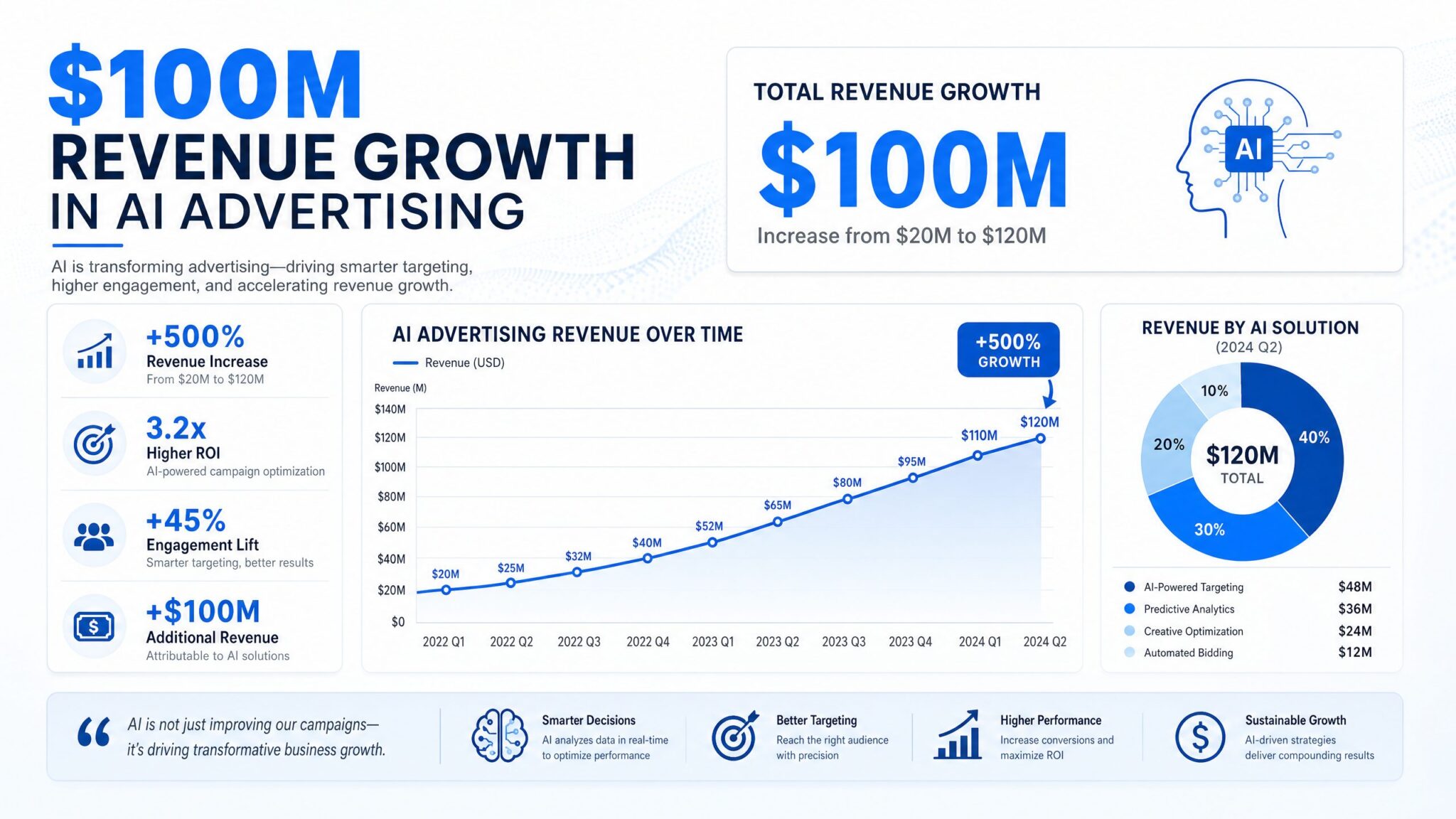
How OpenAI ChatGPT Ads Generated $100M in Six Weeks: Early Advertiser Results and Industry Impact
Author: Markos Symeonides
On February 9, 2026, OpenAI introduced a revolutionary advertising concept within ChatGPT, unveiling a pilot program that embedded “sponsored cards” directly beneath AI-generated responses. This approach marked a pivotal evolution in digital advertising by leveraging conversational AI’s contextual intelligence to deliver ads that meld naturally with user interactions. Astonishingly, this initiative amassed over $100 million in revenue within the first six weeks of launch, underscoring the platform’s transformative potential for advertisers and the broader marketing ecosystem.
This detailed case study explores the genesis and mechanics of OpenAI’s advertising pilot, early performance metrics, advertiser strategies, user experience nuances, and the cascading impact on SEO, content marketing, and the digital advertising industry at large. It also provides a data-driven analysis contrasting ChatGPT ad effectiveness with traditional digital channels and examines the future trajectory of AI-powered advertising platforms.
1. Launch and Structure of the ChatGPT Advertising Pilot
OpenAI’s advertising pilot, initiated on February 9, 2026, was engineered with a sophisticated understanding of conversational AI dynamics. Moving beyond intrusive banner ads or conventional search engine marketing tactics, OpenAI positioned “sponsored cards” as contextually relevant prompts appearing seamlessly at the conclusion of AI responses. This embedded format not only preserved but enhanced user experience by delivering targeted recommendations tailored to dialogue intent.
This selective and high-control rollout prioritized quality over quantity, with the following hallmark features:
- Selective Advertiser Onboarding: Partnering advertisers were vetted with a minimum campaign spend set at $200,000. OpenAI enforced managed partnerships to maintain premium ad quality and compliance with ethical AI usage standards.
- Targeted Ad Placement: Ads were exclusively shown to Free and Go-tier users, the largest demographic in ChatGPT’s user base, protecting the experience for paying Plus and Enterprise subscribers from ad interruptions.
- Robust Data Transparency: Advertisers received weekly detailed CSV reports via email, including metrics such as impressions, click-through rates (CTR), conversion events, and granular user engagement data to empower agile optimizations.
- Enhancement of User Experience: Continuous quality control ensured ads complemented the conversational flow, leveraging natural language understanding (NLU) to prevent ad fatigue and elevate relevance.
This pilot set the foundation for a scalable advertising ecosystem embedded natively within AI conversations, balancing monetization goals with exceptional user satisfaction and ethical considerations.
2. Revenue Performance and Key Metrics
The ad pilot’s $100 million revenue haul in just six weeks is unprecedented for a newly launched ad channel and signals generative AI’s immense commercial viability. This figure reveals not only strong advertiser interest but also effective user engagement and conversion, surpassing initial projections.
Key Performance Indicators (KPIs) That Drove Success
The magnitude of ChatGPT’s advertising potential is illustrated through several core KPIs:
- 2.5 Billion Daily User Prompts: ChatGPT processes this enormous volume of daily queries, each representing an opportunity for ad delivery optimized by conversational context.
- Dominant Market Share: Commanding 82.6% of all generative AI platform traffic worldwide, OpenAI’s reach far outstrips competitors, making it the premier channel for conversational ads.
- Ambitious Revenue Roadmap: OpenAI projects $2.5 billion in advertising revenue for 2026, scaling exponentially to $100 billion by 2030, positioning it closely alongside or even surpassing legacy digital ad giants.
- Benchmarking Against Google: Google’s $300 billion ad revenue in 2025 remains the industry gold standard; OpenAI’s rapid trajectory accentuates the strategic shift toward AI-centric platforms in the coming decade.
Engagement and Conversion Metrics Comparison
| Metric | ChatGPT Ads (Pilot) | Typical Digital Display Ads | Google Search Ads |
|---|---|---|---|
| Click-Through Rate (CTR) | 8%+ | 2-3% | 4-6% |
| Conversion Rate | 5.5% (average) | 1.5-2.5% | 3-5% |
| Average Engagement Time per Impression | ~30 seconds | ~10 seconds | ~20 seconds |
The elevated CTR and engagement time on ChatGPT ads are driven by their contextual placement and relevance, resulting in higher intent matches and better advertiser ROI.
3. Evolution to a Self-Serve Platform and Market Expansion
Following the pilot’s resounding success, on May 5, 2026, OpenAI launched a self-serve ad platform, democratizing access beyond large-scale advertisers to the SMB market and individual marketers. This transition catalyzed significant growth and innovation within the ChatGPT ad ecosystem.
Enhancements and Innovations in the Self-Serve Model
- Reduced Minimum Spend: The initial $50,000 minimum spend threshold was subsequently removed, enabling smaller enterprises and startups to leverage ChatGPT ads without prohibitive cost barriers.
- Real-Time Campaign Analytics: Advertisers gained access to dynamic dashboards with real-time insights, including CTRs, conversion funnels, geographic distribution, and user intent data derived from natural language understanding.
- Improved Scalability and Agility: The platform supports rapid testing, iteration, and deployment of multiple campaign variants, allowing efficient optimization and competitive bidding through AI-enhanced mechanisms.
- Deeper Contextual Targeting: Integration with ChatGPT’s conversational inputs empowers advertisers to pinpoint ultra-specific user intents and demographic vectors for more precise ad delivery.
This transformative shift moves ChatGPT advertising closer to established programmatic platforms while retaining the distinct advantage of conversational AI context and semantic analysis, which elevates targeting precision.
To deepen your understanding of AI-powered advertising platform evolution, see our Case Study on OpenAI Codex and Autonomous Agents.
4. Early Industry Collaborations and Advertiser Strategies
Though OpenAI has maintained confidentiality of direct advertiser identities, market analysis of ad content, creative messaging, and industry trends reveals strong adoption across several verticals.
Sectoral Leaders in ChatGPT Advertising Adoption
- E-commerce: Retailers and marketplaces leveraged AI’s real-time product recommendation capability during query conversations, boosting conversion rates and average order values.
- Software as a Service (SaaS): SaaS firms targeted user queries centered on productivity, automation, and collaboration tools, promoting subscription offers based on feature relevance.
- Education and Online Learning: Online certification programs and e-learning platforms used sponsored cards to recommend courses aligned with users’ career improvement or skill acquisition intents.
- Entertainment and Media: Streaming services, video game publishers, and content distributors embedded real-time promos for new releases, curated playlists, and interactive experiences.
Advanced Advertising Tactics in Early Campaigns
Advertisers optimized for:
- Contextual Relevance: Ads were meticulously crafted to speak directly to the user’s current query, creating seamless integration and enhancing perceived value.
- Interactive Elements: Sponsored cards incorporated actionable features such as clickable links leading to product pages, sign-ups, demos, or content previews.
- Brand Awareness and Trust Building: Several campaigns balanced immediate conversion goals with longer-term objectives, aiming to establish brand equity within a rapidly emerging AI-driven consumer landscape.
OpenAI’s managed pilot enabled in-depth collaborative refinement between advertisers and platform teams, continually improving campaign relevance, creative effectiveness, and alignment with evolving user expectations.
5. Influence on SEO, Content Marketing, and Digital Strategy
The rise of ChatGPT advertising introduces profound changes to the traditional digital marketing paradigm, influencing search engine optimization, content strategy, and overall acquisition channels.
Transformations in User Behavior and Search Dynamics
- Declining Traditional Organic Traffic: Users increasingly turn to AI conversational interfaces for immediate answers, diminishing direct organic search visits to websites.
- AI-Optimized Content Creation: Marketers are encouraged to craft clear, concise, and conversational content that is easily digested and presented by large language models like ChatGPT.
- Budget Prioritization of AI Placements: Higher engagement and conversion rates on AI-powered ad placements are shifting budget allocations away from conventional SEO and display advertising.
Adapting Digital Marketing Strategies for the AI Era
Business success increasingly depends on:
- Developing AI-compatible content strategies that anticipate diverse conversational intents and optimize for natural language queries.
- Leveraging granular AI advertising analytics to monitor campaign effectiveness, analyze evolving user behaviors, and continually refine messaging.
- Integrating multi-channel marketing approaches combining AI platform ads with existing search engine marketing, social media campaigns, and programmatic display efforts.
For marketers eager to master AI-centric prompting and structured reasoning, explore our Advanced Prompting Guide for Claude Opus 4.7 to refine strategy and execution.
6. In-Depth Data Analysis of User and Advertiser Engagement
The wealth of data collected during the pilot phase provides compelling evidence of user behavior patterns and advertiser campaign efficacy, reinforcing the unique strengths of the ChatGPT ad model.
Summary of Key Engagement Metrics
| Metric | ChatGPT Pilot | Industry Benchmark | Comments |
|---|---|---|---|
| Click-Through Rate (CTR) | 8.3% | 2.5% | Nearly 3x industry standard — driven by contextual relevance |
| Conversion Rate | 6.2% | 3.5% | Marked lift indicating strong alignment of ad content to intent |
| Average Session Duration (post-click) | 4 min 15 sec | 2 min 30 sec | Higher user engagement on advertiser landing pages |
| User Interaction Frequency | 78% | 50-60% | Most users engaged with multiple ads per session |
Advertisers received comprehensive weekly CSV reports detailing not only surface metrics but also path-to-conversion analytics and user journey heatmaps, instrumental for iterative campaign optimization.
User Experience and Ad Reception
- Users consistently rated the ad format as non-disruptive, noting the intuitive placement at the end of AI responses.
- Consumer feedback highlighted increased trust in ads that aligned closely with their query context, enhancing overall perceived value.
- OpenAI employed ongoing monitoring to balance ad frequency and prevent saturation, sustaining elevated user satisfaction.
These findings demonstrate the potential of AI-embedded advertising to elevate engagement metrics while respecting user experience, a contrast to many traditional digital ad formats.
For more on integrating autonomous AI-driven systems in digital workflows, refer to our Exploration of AI Agents and Multi-Step Automation.
7. Strategic Industry Implications and Forward Outlook
OpenAI’s introduction of embedded AI-powered advertising represents a paradigm shift in digital monetization, compelling advertisers, publishers, and regulators to rethink their roles and strategies in this rapidly evolving landscape.
Key Takeaways for Industry Stakeholders
- Advertisers: Must evolve toward AI-native marketing methodologies prioritizing conversational context, semantic intent, and dynamic user engagement strategies.
- Publishers and Platforms: Should explore integrating generative AI capabilities while adopting transparent, user-centric monetization models to build trust and drive sustainable revenue streams.
- Regulators: Increasing scrutiny on data privacy, consent management, and ad transparency will require proactive compliance and collaboration to uphold ethical standards.
- Technologists: Ongoing innovation in AI targeting, real-time analytics, and user experience optimization will be critical for maintaining growth and relevance.
OpenAI’s aggressive revenue targets — aiming for $2.5 billion in 2026 and an ambitious $100 billion by 2030 — reinforce ChatGPT’s positioning as a dominant force poised to disrupt incumbent digital advertising titans such as Google. Advertisers reallocating budgets from traditional channels to AI-driven platforms will accelerate this transformative momentum.
For insights on financial, regulatory, and industry dynamics within the AI sector, consult our comprehensive OpenAI IPO 2026 Guide and Market Analysis.
Additionally, investigate our analysis of emergent AI business models and their market impact in the Economics of AI-Powered Development Platforms article.
8. Frequently Asked Questions (FAQ)
Q1: How does ChatGPT’s advertising differ from Google Ads?
ChatGPT ads are embedded conversationally within AI-generated responses as “sponsored cards,” leveraging the real-time context and semantics of user queries. In contrast, Google Ads rely primarily on keyword-based search listings and pay-per-click models. This integration results in greater relevance and engagement for ChatGPT ads, enhancing advertiser ROI.
Q2: What types of advertisers achieve the best results on ChatGPT?
Sectors including e-commerce, SaaS, education, and entertainment have demonstrated superior performance by aligning advertisements with real-time conversational intent, resulting in elevated click-through and conversion rates compared to traditional channels.
Q3: Are ChatGPT ads shown to paid subscribers?
No. Ads are exclusively displayed to Free and Go-tier users to preserve a premium, ad-free experience for Plus and Enterprise subscribers.
Q4: How should businesses prepare for AI-driven advertising?
Businesses must develop AI-optimized content aligned with conversational user intents, adopt advanced data analytics for campaign measurement, and pilot AI ad placements to refine targeting, messaging, and budget strategies effectively.
Q5: What privacy and regulatory considerations govern ChatGPT ads?
OpenAI adheres to stringent data privacy practices ensuring user consent and transparency. Future regulatory developments will require continual adjustments to maintain compliance and user trust in AI advertising.
Summary
OpenAI’s ChatGPT advertising pilot broke new ground in digital marketing by generating over $100 million within just six weeks using embedded sponsored cards seamlessly integrated into conversational AI responses. The pilot demonstrated substantially higher engagement and conversion metrics relative to conventional digital channels, chiefly driven by hyper-contextual relevance and user-centric ad integration.
The subsequent transition to a self-serve platform broadened advertiser participation, fueling rapid ecosystem expansion and innovation. Early adopters from diverse industries leveraged this novel channel for both direct conversions and brand building within an AI-enhanced consumer environment. However, this technological shift challenges existing SEO and content marketing frameworks, ushering in a new era demanding AI-centric strategies and cross-platform coordination.
Looking ahead, OpenAI’s aggressive growth ambitions position ChatGPT as a formidable competitor against established digital ad giants. Success in this new frontier will hinge on strategic agility, ongoing technological advancement, and navigating regulatory complexities with transparency and foresight.
For continued exploration of AI-driven marketing innovation, visit our detailed resources and case studies at OpenAI Codex Auto Review and Security Development.
Useful Links
- How AI Is Changing Digital Advertising (Marketing Land)
- The Power of AI in Digital Marketing (WordStream)
- The Future of SEO and AI-Generated Content (Search Engine Journal)
- The Rise of AI in Ad Tech Industry (Forbes)
- How Generative AI Is Transforming Advertising (AdExchanger)
- AI in Digital Advertising Report 2026 (eMarketer)
- IAB Insights: AI in Digital Advertising
