
The Complete Guide to ChatGPT’s New Custom GPTs Interface: How the Updated Plugin Menu, MCP Connectors, and Action Icons Transform Enterprise AI Workflows
The Complete Guide to ChatGPT’s New Custom GPTs Interface: How the Updated Plugin Menu, MCP Connectors, and Action Icons Transform Enterprise AI Workflows
Category: Case Studies
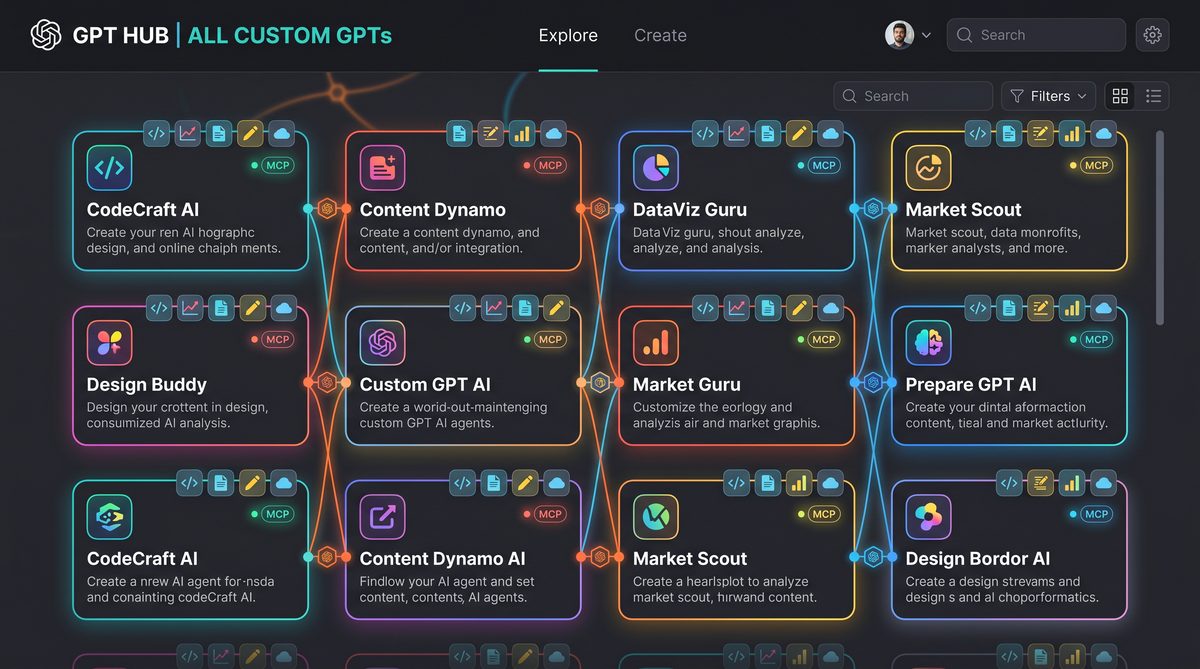
On June 25, 2026, ChatGPT introduced a substantial interface update for Custom GPTs that redefines how enterprise teams discover, configure, and operate plugins, connectors, and actions. The update includes a polished selection menu, explicit icons for plugins/actions/MCPs/connectors, and a redesigned interaction model that reduces friction between product teams, platform engineering, and end users. This article provides an exhaustive, technical deep dive into the new interface and explains how teams can exploit it to build safer, faster, and more observable enterprise workflows.
Executive summary
The update focuses on three core improvements:
- Polished selection menu — a hierarchical, searchable surface with filtering, keyboard navigation, and inline policy metadata that accelerates discovery and governance compliance.
- Unified iconography — distinct, machine-readable icons for plugins, actions, MCPs, and connectors that convey capabilities, permissions, and runtime characteristics at a glance.
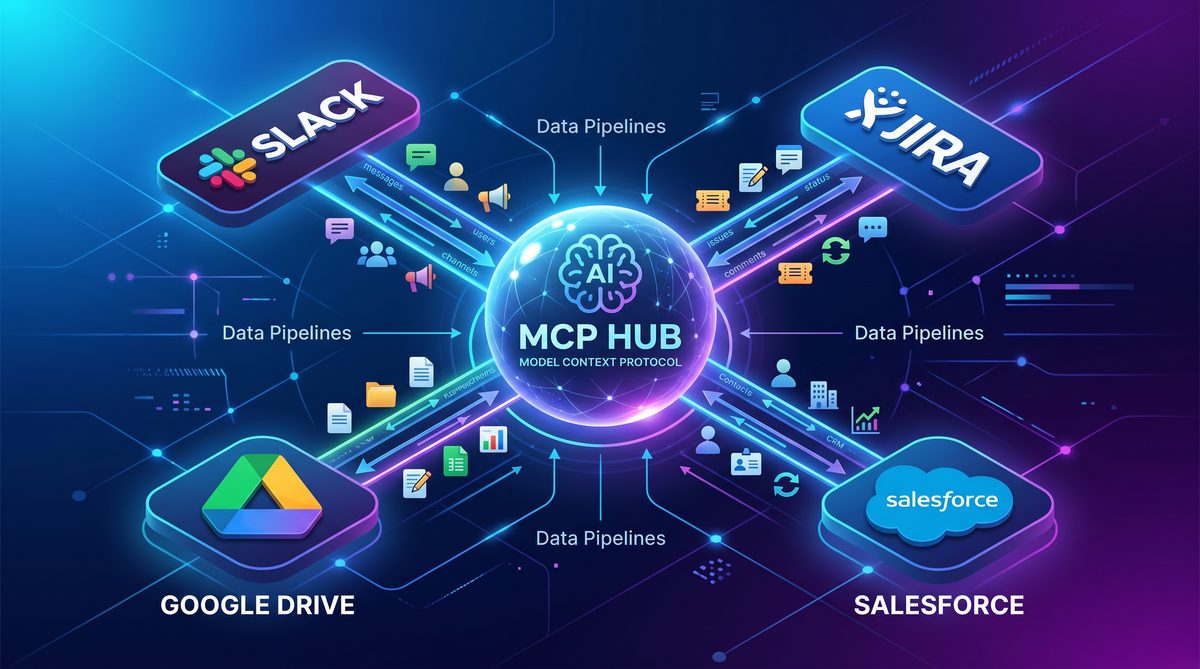
- MCP Connectors model — a standardized connector abstraction (MCP = Managed Connector Platform) that encapsulates authentication, rate limiting, observability, and schema mapping across disparate enterprise systems.
For teams already leveraging ChatGPT for automation, knowledge work, or customer workflows, the update simplifies orchestration and tightens security and auditability—without compromising developer productivity.
What changed on June 25, 2026: An architectural view
The June 25 update is not merely cosmetic. It introduces a new UX-driven contract between front-end selection and back-end execution: a compact selection menu exposes runtime constraints and connector metadata; icons are now semantic primitives used in both UI and API-level manifests; and MCP Connectors provide runtime adapters for enterprise systems (SaaS apps, on-prem databases, message buses) with consistent lifecycle management.
At a high level, the new interface implements:
- A single selection surface that merges plugins, built-in actions, and connectors into one discovery plane.
- A metadata-rich manifest attachment that flows from selection to runtime engine, enforcing permission grants and operational behavior.
- Programmatic flags (via the GPT manifest and platform API) that control connector mode (sandboxed, direct, or proxy), authentication strategy, and observability level.
Why this matters for enterprises
Enterprises manage a complex mix of legacy systems, SaaS vendors, and rigorous compliance requirements. Prior to June 25, the gap between a developer picking a plugin and the platform provisioning secure connectivity often required heavy engineering overhead: custom adapters, point-to-point CI/CD pipelines, and manual permission audits. The new interface shrinks that gap by pushing rich policy and operational metadata into the selection process, enabling:
- Faster provisioning with safe defaults for auth and scopes
- Consistent iconography for rapid recognition and reduced user error
- Reusable MCP Connectors that centralize cross-cutting concerns (auth, throttling, logging)
Polished selection menu: features, UX patterns, and data flow
The polished selection menu is the keystone of the update. It consolidates the discovery of plugins, actions, MCP Connectors, and other resources into a single, keyboard-optimized surface. The UX is designed for two major user personas: “Citizen builders” who assemble workflows with low-code tools and “Platform engineers” who manage integrations, policy, and observability.
Key features
- Search-first design: fuzzy search with indexing of manifest fields (name, description, tags, required scopes).
- Hierarchical grouping: plugins can be grouped into folders and policy-driven collections (e.g., “Approved Finance Integrations”).
- Inline metadata: icons, permission badges, and runtime constraints appear in the menu item without opening a separate details panel.
- Adaptive filtering: filters by compliance status, connector type (MCP, native plugin), environment (sandbox vs prod), and business unit ownership.
- Preview mode: show a sandboxed test of the plugin or action with mocked responses using preconfigured example payloads.
- Keyboard-first workflow: keybindings for open/select/configure, with ARIA-compliant accessibility support.
Data flow and contract between selection and runtime
Two artifacts travel from selection to runtime:
- Selection manifest fragment: a small JSON object that includes the chosen resource ID, desired mode (sandbox/production), selected credential profile, and user-granted scopes.
- Policy envelope: a signed policy token (JWT) issued by the enterprise platform that encodes allowed actions, data residency constraints, and redaction rules.
When a user selects a resource, the UI constructs the manifest fragment and requests an ephemeral session from the platform manager. The platform validates the user’s entitlements against the policy engine and issues the signed policy token that binds the selection to a runtime session.
Example: selection manifest fragment (JSON)
{
  "resource_id": "com.acme.finance.invoice-generator.v2",
  "resource_type": "plugin",
  "mode": "sandbox",
  "credential_profile": "finance-scoped-service-account",
  "user_scopes": [
    "invoices:read",
    "invoices:create"
  ],
  "client_context": {
    "user_id": "[email protected]",
    "department": "finance",
    "session_id": "sess_01FQY7..."
  }
}
Policy envelope example (JWT payload simplified)
{
  "iss": "platform.acme.corp",
  "sub": "selection:sess_01FQY7",
  "aud": "mcp-runtime",
  "exp": 1712000000,
  "permissions": [
    {"resource": "com.acme.finance.invoice-api", "actions": ["read", "create"] }
  ],
  "data_residency": "eu-west-1",
  "redaction": {"enabled": true, "fields": ["ssn", "credit_card"]},
  "signature": "..."
}
Integration points
The selection menu exposes programmatic hooks so platform engineers can:
- Inject policy-driven resource collections (e.g., via an enterprise catalog API).
- Attach enterprise credential profiles that map to vaults, SSO identities, or ephemeral service accounts.
- Configure preview payloads for safe testing without granting production data access.
How the selection menu improves governance
By surfacing policy metadata inline—like whether a plugin is allowed in a given environment or whether it requires explicit approval—organizations reduce risky ad-hoc integration. This also enables automated approvals for low-risk selections and manual gating for high-risk connectors.
Icons: semantics, machine-readability, and UI consistency
Before June 25, iconography was largely decorative and inconsistent across plugin, action, and connector surfaces. The new update treats icons as first-class semantic primitives. Icons are now:
- Semantic: they encode runtime characteristics (e.g., “requires domain admin”, “uses delegated OAuth”, “runs server-side”).
- Machine-readable: each icon maps to an enumerated type in manifests and APIs.
- Composable: overlays can combine base service icons with capability badges (e.g., “streaming”, “refunds”, “sensitive-data”).
Icon taxonomy
The platform introduces a stable set of icon categories:
- Resource type icons: plugin, MCP connector, built-in action, external connector.
- Capability badges: streaming, batch, transactional, idempotent, async.
- Security badges: delegated OAuth, mTLS, ephemeral credentials, restricted scopes.
- Operational badges: sandbox-only, production-ready, rate-limited, monitored.
Manifest integration
Resources now include an icon descriptor in their manifest which maps to a stable enum. This has two benefits: icons are consistent across UI and API surfaces, and back-end services can programmatically react to icons (for example, prevent selection of “production-ready” connectors in dev environments).
{
  "id": "com.acme.connectors.snowflake",
  "type": "mcp_connector",
  "name": "Snowflake MCP Connector",
  "icon": {
    "type": "mcp_connector",
    "capabilities": ["query", "write"],
    "badges": ["mTLS", "production-ready", "rate-limited"]
  },
  "scopes_required": ["snowflake:read", "snowflake:write"],
  "description": "Managed connector for Snowflake with role mapping and SSO integration."
}
Programmatic uses for icons
- Automated guardrails: UI and runtime block certain icon combinations in sensitive environments.
- Telemetry aggregation: categorize operational metrics by icon badges (e.g., all mTLS connectors).
- Onboarding flows: jumpstart onboarding with icon-driven tooltips (e.g., show “delegated OAuth” steps).
Examples of common icon combinations
| Icon | Meaning | Typical Use Case |
|---|---|---|
| plugin + sandbox-only | Design-time-only plugin for prototyping | Data sampling and prompt tuning |
| mcp_connector + mTLS + rate-limited | Production connector with secure transport and throughput controls | Access to sensitive databases and internal APIs |
| action + streaming | Action that delivers incremental responses | Real-time dashboards, logs streaming |
MCP Connectors: definition, runtime model, and enterprise patterns
In this guide, MCP refers to the Managed Connector Platform: an abstraction that encapsulates how ChatGPT Custom GPTs communicate with enterprise systems through reusable, policy-managed adapters. MCP Connectors standardize common cross-cutting concerns so teams can focus on business logic rather than plumbing.
MCP Connector responsibilities
- Authentication: support for delegated OAuth, certificate-based mutual TLS (mTLS), API keys stored in centralized vaults, and ephemeral service accounts.
- Authorization: scope mapping between ChatGPT resource scopes and backend APIs (role and permission translation).
- Rate limiting and throttling: per-connector, per-tenant limits enforced at the MCP layer.
- Schema mapping and transformation: transform GPT-driven payloads to backend request schemas and vice versa.
- Observability: structured logging, tracing (W3C trace-context), and metrics emission.
- Data governance: built-in redaction, DLP hooks, and data residency enforcement.
Connector operation modes
MCP Connectors can run in three modes:
- Proxy mode: all backend calls are proxied through the MCP control plane. Benefits: centralized auditing, easier enforcement of policies. Drawback: added latency and egress complexity.
- Direct mode: the GPT runtime is granted direct access to backend endpoints through ephemeral credentials (useful when low latency or data residency prohibits proxying). Policies are still enforced via tokens and ephemeral scope grants.
- Hybrid mode: metadata and control plane operations (auth refresh, schema validation) run in MCP, but data flows can be direct after token exchange.
Authentication patterns
Enterprises use a mix of authentication schemes. MCP Connectors support the common patterns:
- Delegated OAuth (recommended for SaaS): the connector handles the OAuth dance, stores refresh tokens in a vault, and issues ephemeral access tokens with tight scopes.
- mTLS (recommended for internal services): certificates are provisioned by the platform PKI and rotated automatically; the connector ensures cert chain validation.
- API keys via vault: API keys are stored encrypted with access policies. The MCP retrieves them on-demand and injects them into requests.
- Short-lived service accounts: use token brokers and ephemeral STS tokens for cloud-native backends (AWS STS, GCP Service Account impersonation, Azure Managed Identity).
Example connector manifest
{
  "connector_id": "mcp.snowflake.acme",
  "display_name": "Snowflake (MCP)",
  "modes": ["proxy", "direct", "hybrid"],
  "auth": {
    "type": ["mTLS", "vault_api_key"],
    "vault_path": "secret/data/mcp/snowflake",
    "certificate_profile": "acme-mcp-prod"
  },
  "scopes_mapping": {
    "invoices:read": ["SNOWFLAKE.SELECT"],
    "invoices:create": ["SNOWFLAKE.INSERT"]
  },
  "schema_transforms": {
    "request": ["sanitize_pii", "map_invoice_v2"],
    "response": ["normalize_dates", "redact_ssn"]
  },
  "observability": {
    "tracing": true,
    "metric_prefix": "mcp.snowflake",
    "log_level": "info"
  },
  "rate_limits": {"default": 100, "burst": 200},
  "icon": {"type": "mcp_connector", "badges": ["mTLS", "production-ready"]}
}
MCP Connectors and data governance
The MCP is the ideal spot to inline DLP and redaction. Examples:
- Before a request leaves the GPT runtime, the MCP applies a “sanitize_pii” transform to mask or drop personally identifiable information.
- Responses from the backend pass through “redact_ssn” transforms and cross-checks against enterprise allowlists and blocklists.
- The MCP enforces data residency by routing traffic through region-specific gateways when policy dictates.
Observability and tracing
MCP connectors add tracing headers and emit structured logs with context from the selection manifest and policy envelope. A typical trace includes:
- Selection manifest ID
- Session ID
- Connector ID
- Backend request ID
{
 "trace_id": "00-4bf92f3577b34da6a3ce929d0e0e4736-00f067aa0ba902b7-01",
 "spans": [
   {"name": "selection.validate", "duration_ms": 12},
   {"name": "connector.auth.fetch_cert", "duration_ms": 23},
   {"name": "connector.request.proxy_call", "duration_ms": 162}
 ]
}
Connector lifecycle: versioning, promotion, and rollback
MCP Connectors are versioned: each connector artifact carries a semantic version and compatibility metadata (supported runtime versions, policy compatibility). The platform supports standard lifecycle operations:
- Promotion: push a connector from “staging” to “production” with an automated policy check that runs integration tests.
- Canarying: expose a percentage of traffic to a new connector version for a specific business unit.
- Rollback: revert to a prior version on failed metrics or policy violations.
Action icons and runtime behavior: how actions differ from plugins
Actions are atomic operations that can be composed into workflows. They represent a different abstraction than plugins: while plugins are extended conversations or service wrappers, actions are typed operations (e.g., “create_invoice”, “query_customer”). The June 25 update clarifies the distinction using iconography and runtime semantics.
Action semantics
- Typed interface: actions expose input and output schemas and are validated by the runtime before execution.
- Idempotency: actions include an idempotency key where applicable, and their icons show idempotency support to help builders compose reliable flows.
- Execution guarantees: actions can be configured for synchronous response or asynchronous processing with callback/redelivery semantics.
Action manifest example
{
  "action_id": "com.acme.actions.create_invoice",
  "input_schema": {
    "type": "object",
    "properties": {
      "customer_id": {"type": "string"},
      "items": {"type": "array"}
    },
    "required": ["customer_id", "items"]
  },
  "output_schema": {"type": "object"},
  "idempotency_supported": true,
  "execution_mode": ["sync", "async"],
  "icon": {"type": "action", "badges": ["idempotent", "transactional"]},
  "timeout_seconds": 30
}
Enterprise composition patterns
Action icons help users understand where actions fit in a chain:
- Use transactional (icon badge) actions for financial operations that require strong guarantees and rollback protections.
- Use asynchronous actions for long-running batch jobs; the UI will expose a “follow-up” card that listens for callbacks.
- Combine streaming-action icons with UI components that render incremental responses.
Bringing it all together: an enterprise automation example
To make these ideas concrete, consider a purchase-to-pay automation built using Custom GPTs, plugins, actions, and MCP Connectors. The workflow touches source systems (ERP), contracts DB, finance approval service, and external vendor platforms.
High-level flow
- Procurement agent asks the GPT to generate a purchase order (PO) draft.
- The GPT uses an action “create_po_draft” that validates input and performs schema normalization.
- The GP T selects a “Vendor Info” MCP Connector to fetch vendor credit terms from a secured REST API (mTLS).
- Once validated, an action “submit_po_for_approval” is triggered; this action uses the platform’s approval service plugin (transactional).
- Upon approval, an MCP Connector writes the PO into the ERP using batched, rate-limited operations.
Why the June 25 update helps
- Selection menu prevents the agent from accidentally invoking a production ERP connector by default; sandbox preview is enforced until an approver promotes the session.
- Icons make it obvious which connectors use mTLS and which actions are transactional, lowering the chance of misconfiguration.
- MCP Connectors handle consented credential exchange with the ERP, enforce rate limits, and emit traces for audit.
Sample architecture diagram (textual)
Client (Browser) → ChatGPT UI (selection menu) → Policy Engine → MCP Runtime → Connectors → Backends (ERP, Vendor APIs)
Implementation guide: building and publishing MCP Connectors and actions
This section gives a step-by-step playbook for platform engineers to build, test, and publish MCP Connectors and actions compatible with ChatGPT’s new interface.
Step 1: Define contract and schemas
Create robust JSON schemas for action inputs and outputs. Include validation rules, idempotency semantics, and retry behavior. Maintain these schemas in a version-controlled API repository.
// Example input schema (YAML shown for brevity)
create_po_input:
  type: object
  properties:
    vendor_id: {type: string}
    items:
      type: array
      items:
        type: object
        properties:
          sku: {type: string}
          qty: {type: integer}
  required: [vendor_id, items]
Step 2: Implement connector adapter
Connector adapters should be packaged as containerized services with the following endpoints:
- /healthz — liveness and readiness checks
- /auth — perform auth handshakes and return ephemeral credentials
- /invoke — accept normalized requests from MCP runtime and proxy to backend
- /metrics — expose Prometheus metrics
# Sample Flask pseudo-code for /invoke endpoint
from flask import Flask, request, jsonify
import requests, logging

app = Flask(__name__)

@app.route('/invoke', methods=['POST'])
def invoke():
    payload = request.json
    token = get_ephemeral_token(payload['session_id'])
    headers = {'Authorization': f'Bearer {token}'}
    backend_resp = requests.post('https://erp.internal/api/v1/po', json=payload['body'], headers=headers, timeout=30)
    resp_json = transform_backend_response(backend_resp.json())
    return jsonify(resp_json)
Step 3: Integrate observability
Emit structured logs with context keys: trace_id, session_id, connector_id, user_id. Integrate with OpenTelemetry and export traces to the enterprise tracing backend (Jaeger/Tempo).
# OpenTelemetry pseudo-setup
from opentelemetry import trace
from opentelemetry.exporter.otlp.proto.grpc.trace_exporter import OTLPSpanExporter
from opentelemetry.sdk.trace import TracerProvider

trace.set_tracer_provider(TracerProvider())
tracer = trace.get_tracer(__name__)
exporter = OTLPSpanExporter(endpoint="otel-collector:4317")
# configure processor, etc.
Step 4: Implement security controls
Security is non-negotiable. Best practices:
- Do not persist any LLC data by default; store only necessary metadata.
- Rotate certificates and API keys automatically and lock down vault access to required roles.
- Support per-tenant encryption keys for sensitive fields.
- Perform static code analysis and dependency scanning at build time.
Step 5: Create manifest and icon mapping
Every connector and action requires a manifest with icon descriptors and capability badges. Ensure your icons map to platform enums and badge lists.
{
  "connector_id": "mcp.erp.acme",
  "icon": {"type": "mcp_connector", "badges": ["mTLS", "transactional", "production-ready"]}
}
Step 6: Automated tests and policy checks
Run end-to-end tests in a staging environment using a synthetic dataset. Automate policy checks that validate:
- Data residency is enforced
- No PII leaks (static and dynamic tests)
- Connector respects rate limits
Step 7: Publish to enterprise catalog
Once validated, publish the manifest to the enterprise catalog API. The catalog provides policy metadata used by the selection menu to surface the connector to users.
Security, compliance, and governance deep dive
Enterprises must reconcile the need for developer productivity with regulatory and corporate governance. The June 25 update leans into this by integrating governance controls into selection and runtime.
Key governance hooks
- Approval workflows: resources flagged as high-risk require explicit approval before production usage. Approvals can be delegated to role-based approvers and automated via policy (for example, small volumes or low-sensitivity connectors can be auto-approved).
- Policy-driven selection: the selection menu uses policy endpoints to determine which resources appear for a user in a given environment.
- Auditability: every selection and invocation emits a signed audit record that includes the selection manifest, policy envelope, and the connector trace identifiers.
- Redaction and DLP: MCP connectors integrate with enterprise DLP tools to scan outgoing payloads and perform field-level redaction as required.
Access control models
Support these access control paradigms:
- Role-based access control (RBAC): map users and service accounts to roles with associated scopes. Controls what kinds of connectors or actions an identity can select.
- Attribute-based access control (ABAC): use attributes (department, compliance level, environment) to make fine-grained decisions in the selection menu and runtime policy checks.
- Just-in-time (JIT) credentials: ephemeral tokens are issued only for the active session and automatically expire, reducing blast radius.
Example RBAC policy (pseudo)
{
  "roles": {
    "procurement_user": {
      "allowed_resources": ["plugins:po-editor", "mcp_connectors:vendor-profile"],
      "environments": ["sandbox"],
      "approval_required_for": ["production"]
    },
    "procurement_admin": {
      "allowed_resources": ["*"],
      "environments": ["sandbox", "production"],
      "approval_required_for": []
    }
  }
}
Performance and operational considerations
When you introduce an intermediary such as an MCP, performance, latency, and throughput become critical concerns. The new UI helps by exposing operational badges and mode choices; however, platform teams still need to follow best practices to ensure efficient operations.
Latency budgeting
Define latency SLAs for each connector and action. Use the iconography to mark connectors that will add significant latency (for example, proxy-mode connectors add network hop latency). Use hybrid or direct modes for latency-sensitive operations when permitted.
Circuit breakers and backpressure
MCP should implement circuit breakers, backoff strategies, and queue-based buffering for burst traffic patterns. Rate-limiting must be per-tenant to avoid noisy-neighbor effects.
Scalability patterns
- Horizontal scaling of connector adapters with stateless design.
- Partitioning connectors by workspace/tenant to allow independent scaling and failure isolation.
- Use of async processing for long-running backends with callbacks or webhooks to return results.
Monitoring and SLOs
Create SLOs for availability, latency, and error rates per connector and actions. Monitor:
- Invocation rate
- Success/failure ratio
- Average and p95 latencies
- Error categories (auth failures, validation errors, backend timeouts)
Observability: metrics, tracing, and auditing
With richer selection-time metadata and connector-aware instrumentation, enterprises can trace a user request end-to-end across selection, policy, GPT runtime, MCP, and backend APIs.
Suggested metrics model
| Metric | Description | Labels |
|---|---|---|
| mcp.invocations.total | Count of connector invocations | connector_id, tenant, environment, status |
| mcp.invocation.duration_ms | Latency histogram for connector calls | connector_id, percentile, environment |
| mcp.auth.failures | Authentication failures in connector auth | connector_id, error_type |
| selection.menu.views | UI selection menu opens (useful to measure discoverability) | user_role, query_text |
Audit logs and compliance reporting
Audit logs should include the selection manifest, policy envelope JWT ID, connector trace ID, and backend request IDs. This enables compliance teams to reconstruct who did what and when, which is necessary for end-to-end audits.
Integrations and real-world case studies
Below are three pragmatic case studies showing how organizations can adopt the June 25 update.
Case Study 1 — Global Retailer: contract renewals automation
Challenge: A large retailer needed a unified way to automate vendor contract renewals across multiple regions, requiring data residency, approvals, and linkage to the legal contract repository.
Solution:
- Used the selection menu to expose a curated “Contracts” resource collection with region-specific connectors.
- Created MCP Connectors for the legal contract DB (on-prem) that used mTLS and enforced EU data residency by routing traffic through an EU gateway.
- Actions implemented for “summarize_contract”, “check_renewal_terms”, and “initiate_approval”. Icons highlighted “sensitive-data” and “transactional”.
- Approval workflows leveraged RBAC and ABAC policies; audit logs were exported to the compliance SIEM.
Outcome: Time-to-execute renewals reduced by 70% while maintaining full auditability and data residency compliance.
Case Study 2 — FinTech: fraud detection augmentation
Challenge: A FinTech company wanted to integrate real-time fraud signals into support agent flows and ensure that model outputs did not leak PII.
Solution:
- Built MCP Connectors to fraud engines using proxy mode for centralized DLP and to maintain traceability.
- Icons indicated “streaming” and “sandbox-only” for testing connectors; later promoted to “production-ready”.
- Policy envelopes required redaction transforms before any GPT-visible summary
- Telemetry captured both selection-time decisions and connector invocations, enabling correlation between suspicious transactions and support dialogues.
Outcome: Fraud signal latency met sub-300ms targets in hybrid mode and PII leakage incidents dropped to zero in the tested timeframe.
Case Study 3 — Professional Services: knowledge-work augmentation
Challenge: A consulting firm wanted to enhance consultants’ productivity by integrating internal knowledge bases and code artifacts into GPT sessions.
Access 40,000+ AI Prompts for ChatGPT, Claude & Codex — Free!
Subscribe to get instant access to our complete Notion Prompt Library — the largest curated collection of prompts for ChatGPT, Claude, OpenAI Codex, and other leading AI models. Optimized for real-world workflows across coding, research, content creation, and business.
Solution:
- Deployed MCP Connectors that federated search across Confluence and internal Git repositories with proper auth mapping.
- Used the polished selection menu to provide
For a deeper exploration of related strategies and implementation patterns, our comprehensive guide on Codex for Knowledge Work: How OpenAI’s Productivity Platform Is Transforming Non-Technical Roles with AI-Powered Research, Analysis, and Automation provides detailed frameworks, step-by-step workflows, and production-ready templates that complement the approaches discussed in this section.
as a contextual plugin option with explicit icons indicating “read-only” and “sensitive-data”.
- Action icons indicated “idempotent” for code scaffolding actions and “sandbox-only” for code execution.
Outcome: Consultant throughput increased; secure access to internal code and docs improved knowledge retrieval precision and decreased time-to-deliver proposals.
Developer and product team playbook
Transitioning to the new interface requires coordination across product, platform, security, and developer teams. The playbook below covers roles and responsibilities.
Role matrix
| Role | Responsibilities | Deliverables |
|---|---|---|
| Platform Engineering | Build MCP, manage catalogs, enforce policy | MCP runtime, connector templates, catalog API |
| Security & Compliance | Define policies, approve connectors, audit | Approval rules, data residency policies, audit runbooks |
| Integration Engineers | Implement connectors/adapters and tests | Connector images, manifests, integration tests |
| Product Teams | Define action semantics and usage patterns | Action schemas, UX flows, example prompts |
| Developers / Citizen Builders | Consume resources and build workflows | Workflows, prompts, dashboards |
Adoption milestones
- Pilot: select 2-3 high-value connectors and publish to an internal catalog; training for power users.
- Expand: integrate policy automation, add 5 more connectors, instrument SLOs and alerts.
- Scale: publish cross-business-unit collections, automate promotions, and run quarterly audits.
Developer examples: manifest, selection hook, and runbook
The following are practical artifacts to speed adoption.
Connector manifest (complete example)
{
  "connector_id": "mcp.s3.acme",
  "display_name": "Acme S3 Connector",
  "description": "Managed connector for S3-compatible object stores with vault integration and region routing.",
  "modes": ["proxy","direct"],
  "auth": {
    "type": ["vault_api_key","sts_impersonation"],
    "vault_path": "secret/mcp/s3",
    "sts_role": "arn:aws:iam::123456789012:role/mcp-s3-access"
  },
  "scopes_mapping": {
    "objects:read": ["s3:GetObject"],
    "objects:write": ["s3:PutObject"]
  },
  "schema_transforms": {
    "request": ["sanitize_filenames"],
    "response": ["strip_metadata"]
  },
  "observability": {"tracing": true, "metrics": true},
  "rate_limits": {"default_per_tenant": 100, "burst": 500},
  "icon": {"type": "mcp_connector", "badges": ["production-ready"]}
}
Selection hook (pseudo-API consumer)
// User selects a connector in the UI; backend receives manifest fragment
POST /api/v1/selection
{
  "resource_id": "mcp.s3.acme",
  "mode": "direct",
  "credential_profile": "tenant-prod-role",
  "client_context": {"user_id": "[email protected]"}
}

Response:
{
  "session_id": "sel_01XYZ",
  "policy_token": "eyJhbGciOiJ...",
  "preview_endpoints": {
    "sandbox_url": "https://sandbox.mcp.acme/api/v1/invoke"
  }
}
Runbook snippet for failure scenarios
Scenario: Connector auth failures increase by >5% in 10 minutes
Runbook:
1. Check connector /auth endpoint logs for recent errors.
2. Validate vault connectivity and secrets (rotation event?).
3. Check policy engine: has policy envelope changed or expired?
4. Failover: switch matching traffic to previous connector version or direct mode.
5. Alert: paging to on-call and open incident ticket with trace_id and session context.
Measuring ROI: productivity, risk reduction, and developer velocity
Post-deployment metrics should map to business KPIs. Baseline metrics before the update and measure improvements across these dimensions:
- Time to integrate new backend: measure days from design to production-ready connector.
- Number of ad-hoc integrations reduced: count of direct API keys being used outside MCP.
- Developer productivity: average time for creating and validating actions.
- Security incidents: number and severity of leaked credentials or policy violations.
- User satisfaction: internal NPS among citizen builders and platform engineers.
Suggested dashboards
- Connector Health: errors, latency, invocation counts
- Selection Usage: top selected resources, search queries, approval rates
- Policy Violations: blocked selections and escalations
Integration with external automation systems and connectors
The new interface integrates well with external orchestration platforms (CI/CD, automation platforms, RPA). Two recommended patterns:
Pattern A: Event-driven orchestration
Use actions that emit events to an event bus (Kafka, Pub/Sub). Downstream systems subscribe to action outputs and perform further work. The MCP Connectors ensure secure delivery and traceability.
// Event schema example
{
  "type": "po.created",
  "source": "custom_gpt.procurement",
  "data": { "po_id": "PO-2026-1001", "amount": 12500.00 },
  "context": {"session_id": "sel_01XYZ"}
}
Pattern B: Closed-loop automation with external workflow engines
Integrate with workflow engines (Temporal, Cadence) to manage long-running business processes. Actions are invoked as tasks with idempotency keys and callbacks that resume the workflow on completion.
Extending to low-code and no-code citizens
The refined selection menu and icons are intentionally designed to reduce cognitive load for citizen developers. Consider providing:
- Pre-built templates that combine actions and connectors for common patterns (e.g., “Approve invoice and pay vendor”).
- Inline guidance that explains icon semantics in layman’s terms.
- Governed sandboxes that allow experimentation without production risk.
Frequently asked technical questions (FAQ)
Q1: What does MCP stand for and why is it required?
A1: MCP stands for Managed Connector Platform. It provides a standardized abstraction for securely connecting ChatGPT Custom GPTs to enterprise systems. It’s required to centralize concerns like auth, rate limiting, observability, and DLP, reducing bespoke integration work and improving auditability.
Q2: How do icons become machine-readable?
A2: Icons are represented in manifests as enumerated descriptors (type, badges). UI components and backend services consult these enums to render visual icons and to apply policy-based rules. The mapping is stable and versioned to ensure backward compatibility.
Q3: What are the tradeoffs of proxy vs direct connector modes?
A3: Proxy mode centralizes security and adds observability but increases latency and egress routing complexity. Direct mode reduces latency and can simplify data residency if the platform issues ephemeral credentials, but it requires extra effort to ensure auditing and governance remains intact. Hybrid mode gives a pragmatic mix.
Q4: How can we prevent PII leakage through GPT plugins?
A4: Use MCP schema transforms, DLP hooks, and policy envelopes to redact or block PII before it reaches GPT or leaves via connectors. Use sandbox preview modes and static/dynamic scanning as part of CI/CD for connectors.
Q5: How to measure whether selection improvements increase adoption?
A5: Track selection.menu.views, selection.success.rate, time-to-first-integration, and conversion from sandbox to production. Combine telemetry with user surveys to capture qualitative feedback.
Extending with ChatGPT Connectors for automated workflows
The connector model in the June 25 update dovetails directly with automation objectives. For teams seeking to build end-to-end automation, look at
For a deeper exploration of related strategies and implementation patterns, our comprehensive guide on How to Set Up ChatGPT Connectors for Automated Workflows: Integrating Slack, Google Drive, Jira, and 20+ Third-Party Apps with Scheduled Tasks provides detailed frameworks, step-by-step workflows, and production-ready templates that complement the approaches discussed in this section.
which outlines canonical patterns and reusable connector templates targeted at common enterprise stacks (ERP, CRM, HRIS).
Best practices checklist
- Define explicit schemas for every action and connector.
- Use icons and badges in manifests to surface runtime constraints.
- Prefer MCP-managed authentication strategies (mTLS, ephemeral tokens).
- Implement DLP transforms at the MCP layer before data reaches GPT or external services.
- Automate connector promotion with controlled canarying and testing.
- Instrument everything—logs, metrics, and traces with selection context.
- Use RBAC and ABAC together for fine-grained governance.
Appendix: Useful manifest snippets and mappings
Icon enum sample
{
  "icon_types": ["plugin", "mcp_connector", "action", "external_connector"],
  "badges": ["mTLS","production-ready","sandbox-only","streaming","transactional","idempotent","rate-limited","sensitive-data"]
}
Connector mapping table
| Backend Type | Recommended MCP Mode | Auth Pattern | Icon Badges |
|---|---|---|---|
| On-prem SQL DB | Proxy or hybrid | mTLS + short-lived certificates | mTLS, production-ready, rate-limited |
| Snowflake | Direct or hybrid | STS/Key pair + role mapping | production-ready, rate-limited |
| SaaS CRM | Proxy (recommended) | Delegated OAuth | delegated-oauth, sandbox-only |
| Cloud Object Store | Direct | Ephemeral STS tokens | production-ready, idempotent |

Roadmap and next steps for platform leaders
Adoption of the June 25 update should be staged. Recommended roadmap:
- Inventory existing integrations and identify top-10 high-value connectors.
- Stand up MCP runtime in a staging environment with observability pipelines.
- Implement RBAC/ABAC policies tied to the selection catalog integration.
- Roll out curated collections in the polished selection menu for pilot teams.
- Measure, iterate, and scale to additional business units.
Closing summary
The June 25, 2026 update to ChatGPT Custom GPTs marks an important maturation of the platform for enterprise use. By unifying discovery through the polished selection menu, giving icons semantic and machine-readable meaning, and standardizing integration through MCP Connectors, organizations can accelerate adoption while strengthening security, observability, and governance.
The modernization unlocks real-world gains: faster time to market for integrations, safer experimentation by citizen developers, and consolidated control for platform teams. For practitioners, the pathway forward is clear: define schemas, implement connectors with robust auth and transforms, publish manifests with explicit iconography, and operationalize observability and SLOs.
For further reading on automating workflows and building connectors that integrate tightly with enterprise orchestration systems, see
For a deeper exploration of related strategies and implementation patterns, our comprehensive guide on Best ChatGPT Prompts for data analysis provides detailed frameworks, step-by-step workflows, and production-ready templates that complement the approaches discussed in this section.
. For approaches to augmenting knowledge work using model-augmented developer tooling and coding assistants, consult
For a deeper exploration of related strategies and implementation patterns, our comprehensive guide on The Complete Guide to Codex for Knowledge Workers: Research, Analysis, and Automation provides detailed frameworks, step-by-step workflows, and production-ready templates that complement the approaches discussed in this section.
.
