

⚡ The Brief
- What: Key lessons from Code with Claude 2026 on moving from standalone LLM calls to full agentic workflows.
- Who it’s for: Engineers, founders, and platform teams experimenting with Claude agents and orchestrated workflows.
- Key takeaways: What worked in real demos: planning, memory, tool use, error handling, and human-in-the-loop patterns.
- Pricing / cost angle: Highlights the engineering and infra tradeoffs between simple chatbots and always-on agent systems.
- Bottom line: Start with one well-scoped agentic workflow that ships value end-to-end before scaling to multi-agent meshes.
The Shift from LLMs to Agentic Workflows: Insights from Code with Claude 2026
Artificial intelligence continues to redefine the boundaries of what machines can achieve, and the landscape of large language models (LLMs) is evolving rapidly. The recent Code with Claude 2026 event marked a pivotal moment in this evolution, spotlighting a significant shift from traditional LLM-centric paradigms toward more autonomous, agentic workflows. This transformation promises to materially change how developers, businesses, and end-users interact with AI systems, enabling more complex, context-aware, and goal-driven automation.
In this comprehensive article, we will unpack the critical takeaways from the Code with Claude 2026 event, exploring the background, technical underpinnings, practical applications, and future prospects of agentic workflows. We will also compare these new developments with prior iterations of LLMs and competing technologies, providing a detailed perspective for developers, tech leaders, and AI enthusiasts.
Background and Context: From Static LLMs to Dynamic AI Agents
The journey from early language models to today’s agentic systems is a story of increasing sophistication and autonomy. Initially, LLMs like GPT-3, Claude, and OpenAI Codex focused on natural language understanding and generation, excelling in tasks such as text completion, summarization, and code generation. However, these models traditionally operated as reactive tools — generating outputs based on input prompts without ongoing context management or autonomous decision-making capabilities.
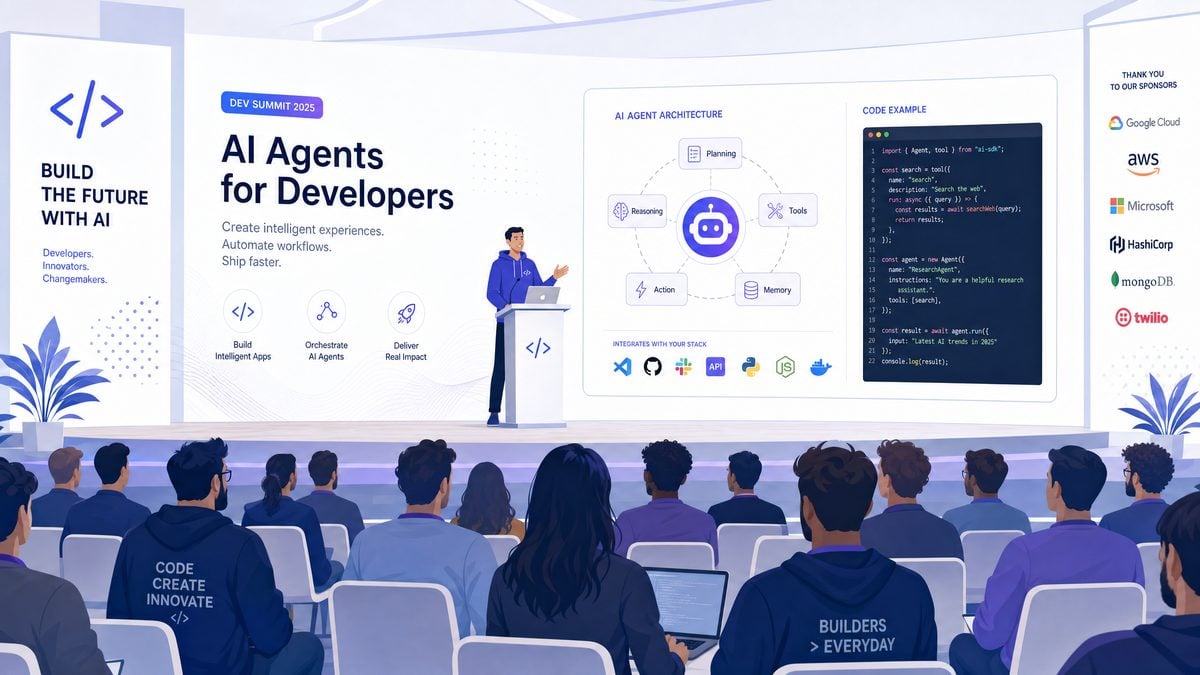
At the Code with Claude 2026 conference, developers and researchers unveiled a new paradigm: AI agents capable of executing multi-step workflows autonomously, adapting dynamically to changing inputs and environments. These agents leverage the foundational strengths of LLMs but embed them within frameworks that allow for goal orientation, memory retention, and interaction with external systems.
Historical Evolution of LLMs
Large language models have progressed from basic pattern recognition and language modeling to sophisticated transformers capable of reasoning and contextual understanding. Key milestones include:
- Transformer Architecture (2017): Revolutionized sequence modeling with attention mechanisms, enabling models like BERT and GPT.
- GPT-3 and Claude series: Achieved unprecedented scale and capability, powering applications in content creation, code synthesis, and conversational AI.
- Integration with APIs and Tooling: Early attempts to extend LLMs’ usefulness by enabling them to call external APIs or databases.
Despite these advances, the interaction model remained largely synchronous and prompt-driven. Agents introduced at Code with Claude 2026 break this mold by embedding LLMs within architectures that maintain state, plan multi-turn strategies, and autonomously invoke external tools.
Defining Agentic Workflows
Agentic workflows refer to AI-driven processes where an autonomous agent orchestrates a sequence of actions toward a defined objective. Unlike simple LLM completions, agentic workflows incorporate:
- Goal-Oriented Planning: The agent strategizes steps to achieve a target outcome.
- Contextual Memory: Retains relevant information across interactions.
- Multi-Modal Integration: Interfaces with APIs, databases, and external software environments.
- Adaptive Decision-Making: Alters plans based on feedback and new data.
This approach transforms AI from a passive generator into an active participant in complex workflows, enabling automation of sophisticated tasks previously requiring human oversight.
The Foundational Principles of Agentic AI
Beyond the definition, understanding the core principles that govern agentic AI is crucial. These systems are not merely advanced chatbots; they embody a paradigm shift towards intelligent autonomy. The foundational principles include:
- Perception: Agents must be able to observe and interpret their environment, which includes understanding natural language, parsing structured data, and processing sensor inputs (e.g., images, audio). This perception feeds into their understanding of the current state and available actions.
- Reasoning and Planning: This is the “brain” of the agent. It involves taking perceived information, accessing memory, and using the LLM’s reasoning capabilities to formulate a plan to achieve its goal. This often involves breaking down complex goals into smaller, manageable sub-goals.
- Action: Agents must be able to act upon their environment. This could be generating text, executing code, calling an API, or interacting with a robotic system. The action component is what allows the agent to make tangible progress towards its objective.
- Learning and Adaptation: True agentic systems are not static. They learn from their experiences, both successes and failures. This learning can be explicit (e.g., updating internal knowledge bases) or implicit (e.g., refining planning strategies through reinforcement learning from human feedback). This adaptive capability is key to their robustness and long-term utility.
- Memory and State Management: As highlighted earlier, maintaining state and context is paramount. This goes beyond short-term conversational history to include long-term knowledge, task progress, and environmental variables. Effective memory management prevents redundant actions and allows for complex, multi-stage processes.
These principles combine to create systems that can not only understand and generate information but also proactively engage with their environment to achieve defined outcomes. The Code with Claude 2026 event emphasized how Anthropic’s latest offerings are integrating these principles more seamlessly and robustly than ever before, pushing the boundaries of what’s possible with AI.
Technical Deep Dive: Mechanics Behind Agentic AI at Code with Claude 2026
The technical innovations demonstrated at Code with Claude 2026 highlight how agentic workflows build upon and extend core LLM capabilities. We explore the architecture, algorithms, and implementation strategies that underpin these systems.
Architectural Components of Agentic Systems
At a high level, agentic AI architectures integrate several key components:
| Component | Description | Role in Agentic Workflow |
|---|---|---|
| Core LLM | Pretrained large language model (e.g., Claude 3, Codex) | Generates natural language, interprets instructions, and manages dialogue |
| Memory Module | Persistent storage maintaining dialogue history, facts, and intermediate states | Enables long-term context awareness and stateful reasoning |
| Planner/Controller | Algorithmic logic that decomposes goals into actionable sub-tasks | Coordinates multi-step execution and decision-making |
| External Interface Layer | APIs, databases, software tools, and other integrations | Allows the agent to perform real-world actions and retrieve live data |
| Feedback Loop | Mechanism for monitoring outcomes and adjusting strategies | Facilitates adaptive learning and error correction |
Multi-Turn Reasoning and Planning Algorithms
Unlike traditional LLM usage, which often entails one-shot prompt completions, agentic workflows require iterative reasoning. Techniques highlighted at the event include:
- Chain-of-Thought Prompting: Guiding the model to generate stepwise reasoning steps rather than final answers.
- Reinforcement Learning with Human Feedback (RLHF): Training agents to optimize multi-step task completions based on reward signals.
- Hierarchical Task Decomposition: Breaking complex objectives into smaller sub-goals, which the agent sequences and executes autonomously.
- Dynamic API Invocation: Allowing agents to call external services conditionally based on contextual understanding.
Memory Management and Context Retention
A significant advancement in agentic workflows is efficient management of context across long interactions. Innovations include:
- Vector-based Embedding Stores: Indexing conversation history and knowledge bases for fast retrieval.
- Selective Memory Recall: Employing relevance scoring to prioritize important past information.
- Context Window Optimization: Strategically truncating or summarizing history to fit within model input limits.
These techniques address one of the core limitations of earlier LLM deployments — the inability to maintain meaningful context beyond a few thousand tokens.
Advanced Orchestration and Control Mechanisms
The sophistication of agentic workflows presented at Code with Claude 2026 extends beyond basic planning and memory. Central to their operation are advanced orchestration and control mechanisms that enable robust and reliable execution of complex tasks. These include:
- State Machines and Finite Automata: Many agentic systems leverage state machines to define the permissible sequence of actions and transitions. This helps in managing the complexity of multi-step processes and ensuring that the agent follows a logical flow, preventing illogical jumps or dead ends. The LLM acts as the decision-maker within this structured framework, determining the next state based on current context and goal.
- Error Handling and Recovery Protocols: A critical aspect of autonomous agents is their ability to handle unexpected errors or failures gracefully. Code with Claude 2026 showcased agents with built-in error detection mechanisms, allowing them to identify when an API call fails, an external system is unresponsive, or an output is invalid. Upon detection, the agent can initiate recovery protocols, such as retrying an action, consulting alternative tools, or escalating the issue to a human operator with detailed diagnostics. This significantly enhances the reliability of agentic systems in real-world deployments.
- Concurrency and Parallelism Management: For highly complex workflows, agents may need to execute multiple sub-tasks concurrently or in parallel. Advanced control mechanisms include sophisticated schedulers that manage these parallel execution paths, synchronize results, and resolve dependencies. This is particularly important in scenarios like software development pipelines where multiple tests, builds, and deployments might occur simultaneously.
- Human-in-the-Loop (HITL) Integration: While agents strive for autonomy, there are instances where human oversight or intervention is necessary. Orchestration mechanisms often include designated breakpoints or decision points where the agent can solicit human input, validation, or override. This ensures that critical decisions remain under human control while offloading the majority of the procedural work to the AI. This hybrid approach leverages the strengths of both AI and human intelligence.
These sophisticated control mechanisms are what elevate agentic workflows from mere sequences of LLM calls to truly intelligent and resilient autonomous systems. They provide the necessary structure and safety nets for deploying AI in critical business operations.
Real-World Implications and Use Cases
Moving from theory to practice, the Code with Claude 2026 event showcased several compelling use cases that illustrate how agentic workflows are transforming industries and developer experiences.
Automated Software Development Pipelines
One of the highlight demonstrations involved integrating Claude-powered agents within continuous integration and deployment (CI/CD) systems. These agents autonomously:
- Analyze code repositories for bugs and security vulnerabilities.
- Generate and validate test cases dynamically.
- Optimize code for performance and style based on organizational guidelines.
- Deploy applications and monitor runtime metrics, adjusting configurations as needed.
This level of automation reduces human intervention, accelerates development cycles, and enhances software quality.
Enterprise Knowledge Management
Agentic workflows enable intelligent assistants that synthesize information across multiple enterprise data sources — including documents, emails, and databases — to provide:
- Contextualized answers to complex queries.
- Automated report generation with up-to-date data.
- Personalized onboarding content for employees based on role and experience.
Unlike static search tools, these agents proactively gather and integrate knowledge, adapting to evolving organizational needs.
Customer Support and Helpdesk Automation
Advanced AI agents demonstrated at the event can manage entire customer support workflows, including:
- Understanding nuanced customer issues through multi-turn conversations.
- Triggering backend workflows such as ticket creation, escalation, and resolution tracking.
- Learning from historical cases to improve response accuracy over time.
This approach improves customer satisfaction while reducing operational costs.
Financial Analysis and Portfolio Management
The financial sector is another area ripe for agentic transformation. Agents can be deployed to:
- Real-time Market Monitoring: Continuously scan news feeds, social media, and financial reports for events impacting specific assets or sectors, providing instant summaries and risk assessments.
- Automated Research and Due Diligence: Compile comprehensive reports on companies by aggregating data from financial statements, analyst reports, and regulatory filings, highlighting key metrics and potential red flags.
- Personalized Investment Advice: Based on an individual’s risk tolerance, financial goals, and existing portfolio, agents can suggest adjustments, identify opportunities, and explain complex financial concepts in an understandable manner.
- Compliance and Fraud Detection: Monitor transactions and communications for suspicious patterns that might indicate fraud or non-compliance with regulations, significantly reducing manual oversight.
These applications allow financial professionals to make more informed decisions faster, while also enhancing regulatory adherence.
Comparative Table: Agentic Workflows vs. Traditional LLM Applications
| Aspect | Traditional LLM Usage | Agentic Workflows |
|---|---|---|
| Interaction Style | Single-turn, prompt-response | Multi-turn, goal-driven conversations |
| Context Retention | Limited to input token window | Persistent, selective memory across sessions |
| Decision-Making | Reactive generation based on prompt | Proactive planning and adaptation |
| External Integration | Manual or limited API calls | Dynamic, conditional API and tool invocation |
| Automation Level | Task-specific assistance | End-to-end workflow automation |
Comparisons with Previous Versions and Competing Technologies
To fully appreciate the significance of agentic workflows introduced at Code with Claude 2026, it’s essential to contrast them against prior LLM versions and rival platforms.
Claude 2026 vs. Claude 2024 and Earlier
Claude 2026 introduces several enhancements over its predecessors:
- Enhanced Multi-Modal Capabilities: Supports not only text but also code, images, and structured data inputs.
- Native Agentic Framework: Integrated components for task planning and memory, rather than relying on external orchestration.
- Improved Safety and Explainability: Built-in mechanisms to audit agent decisions and minimize hallucinations.
In contrast, Claude 2024 primarily functioned as a highly capable conversational LLM but lacked native persistence and autonomous planning features.
Comparing Agentic AI with OpenAI Codex and ChatGPT Plugins
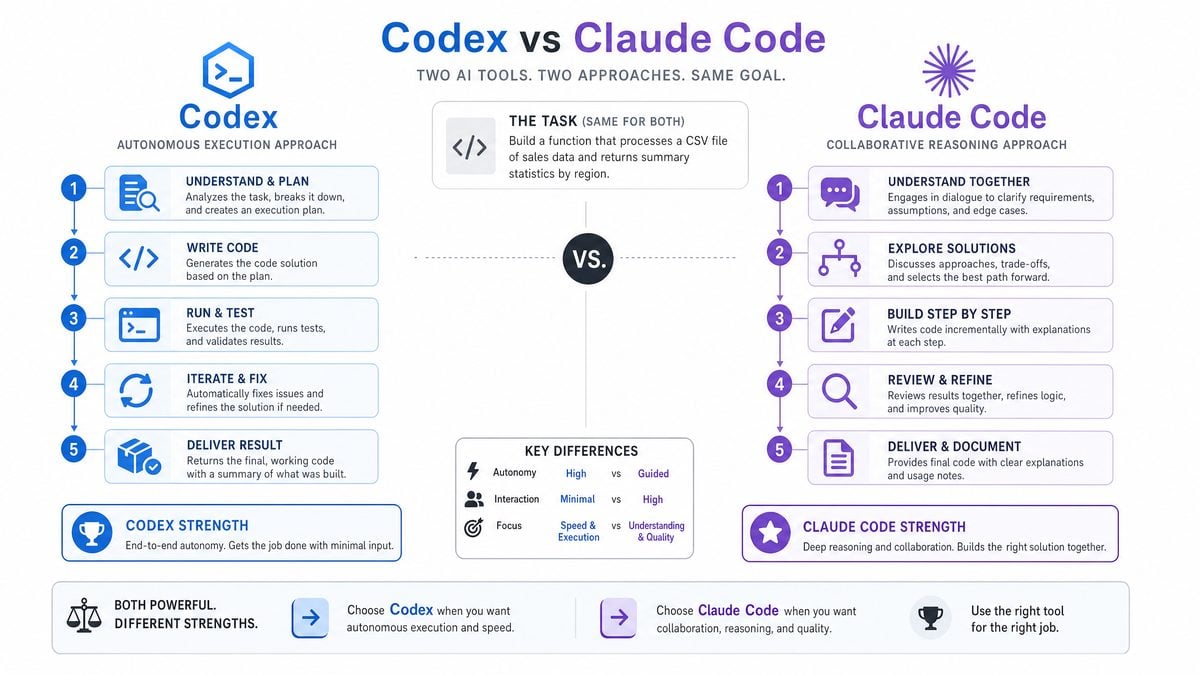
OpenAI Codex pioneered code generation, and ChatGPT introduced plugin ecosystems enabling external tool usage. However, agentic workflows offer:
- Deeper Autonomy: Agents manage decision-making and task sequencing without constant human prompting.
- Unified Memory Systems: Persistent context enables long-term project continuity.
- Robust Error Handling: Built-in feedback loops allow agents to detect and correct mistakes dynamically.
While plugins extend ChatGPT’s capabilities, agents represent a more holistic approach to AI-driven automation.
Competitive Landscape: Anthropic Claude vs. Google Gemini and Microsoft Azure AI
| Feature | Anthropic Claude 2026 | Google Gemini | Microsoft Azure AI |
|---|---|---|---|
| Agentic Workflow Support | Native, multi-step autonomous agents | Emerging, plugin-based interaction | Integrated with Cognitive Services but limited agent autonomy |
| Memory & Context Handling | Persistent, selective memory modules | Session-based context | Variable, depends on configuration |
| Multi-Modal Inputs | Text, code, images, structured data | Primarily text and images | Text, vision, speech support |
| Customization for Enterprises | Fine-tuning with agentic workflow templates | API access with limited tuning | Extensive customization via Azure AI Studio |
The event underscored Anthropic’s focus on pushing agentic AI as a differentiator in the competitive AI landscape.
Ethical AI and Responsible Deployment
A significant area of comparison and competitive differentiation, particularly highlighted by Anthropic, is the focus on ethical AI and responsible deployment. While all major AI players acknowledge these concerns, Anthropic’s “Constitutional AI” approach, which guides LLMs to follow a set of principles rather than relying solely on human feedback, offers a distinct methodology. At Code with Claude 2026, discussions revolved around how these principles are embedded directly into agentic workflows:
- Bias Mitigation: Agentic systems are designed with explicit checks and balances to detect and mitigate algorithmic bias in decision-making, data processing, and output generation. This is crucial as agents take on more autonomous roles in critical applications.
- Transparency and Explainability: The architecture of Claude 2026 agents includes enhanced logging and introspection capabilities, allowing developers and auditors to trace an agent’s decision-making process. This improved explainability is vital for building trust and ensuring accountability.
- Controlled Autonomy: While agentic, the systems are not designed for unchecked autonomy. Mechanisms for human oversight, intervention, and clear boundaries of operation are paramount. This ensures that agents operate within predefined ethical and operational guidelines, especially in sensitive domains.
- Privacy and Data Security: Agentic workflows often handle sensitive enterprise data. Claude 2026 emphasized robust data governance frameworks, secure API integrations, and privacy-preserving techniques to ensure compliance with regulations like GDPR and HIPAA.
This commitment to responsible AI is not just a feature but a foundational aspect of Anthropic’s agentic strategy, positioning it as a leader in trustworthy AI deployment, a critical factor for enterprise adoption.
Future Outlook: What Lies Ahead for Agentic AI and Workflows
The momentum generated by Code with Claude 2026 signals a broader industry transition toward AI systems that are not only intelligent but autonomous collaborators. Key future trends include:
Increased Integration with Enterprise Systems
Agentic AI will become deeply embedded within ERP, CRM, and workflow automation platforms, enabling seamless orchestration of complex business processes without manual intervention.
Advancements in Explainability and Trust
As agents take on more critical roles, transparent decision-making and audit trails will be essential. Research into interpretable models and regulatory compliance will accelerate.
Hybrid Human-AI Collaboration
Rather than replacing human roles, agentic workflows will augment human teams by handling routine and complex procedural tasks, allowing humans to focus on creativity and strategic work.
Cross-Model and Cross-Platform Agent Ecosystems
Interoperability between agents powered by different LLMs (e.g., Claude, GPT, Bard) and across cloud platforms will foster rich ecosystems where specialized agents collaborate or hand off tasks efficiently.
Personalized and Adaptive Agents
Future agents will evolve personalized profiles for individual users or organizations, adapting dynamically to preferences and operational styles, leading to highly customized AI experiences.
For developers and business leaders, staying abreast of these developments and experimenting with agentic workflows will be critical to maintaining competitive advantage in AI-driven innovation.
The Role of Edge AI in Agentic Systems
Looking ahead, the integration of agentic workflows with Edge AI technologies is poised to open new frontiers. Currently, many sophisticated LLM-powered agents rely on cloud-based processing due to the computational demands. However, advancements in model compression, specialized hardware (e.g., AI accelerators), and efficient inference techniques are making it feasible to deploy parts of agentic systems, or even entire agents, closer to the data source or end-user device. This “Edge AI” approach offers several compelling advantages for future agentic workflows:
- Reduced Latency: Performing computations locally significantly reduces the time taken for agents to perceive, reason, and act, which is critical for real-time applications like autonomous robotics, industrial automation, and immediate human interaction.
- Enhanced Privacy and Security: Processing data on the edge minimizes the need to transmit sensitive information to the cloud, thereby reducing privacy risks and enhancing data security, particularly important for regulated industries.
- Offline Capabilities: Edge-deployed agents can operate effectively even without constant internet connectivity, making them suitable for remote locations or environments with unreliable network access.
- Cost Efficiency: By offloading some processing from centralized cloud servers, organizations can potentially reduce cloud infrastructure costs, especially for applications that generate vast amounts of data.
- Scalability: Distributing AI processing across numerous edge devices can offer a more scalable architecture than relying solely on a few large data centers, allowing for wider deployment of intelligent automation.
The Code with Claude 2026 event hinted at future research directions focusing on how to effectively partition agentic logic between cloud-based LLMs (for complex reasoning) and edge devices (for immediate perception and action), creating a hybrid intelligence architecture. This will enable agents to operate with unprecedented speed and resilience in diverse environments, further accelerating the adoption of autonomous AI across industries.
Building on the importance of intelligent architecture, understanding how to effectively coordinate multiple AI agents is crucial for maximizing their potential. The comprehensive prompting guide for multi-agent orchestration with Claude offers in-depth strategies to streamline agent collaboration, ensuring faster and more resilient AI operations across various applications.
Useful Links
- Anthropic Claude Official Site
- OpenAI Codex Overview
- Google Cloud AI and Machine Learning
- Microsoft Azure Cognitive Services
- Research Paper: Chain-of-Thought Prompting
- IBM Research on AI Agents
- Building Autonomous Agents with AI
- AI Agents: Principles and Practices
- Fast.ai Discussion on Agentic AI
Building on the principles and practices of AI agents, mastering advanced prompting techniques is essential for maximizing their capabilities, especially as newer models like GPT-5.5 and Claude emerge. To explore sophisticated strategies that enhance prompt design and interaction, check out Advanced Prompting Techniques for GPT-5.5 and Claude: The 2026 Framework.
Conclusion
The Code with Claude 2026 event demonstrated a transformative leap in AI capabilities, moving beyond static large language models to sophisticated, autonomous agents capable of orchestrating complex workflows. This shift enables a new class of applications that are more adaptive, context-aware, and capable of multi-step reasoning and action. For developers, technologists, and business leaders, understanding and adopting agentic AI workflows will be crucial to leveraging AI’s full potential in the coming years.
As the technology matures, agentic workflows promise to redefine human-computer interaction, automate complex operations, and unlock unprecedented efficiencies across industries. Staying informed and engaged with these advancements will empower organizations to harness the next wave of AI innovation effectively.
To fully leverage the potential of Claude Managed Agents, understanding their capabilities in dreaming, achieving outcomes, and orchestrating multiple agents is essential. This comprehensive overview provides valuable insights into how these advanced features can transform AI-driven workflows and collaboration. Explore the Complete Guide to Claude Managed Agents: Dreaming, Outcomes, and Multiagent Orchestration to deepen your knowledge of these state-of-the-art technologies.
Frequently Asked Questions
What is an agentic workflow?
A workflow where an AI agent plans, executes, and adjusts a sequence of actions to achieve a goal, not just answer a single prompt.
How is an agent different from a chatbot?
A chatbot responds turn by turn, while an agent keeps state, calls tools, and can continue working without constant human prompts.
Do I need a multi-agent setup from day one?
No. Most teams start with a single well-scoped agent and later add more agents as the use case matures.
What tooling do I need for agentic systems?
You need orchestration (planner), memory, logging/observability, and reliable tool/API integrations.
How do I keep agents safe and aligned?
Use clear system policies, strict tool permissions, logging, and human-in-the-loop checkpoints for high-impact actions.
Where should I pilot agentic workflows?
Start with internal workflows that have clear success criteria and low external risk, such as dev tooling or internal support.
Access 40,000+ AI Prompts for ChatGPT, Claude & Codex — Free!
Subscribe to get instant access to our complete Notion Prompt Library — the largest curated collection of prompts for ChatGPT, Claude, OpenAI Codex, and other leading AI models. Optimized for real-world workflows across coding, research, content creation, and business.
Access Free Prompt Library