
GPT-5.5 Prompts for Supply Chain and Operations Management: Demand Forecasting, Inventory Optimization, and Logistics

Masterclass Guide: Leveraging GPT-5.5 for Advanced Supply Chain & Operations Management Prompts
In today’s hyper-competitive and increasingly complex global markets, supply chain and operations management are pivotal to organizational success. The ability to predict demand accurately, optimize inventory levels, streamline logistics, and assess supplier risks directly impacts operational efficiency, customer satisfaction, and financial performance. Traditional methods—often reliant on static models, manual analysis, and siloed data—are no longer sufficient to meet the dynamic challenges posed by fluctuating consumer behavior, supply disruptions, and evolving regulatory landscapes. For more details, see our guide on Apple to Unveil Reality Pro: AR/VR Headset with Stunning ….
Enter GPT-5.5, the latest iteration of OpenAI’s advanced language model, which offers unparalleled capabilities in natural language understanding, reasoning, and data synthesis. Beyond simple text generation, GPT-5.5 can process complex datasets, interpret time-series patterns, and generate actionable insights when guided by meticulously crafted system prompts. This masterclass guide is designed to empower supply chain and operations professionals, data scientists, and decision-makers to harness GPT-5.5 as a strategic augmentation tool—transforming raw data and fragmented information into robust, scalable operational strategies.
Why GPT-5.5 Is a Game-Changer for Supply Chain and Operations
GPT-5.5 transcends conventional AI models by integrating multimodal reasoning with contextual understanding and advanced scenario simulation. Its architecture incorporates:
- Enhanced Temporal Reasoning: Critical for demand forecasting and seasonality analysis across multiple time horizons.
- Contextual Data Fusion: Ability to merge qualitative insights (e.g., supplier news, geopolitical events) with quantitative metrics (e.g., sales volumes, inventory levels).
- Dynamic Prompt Adaptability: Enables users to tailor prompts for diverse operational contexts, from fast-moving consumer goods (FMCG) to heavy manufacturing.
- Explainability: Generates transparent reasoning steps to justify recommendations, fostering trust and facilitating cross-functional alignment.
By leveraging these capabilities, organizations can shift from reactive, intuition-based decisions to proactive, evidence-driven strategies that anticipate disruptions, optimize resource allocation, and enhance customer responsiveness.
Scope and Structure of This Guide
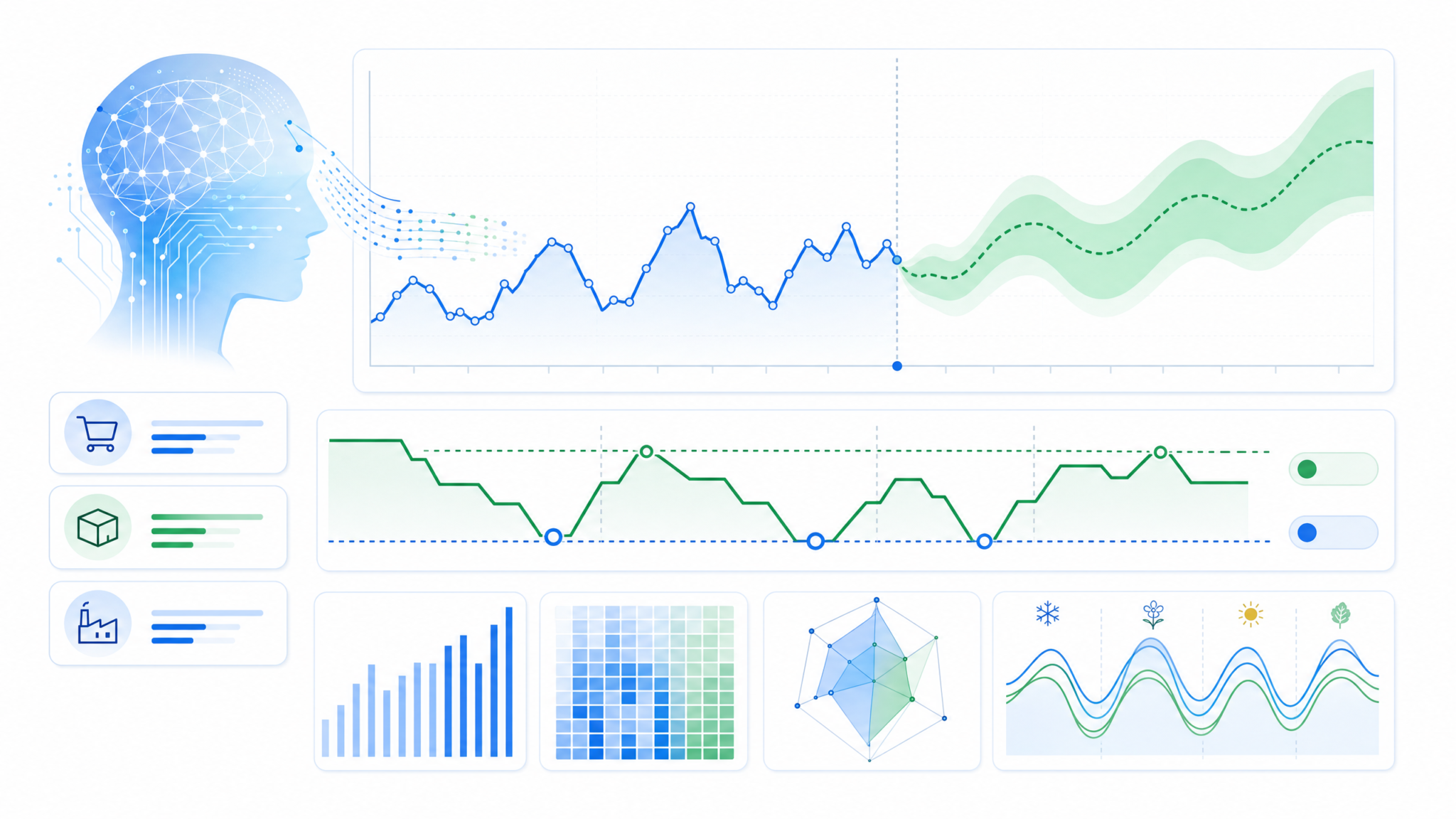
This guide systematically addresses three core pillars of supply chain and operations management:
- Demand Forecasting: Utilizing GPT-5.5 to predict future product demand with high granularity by integrating historical sales data, promotional calendars, economic indicators, and external shocks.
- Inventory Optimization: Focusing on safety stock calculation and reorder point setting, balancing service levels with carrying costs through adaptive prompts that reflect varying lead times, demand variability, and supplier reliability.
- Logistics and Route Optimization: Applying GPT-5.5 to design efficient transportation routes, minimize delivery times, reduce fuel consumption, and accommodate real-time constraints such as traffic and weather conditions.
Each section offers a comprehensive workflow including:
- Operational Goal Definition: A clear articulation of the business challenge and KPIs.
- Exact GPT-5.5 Prompt Examples: Highly structured prompts engineered to invoke advanced reasoning and domain-specific analysis.
- Sample Model Outputs: Realistic examples illustrating the depth and clarity of GPT-5.5’s responses.
- Prompt Customization Tips: Guidance on modifying prompts to suit different industries, data availability, and decision contexts.
Real-World Relevance: A Use Case Illustration
Consider a multinational electronics manufacturer faced with volatile demand due to rapid technology shifts and global supply chain disruptions. The procurement team must forecast demand for next-generation smartphones across multiple regions, optimize inventory buffers in warehouses worldwide, and coordinate shipments to meet tight launch schedules. Traditional forecasting methods struggled to incorporate qualitative inputs such as competitor product launches and geopolitical tensions.
By deploying GPT-5.5 with carefully designed prompts, the team can:
- Analyze historical sales trends alongside news summaries about component shortages.
- Calculate safety stock by simulating various demand scenarios and supplier lead-time variability.
- Generate optimized routing plans that consider port congestion and customs delays.
This approach results in improved forecast accuracy, reduced stockouts, and more agile logistics operations.
Step-By-Step Breakdown: Crafting Effective GPT-5.5 Prompts

| Step | Purpose | Example |
|---|---|---|
| 1. Define Objective | Clarify the specific operational challenge to address. | “Forecast weekly demand for product X in North America for the next 12 weeks.” |
| 2. Specify Data Inputs | Indicate what data sources and variables the model should consider. | “Use historical sales from past 3 years, promotional event schedules, and macroeconomic indicators.” |
| 3. Describe Desired Output Format | Guide the model on how to structure its response. | “Provide a weekly demand forecast table with 95% confidence intervals.” |
| 4. Request Reasoning and Assumptions | Ensure transparency and explainability of the model’s logic. | “Explain key drivers influencing forecast changes and assumptions made.” |
| 5. Include Contextual Constraints | Embed operational constraints or business rules. | “Consider lead time variability of 2-4 weeks and supplier reliability index.” |
Example Prompt Snippet for Demand Forecasting
System Prompt:
"You are an expert supply chain analyst. Using the past 3 years of weekly sales data for SKU123, promotional calendars, and macroeconomic trends, forecast weekly demand for the next 12 weeks. Provide your forecast along with confidence intervals, and explain the primary factors driving demand fluctuations. Account for seasonal patterns and recent supply disruptions."
Such a prompt leverages GPT-5.5’s capability to integrate multiple data dimensions, generate probabilistic outputs, and articulate decision-critical insights.
Complementary Technologies and Data Integration
While GPT-5.5 is a powerful reasoning engine, optimal supply chain decision-making often requires integration with other technologies and datasets:
- Enterprise Resource Planning (ERP) Systems: To feed real-time transactional data into GPT-5.5 prompts.
- Internet of Things (IoT) Sensors: For live inventory and shipment status updates.
- Geospatial Analytics Tools: To enhance logistics routing with traffic and weather data.
- External Data Feeds: Including market intelligence, social media sentiment, and regulatory changes.
This interoperability amplifies GPT-5.5’s impact, enabling end-to-end visibility and agile operational responses.
Conclusion
This introduction sets the stage for a detailed exploration of GPT-5.5 prompts tailored to supply chain and operations management. The subsequent sections delve into specialized applications—demand forecasting, inventory optimization, and logistics planning—each featuring meticulously crafted prompts and practical insights. By mastering these techniques, professionals can unlock AI-driven decision-making that not only enhances efficiency but also builds resilience against the uncertainties of a volatile global marketplace.
1. Demand Forecasting
Operational Goal
Demand forecasting is a foundational pillar in supply chain and operations management, serving as the critical mechanism by which organizations anticipate customer demand for products and services. The primary objective is to produce accurate and actionable forecasts that enable synchronized decision-making across procurement, production, inventory management, and distribution functions. By precisely predicting future demand, companies can minimize the risks of stockouts—leading to lost sales and dissatisfied customers—and overstock situations, which incur excessive holding costs and potential obsolescence.
Effective demand forecasting relies on a multifaceted analysis of diverse data sources, including detailed historical sales records, seasonal and cyclical demand patterns, promotional and marketing activities, and macroeconomic indicators. Additionally, modern forecasting integrates external variables such as competitor actions, emerging market trends, and socio-economic factors. The end goal is to develop a comprehensive understanding of demand drivers and translate this into quantitatively robust forecasts that support strategic and tactical supply chain planning.
To illustrate, consider a global electronics manufacturer planning production for a flagship smartphone model. Historical sales patterns reveal pronounced seasonality—higher demand during year-end holidays and product launch quarters. Promotional campaigns around these periods typically yield a 20-30% uplift, while external factors such as consumer confidence and exchange rates significantly influence demand. An advanced demand forecasting system incorporates these variables to produce monthly forecasts with confidence intervals, enabling the company to optimize inventory levels, negotiate supplier contracts, and streamline logistics operations.
Advanced Methodological Framework for Demand Forecasting
Achieving superior forecast accuracy entails the use of sophisticated analytical techniques and machine learning models, supported by high-quality data integration and preprocessing. The following methodological framework outlines key components:
- Data Collection and Integration: Collate multi-source datasets, including transactional sales records, promotional calendars, weather data, competitor pricing, and macroeconomic indicators. Data integrity and consistency checks are critical at this stage.
- Exploratory Data Analysis (EDA): Conduct thorough EDA to identify trends, seasonality, outliers, and cyclical patterns. Visualization tools and statistical tests (e.g., autocorrelation functions) aid in understanding temporal dependencies.
- Feature Engineering: Develop derived variables such as lagged sales values, moving averages, seasonal indices, promotional event flags, and economic indicator proxies to enhance model input richness.
- Model Selection and Training: Employ a combination of forecasting techniques tailored to the data characteristics and business context. Popular models include ARIMA (AutoRegressive Integrated Moving Average), Exponential Smoothing (ETS), Prophet by Facebook, and advanced machine learning algorithms such as Gradient Boosting Machines (GBM), Random Forests, and deep learning architectures like LSTM (Long Short-Term Memory) networks.
- Incorporation of External Factors: Integrate exogenous variables (e.g., GDP growth rates, consumer sentiment indices) into models to capture demand elasticity with respect to macroeconomic conditions.
- Forecast Validation and Performance Monitoring: Utilize backtesting with holdout samples, cross-validation, and error metrics such as Mean Absolute Percentage Error (MAPE), Root Mean Squared Error (RMSE), and Mean Absolute Error (MAE) to evaluate model accuracy and stability.
- Uncertainty Quantification: Generate prediction intervals (e.g., 95% confidence intervals) to quantify forecast uncertainty, enabling risk-aware decision-making.
GPT-5.5 System Prompt
You are an expert supply chain analyst specializing in advanced demand forecasting and time series analysis.
Given the following inputs, your task is to generate a comprehensive and precise demand forecast for the next 12 months for each product SKU, incorporating statistical rigor and contextual insights.

Data Inputs:
- Historical monthly sales data (past 36 months) per SKU, cleaned and normalized.
- Seasonal adjustment factors derived from decomposition of historical demand.
- Detailed promotional calendar with event dates, types, and expected lift percentages.
- Relevant macroeconomic indicators (e.g., GDP growth rates, consumer sentiment index, unemployment rate).
- Optional supplementary variables: weather patterns, competitor pricing, and supply chain lead time variability.

Please output the following deliverables:
1. A detailed 12-month forecast table for each SKU, including:
   - Point estimates of forecasted demand.
   - 95% confidence intervals specifying forecast uncertainty bounds.
   - Scenario-based forecasts (best case, base case, worst case) incorporating potential market volatility.
2. A narrative analysis that:
   - Explains key demand drivers identified from the data.
   - Discusses the impact of seasonality and promotional events on forecasted demand.
   - Highlights any expected demand spikes or dips with contextual explanations.
   - Assesses the influence of macroeconomic trends on demand stability.
3. Actionable recommendations for adjusting forecasts under various uncertainty scenarios, including:
   - Strategies to mitigate risks from supply chain disruptions or market shocks.
   - Guidelines for dynamic forecast recalibration as new data becomes available.
   - Suggestions for inventory and production planning aligned with forecast insights.

Ensure all outputs adhere to industry best practices and are suitable for integration into enterprise supply chain planning systems.
Realistic Output Excerpt
Forecast Summary for SKU: Alpha-1001
| Month | Forecast Units | 95% Confidence Interval | Scenario Forecasts (Units) |
|---|---|---|---|
| July 2024 | 5,200 | 4,800 – 5,600 | Best: 5,600 | Base: 5,200 | Worst: 4,800 |
| August 2024 | 5,800 | 5,300 – 6,300 | Best: 6,300 | Base: 5,800 | Worst: 5,300 |
| September 2024 | 6,100 | 5,600 – 6,600 | Best: 6,600 | Base: 6,100 | Worst: 5,600 |
Analysis: The forecast reveals a pronounced seasonal uptick initiating in August, primarily driven by back-to-school promotions, which historically contribute a 15% lift to baseline demand. The promotional calendar indicates a series of targeted marketing campaigns from mid-July through early September, aligning with increased consumer purchasing activity in this period. Macroeconomic indicators, including stable GDP growth at 2.1% annually and a consumer sentiment index hovering near neutral, suggest a steady demand environment.
Further analysis of historical data uncovers a subtle demand dip in November, likely attributable to supply chain disruptions observed last fiscal year during the holiday season. Contingency planning is advised to mitigate potential risks, including ramping up safety stock levels and exploring alternative logistics providers.
The scenario-based forecasts provide a useful sensitivity analysis, reflecting potential demand fluctuations due to external uncertainties such as geopolitical tensions or raw material price volatility. In the worst-case scenario, a 10% demand contraction is anticipated, while the best case assumes a 10% upside fueled by stronger-than-expected promotional effectiveness and positive economic surprises.
Step-by-Step Forecasting Approach Using Python
The following is a simplified Python example employing the Prophet library for time series demand forecasting, including seasonal and promotional effects integration:
import pandas as pd
from prophet import Prophet

# Load historical sales data
sales_data = pd.read_csv('sales_data.csv')  # columns: ds (date), y (sales units)

# Load promotional events data
promotions = pd.read_csv('promotions.csv')  # columns: ds (date), promo_impact (binary or percentage)

# Merge promotions as an additional regressor
sales_data = sales_data.merge(promotions, on='ds', how='left').fillna(0)

# Initialize Prophet model with weekly and yearly seasonality
model = Prophet(yearly_seasonality=True, weekly_seasonality=False, daily_seasonality=False)

# Add promotional events as a regressor
model.add_regressor('promo_impact')

# Fit the model
model.fit(sales_data)

# Create future dataframe for next 12 months (assuming monthly frequency)
future = model.make_future_dataframe(periods=12, freq='M')

# Include promotional schedule for forecast period
future = future.merge(promotions, on='ds', how='left').fillna(0)

# Generate forecast
forecast = model.predict(future)

# Output forecast with confidence intervals
print(forecast[['ds', 'yhat', 'yhat_lower', 'yhat_upper']].tail(12))
This example highlights the integration of promotional lift as an exogenous regressor, allowing the model to adjust forecasts dynamically based on marketing activities. In practice, additional regressors such as macroeconomic indicators or competitor pricing can be incorporated similarly to refine forecast accuracy.
Comparison of Forecasting Models
| Model | Strengths | Limitations | Best Use Cases |
|---|---|---|---|
| ARIMA | Effective for linear, stationary time series with well-defined trends and seasonality | Limited in handling multiple exogenous regressors and non-linear relationships | Short-term forecasting of stable demand patterns |
| Exponential Smoothing (ETS) | Captures level, trend, and seasonality with simple implementation | Does not handle external variables or complex seasonality well | Baseline forecasts in stable environments |
| Prophet | Robust to missing data and outliers; easily incorporates multiple seasonality and regressors | May underperform with highly volatile or sparse data | Business forecasting with known seasonality and marketing effects |
| Machine Learning (e.g., GBM, Random Forest) | Captures non-linear relationships and interactions; flexible with various data types | Requires extensive feature engineering and large datasets; risk of overfitting | Complex demand drivers with rich explanatory variables |
| Deep Learning (LSTM, RNN) | Excels at capturing long-term dependencies and sequential patterns | Computationally intensive; requires large amounts of data and tuning | Highly complex demand patterns with intricate temporal dependencies |
Adapting the Prompt
- Data Specificity: Depending on operational granularity, forecasts can be generated at SKU-level, product family, or even aggregated geographical zones to align with strategic planning objectives.
- Additional Variables: Incorporate weather data (e.g., temperature, precipitation) where demand is weather-sensitive—such as apparel or perishables—or competitor pricing to capture market share dynamics.
- Time Horizon: Adjust forecast granularity and horizon according to planning cycles; for example, weekly forecasts for fast-moving consumer goods (FMCG) or quarterly projections for capital-intensive manufacturing.
- Model Output Detail: Request scenario-based outputs including best-case, base-case, and worst-case forecasts to facilitate risk-adjusted decision-making and contingency planning.
- Integration with Inventory Optimization: Extend the prompt to link forecast outputs with inventory planning algorithms, enabling just-in-time replenishment and minimizing carrying costs.
2. Inventory Optimization: Safety Stock Calculation
Operational Goal
Safety stock serves as a strategic inventory buffer designed to mitigate the risks associated with demand variability and supply lead time uncertainty. Its primary function is to prevent stockouts—situations where product availability cannot meet customer demand—thereby maintaining high service levels and customer satisfaction. However, holding excessive inventory leads to increased carrying costs, including capital tied up in stock, warehousing expenses, and potential obsolescence risks. Therefore, the operational goal in safety stock calculation is to determine the optimal buffer quantity that balances the trade-off between service level targets and inventory holding costs. This calculation must consider variability in both demand and supplier lead times, as well as organizational constraints such as SKU criticality, demand seasonality, and supply chain disruptions.
More specifically, safety stock optimization aims to compute tailored safety stock levels for each SKU or product family, taking into account:
- Demand Variability: Fluctuations in customer order quantities over time, quantified by demand standard deviation.
- Lead Time Variability: Variations in supplier delivery times due to production delays, transportation, or customs clearance.
- Service Level Targets: Desired probability of not experiencing a stockout during the replenishment lead time, commonly expressed as a percentage (e.g., 95%).
- Supply Chain Constraints: Inventory policies, reorder points, storage capacity, and budgetary limitations.
By accurately calculating safety stock, companies can improve forecast reliability, reduce lost sales, optimize warehouse space, and enhance overall supply chain responsiveness.
GPT-5.5 System Prompt
You are a supply chain optimization specialist tasked with calculating safety stock levels.

Input Data:
- Historical daily demand mean and standard deviation per SKU (last 180 days)
- Average supplier lead time and lead time standard deviation (in days)
- Desired service level (e.g., 95%)
- Current inventory policies (e.g., reorder points, order quantities)
- Additional context such as SKU priority or seasonality indicators (optional)

Using the standard safety stock formula adjusted for demand and lead time variability:

Safety Stock = Z * sqrt((Lead Time Average * Demand Variance) + (Demand Average^2 * Lead Time Variance))

Where Z corresponds to the service level's Z-score, derived from the standard normal distribution.

Please provide:
1. Safety stock quantity per SKU, rounded appropriately.
2. A detailed explanation of the calculation steps, assumptions, and statistical rationale.
3. Recommendations for dynamically adjusting safety stock levels based on evolving demand or lead time patterns, including triggers for recalculation.
4. Optional: Include suggestions for incorporating cost considerations or multi-echelon inventory contexts.
Analytical Explanation of Safety Stock Formula
The core formula for safety stock integrates two fundamental sources of uncertainty: demand variance during lead time and lead time variance itself. The formula is:
Safety Stock = Z × √(L × σD2 + D2 × σL2)
- Z: Z-score corresponding to the desired service level. For example, a 95% service level corresponds to a Z-score of approximately 1.645, representing the number of standard deviations needed to cover demand fluctuations.
- L: Average supplier lead time in days.
- σD2: Variance of daily demand (square of standard deviation).
- D: Average daily demand.
- σL2: Variance of lead time (square of lead time standard deviation).
This formula assumes demand and lead time are independent random variables and that demand follows a normal distribution during the lead time. The first term under the square root, L × σD2, captures the variability in demand over the lead time. The second term, D2 × σL2, accounts for the uncertainty introduced by variability in lead time itself.
When lead time is constant (i.e., σL = 0), the formula simplifies to the classic safety stock formula:
Safety Stock = Z × σD × √L
However, in real-world supply chains, lead times often fluctuate due to operational disruptions, making the inclusion of lead time variance critical for accurate safety stock estimation.
Step-by-Step Calculation Example
Safety Stock Calculation for SKU: Beta-2045
| Parameter | Value | Description |
|---|---|---|
| Average Daily Demand (D) | 120 units | Mean demand observed over 180 days |
| Demand Std Dev (σD) | 25 units | Standard deviation of daily demand |
| Average Lead Time (L) | 7 days | Supplier’s average replenishment lead time |
| Lead Time Std Dev (σL) | 2 days | Variability in lead time |
| Service Level | 95% (Z = 1.645) | Target probability of no stockout during lead time |
Calculation details:
- Calculate demand variance: σD2 = 25² = 625
- Calculate lead time variance: σL2 = 2² = 4
- Compute the first term: L × σD2 = 7 × 625 = 4,375
- Compute the second term: D2 × σL2 = 120² × 4 = 14,400 × 4 = 57,600
- Sum the terms inside the square root: 4,375 + 57,600 = 61,975
- Calculate the square root: √61,975 ≈ 249
- Multiply by Z-score: 1.645 × 249 ≈ 410 units
Conclusion: To maintain a 95% service level, the recommended safety stock for SKU Beta-2045 is approximately 410 units.
Dynamic Safety Stock Adjustment Recommendations
Safety stock levels should not be static but revisited regularly to reflect evolving demand and supply conditions. The following best practices are recommended for dynamic adjustment:
- Rolling Window Analysis: Continuously update demand mean and variance using a rolling window (e.g., last 180 days) to capture recent demand trends and seasonality.
- Lead Time Monitoring: Track supplier performance metrics and adjust lead time averages and variances monthly or quarterly. Alert systems can notify when lead times deviate beyond historical norms.
- Event-Driven Recalculation: Trigger safety stock recalculations during known events such as promotional campaigns, seasonal peaks, supplier changes, or transportation disruptions.
- SKU Prioritization: For high-priority or critical SKUs, consider increasing service levels or safety stock buffers to prevent costly stockouts.
- Scenario Analysis: Simulate different demand and lead time scenarios using Monte Carlo simulation or stochastic modeling to understand safety stock sensitivity.
- Integration with Forecast Updates: Align safety stock updates with demand forecast refresh cycles to ensure consistency.
Incorporating Cost Trade-Offs and Multi-Echelon Considerations
While the standard safety stock formula focuses on service level adherence, optimal inventory management must balance holding costs against stockout costs:
| Cost Type | Impact on Safety Stock | Management Approach |
|---|---|---|
| Holding Costs | Discourage excessive safety stock to reduce capital and warehousing expenses. | Use cost-based optimization models integrating unit holding cost per SKU. |
| Stockout Costs | Encourage higher safety stock to prevent lost sales, backorder penalties, and customer dissatisfaction. | Quantify lost margin per stockout event and incorporate into inventory decision models. |
Advanced GPT-5.5 prompts can be designed to:
- Request safety stock suggestions that minimize total expected cost rather than solely targeting service level thresholds.
- Factor in multi-echelon inventory contexts, where safety stock is distributed between central warehouses and regional distribution centers, optimizing the overall supply network.
- Generate policy recommendations on reorder points and order quantities that incorporate safety stock adjustments dynamically.
Code Snippet: Python Implementation for Safety Stock Calculation
import math
from scipy.stats import norm

def calculate_safety_stock(demand_mean, demand_std, lead_time_mean, lead_time_std, service_level):
    # Calculate Z-score for the desired service level
    Z = norm.ppf(service_level)

    # Calculate variances
    demand_variance = demand_std ** 2
    lead_time_variance = lead_time_std ** 2

    # Calculate safety stock
    safety_stock = Z * math.sqrt((lead_time_mean * demand_variance) + ((demand_mean ** 2) * lead_time_variance))

    return round(safety_stock)

# Example parameters for SKU Beta-2045
demand_mean = 120
demand_std = 25
lead_time_mean = 7
lead_time_std = 2
service_level = 0.95

safety_stock_qty = calculate_safety_stock(demand_mean, demand_std, lead_time_mean, lead_time_std, service_level)
print(f"Recommended Safety Stock: {safety_stock_qty} units")
Comparison Table: Safety Stock Under Different Lead Time Variability Scenarios
| Lead Time Std Dev (days) | Safety Stock (units) | Comment |
|---|---|---|
| 0 (Constant Lead Time) | 208 | Lower safety stock since lead time uncertainty is zero. |
| 1 | 285 | Moderate increase due to some lead time variability. |
| 2 (Baseline) | 410 | Significant increase reflecting real lead time variability. |
| 3 | 572 | High buffer needed due to pronounced lead time fluctuations. |
Note: This illustrates how ignoring lead time variability can drastically underestimate safety stock requirements, leading to increased risk of stockouts.
Adapting the Prompt
- Service Level Flexibility: Customize service level targets per SKU priority or customer segmentation, such as 99% for critical SKUs and 90% for less critical items.
- Multi-Echelon Inventory: Extend prompt to calculate safety stock across multiple distribution centers or warehouses, considering lead times and demand correlations at different nodes.
- Incorporate Cost Trade-offs: Request cost optimization by balancing holding costs versus stockout penalties, possibly through expected total cost minimization.
- Data Frequency: Adjust input data gran
3. Logistics and Route Optimization
Operational Goal
Logistics and route optimization are critical components in modern supply chain and operations management, directly impacting operational costs, customer satisfaction, and sustainability metrics. The primary goal is to design and implement efficient delivery routes that minimize total transportation costs, reduce delivery lead times, and improve overall fleet utilization while adhering to a complex array of constraints. These constraints include vehicle capacity limitations, delivery time windows, driver working hours, vehicle types, and dynamic environmental factors such as traffic congestion and weather conditions.
Effective route optimization not only reduces fuel consumption and operational expenses but also enhances reliability and flexibility in delivery schedules, which is essential for meeting stringent customer expectations in just-in-time (JIT) and last-mile delivery scenarios. Furthermore, integrating real-time data and predictive analytics enables dynamic adjustment of routes to accommodate unforeseen disruptions, thereby increasing resilience and service quality.
Technical Challenges and Considerations
Route optimization involves solving complex combinatorial optimization problems, often modeled as variants of the Vehicle Routing Problem (VRP). Key challenges include:
- Multi-constraint optimization: Balancing among vehicle capacity, delivery time windows, driver shift regulations, and varying demand volumes.
- Dynamic and stochastic conditions: Incorporating variable traffic congestion patterns, weather impacts, and last-minute order changes.
- Scalability: Handling large-scale datasets with hundreds or thousands of delivery points while maintaining computational efficiency.
- Multi-modal transportation: Coordinating routes involving multiple transport modes such as trucks, drones, and rail.
- Environmental sustainability: Minimizing carbon emissions as part of route planning.
GPT-5.5 System Prompt
You are an expert logistics planner applying advanced optimization techniques, combining heuristic algorithms, machine learning predictions, and real-time data integration.

Inputs:
- List of delivery locations with geospatial coordinates, demand volumes, and priority levels.
- Detailed fleet information: number of vehicles, capacity constraints (weight and volume), operating hours, driver shift schedules.
- Delivery time windows and specific customer constraints for each location.
- Real-time or historical traffic congestion data, including probabilistic traffic delays.
- Weather forecasts affecting road conditions.
- Optional environmental goals such as carbon footprint reduction targets.
- Multi-modal transportation options if applicable.

Task:
Develop an optimized routing plan that minimizes total distance traveled, delivery times, and operational costs while respecting all constraints and maximizing fleet utilization. Incorporate contingency measures for anticipated traffic disruptions or adverse weather.

Output should include:
1. Detailed route plans per vehicle with the sequence of stops, estimated arrival and departure times, and load status at each point.
2. Comprehensive summary metrics, including total distance, total time, fuel consumption estimates, and carbon emissions.
3. Identification of potential bottlenecks or conflicts such as overlapping delivery windows or tight loading constraints.
4. Suggested contingency strategies including rerouting options, vehicle swaps, or delivery rescheduling.
5. Visual route maps or schematic diagrams highlighting critical segments and potential risk zones (optional).
Step-by-Step Breakdown of Route Optimization Using GPT-5.5
- Data Ingestion and Preprocessing: Collect and validate input data for delivery locations, fleet details, and constraints. Geocode addresses to precise coordinates and verify demand volumes.
- Constraint Modeling: Encode constraints such as vehicle capacity (weight and volume), time windows, driver shift regulations, and priority deliveries. Include traffic and weather data as dynamic constraints with probabilistic models.
- Initial Route Generation: Utilize heuristic algorithms (e.g., Clarke-Wright savings algorithm, nearest neighbor) to generate a feasible initial set of routes.
- Optimization Loop: Apply metaheuristic methods like Genetic Algorithms, Tabu Search, or Ant Colony Optimization enhanced by GPT-5.5’s reasoning capabilities to iteratively improve route plans, minimizing objective functions.
- Integration of Real-Time Data: Incorporate live traffic and weather updates to dynamically adjust routes, employing predictive analytics for anticipated delays.
- Validation and Contingency Planning: Analyze route feasibility, identify bottlenecks, and generate contingency plans such as alternate routes or load redistribution.
- Output Generation: Format detailed route plans, including sequences, timings, load status, total metrics, and contingency recommendations.
Realistic Output Excerpt
Optimized Routes Summary (Fleet of 3 Vehicles)
- Vehicle 1: Depot → Location A → Location D → Location F → Depot | Distance: 120 km | Total Time: 4.5 hrs | Estimated Fuel Consumption: 15 liters | Carbon Emissions: 35 kg CO2
- Vehicle 2: Depot → Location B → Location E → Location G → Depot | Distance: 110 km | Total Time: 4.2 hrs | Estimated Fuel Consumption: 13 liters | Carbon Emissions: 30 kg CO2
- Vehicle 3: Depot → Location C → Location H → Depot | Distance: 90 km | Total Time: 3.8 hrs | Estimated Fuel Consumption: 11 liters | Carbon Emissions: 25 kg CO2
Analysis: All vehicles operate within capacity limits. Time windows for Locations D and G are tight; vehicle arrival times are strictly scheduled to ensure compliance. Real-time traffic data indicates potential congestion on the route to Location E between 3–5 PM; contingency routing suggests a detour via Route 12 to avoid delays. Weather forecasts predict light rain in the afternoon, recommending slower speeds on certain segments to maintain safety. Load balancing has been optimized to minimize empty return trips, improving fleet utilization.
Example Code Snippet: GPT-5.5 Prompt for Dynamic Route Optimization
{
  "prompt": "You are an expert logistics optimizer. Given the input data below, generate the most efficient delivery routes while considering dynamic traffic and weather data.",
  "inputs": {
    "locations": [
      {"id": "A", "coords": [40.7128, -74.0060], "demand": 100, "time_window": ["09:00", "12:00"]},
      {"id": "B", "coords": [40.7306, -73.9352], "demand": 80, "time_window": ["10:00", "14:00"]},
      {"id": "C", "coords": [40.7580, -73.9855], "demand": 50, "time_window": ["08:00", "11:00"]}
    ],
    "fleet": {
      "vehicles": 2,
      "capacity": 150,
      "operating_hours": ["08:00", "18:00"]
    },
    "traffic_data": "real-time",
    "weather_forecast": "light rain at 15:00"
  },
  "task": "Output optimized routes with stop sequences, arrival times, total distance, and contingency plans."
}
Comparative Table: Traditional vs GPT-5.5 Enabled Route Optimization
Criteria Traditional Route Planning GPT-5.5 Enhanced Route Optimization Data Inputs Static location and demand data, limited real-time inputs Dynamic integration of real-time traffic, weather, and multi-modal options Algorithmic Approach Heuristics and rule-based optimization Hybrid metaheuristics with AI-driven reasoning and predictive analytics Constraint Handling Basic constraints (capacity, time windows) Complex constraints including driver shifts, environmental goals, and stochastic events Scalability Challenges with large-scale routing problems Scales to hundreds/thousands of stops using clustering and decomposition strategies Contingency Planning Manual or reactive adjustments Proactive, AI-generated contingency strategies with alternative routing Output Detail Basic route sequences and distances Comprehensive metrics including fuel, emissions, arrival times, and risk analysis Adapting the Prompt for Advanced Use Cases
- Constraint Expansion: Enhance the prompt to include driver shift schedules, mandatory breaks, vehicle types (e.g., refrigerated trucks), and regulatory compliance requirements.
- Dynamic Inputs: Utilize streaming APIs for live traffic, weather, and delivery updates to enable real-time route re-optimization and exception handling.
- Scalability: For large-scale logistics networks, incorporate clustering techniques such as k-means or DBSCAN to partition delivery points into manageable subproblems, enabling parallel optimization and faster computation.
- Environmental Goals: Integrate carbon footprint minimization objectives, including selecting low-emission vehicles, optimizing for fuel efficiency, and scheduling routes to avoid congested areas with high pollution levels.
- Multi-modal Logistics: Extend the prompt to generate route plans integrating multi-modal transport options, e.g., combining trucking with rail or drone delivery for last-mile services, accounting for transfer points and mode-specific constraints.
- Risk and Sensitivity Analysis: Request GPT-5.5 to perform scenario analysis under different traffic, weather, or demand conditions to identify robust routing strategies and quantify risk exposure.
4. Supplier Risk Evaluation
Operational Goal
Supplier risk evaluation is a critical component of modern supply chain and operations management, aimed at ensuring supply continuity, maintaining operational resilience, and minimizing exposure to potential disruptions. These disruptions can stem from a variety of sources including geopolitical instability, financial volatility, quality compliance failures, cyber threats, and environmental factors. The primary objective is to develop a robust, data-driven framework for assessing and monitoring supplier risk profiles, enabling proactive mitigation and strategic decision-making.
This process involves integrating both quantitative metrics—such as financial health indicators, delivery performance statistics, and compliance records—and qualitative insights drawn from geopolitical analyses, contract terms, and market intelligence. By synthesizing these diverse data points, organizations can classify suppliers according to multidimensional risk scores, identify early warning signals, and allocate resources effectively to mitigate vulnerabilities.
The long-term operational goal is to cultivate a resilient supplier network that supports uninterrupted production and distribution cycles while adapting dynamically to emerging risks. This ensures competitive advantage through enhanced supply chain agility and risk-informed supplier management.
GPT-5.5 System Prompt
You are a supply chain risk analyst with deep expertise in supplier evaluation, risk quantification, and mitigation planning.

Input:
- Supplier profiles including detailed financial health metrics:
    • Credit ratings (e.g., S&P, Moody’s)
    • Liquidity ratios (current ratio, quick ratio)
    • Debt-to-equity ratios
    • Profitability margins
- Historical operational performance data:
    • On-time delivery percentages (monthly/quarterly trends)
    • Quality defect rates and types (critical, major, minor)
    • Compliance audit results and certifications (ISO, Six Sigma)
- External risk factors:
    • Country risk indices (e.g., World Bank, Moody’s sovereign risk)
    • Political stability scores (e.g., Economist Intelligence Unit, Global Peace Index)
    • Natural disaster frequency and impact history (earthquakes, floods, pandemics)
    • Cybersecurity risk indicators and previous incident records
- Contractual terms and supply diversification:
    • Contract length and renewal clauses
    • Penalty and incentive clauses for performance
    • Degree of supplier diversification (single-source, multi-source)
    • Exclusivity agreements
- Additional contextual data:
    • News sentiment analysis relevant to the supplier
    • Social media monitoring for reputational risks
    • Sustainability and ESG risk dimensions

Task:
Generate a comprehensive risk assessment report for each supplier, including:
1. Quantitative risk scores segmented by financial, operational, geopolitical, cybersecurity, and sustainability dimensions, normalized on a 1-10 scale.
2. An in-depth narrative that contextualizes scores, highlights key vulnerabilities and strengths, and references recent trends or incidents.
3. Customized mitigation strategies prioritized by risk dimension and supplier criticality, including contingency planning, contract renegotiation, and supplier development programs.
4. A set of early warning indicators (EWIs) with defined thresholds and monitoring frequencies, designed to trigger timely interventions.
5. Visual summaries such as risk heatmaps or scorecards to facilitate stakeholder communication.
Expanded Framework for Supplier Risk Evaluation
To operationalize the GPT-5.5 system prompt effectively, organizations should adopt the following multi-step analytical framework:
- Data Collection & Normalization: Consolidate all quantitative and qualitative data streams into a centralized database. Normalize each metric to a consistent scale (e.g., 1 to 10) to enable cross-dimensional comparisons.
- Dimension-Specific Risk Scoring: Calculate individual risk scores for key categories:
- Financial Risk: Evaluate creditworthiness, liquidity, solvency, and profitability trends.
- Operational Risk: Analyze delivery timeliness, quality defect rates, compliance audit outcomes.
- Geopolitical Risk: Assess macroeconomic stability, political climate, and exposure to natural disasters.
- Cybersecurity Risk: Review cyber incident history, IT infrastructure robustness, and compliance with industry standards.
- Sustainability Risk: Measure environmental, social, and governance (ESG) factors including carbon footprint, labor practices, and regulatory compliance.
- Composite Risk Profile Generation: Weight risk dimensions based on supplier criticality and industry context to produce a holistic risk score.
- Risk Narrative Development: Use AI-generated insights to contextualize scores within current market and geopolitical conditions, drawing on real-time data such as news sentiment and social media trends.
- Mitigation Strategy Formulation: Prioritize risk responses, ranging from contract renegotiations, dual/multi-sourcing approaches, supplier development initiatives, to contingency inventory buildup.
- Early Warning Indicator Framework: Define specific leading indicators (e.g., sudden drop in credit rating, increase in defect rates, political unrest signals) with alert thresholds and monitoring cadence.
- Visualization & Reporting: Present findings in structured reports enriched with dashboards, heatmaps, and trend charts for easy stakeholder consumption.
Realistic Output Excerpt
Supplier Risk Profile: Gamma Components Ltd.
Risk Dimension Score (1-10) Details Financial Risk 6 (Moderate) Credit rating BBB-, current ratio 1.2, debt-to-equity 1.5; stable but limited liquidity buffer. Operational Risk 3 (Low) On-time delivery 98%, defect rate 0.5%; consistent quality with ISO 9001 certification. Geopolitical Risk 8 (High) Located in a region with elevated political instability (country risk index 7/10), recent civil protests and regulatory uncertainty. Cybersecurity Risk 5 (Moderate) Past phishing incident reported, ongoing improvements in IT security protocols. Sustainability Risk 4 (Low-Moderate) Compliant with environmental standards, minor issues in labor practices flagged. Summary: Gamma Components Ltd. exhibits strong operational reliability and acceptable financial health, though liquidity constraints limit its flexibility. The supplier’s geopolitical exposure in a volatile region poses the most significant threat to supply continuity. Cybersecurity posture is improving but remains an area requiring vigilance. Sustainability compliance is generally satisfactory but warrants monitoring of labor-related concerns.
Recommendations:
- Implement dual sourcing to reduce dependency on Gamma Components, especially for critical components.
- Renegotiate contracts to include flexible delivery and force majeure clauses that account for geopolitical disruptions.
- Establish a weekly political risk monitoring protocol using AI-driven sentiment analysis from news and social media feeds.
- Enhance cybersecurity collaboration through joint audits and shared incident response plans.
- Engage in supplier development programs focused on improving labor standards and ESG reporting.
Early Warning Indicators (EWIs):
Indicator Threshold Monitoring Frequency Action on Trigger Credit rating downgrade Below BBB- Monthly Initiate financial review and contingency planning. On-time delivery < 95% Consistent over 2 months Weekly Conduct operational audit and assess alternative suppliers. Country risk index increase Increase > 1 point Weekly Trigger geopolitical risk assessment update. Negative news sentiment score Below -0.5 (scale -1 to 1) Daily Investigate reputational risks and escalate to risk committee. Step-by-Step Example: Supplier Risk Evaluation Workflow
Below is a procedural outline illustrating how a supply chain risk analyst might leverage GPT-5.5 to conduct a supplier risk evaluation:
- Data Ingestion: Aggregate supplier financial reports, delivery logs, audit certificates, geopolitical data streams, and social media feeds into a unified data lake.
- Prompt Construction: Format the collected data into the GPT-5.5 input schema, emphasizing recent trends and critical metrics.
- Risk Scoring: Execute the GPT-5.5 prompt to generate normalized risk scores and a detailed narrative.
- Report Generation: Compile GPT-5.5 outputs into a structured report with tables, visual risk heatmaps (), and prioritized recommendations.
- Review & Validation: Cross-validate AI-generated insights with internal domain experts and historical risk events.
- Mitigation Execution: Implement recommended strategies such as contract adjustments, supplier diversification, and monitoring setups.
- Continuous Monitoring: Automate periodic reassessment with updated data inputs to maintain current risk profiles.
Code Snippet: Automating Supplier Risk Data Preparation for GPT-5.5
import pandas as pd
import json

def prepare_supplier_prompt(supplier_data):
    """
    Converts supplier data into structured JSON input for GPT-5.5 prompt.

    supplier_data: dict containing financials, operations, geopolitical, and contract info.

    Returns: JSON string formatted for prompt insertion.
    """
    input_payload = {
        "SupplierFinancials": {
            "CreditRating": supplier_data.get("credit_rating"),
            "LiquidityRatio": supplier_data.get("liquidity_ratio"),
            "DebtEquityRatio": supplier_data.get("debt_to_equity"),
            "ProfitMargin": supplier_data.get("profit_margin")
        },
        "OperationalPerformance": {
            "OnTimeDelivery": supplier_data.get("on_time_delivery"),
            "DefectRate": supplier_data.get("defect_rate"),
            "Certifications": supplier_data.get("certifications")
        },
        "ExternalRiskFactors": {
            "CountryRiskIndex": supplier_data.get("country_risk_index"),
            "PoliticalStability": supplier_data.get("political_stability"),
            "NaturalDisasterScore": supplier_data.get("natural_disaster_score"),
            "CybersecurityIncidents": supplier_data.get("cyber_incidents")
        },
        "ContractTerms": supplier_data.get("contract_terms"),
        "AdditionalData": {
            "NewsSentimentScore": supplier_data.get("news_sentiment"),
            "SocialMediaRisk": supplier_data.get("social_media_risk"),
            "SustainabilityScore": supplier_data.get("sustainability_score")
        }
    }
    return json.dumps(input_payload, indent=2)

# Example usage
supplier_example = {
    "credit_rating": "BBB-",
    "liquidity_ratio": 1.2,
    "debt_to_equity": 1.5,
    "profit_margin": 8.5,
    "on_time_delivery": 98,
    "defect_rate": 0.5,
    "certifications": ["ISO 9001", "Six Sigma"],
    "country_risk_index": 7,
    "political_stability": 4,
    "natural_disaster_score": 3,
    "cyber_incidents": 1,
    "contract_terms": {
        "length_months": 24,
        "renewal": "automatic",
        "penalties": "5% late delivery",
        "incentives": "2% early delivery bonus"
    },
    "news_sentiment": -0.2,
    "social_media_risk": 0.1,
    "sustainability_score": 6
}

prompt_input_json = prepare_supplier_prompt(supplier_example)
print(prompt_input_json)
Comparison Table: Traditional vs GPT-5.5-Enabled Supplier Risk Evaluation
Conclusion
GPT-5.5’s revolutionary advancements in natural language understanding and multi-step reasoning have created unprecedented opportunities for supply chain and operations management professionals. Through the precise engineering of context-rich prompts, GPT-5.5 enables the extraction of actionable insights from complex, multi-dimensional data sets, driving improvements across demand forecasting, inventory optimization, logistics planning, and risk mitigation.
To fully leverage GPT-5.5’s capabilities, it is essential to understand the underlying mechanics of prompt design and model interaction. This involves constructing prompts that provide structured, domain-specific context, incorporate historical data patterns, and explicitly define the desired output format. For example, when forecasting demand, prompts that specify temporal granularity, product segmentation, and external factors such as seasonality or promotions yield more accurate and reliable predictions. Similarly, inventory optimization prompts that outline constraints such as reorder points, lead times, and carrying costs enable GPT-5.5 to generate nuanced recommendations balancing service levels and cost efficiency.
Consider the following step-by-step breakdown for developing a demand forecasting prompt:
- Data Specification: Include historical sales data, broken down by SKU and region, clearly formatted in tabular or JSON structures.
- Contextual Variables: Add information on marketing campaigns, holidays, and competitor activity that may influence demand spikes or drops.
- Forecast Horizon: Define the time period for predictions (e.g., next quarter, next 12 weeks) and the desired granularity (daily, weekly, monthly).
- Output Format: Request forecasts in a structured format conducive to integration with existing planning systems, such as CSV or JSON.
- Validation Criteria: Ask GPT-5.5 to provide confidence intervals or uncertainty bounds alongside point forecasts to support risk-aware decision-making.
Below is an illustrative prompt example for demand forecasting:
Generate a weekly demand forecast for Product A across three regions (North, South, East) for the next 12 weeks. Use the historical sales data from the past 52 weeks provided below. Consider the impact of major upcoming holidays (Thanksgiving, Christmas), and ongoing promotional campaigns. Provide the output as a JSON array with fields: week_start_date, region, forecasted_demand, confidence_interval_lower, confidence_interval_upper.
In inventory optimization, GPT-5.5 can synthesize complex trade-offs between holding costs, stockout risks, and supplier lead times. By embedding operational constraints and service level targets within prompts, it can generate tailored reorder policies. For instance, a prompt might request an optimal reorder point and order quantity for each SKU, considering variability in demand and supplier reliability.
In logistics, GPT-5.5 supports route optimization, carrier selection, and dynamic scheduling by interpreting multifaceted parameters such as delivery windows, vehicle capacities, traffic patterns, and fuel costs. By combining these variables in well-structured prompts, supply chain managers can derive actionable logistics plans that minimize costs while adhering to customer service commitments.
To illustrate the comparative advantages of GPT-5.5-driven approaches versus traditional algorithmic methods, consider the following table:
Aspect Traditional Methods GPT-5.5-Enhanced Methods Data Input Structured numeric datasets, often requiring manual preprocessing Flexible input formats including unstructured text, tables, and semi-structured data Contextual Awareness Limited to predefined variables and parameters Rich contextual understanding including external events, market trends, and textual descriptions Model Adaptability Requires retraining or recalibration to incorporate new features Dynamic adjustment through prompt engineering without retraining Output Format Fixed outputs, often numerical or tabular Customizable outputs including narrative explanations, structured data, and recommendations Explainability Often opaque, reliant on statistical assumptions Provides step-by-step reasoning and justification on demand Furthermore, GPT-5.5’s natural language generation capabilities enable the automatic creation of comprehensive reports, executive summaries, and exception alerts, which facilitate communication across cross-functional teams and stakeholders. This reduces the cognitive load on supply chain planners and accelerates decision cycles.
Real-world adoption of GPT-5.5 in supply chain contexts has demonstrated measurable benefits. For example, a multinational electronics manufacturer integrated GPT-5.5-driven demand forecasting workflows that incorporated real-time social media sentiment and competitor pricing intelligence. This approach improved forecast accuracy by 15%, reduced inventory holding costs by 10%, and enhanced responsiveness to market fluctuations.
Another case study involves a global logistics provider that used GPT-5.5 to dynamically optimize last-mile delivery routes based on traffic, weather, and delivery priority inputs encoded in prompts. This led to a 12% reduction in fuel consumption and a 20% improvement in on-time delivery performance.
Despite these advancements, practitioners must be mindful of potential limitations and risks. GPT-5.5’s outputs are only as good as the quality and relevance of input data and prompt design. Ensuring data integrity, prompt validation, and ongoing model performance monitoring are critical to maintaining operational robustness. Additionally, ethical considerations around data privacy and algorithmic fairness warrant continuous vigilance.
In conclusion, GPT-5.5 represents a paradigm shift in how supply chain and operations management tasks can be approached. Its advanced reasoning and linguistic capabilities empower professionals to harness AI with unprecedented precision and flexibility. By mastering the art and science of prompt engineering, organizations can unlock new levels of operational excellence, agility, and resilience in an increasingly complex and uncertain global supply environment.
For further exploration and to deepen your understanding of applying AI in supply chain contexts, we recommend consulting our comprehensive analyses on Advanced Supply Chain Analytics and AI-Powered Inventory Management. These resources offer detailed methodologies, case studies, and technical frameworks that complement the insights presented in this guide.
📚 Related Articles You Might Enjoy
🚀 Stay Ahead with ChatGPT AI Hub
Get the latest GPT-5.5 tutorials, Codex guides, and AI news delivered to your inbox every week.

More on this
AI Misuse Incident Response Playbook: Stolen API Keys, Agentic Cyber Operations, Detection, Containment, and Evidence
Why this playbook starts with disrupted misuse cases, not threat prevalence Anthropic’s September 2026 threat-intelligence report is best read as a set of selected notable disrupted cases observed between December 2025 and August 2026, not as a statistical prevalence study…OpenAI OneGov 2.0 Explained: ChatGPT, Codex, API Access, Daybreak Cyber Defense, Pricing, and Procurement
What OpenAI OneGov 2.0 changes for public-sector AI adoption OpenAI’s OneGov 2.0 announcement is best understood as a procurement and adoption framework for U.S. government organizations, not as a universal grant of unlimited free AI. OpenAI and the U.S. General…25 ChatGPT-5.5 Prompts for OpenAI Workspace Admins: Model Access, Group Provisioning, Codex Audits, and Key Rotation
How to use ChatGPT-5.5 as an administration planning partner without giving it authority it does not have ChatGPT-5.5 can help workspace administrators draft access reviews, critique group-provisioning plans, normalize audit evidence, prepare key-rotation runbooks, and identify missing approvals before a…Use the Data Plugin in ChatGPT Work and Codex: Semantic Layers, Permissions, Dashboard Publishing, and Validation
The Data plugin is an analytics workflow, not a permission bypass OpenAI describes the Data plugin as a way to investigate connected business data in ChatGPT Work and Codex, explain changes, and create interactive dashboards and reports. The practical interpretation…ChatGPT AI Hub Tools
© 2026 ChatGPT AI Hub
