
How to Use OpenAI Codex Computer Use: A Complete Setup and Workflow Tutorial
⚡ The Brief
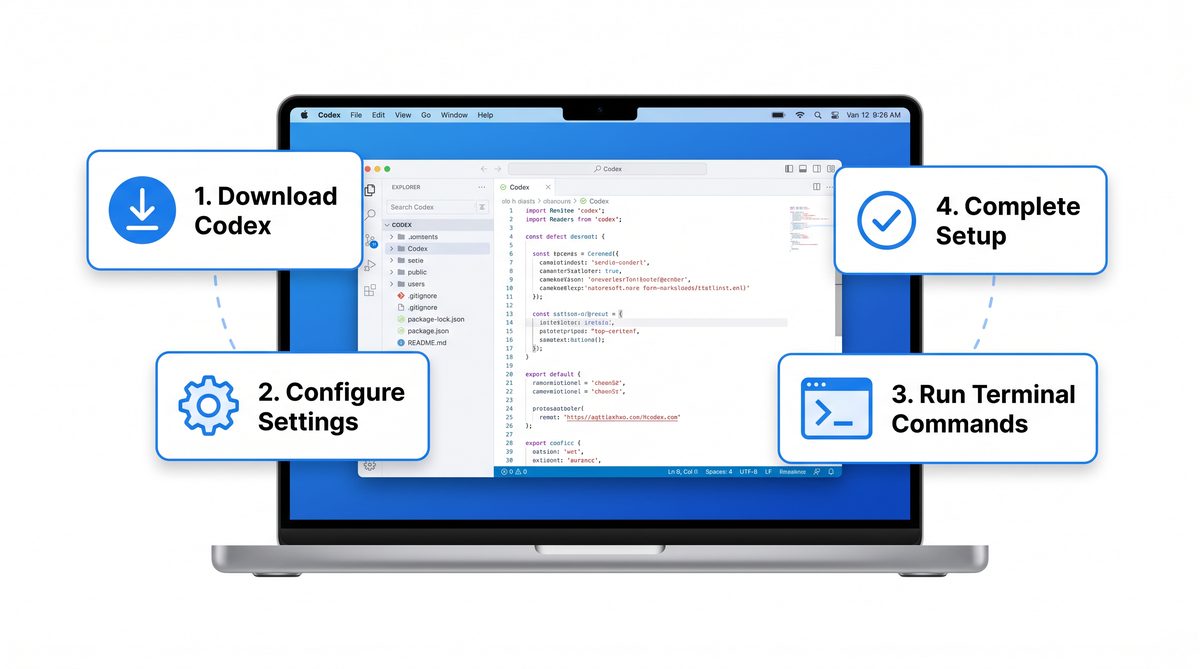
- What it is: A hands-on tutorial for setting up and using OpenAI Codex with Computer Use to automate desktop workflows.
- Who it’s for: Developers and power users ready to deploy their first AI desktop agent.
- What you’ll build: A sandboxed Codex agent that can browse, edit documents, and orchestrate multi-app workflows.
- Requirements: ChatGPT Pro ($100/mo), a sandbox VM (VirtualBox or UTM), Codex CLI installed.
- Bottom line: 30–60 minutes of setup, then you have a working AI desktop agent for repeatable tasks.
✓ Instant access✓ No spam✓ Unsubscribe anytime
In the rapidly evolving landscape of artificial intelligence, OpenAI Codex stands out as a transformative technology designed to revolutionize programming and computer use. As an advanced AI system built on the foundations of GPT models, Codex is capable of understanding natural language prompts and generating high-quality source code across a wide variety of programming languages and environments. This ability enables developers, automation specialists, and even non-technical users to leverage AI for accelerating software development, automating repetitive tasks, and enhancing learning experiences. The profound implications of Codex extend not only to professional software engineering but also to education, research, and productivity enhancement.
This comprehensive tutorial aims to guide readers through the entire process of setting up, utilizing, and integrating OpenAI Codex into their daily development workflows. From understanding the core features and supported languages to configuring an optimal environment and writing effective prompts, this article covers every essential aspect. Additionally, it delves into advanced topics such as fine-tuning, cost management, ethical considerations, and best practices to ensure safe and efficient use of Codex-powered solutions.
Whether you are an experienced developer seeking to augment your coding capabilities, a beginner eager to explore AI-assisted programming, or a technology enthusiast interested in the intersection of AI and computer use, this tutorial is tailored to provide you with in-depth knowledge and actionable insights. Prerequisites include a basic understanding of programming concepts, familiarity with command-line interfaces, and a willingness to engage with AI APIs. By the end of this tutorial, you will be equipped with the skills necessary to harness the power of OpenAI Codex for a broad spectrum of computer use cases.
1. Understanding OpenAI Codex
1.1 What is OpenAI Codex?
OpenAI Codex is a state-of-the-art artificial intelligence system developed by OpenAI that specializes in interpreting natural language instructions and generating corresponding source code. Launched as an evolution of the GPT (Generative Pre-trained Transformer) family, Codex specifically focuses on programming tasks, enabling users to write code by simply describing their intent in everyday language. The origins of Codex trace back to earlier iterations of GPT models, notably GPT-3, which demonstrated strong natural language understanding but were not fine-tuned specifically for code generation. Recognizing the vast potential of AI to assist with coding, OpenAI introduced Codex as a model trained on a diverse dataset of public source code repositories, documentation, and programming-related texts.
The distinction between Codex and its GPT predecessors lies primarily in its specialization and training data. While GPT models excel at generating human-like text for a variety of tasks including writing, summarization, and translation, Codex is optimized to comprehend programming logic, syntax, and conventions. This specialization enables Codex to generate syntactically correct, contextually relevant code snippets, complete existing code, and even explain complex code segments in plain English. Consequently, Codex serves as a powerful assistant for developers, capable of accelerating coding workflows and reducing the cognitive load associated with remembering language-specific syntax or library functions.
1.2 Core Features and Use Cases
OpenAI Codex offers a robust suite of features designed to enhance the programming experience across multiple dimensions. Foremost among these is its ability to generate code snippets directly from natural language prompts. By describing a desired function or algorithm in conversational terms, users can obtain ready-to-use code, thereby expediting development cycles. This capability is invaluable for both novice programmers who may struggle with syntax and seasoned developers who seek rapid prototyping.
Another critical feature of Codex is its aptitude for code completion and suggestion. Integrated within popular code editors, Codex can predict the next lines of code, propose function implementations, or suggest improvements in real-time. This reduces typographical errors and enables developers to focus on higher-level design decisions. Additionally, Codex can analyze existing codebases to provide explanations and generate documentation, which is instrumental in maintaining code clarity and facilitating onboarding of new team members.
Beyond coding assistance, Codex plays a significant role in automation and scripting. It can generate scripts to automate repetitive tasks, manipulate data, or interface with APIs, thereby freeing up human resources for more complex problem-solving. Its versatility extends to educational domains where it supports interactive coding exercises, debugging tutorials, and personalized learning paths.
1.3 Supported Programming Languages and Environments
One of Codex’s strengths is its broad language support, enabling it to assist across a diverse range of programming environments. It supports major languages such as Python, JavaScript, Java, C++, C#, Ruby, Go, TypeScript, Swift, and many others. This extensive coverage is due to training on a wide variety of public repositories and code examples, allowing Codex to understand language-specific idioms, libraries, and frameworks.
In addition to language versatility, Codex integrates seamlessly with various Integrated Development Environments (IDEs) and platforms. For instance, VS Code extensions powered by Codex provide inline code suggestions and completions. Additionally, Codex can be accessed via RESTful APIs, enabling integration into custom tools, CI/CD pipelines, and cloud-based development environments. This flexibility allows organizations and individual developers to embed AI-powered coding capabilities into their preferred workflows without significant disruption.
Such integration possibilities enable Codex to function as a collaborative partner in software projects, enhancing productivity and code quality regardless of the development environment or programming language in use. This adaptability also encourages experimentation and innovation across different sectors and project types.
2. Setting Up Your Environment for Codex
Get Free Access to 40,000+ AI Prompts
Join 40,000+ AI professionals. Get instant access to our curated Notion Prompt Library with prompts for ChatGPT, Claude, Codex, Gemini, and more — completely free.
Get Free Access Now →No spam. Instant access. Unsubscribe anytime.
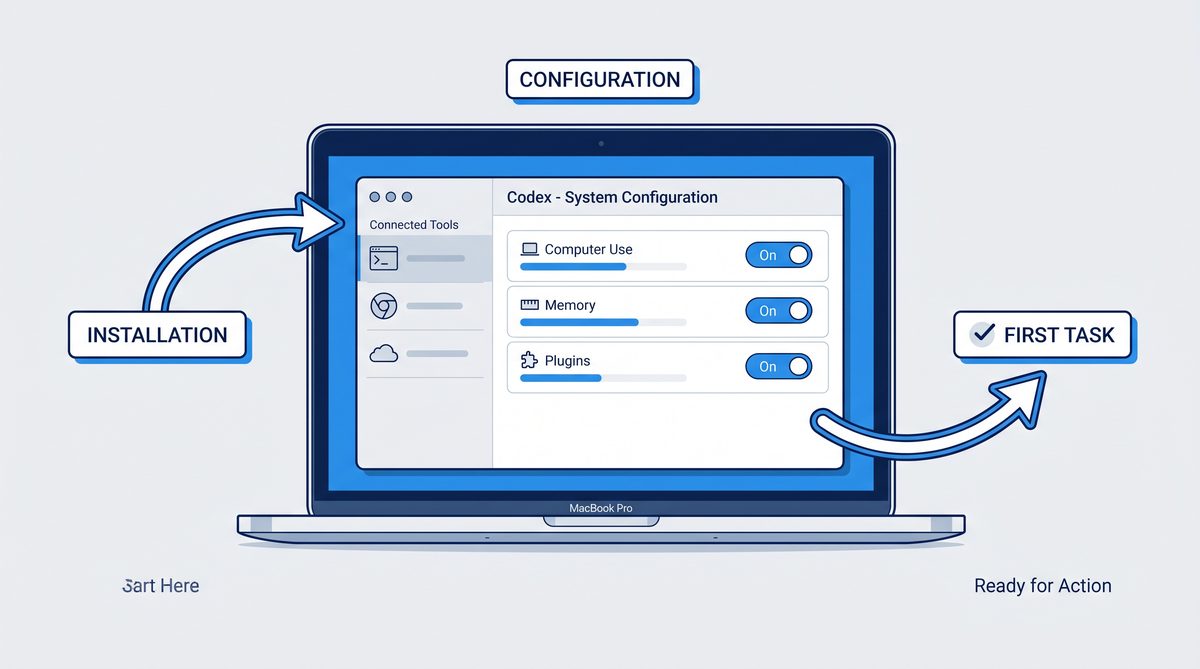
2.1 Creating an OpenAI Account and API Access
To begin utilizing OpenAI Codex, the first essential step is to create an OpenAI account and obtain API access. This process starts at the official OpenAI website, where users can sign up by providing necessary personal and payment information, depending on the chosen usage plan. OpenAI offers various subscription tiers, including free trial credits, pay-as-you-go options, and enterprise plans tailored for large-scale deployments. Understanding these options upfront is crucial for managing costs effectively.
After account creation, users must generate an API key, which serves as a secure token to authenticate requests to OpenAI’s services. API keys are confidential and should be stored securely to prevent unauthorized access. OpenAI’s dashboard provides detailed usage statistics, billing information, and controls to regenerate or revoke keys as needed. It is also important to familiarize oneself with the API usage limits, rate restrictions, and pricing to avoid unexpected interruptions during development.
2.2 Installing Required Tools and SDKs
Once API access is secured, the next step involves installing the necessary software tools and SDKs to interact with Codex programmatically. Python is the most commonly used language for this purpose due to its extensive ecosystem and simplicity. Installing Python 3.7 or later is recommended, along with package management tools such as pip.
The OpenAI Python SDK is the official library that facilitates communication with Codex APIs. Installation can be completed via the command:
| Command | Description |
|---|---|
pip install openai |
Installs the OpenAI Python SDK for API interactions |
Alternative SDKs and CLI tools exist for other programming languages like Node.js, Java, and Ruby, enabling integration into diverse technology stacks. Users should select the SDK that best fits their development environment and project requirements. Additionally, OpenAI provides REST API endpoints that can be called directly via HTTP requests, offering flexibility for integration into custom workflows and non-Python applications.
2.3 Configuring Your Development Environment
Proper configuration of the development environment is critical to ensure secure and efficient communication with OpenAI’s services. One best practice is to set environment variables to store API keys rather than hardcoding them into source code, which mitigates the risk of accidental exposure. For example, in Unix-like systems, users can add the following line to their shell profile:
export OPENAI_API_KEY="your_api_key_here"
In Windows environments, environment variables can be configured via the System Properties or PowerShell commands. Developers can then access these variables within their code to authenticate API requests securely.
Furthermore, installing recommended IDE plugins enhances productivity. For example, Visual Studio Code offers extensions that integrate OpenAI Codex features such as inline completions and documentation generation. These extensions typically require API key configuration and provide user-friendly interfaces to interact with the AI assistant directly within the coding environment. Popular IDEs including JetBrains’ suite and Sublime Text also support customized plugin development to leverage Codex capabilities.
2.4 Testing Your Setup with a Basic API Call
After completing the installation and configuration steps, it is prudent to perform a simple test to verify that the environment is correctly set up and Codex is accessible. A basic Python script to query Codex might look like the following:
import os
import openai

openai.api_key = os.getenv("OPENAI_API_KEY")

response = openai.Completion.create(
    engine="code-davinci-002",
    prompt="Write a Python function that returns the Fibonacci sequence up to n",
    max_tokens=100,
    temperature=0.5
)

print(response.choices[0].text.strip())
This script sets the API key from an environment variable, sends a prompt to generate a Fibonacci function in Python, and prints the resulting code snippet. The engine parameter specifies the Codex version optimized for code generation. Adjustments to parameters like max_tokens and temperature control the length and creativity of the output.
If the code executes without errors and returns a valid function, the setup is complete. Common issues include invalid API keys, network connectivity problems, or missing dependencies. Error messages returned by the API provide guidance to troubleshoot these problems effectively.
Successful completion of this step confirms readiness to begin leveraging OpenAI Codex for practical programming tasks and automation.
Codex setup3. Writing Code with OpenAI Codex
3.1 Generating Code Snippets from Natural Language Prompts
One of the most powerful capabilities of OpenAI Codex is its ability to transform natural language instructions into executable code snippets. Crafting effective prompts is essential to maximizing the accuracy and relevance of the generated code. A well-designed prompt should be clear, concise, and provide sufficient context to guide Codex’s output.
Starting with simple prompts, users can instruct Codex to write functions or scripts that perform specific tasks. For example, a prompt such as “Create a Python function that calculates the factorial of a number” will typically result in a correct implementation. More complex tasks require detailed descriptions, including constraints, input/output formats, and edge cases. For instance, “Write a JavaScript function that filters an array of objects to only include those with an age greater than 30 and sorts them by last name ascending” gives Codex a precise directive.
Prompt engineering techniques can further improve results. These include providing examples of desired input and output, specifying the programming language explicitly, and requesting comments or explanations within the code. Iterative refinement of prompts based on the output quality is a recommended practice to achieve optimal code generation.
3.2 Using Codex for Code Completion and Suggestions
Codex can be integrated into code editors to offer real-time code completions and suggestions. This feature resembles traditional autocomplete functionality but is significantly more advanced due to Codex’s deep understanding of context and intent. Developers can type partial code or comments, and Codex will propose entire lines or blocks that logically follow.
Many IDEs support this integration via extensions or plugins, allowing Codex to complement native language servers and linters. To improve suggestion accuracy, developers should maintain well-structured codebases, use descriptive variable names, and provide ample contextual information through comments. Additionally, configuring Codex parameters such as temperature and top-p sampling can influence the creativity versus determinism balance in suggestions.
Using Codex for inline suggestions accelerates coding speed, reduces syntax errors, and introduces developers to idiomatic constructs or libraries they might not be familiar with. This feature is particularly beneficial in large or unfamiliar codebases where understanding every nuance is challenging.
3.3 Debugging and Refactoring Code with Codex Assistance
Beyond generating new code, OpenAI Codex excels at assisting with debugging and refactoring existing code. Developers can submit code snippets along with queries such as “Identify any errors in the following Python function” or “Refactor this JavaScript code to improve readability and performance.” Codex analyzes the input and provides diagnostic feedback or improved code versions.
In debugging scenarios, Codex can detect common issues such as syntax errors, logical flaws, or inefficient constructs. It can also suggest test cases or edge conditions that the original code does not handle. When refactoring, Codex promotes best practices by reorganizing code, simplifying complex expressions, and introducing modularization.
Using Codex in this capacity reduces time spent on manual code review and accelerates the improvement cycle. However, it remains critical for developers to validate and test Codex’s suggestions thoroughly to ensure correctness and maintainability.
3.4 Automating Repetitive Coding Tasks
Codex’s ability to generate bulk code snippets enables automation of repetitive programming tasks. For example, generating boilerplate code for project scaffolding, creating CRUD operations for database entities, or writing unit tests for multiple functions can be accomplished by crafting batch prompts or scripting Codex API calls.
Automation workflows may involve templates where variable components are programmatically inserted into prompts to generate customized code variations. This approach saves significant development time and ensures consistency across large codebases. For instance, a developer can automate the generation of REST API endpoints by iterating over a list of resource names and feeding these as dynamic prompts to Codex.
Additionally, Codex can assist in creating automation scripts to manipulate files, interact with system processes, or integrate with third-party services. These scripts can be generated, tested, and iterated rapidly, streamlining tasks that traditionally require manual scripting expertise.
computer use tutorial🕐 Instant∞ Unlimited🎁 Free
4. Building a Workflow Around Codex
4.1 Integrating Codex into Your Daily Development Cycle
To fully leverage OpenAI Codex, it is essential to build a cohesive workflow that incorporates the AI assistant into everyday development activities. One effective strategy is to combine Codex-generated code with version control systems such as Git. Developers can use Codex to draft initial implementations, which are then committed to branches for review and testing. This preserves audit trails and facilitates collaborative development.
Code review processes also benefit from Codex integration. Reviewers can use Codex to understand unfamiliar code segments by querying explanations, or to verify the logic and security implications of contributed code. This collaborative synergy enhances code quality, reduces bugs, and accelerates feature delivery.
Moreover, Codex can be embedded into Continuous Integration/Continuous Deployment (CI/CD) pipelines to automate test generation, code formatting, or documentation updates. These integrations create a seamless ecosystem where AI assists at multiple stages, from development to deployment, ensuring consistency and reducing manual overhead.
4.2 Using Codex for Learning and Skill Improvement
OpenAI Codex is a valuable educational resource for programmers seeking to improve their skills. By interacting with Codex, learners can receive instant feedback on coding exercises, understand best practices, and explore unfamiliar languages or frameworks. Codex can generate tailored practice problems, provide step-by-step solutions, and elucidate complex concepts in plain language.
Interactive tutorials powered by Codex enable hands-on learning experiences where users write code, receive AI-generated hints, and iteratively refine their solutions. This approach fosters deeper understanding compared to passive reading or video tutorials. Furthermore, Codex’s ability to explain code helps demystify advanced topics and encourages curiosity-driven exploration.
4.3 Managing API Costs and Rate Limits
Given that OpenAI Codex operates via API calls billed based on usage, managing costs and adhering to rate limits is critical for sustainable deployment. Developers should monitor their API consumption through OpenAI’s dashboard and implement logging within their applications to track call frequency and associated expenses.
Optimizing prompts to be concise and focused helps reduce token usage, thereby lowering costs. Combining multiple requests into batch calls or caching frequent responses can prevent redundant API calls. Additionally, developers can set usage alerts and quotas to avoid unexpected overruns.
Understanding rate limits is important to prevent throttling or service interruptions. Strategies such as exponential backoff, request queuing, and prioritization of critical API calls ensure reliable operation even under heavy load. Thoughtful management of API interactions balances performance, cost-efficiency, and user experience.
5. Advanced Usage and Customization
5.1 Fine-tuning Codex for Specific Domains
While OpenAI Codex provides impressive general-purpose capabilities, fine-tuning the model on domain-specific datasets can significantly enhance its performance for specialized applications. Fine-tuning involves training the base Codex model on curated examples that reflect the vocabulary, style, and conventions of a particular industry or project.
The process begins with gathering a high-quality dataset representative of the target domain, including proprietary codebases, documentation, and domain-specific patterns. This data must be preprocessed and formatted according to OpenAI’s guidelines. Subsequently, the fine-tuning job is submitted via OpenAI’s API or platform tools, specifying training parameters such as epochs, learning rate, and validation metrics.
Fine-tuned models exhibit superior accuracy in generating relevant code snippets, adhering to organizational standards, and understanding bespoke APIs or frameworks. This customization is especially beneficial for enterprises requiring tailored coding assistants that align closely with internal workflows and coding practices.
5.2 Creating Custom Prompt Templates and Workflows
To streamline repetitive interactions with Codex, developers can design reusable prompt templates that standardize input formats and expected outputs. These templates serve as frameworks where variable components are dynamically inserted, enabling consistent and reliable code generation across diverse tasks.
For example, a prompt template for generating REST API endpoints might include placeholders for resource names, HTTP methods, and validation rules. Automation scripts can populate these placeholders programmatically and send the resulting prompts to Codex, facilitating mass code generation with minimal manual intervention.
Such workflows improve efficiency, reduce errors, and foster best practices by encapsulating organizational knowledge within prompt designs. Developers should maintain repositories of prompt templates and document their usage to maximize team-wide benefits.
5.3 Integrating Codex with Other AI Tools and APIs
Building sophisticated AI-powered applications often involves combining Codex with other AI services and data processing APIs. For instance, integrating natural language processing (NLP) tools enables richer understanding of user queries before passing refined prompts to Codex. Similarly, data analytics APIs can provide contextual information that informs code generation tailored to specific datasets.
End-to-end applications might incorporate Codex for code synthesis, a chatbot interface for user interaction, and database APIs for persistent storage. This multi-component architecture leverages the strengths of different AI systems, creating robust solutions that automate complex workflows and provide intelligent assistance.
Developers should design modular interfaces with clear API contracts to facilitate smooth communication between components. Security considerations such as authentication, data privacy, and rate limiting must be addressed holistically to ensure reliable and compliant operation.
OpenAI desktop6. Best Practices, Limitations, and Ethical Considerations
6.1 Ensuring Code Quality and Security
Despite Codex’s impressive capabilities, it is imperative to rigorously validate all AI-generated code before deployment. Automated unit tests, static analysis tools, and peer code reviews help detect bugs, vulnerabilities, or suboptimal implementations. Developers should treat Codex-generated code as a starting point that requires human oversight and refinement.
Security risks include the inadvertent introduction of unsafe constructs such as SQL injection vulnerabilities, improper authentication, or insecure data handling. Codex may not be aware of the latest security best practices or organizational policies. Therefore, integrating security scanning tools within the development pipeline is recommended to catch potential issues early.
Maintaining clear documentation and traceability of AI-assisted code generation decisions supports accountability and facilitates future maintenance. Establishing coding standards and guidelines for AI usage ensures consistent quality across teams and projects.
6.2 Understanding Limitations of Codex
While Codex is a powerful assistant, it is not infallible. Common failure modes include generating syntactically correct but logically flawed code, misunderstanding ambiguous prompts, or producing outputs that do not align with user intent. These limitations necessitate careful prompt construction and thorough testing of AI-generated artifacts.
Codex’s knowledge is bounded by its training data cutoff and may lack awareness of recent language features, libraries, or security advisories. Users should supplement AI assistance with up-to-date references and human expertise. Additionally, Codex may inadvertently perpetuate biases present in training datasets, underscoring the need for critical evaluation and ethical usage.
6.3 Ethical Use of AI-generated Code
Ethical considerations surrounding AI-generated code encompass issues such as attribution, licensing, and responsible usage. Developers must respect intellectual property rights and avoid generating or distributing code that infringes upon proprietary licenses or contains malicious components.
Transparency about the use of AI in code creation fosters trust and encourages best practices in software development. Organizations should establish policies regarding AI assistance, including guidelines for disclosure, review, and compliance.
Furthermore, avoiding bias and misuse entails careful monitoring of Codex outputs to prevent discriminatory or harmful code generation. Developers are responsible for ensuring that AI tools enhance inclusivity, security, and fairness within software ecosystems.
Useful Links
- GPT-Rosalind and GPT-5.4-Cyber: How OpenAI’s Specialized Models Are Reshaping Industries
- How 3,000 Government Employees Transformed Public Services Using ChatGPT Enterprise
- OpenAI Codex Major Update: Desktop Computer Use, Subagents, and Persistent Memory
- The Rise of AI Super Apps: How OpenAI and Anthropic Are Reshaping Development
- The Ultimate Prompt Engineering Framework for ChatGPT, Claude, and Codex in 2026
Related Reading
Conclusion
OpenAI Codex represents a significant advancement in AI-assisted programming and computer use, offering unprecedented capabilities to generate, complete, and explain code across numerous languages and environments. This tutorial has provided a detailed roadmap from understanding the fundamentals of Codex to setting up a robust development environment, writing effective prompts, building integrated workflows, and exploring advanced customization options.
By adhering to best practices, managing costs, and considering ethical implications, developers and organizations can harness Codex to accelerate innovation, improve code quality, and foster continuous learning. The journey does not end here; ongoing experimentation, community engagement, and knowledge sharing will unlock further potential of AI-driven coding assistants.
We encourage readers to explore the rich ecosystem of resources, participate in forums, and contribute to the evolving dialogue on AI in software development. Embracing OpenAI Codex as a collaborative partner can transform traditional coding paradigms and empower developers to achieve new heights of productivity and creativity.
Frequently Asked Questions
What do I need to run Codex Computer Use?
A ChatGPT Pro subscription or Codex API access (Tier 3+), the Codex CLI installed, and ideally a sandboxed VM (VirtualBox, VMware, UTM, or a cloud VM like GCP/AWS). Running on your main machine is technically possible but discouraged because the agent has full desktop control.
How do I install Codex CLI?
Run the install command: `curl -fsSL https://codex.ai/install.sh | sh` on macOS/Linux, or `iwr -useb codex.ai/install.ps1 | iex` on PowerShell. Authenticate with `codex login`, then verify with `codex –version`. Full setup takes about 5 minutes.
What's the best sandbox for Codex Computer Use?
For local work: UTM on Mac, VirtualBox on Windows/Linux, both running Ubuntu 24.04 or Windows 11. For cloud work: a GCP or AWS instance with Xvfb and VNC. The sandbox should have limited network access, no access to production credentials, and snapshots enabled so you can roll back quickly.
How do I give Codex access to my applications?
Launch Codex inside the sandbox VM with `codex computer-use`. It inherits access to whatever apps are running in that session. For sensitive apps (email, banking, production admin panels), don't install or log in — keep them off the sandbox entirely.
What workflows does Computer Use handle well?
Reliably: web research, form filling, data extraction to spreadsheets, document editing in Google Docs / Word, email triage, light scheduling, and cross-app information flow. Less reliably: anything time-critical, games, pixel-precise design work, or CAPTCHA-heavy sites.
Can I write my own workflows for Codex Computer Use?
Yes. The Codex SDK lets you define structured tasks in Python or TypeScript with explicit steps, verifications, and retry logic. This is how most teams productionize agent work — they start with natural-language tasks and progressively codify the reliable ones into explicit workflows.
Get Free Access to 40,000+ AI Prompts
Join 40,000+ AI professionals. Get instant access to our curated Notion Prompt Library with prompts for ChatGPT, Claude, Codex, Gemini, and more — completely free.
Get Free Access Now →No spam. Instant access. Unsubscribe anytime.
