
OpenAI and Dell Codex Enterprise Partnership: Complete Guide to On-Premises AI Agent Deployment
Author: Markos Symeonides
Introduction: Revolutionizing Enterprise AI with OpenAI and Dell
In today’s digital economy, artificial intelligence (AI) continues to redefine business processes, customer engagement, and operational efficiency. The groundbreaking partnership between OpenAI and Dell Technologies, announced on May 18, 2026, represents a paradigm shift in how enterprises access, secure, and harness AI power within their own controlled infrastructures.
This collaboration centers on deploying OpenAI’s Codex—an advanced AI model renowned for code generation and versatile automation capabilities—natively within hybrid and fully on-premises environments. By doing so, organizations achieve a new standard in AI application: combining powerful machine intelligence with strict compliance, enhanced security, and low-latency performance.
This exhaustive guide delves into the partnership’s strategic vision, technological underpinnings, expansive use cases, detailed deployment considerations, and tangible business outcomes. Targeted at IT leaders, AI practitioners, and enterprise decision-makers, it provides a comprehensive roadmap to realizing the full potential of AI agents deployed on-premises.
1. Partnership Overview: Combining AI Innovation with Enterprise-Grade Infrastructure
Strategic Collaboration in the AI Landscape
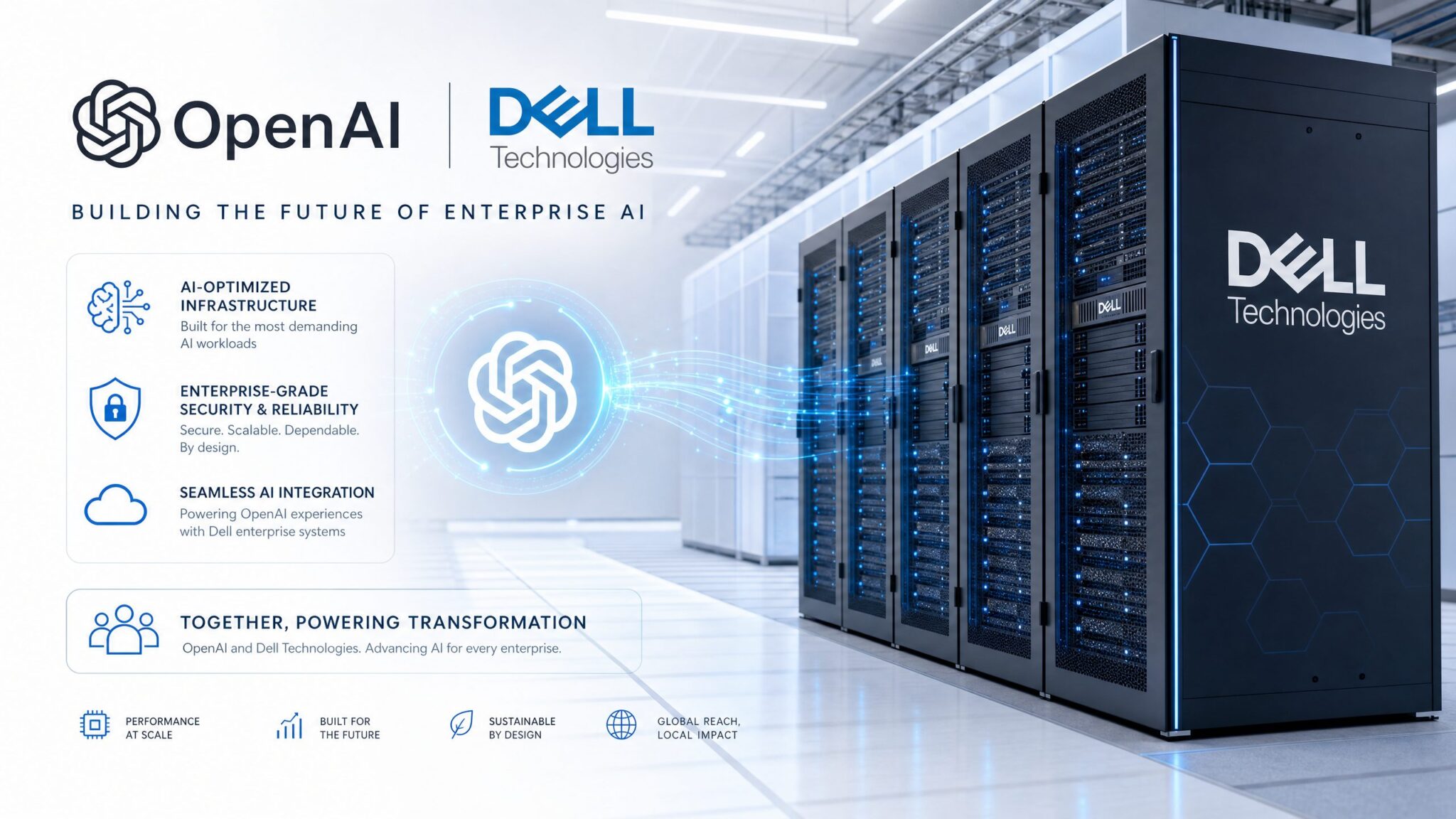
The alliance between OpenAI and Dell Technologies represents a fusion of AI innovation with trusted enterprise-grade infrastructure. OpenAI brings its cutting-edge AI research and breakthroughs, especially with Codex, which extends beyond developer assistance into broader automation and intelligent decision-making. Dell contributes its industry-leading hardware solutions and AI operational frameworks, designed to meet rigorous enterprise demands for scalability, security, and governance.
Codex, which currently supports over 4 million developers weekly, serves as the linchpin—enabling code synthesis, natural language understanding, and AI agent orchestration. Integrating Codex within Dell’s AI Data Platform and Dell AI Factory embeds these AI capabilities tightly with data storage, lifecycle management, and compliance monitoring. This marriage addresses prevalent challenges such as stringent data sovereignty laws, industrial latency constraints, and the integration burden enterprises commonly encounter.
Key Objectives of the Partnership
- Enhance Data Security and Governance: Empower organizations to run AI workloads within their own data centers, ensuring that sensitive enterprise information never leaves secured perimeters.
- Boost Operational Efficiency: Automate complex tasks—from software development lifecycles to customer relationship management—by embedding AI agents in business workflows.
- Facilitate Scalable and Flexible AI Deployment: Support hybrid cloud architectures that balance on-premises control with cloud scalability—ensuring workload placement optimizes both cost and security.
- Extend AI Capabilities Beyond Development: Foster AI adoption across multiple business units, including sales, marketing, product development, and IT operations, to extract diverse enterprise value.
Enterprise AI enthusiasts can deepen their understanding of integration strategies by consulting Understanding Enterprise AI Integration Strategies.
2. Technical Architecture: Seamless Integration of Codex within Dell’s AI Ecosystem
Overview of the Deployment Architecture
The core technological foundation hinges on embedding Codex within Dell’s AI-centric infrastructure, tailored expressly for hybrid and on-premises deployments. This architecture strikes a balance between meeting strict IT compliance needs and delivering the high throughput required for sophisticated AI inference and training.
The architecture includes several primary components, each offering distinct functions and benefits:
| Component | Functionality | Enterprise Benefits |
|---|---|---|
| Dell AI Data Platform | Comprehensive data management, including secure storage, data lineage tracking, and strict governance enforcement. | Ensures regulatory compliance such as GDPR, HIPAA, and CCPA while enabling secure, auditable AI data access. |
| Dell AI Factory | Orchestrates AI model lifecycle operations—training, fine-tuning, testing, validating, and deployment. | Automates MLOps workflows, streamlining updates and continuous integration of AI models within enterprise systems. |
| ChatGPT Enterprise Integration | Augments Codex with conversational AI capabilities, enabling natural language interactions alongside code-related task automation. | Facilitates cross-functional AI usages, empowering non-technical teams to benefit from AI-assisted workflows. |
Hybrid and On-Premises Configuration Benefits
- Low Latency AI Processing: Placing AI inference engines close to data sources significantly reduces response times—vital for real-time analytics and decision-making.
- Data Residency and Compliance: Guarantees that sensitive data remains on-premises, satisfying jurisdictional and organizational policies.
- Flexible Scaling Strategies: Facilitates scaling on local infrastructure, with the option to burst workloads into cloud environments when necessary.
For intricate design details and architectural best practices, review Enterprise AI Automation Case Studies 2026.
3. Enterprise Use Cases: Driving Impact with Codex-Powered AI Agents
Expanded Applications Beyond Code Generation
While Codex is widely recognized for code generation, its integration with Dell’s AI platform extends its impact across a broad spectrum of enterprise applications. AI agents deployed on-premises can automate, augment, and optimize myriad business processes that traditionally demand significant human effort.
| Use Case | Description | Business Impact |
|---|---|---|
| Automated Report Generation | Synthesizes data from multiple sources into tailored, actionable reports with natural language explanations. | Reduces manual processing time, expedites data-driven decision-making, and enhances report accuracy. |
| Lead Qualification & CRM Automation | AI-driven automated classification, prioritization, and routing of sales leads within CRM platforms. | Improves sales pipeline efficiency and conversion rates by focusing resources on high-quality leads. |
| Product Feedback Analysis | Natural language processing categorizes customer feedback, highlights trends, and routes issues to relevant teams. | Accelerates product iteration cycles and enhances customer satisfaction by promptly addressing concerns. |
| AI-Generated Follow-Up Communications | Automatically crafts personalized messages for sales prospects and customer support inquiries. | Increases customer engagement, retention, and builds stronger relationships. |
| Data Preparation & Test Automation | Automates data cleansing, transformation workflows, and generates test cases to support agile software development. | Reduces development cycle times, ensures higher software quality, and lowers defect rates. |
Industry Verticals Poised to Benefit
Enterprises dealing with compliance-sensitive data, such as finance, healthcare, government agencies, and manufacturing firms, will gain disproportionately from on-premises Codex deployment. The ability to keep data securely in-house while enabling powerful AI-driven automation enhances both their regulatory standing and operational responsiveness.
Those interested in the transformative impact of AI on small and medium business operations can explore Claude for Small Business 2026: How Anthropic’s AI Is Transforming SMB Operations.
4. Deployment Considerations: Best Practices for Enterprise Adoption
Infrastructure Setup and Requirements
Successful deployment of Codex-powered AI agents at scale demands a carefully architected infrastructure that balances performance, security, and compliance:
- Compute Resources: Leverage GPU-accelerated servers (e.g., NVIDIA A100, H100) with high CPU core counts and at least 64GB+ RAM alongside NVMe SSDs to ensure fast model training and low-latency inference.
- Network and Security Configurations: Utilize encrypted communication channels (TLS 1.3 or higher), secure VPNs for remote access, enterprise firewalls, and enforce multi-factor authentication (MFA) and role-based access controls (RBAC) for all AI services.
- Compliance Monitoring: Employ monitoring tools to maintain real-time verification of compliance with regulations such as GDPR, HIPAA, and CCPA throughout AI data processing and model lifecycle activities.
Integration and Workflow Orchestration
Integrating Codex-powered AI agents seamlessly with legacy ERP systems, databases, and custom enterprise applications is paramount. Dell AI Factory simplifies this via a robust set of APIs, event-driven publish-subscribe mechanisms, and ready-made connectors. This flexibility enables building complex workflows—such as automated lead routing or incident ticket prioritization—without disrupting existing IT ecosystems.
Model Lifecycle Management
Maintaining AI model efficacy requires ongoing management:
- Continuous Training: Updating models with new enterprise data to adapt to changing business contexts and evolving data patterns.
- Fine-Tuning: Customizing Codex to enterprise-specific languages, terminologies, and use cases for improved accuracy.
- Validation and Testing: Systematic verification of model outputs to avoid biases, inaccuracies, or dangerous behaviors.
- Secure Deployment: Rolling out updated AI models seamlessly with minimum downtime and maintaining rollback capabilities.
Dell AI Factory capsulates these MLOps tasks by providing automated pipelines, dashboards, and alerting mechanisms ensuring trustworthy AI operations.
Organizational Change and User Adoption
- User Training: Conduct comprehensive training programs to familiarize employees with AI functionalities, limitations, and best practices.
- Governance Framework: Establish clear governance policies defining accountability, data ethics, and responsible AI use.
- Business Alignment: Align AI initiatives with strategic organizational goals, leveraging measurable KPIs to track ROI and foster executive sponsorship.
For a closer look at the AI deployment landscape and strategy, see OpenAI Launches $4 Billion Deployment Company to Embed AI Across Enterprise Operations.
Frequently Asked Questions (FAQ)
Q1: What types of data can Codex access in an on-premises deployment?
A1: Codex can securely access any structured or unstructured enterprise data stored within Dell AI Data Platform or linked legacy databases and storage repositories. Access is strictly controlled via permissions set by enterprise administrators.
Q2: Can the Codex integration support multi-cloud environments?
A2: Absolutely. The solution supports hybrid cloud models where workloads can run in on-prem data centers or in public cloud infrastructure, depending on enterprise preferences for cost, latency, and compliance.
Q3: How is data privacy maintained during AI model training?
A3: Data privacy is enforced through secure encryption, rigorous access control, and confining all data processing to the on-premises environment. This ensures sensitive data never traverses to external networks during training or inference workflows.
Q4: What are the minimum hardware requirements for deploying Codex on-premises?
A4: Minimum specifications typically include GPU-accelerated servers (such as NVIDIA A100 or H100), processors with multiple cores, at least 64 GB RAM, and high-speed NVMe storage arrays. Dell provides tailored reference architectures optimized for performance and scalability.
Q5: How does the partnership affect existing AI development workflows?
A5: Integration with Dell AI Factory’s APIs and lifecycle management tools streamlines current AI development cycles. It enables smoother model version control, automated testing, and continuous deployment, helping enterprises evolve MLOps maturity without disrupting existing processes.
Summary & Conclusion
The strategic partnership between OpenAI and Dell Technologies ushers in a new era of enterprise AI deployment by embedding Codex directly within hybrid and on-premises IT infrastructures. This synergy delivers unmatched AI capabilities alongside uncompromising enterprise data governance, creating a robust platform for digital transformation.
Organizations adopting this integrated solution stand to achieve accelerated automation, enhanced customer experiences, and improved productivity across diverse industries. The flexible, scalable architecture combined with comprehensive deployment best practices ensures that AI agents powered by Codex become practical, manageable, and secure tools within the enterprise technology stack.
For enterprises dedicated to future-proofing their operations, embracing this partnership’s offerings represents a critical step toward sustained competitive advantage in an AI-driven world.
Useful Links
- OpenAI Codex Official Research
- Dell Technologies AI & Machine Learning
- Gartner AI Insights for Enterprises
- NVIDIA GPU-Accelerated AI Applications
- Hybrid Cloud AI Strategies
- Microsoft AI Platform for Enterprises
- AWS Machine Learning Services
- IBM AI Overview and Industry Adoption
- Forrester Wave: Enterprise AI Platforms
