
The Rise of AI Coding Agents: How Codex and Claude Code Are Replacing Traditional Development Workflows
⚡ The Brief
- What it is: An analysis of how AI coding agents (Codex, Claude Code, Cursor, Devin) are replacing traditional development workflows in 2026.
- Who it’s for: Engineering leaders, developers, and CTOs planning their AI-coding strategy.
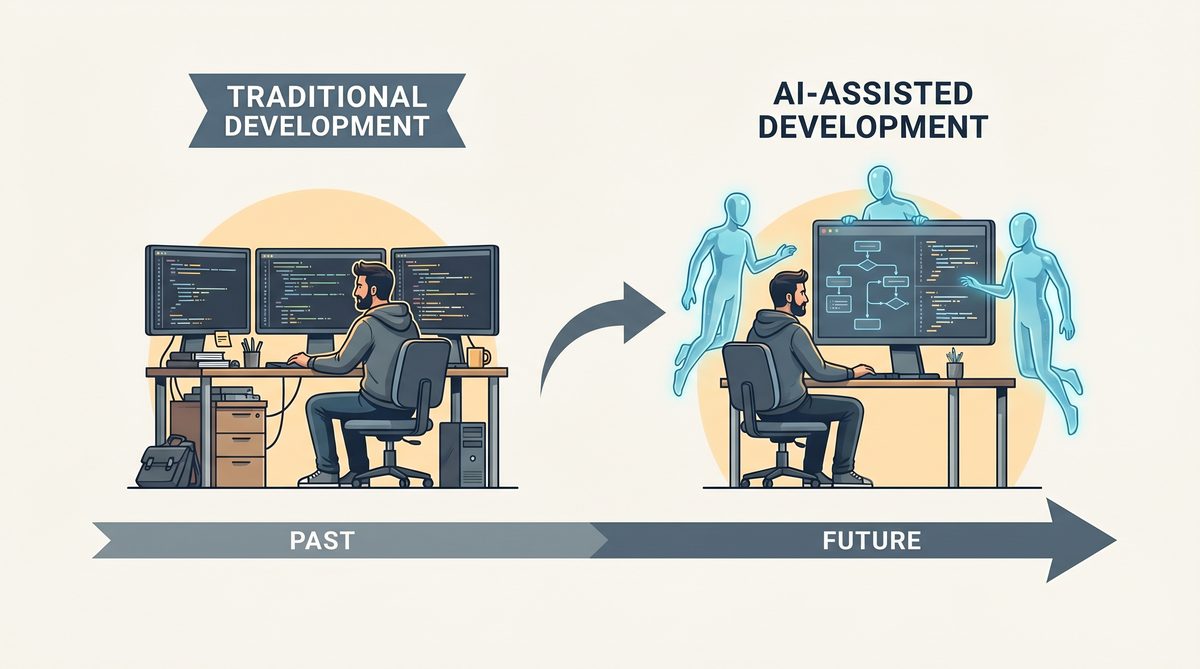
- Core shifts: From autocomplete → to pair-programmer → to autonomous agents executing multi-hour tasks.
- Who’s winning: Claude Code (agent quality), Cursor (IDE UX), Codex (ecosystem breadth).
- Bottom line: Individual productivity is up 30–60% for early adopters. Teams that don’t adopt by mid-2026 will fall meaningfully behind.
✓ Instant access✓ No spam✓ Unsubscribe anytime
The landscape of software development has undergone a profound transformation in recent years, driven largely by the emergence of artificial intelligence (AI) technologies. Among the most groundbreaking advancements is the introduction of AI coding agents—intelligent systems designed to assist, enhance, or even automate portions of the coding process. These agents harness powerful machine learning models to understand natural language inputs and generate functional code, fundamentally altering the way developers approach software creation. This article provides a comprehensive examination of AI coding agents, focusing on two of the most influential platforms in this domain: OpenAI’s Codex and Anthropic’s Claude Code.
AI coding agents represent a new paradigm in software engineering, blending the cognitive strengths of human developers with the computational prowess of AI. By translating natural language prompts into executable code, these agents serve as collaborators rather than mere tools, elevating productivity and reshaping workflows. Codex and Claude Code stand at the forefront of this revolution, each bringing unique design philosophies and technological innovations to the table.
The purpose of this article is to explore the evolution of traditional software development workflows, analyze the technical foundations and capabilities of Codex and Claude Code, and assess their broader impact on the development ecosystem. This detailed exploration will also address emerging challenges, real-world applications, and future trends, offering readers an authoritative resource on the transformative role of AI coding agents in modern software development.
1. Evolution of Software Development Workflows
1.1 Traditional Development Processes
For decades, software development has been characterized by structured, manual coding practices that demand meticulous attention to detail and a deep understanding of programming languages and system architectures. Developers typically write code line-by-line, often relying on integrated development environments (IDEs) such as Visual Studio, IntelliJ IDEA, or Eclipse to facilitate the process. These IDEs provide essential features like syntax highlighting, debugging tools, and version control integrations that help streamline development but still require significant human input.
Debugging, a critical component of the development lifecycle, traditionally involves identifying errors through testing, manual inspection, and iterative code refinement. Collaboration among development teams is managed through version control systems like Git, which enable multiple developers to contribute simultaneously while maintaining codebase integrity. Although these practices have enabled the creation of increasingly complex software systems, they are inherently time-consuming and susceptible to human error.
1.2 Challenges in Traditional Workflows
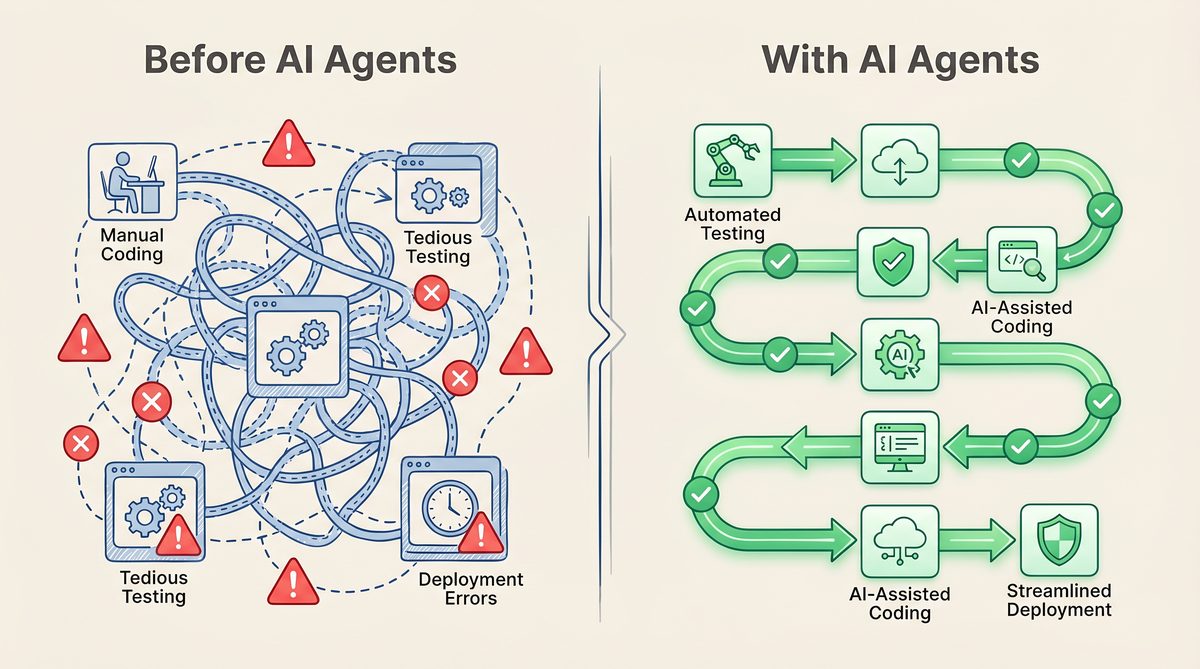
Despite the sophistication of established development processes, several challenges persist. Coding cycles often extend over long periods due to the necessity of writing, testing, and debugging extensive codebases. This time-intensive nature slows down feature delivery and can impede responsiveness to market demands.
Human error remains a significant obstacle. Even experienced developers are prone to bugs, logical flaws, and inefficiencies that can compromise software reliability and performance. Debugging these issues consumes substantial resources and can delay product releases.
Scaling development teams to meet growing project complexities introduces additional hurdles. Coordinating work across large groups requires robust communication and management strategies, and inconsistencies in coding styles or knowledge disparities can reduce overall efficiency. These challenges underscore the need for innovative solutions to augment traditional workflows.
1.3 Emergence of Automation and AI Tools
In response to these limitations, the software development community has progressively embraced automation. Early efforts included tools such as code generators, static analyzers, and automated testing frameworks that reduce repetitive tasks and improve code quality. Plugins integrated within IDEs began to offer rudimentary assistance, such as code snippets and syntax suggestions.
The advent of machine learning marked a turning point, enabling more sophisticated coding aids that learn from vast code repositories to provide intelligent assistance. These AI-powered tools can infer developer intent, predict code completions, and even suggest fixes for common errors. This shift laid the groundwork for AI coding agents, which leverage advanced natural language processing (NLP) and deep learning architectures to transform software development.
2. Overview of AI Coding Agents: Codex and Claude Code
Get Free Access to 40,000+ AI Prompts
Join 40,000+ AI professionals. Get instant access to our curated Notion Prompt Library with prompts for ChatGPT, Claude, Codex, Gemini, and more — completely free.
Get Free Access Now →No spam. Instant access. Unsubscribe anytime.
2.1 What is Codex?
OpenAI’s Codex is a state-of-the-art AI coding agent developed as an extension of the GPT (Generative Pre-trained Transformer) family of models. It specializes in translating natural language prompts into executable code across multiple programming languages. Codex’s architecture builds upon the deep transformer networks that power GPT-3, enabling contextual understanding of human language paired with extensive knowledge of programming syntax and semantics.
Codex supports over a dozen programming languages, including Python, JavaScript, Java, and C++, making it a versatile assistant for diverse development needs. Its key features include code generation from natural language descriptions, interactive code completion, and the ability to interpret and write complex algorithms. By integrating seamlessly into popular IDEs and platforms such as GitHub Copilot, Codex empowers developers to accelerate coding tasks, reduce errors, and explore creative solutions more efficiently.
2.2 What is Claude Code?
Claude Code is an AI coding agent crafted by Anthropic, a company focused on building safe and reliable AI systems. Unlike Codex, Claude Code emphasizes ethical AI design principles, interpretability, and minimizing unintended consequences. Its model architecture incorporates innovations aimed at comprehending developer intent with greater nuance and delivering code suggestions that align with best practices and security standards.
Claude Code’s design prioritizes transparency and controllability, enabling developers to understand why specific code snippets are generated and to adjust parameters accordingly. Functionally, it matches Codex in supporting multiple programming languages and offers robust debugging and optimization features. However, its unique focus on safety and interpretability makes Claude Code particularly suited for environments where code reliability and compliance are paramount.
2.3 Other Notable AI Coding Agents
Beyond Codex and Claude Code, the AI coding landscape includes several other notable agents such as GitHub Copilot, powered by Codex itself, and Tabnine, which utilizes deep learning to provide context-aware code completions. While these alternatives offer valuable capabilities, Codex and Claude Code distinguish themselves through their advanced architectures, broader language support, and emphasis on contextual understanding.
Their ability to generate complex code structures, perform intelligent debugging, and integrate tightly with development environments elevates them above simpler autocomplete tools. These distinctions position Codex and Claude Code as flagship examples of the next generation of AI coding agents transforming the software industry.
3. How AI Coding Agents Function
3.1 Natural Language Processing in Code Generation
At the core of AI coding agents like Codex and Claude Code lies advanced natural language processing (NLP) capabilities. These systems are trained on massive datasets containing human-written code and accompanying documentation, enabling them to learn the intricate relationships between language and programming constructs. When a developer inputs a natural language prompt—such as “Create a function to sort a list of integers”—the AI interprets the intent behind the request and generates corresponding code snippets.
This process involves several NLP techniques, including semantic parsing, intent recognition, and contextual embedding. By understanding the developer’s desired outcome, the agent can produce syntactically correct and logically coherent code that aligns with the prompt’s specifications. This natural language to code translation not only accelerates development but also democratizes programming by lowering entry barriers for non-experts.
3.2 Context Awareness and Code Completion
AI coding agents excel at leveraging the context provided by the existing codebase to deliver relevant and precise code completions. Unlike traditional autocomplete features that rely solely on lexical patterns, these agents analyze the surrounding code, variable types, function definitions, and comments to infer the appropriate next steps. This context awareness enables the generation of complex code blocks that integrate seamlessly with the developer’s work.
For example, if a developer is writing a class method, the AI can suggest implementations consistent with class attributes and previously defined functions. This intelligent autocompletion enhances productivity by reducing manual typing and minimizing syntactic errors, while also encouraging adherence to project-specific coding conventions.
3.3 Debugging and Code Optimization Capabilities
Beyond code generation, AI coding agents provide valuable debugging and optimization assistance. They can automatically detect common programming errors such as syntax mistakes, logical flaws, and security vulnerabilities by analyzing code patterns and known anti-patterns. Furthermore, these agents suggest fixes or improvements, often proposing more efficient algorithms or cleaner code structures.
This capability not only accelerates the identification and resolution of bugs but also promotes best practices in software design. Developers benefit from AI-generated insights that might otherwise require extensive manual review or expert consultation, ultimately enhancing software quality and maintainability.
3.4 Integration with Development Environments
Codex and Claude Code are designed for seamless integration with popular development environments, providing real-time interaction within IDEs through plugins and APIs. This integration allows developers to invoke AI assistance directly within their coding workflows, receiving instant suggestions, code completions, and debugging tips without context switching.
Such embedded AI functionality fosters an interactive coding experience, where developers can iteratively refine prompts, request explanations, and validate AI-generated code on the fly. This continuous feedback loop enhances usability and encourages widespread adoption of AI coding agents in professional settings.
🕐 Instant∞ Unlimited🎁 Free
4. Impact on Traditional Development Workflows
4.1 Reduction in Manual Coding Effort
The advent of AI coding agents has dramatically reduced the manual effort required in software development. By automating routine coding tasks, these agents enable developers to write code at unprecedented speeds. The ability to generate fully functional code snippets from descriptive prompts eliminates the need for laborious line-by-line programming, allowing teams to accelerate project timelines and focus on higher-value activities.
This acceleration is particularly beneficial for beginners and non-expert programmers, who can leverage AI assistance to overcome knowledge gaps and produce working code with minimal prior experience. Consequently, AI coding agents are fostering more inclusive development environments and expanding the pool of contributors to software projects.
4.2 Changes in Developer Roles and Responsibilities
With AI agents assuming responsibility for generating boilerplate code and handling routine tasks, the role of the developer is shifting towards supervision and validation. Developers increasingly act as reviewers and curators of AI-generated content, ensuring correctness, security, and alignment with project goals. This transition emphasizes higher-level skills such as software architecture design, system integration, and strategic decision-making.
The evolving dynamic encourages developers to develop expertise in guiding AI tools effectively, crafting precise prompts, and understanding AI limitations. Thus, AI coding agents are reshaping job descriptions and skill requirements, heralding a new era of human-AI collaboration in software engineering.
4.3 Enhancing Collaboration and Knowledge Sharing
AI coding agents contribute to improved collaboration within development teams by standardizing code quality and fostering knowledge dissemination. By generating consistent and well-documented code, these agents reduce variability caused by differing coding styles or experience levels among team members. This consistency facilitates smoother code reviews, easier onboarding of new developers, and more maintainable codebases.
Moreover, AI can assist in documenting code automatically, generating descriptive comments and summaries that enhance understanding across distributed teams. This capability strengthens collective code ownership and accelerates team productivity, making AI coding agents invaluable assets in collaborative development environments.
4.4 Potential Risks and Challenges
Despite their advantages, reliance on AI coding agents introduces potential risks. Over-dependence on AI-generated code may erode fundamental programming skills and critical thinking among developers. Blind acceptance of AI suggestions without rigorous validation can lead to security vulnerabilities, introducing exploitable flaws into software systems.
Privacy concerns also arise, especially when proprietary code or sensitive data is processed by cloud-based AI services. Ensuring data confidentiality and compliance with regulatory requirements is paramount. Furthermore, AI models may exhibit biases inherited from training data, resulting in suboptimal or inappropriate code recommendations that must be carefully managed.
Addressing these challenges requires establishing best practices for AI integration, including rigorous code review processes, secure data handling protocols, and ongoing evaluation of AI performance and fairness.
5. Case Studies and Real-World Applications
5.1 Software Startups Leveraging AI Coding Agents
Emerging software startups are among the earliest adopters of AI coding agents, capitalizing on their ability to boost development velocity and reduce operational costs. For instance, startups focused on rapid prototyping use Codex to quickly generate functional prototypes, accelerating product-market fit cycles. Similarly, companies specializing in niche applications leverage Claude Code’s safety features to ensure compliance with industry standards while maintaining agility.
These startups report significant improvements in developer productivity and innovation capacity, enabling lean teams to compete with larger organizations effectively. The integration of AI coding agents thus serves as a strategic differentiator in competitive startup ecosystems.
5.2 Large Enterprises and AI Integration
Large enterprises have begun incorporating AI coding agents into their extensive development pipelines to enhance efficiency and scalability. By automating routine coding and testing tasks, these organizations reduce bottlenecks in software delivery and improve time-to-market for critical applications.
For example, multinational technology firms integrate Codex-based solutions with their existing DevOps workflows to automate code reviews and security audits, ensuring consistent quality across sprawling codebases. Claude Code’s emphasis on transparency aligns well with enterprises’ regulatory and compliance requirements, facilitating safer adoption at scale.
5.3 Open Source Contributions and Community Impact
The open source community has also benefited from AI coding agents, which democratize access to programming expertise and accelerate contribution cycles. Developers with varying skill levels can utilize AI assistance to submit higher-quality code, enhancing project sustainability and innovation.
AI tools help maintainers manage growing repositories by suggesting fixes, generating tests, and improving documentation. This collaborative synergy between humans and AI fosters a more inclusive and dynamic open source ecosystem, expanding the reach and impact of software projects worldwide.
5.4 Educational Use Cases
In academic settings, AI coding agents serve as powerful educational tools for programming students. By providing instant feedback, code examples, and debugging assistance, these agents support personalized learning and help students grasp complex concepts more effectively.
Educators incorporate AI coding tools into curricula to enhance coding exercises, encourage experimentation, and reduce frustration associated with syntax errors. This integration promotes active learning and equips the next generation of developers with skills aligned to the evolving technological landscape.
6. Future Prospects and Trends
6.1 Advances in AI Coding Agent Technologies
The future of AI coding agents is poised for remarkable advancements, driven by improvements in model architectures and training methodologies. Emerging multimodal agents will combine text, code, and visual inputs to provide richer, more intuitive interactions. Conversational coding assistants will enable developers to engage in dialogues with AI, refining code iteratively and receiving explanations in natural language.
Enhanced reasoning capabilities and deeper contextual understanding will empower AI agents to tackle increasingly complex programming challenges, including architectural design and cross-domain integrations. These developments will blur the lines between human and machine creativity in software engineering.
6.2 Integration with DevOps and Continuous Delivery
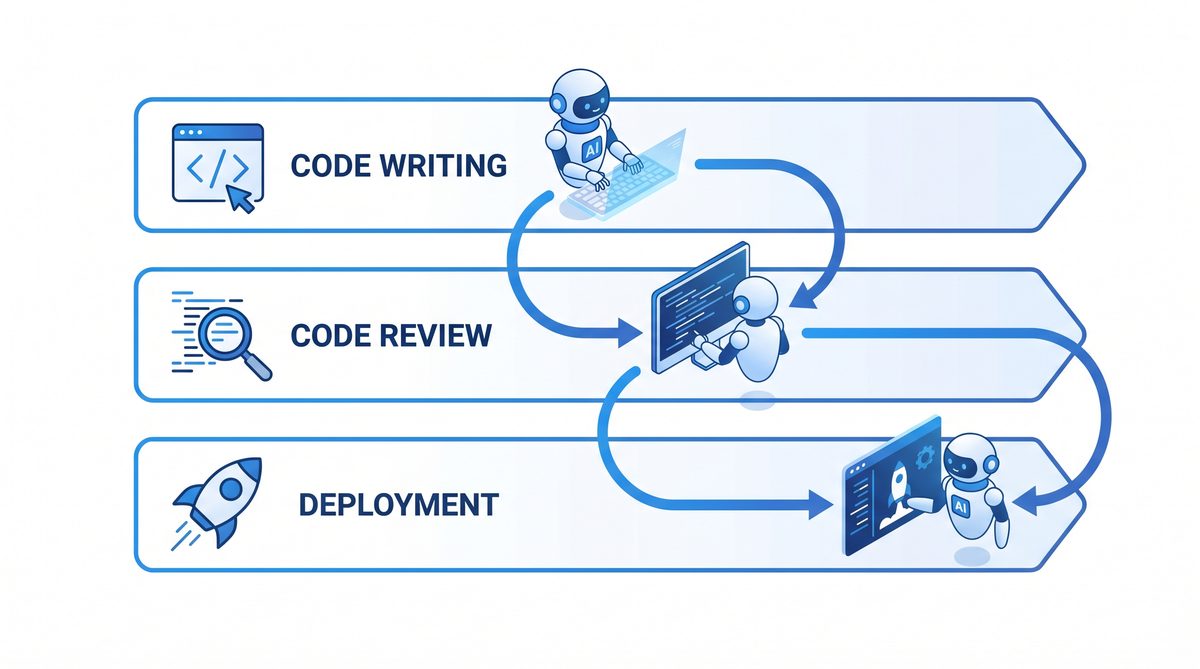
AI coding agents will increasingly integrate with DevOps pipelines, automating not only code generation but also testing, deployment, and monitoring processes. Automated testing frameworks driven by AI will generate comprehensive test cases, identify edge cases, and predict failure points, enabling more robust continuous integration and delivery (CI/CD) workflows.
This seamless integration will foster end-to-end automation in software development lifecycles, reducing manual intervention and accelerating delivery cycles while maintaining high quality and reliability standards.
6.3 Ethical and Regulatory Considerations
The widespread adoption of AI-generated code necessitates careful consideration of ethical and legal issues. Intellectual property rights must be clarified concerning AI-produced code, including authorship and liability in case of defects or infringements. Transparency around AI decision-making processes will be critical to building trust among developers and users.
Regulatory frameworks will likely evolve to govern the use of AI in software development, emphasizing accountability, fairness, and security. Developers and organizations will need to navigate these evolving landscapes to ensure compliant and responsible AI deployment.
6.4 Vision for the Next-Generation Development Workflows
The ultimate vision for software development is a harmonious collaboration between humans and AI agents, where each complements the other’s strengths. Human developers will focus on strategic problem-solving, creativity, and ethical considerations, while AI agents handle routine coding, testing, and optimization tasks.
Looking further ahead, fully autonomous coding systems may emerge, capable of designing, implementing, and maintaining software with minimal human oversight. While such systems raise profound technical and ethical questions, they promise unprecedented productivity gains and new possibilities for innovation.
This evolving synergy will redefine productivity paradigms and reshape the future of software engineering across industries.
Useful Links
- The Rise of AI Super Apps: How OpenAI and Anthropic Are Reshaping Development
- How to Use Claude Design for Rapid Prototyping and Mockups
- Complete Guide to AI Coding Assistants in 2026: Codex vs Claude Code vs Gemini
- How Engineering Teams Are Adopting AI Desktop Agents in 2026
- GPT-Rosalind and GPT-5.4-Cyber: How OpenAI’s Specialized Models Are Reshaping Industries
Related Reading
Conclusion
The rise of AI coding agents such as OpenAI Codex and Anthropic’s Claude Code marks a transformative milestone in software development workflows. By automating code generation, enhancing debugging, and integrating seamlessly with existing tools, these agents are revolutionizing traditional practices and unlocking new levels of developer productivity and creativity.
While offering substantial benefits, the integration of AI coding agents also introduces challenges related to reliance, security, and ethical responsibility. Balancing these opportunities and risks will be critical to harnessing the full potential of AI in software engineering.
As AI coding agents continue to evolve, they will redefine developer roles, accelerate innovation, and enable more inclusive participation in software creation. Embracing this paradigm shift with thoughtful strategies and responsible governance will shape the next generation of development workflows and the future of the software industry itself.
Developers, organizations, and educators alike should closely monitor these advancements and adapt accordingly to thrive in this new era of AI-powered software development. For a deeper understanding of how AI is reshaping the coding landscape, exploring AI coding agents can provide additional valuable insights.
Moreover, to appreciate the practical applications and ongoing innovations, examining case studies focused on Claude Code implementations offers a detailed perspective on real-world integrations. Finally, a comprehensive exploration of OpenAI Codex will enrich understanding of the technological foundations and future directions of AI-assisted coding.
Frequently Asked Questions
What is an AI coding agent?
An AI coding agent is an autonomous system that plans, writes, tests, and iterates on code with minimal human input. Unlike autocomplete (GitHub Copilot) or chat assistants (ChatGPT), agents take a high-level goal like 'add rate limiting to the API' and execute the full change across multiple files, tests, and commits.
Codex vs Claude Code vs Cursor — which should I use?
Claude Code has the best raw agent quality and handles complex multi-file changes best. Cursor has the best IDE experience for developers who want AI assistance without fully handing over control. Codex has the broadest ecosystem and integrations. Many teams use a mix — Cursor for daily work, Claude Code or Codex for larger autonomous tasks.
Are coding agents production-ready?
For bounded, well-tested tasks — yes. For greenfield architecture decisions or security-sensitive changes — not without strong human review. A good rule of thumb: if you'd let a mid-level engineer do it unsupervised, an agent can probably do it with your PR review. If you'd require senior oversight, keep a human in the loop.
How much does using coding agents cost?
Real API usage runs $200–2,000/month per active engineer depending on workload and model choice. Tool licenses (Cursor Pro, ChatGPT Pro, Claude Max) add $20–200/month per seat. Total cost is typically 1–3% of a senior engineer's salary — and the productivity lift tends to return 10–50x that investment.
Will AI coding agents replace developers?
They're replacing tasks, not people. The job is shifting from typing code to supervising, reviewing, and integrating AI-generated work. Developers who learn to work with agents are accelerating their output. Developers who don't are becoming slower by comparison — which functionally is a kind of replacement if wage markets respond.
How do I get started with AI coding agents?
Pick one tool (Cursor for easiest onboarding, Claude Code for raw power) and use it full-time for two weeks. Start with small bug fixes and refactors, build trust with the agent's review cycle, then expand to feature work. Most engineers find their workflow transformed within 30 days of daily use.
Get Free Access to 40,000+ AI Prompts
Join 40,000+ AI professionals. Get instant access to our curated Notion Prompt Library with prompts for ChatGPT, Claude, Codex, Gemini, and more — completely free.
Get Free Access Now →No spam. Instant access. Unsubscribe anytime.
