
OpenAI Codex April 2026 Update: Computer Use, Memory, and 90+ New Plugins Transform Developer Workflows
Introduction
Overview of OpenAI Codex and Its Evolution
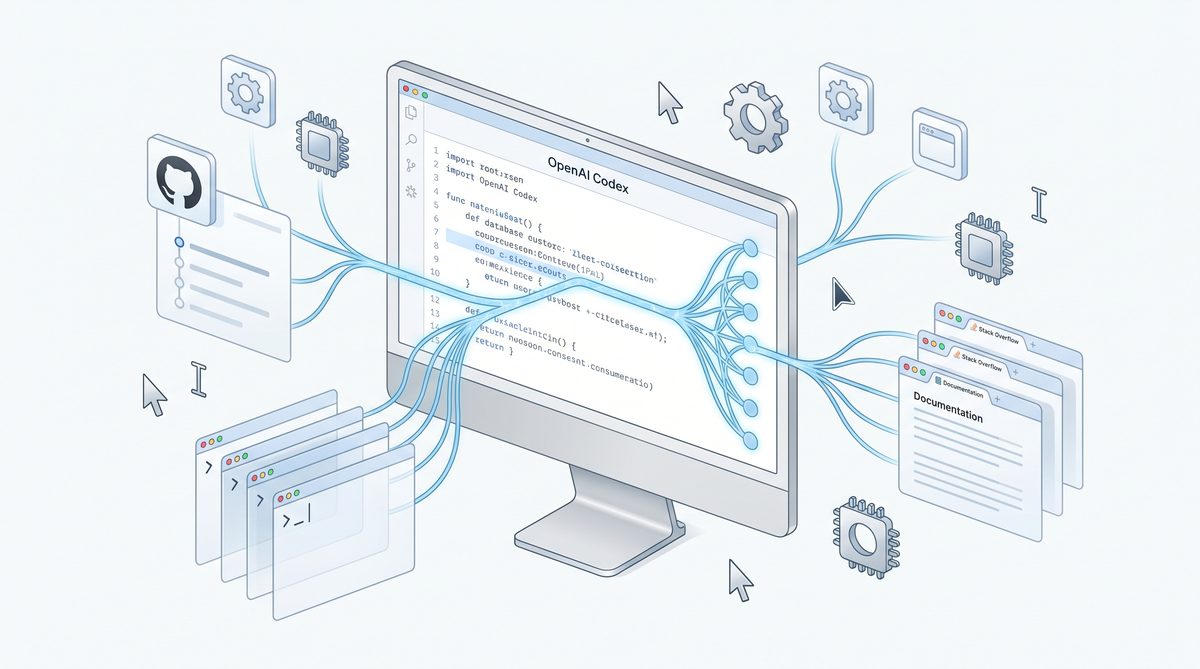
Since its initial release, OpenAI Codex has continuously redefined the boundaries of AI-assisted programming by leveraging natural language understanding to generate, interpret, and optimize code across numerous languages and frameworks. Originally designed to translate human intent into executable code snippets, Codex has evolved into a comprehensive AI-powered assistant that integrates deeply with development environments to enhance productivity and code quality. The trajectory from its inception to the present day reflects an exponential improvement in contextual comprehension, code generation accuracy, and interactive capabilities, culminating in a robust toolset embraced by developers worldwide.
Over the years, OpenAI Codex has expanded its functionalities beyond simple code generation to include debugging, refactoring, documentation generation, and real-time collaboration, all while maintaining a commitment to security and ethical AI application. The April 2026 update marks a significant milestone in this evolution, introducing groundbreaking features that further solidify Codex’s role as an indispensable component in modern software development workflows.
Significance of the April 2026 Update
The April 2026 release of OpenAI Codex represents one of the most transformative updates in the platform’s history. This update introduces enhanced computer use capabilities, revolutionary memory management improvements, and an extensive ecosystem of over 90 new plugins. Together, these enhancements are designed to fundamentally alter how developers interact with their coding environments, manage complex projects, and leverage AI to streamline their workflows.
Notably, the update addresses longstanding challenges such as limited memory recall across sessions and restricted access to underlying system resources, thereby enabling a more natural and efficient coding experience. Additionally, the introduction of a vast plugin library allows developers to tailor Codex’s functionality to their specific needs, automating mundane tasks and integrating seamlessly with diverse tools and platforms. The implications of these advancements extend beyond mere convenience; they signal a paradigm shift in AI-assisted software development.
Objectives of the Article
This article aims to provide a comprehensive and authoritative examination of the OpenAI Codex April 2026 update. It will dissect the technical innovations introduced, evaluate their practical applications, and analyze their broader impact on developer workflows and the software industry. By exploring enhanced computer use features, memory enhancements, and the extensive plugin ecosystem, readers will gain a deep understanding of how this update redefines the capabilities of AI-based coding assistants. Furthermore, the article will present real-world case studies, developer testimonials, and industry feedback to contextualize the significance of these changes.
Ultimately, this piece seeks to inform developers, technical leaders, and industry stakeholders about the potentials unlocked by this update and to guide them in adapting their workflows to harness the full power of OpenAI Codex’s latest iteration.
Enhanced Computer Use Capabilities
New Features Enabling Deeper System Integration
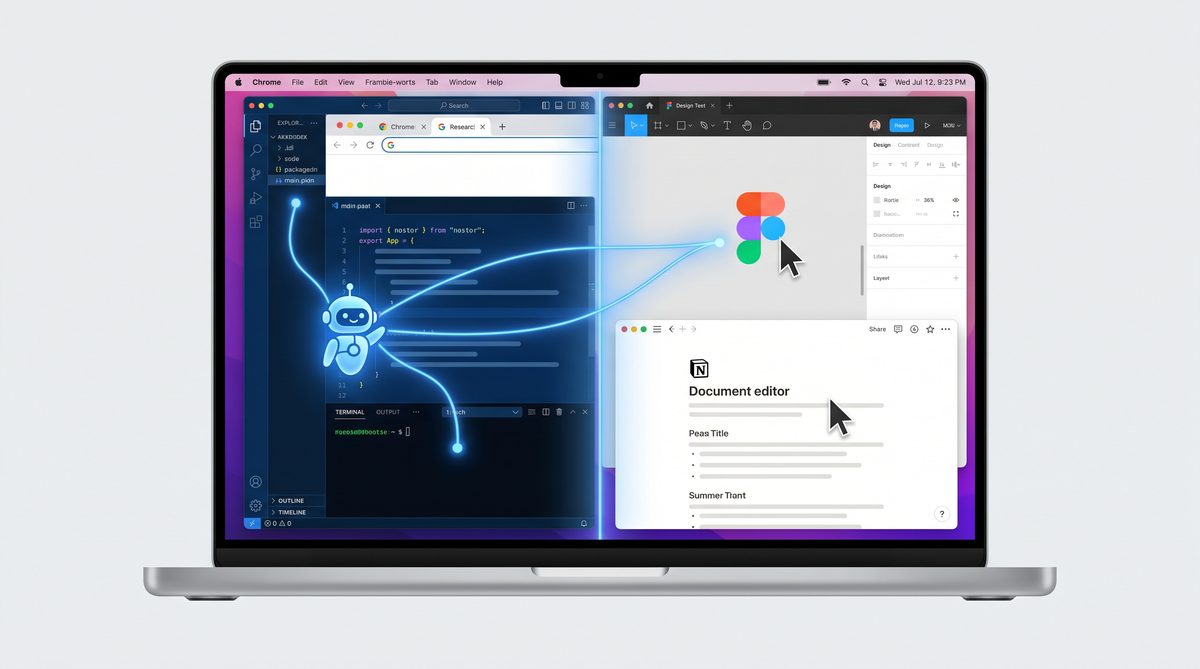
One of the most groundbreaking aspects of the April 2026 update is the introduction of advanced system integration features that allow OpenAI Codex to interact directly with the host computer’s operating system and hardware components. Previously, Codex operated primarily as an isolated AI model generating code based on textual inputs, with limited capacity to execute or manipulate system-level resources. This update changes that paradigm by granting Codex controlled access to file systems, process management, and hardware APIs through secure sandboxing mechanisms.
These new capabilities enable Codex to perform complex tasks such as managing local development environments, automating build and deployment processes, and optimizing resource utilization in real time. For example, Codex can now intelligently query system performance metrics and adjust code generation strategies accordingly, ensuring that the output is not only syntactically correct but also optimized for the specific hardware it will run on. This deep system awareness represents a significant leap forward, positioning Codex as a proactive assistant capable of contextual decision-making beyond mere code synthesis.
Improved Hardware Compatibility and Performance
Complementing its enhanced system integration, the update introduces broad hardware compatibility improvements, allowing Codex to operate efficiently across a wider range of devices and architectures. Support now extends to emerging processor technologies, including ARM-based chips prevalent in mobile and embedded systems, as well as high-performance GPUs and specialized AI accelerators. This expansion ensures that developers working in diverse environments—from cloud servers to edge devices—can benefit from Codex’s AI assistance without performance degradation.
Performance optimizations have also been implemented at the core AI model level, reducing latency in code generation and system interaction tasks. These optimizations leverage adaptive batching and asynchronous processing techniques, enabling near-real-time responses even when handling computationally intensive requests. The result is a smoother, more responsive user experience that integrates seamlessly into fast-paced development workflows.
Impact on Cross-Platform Development
The newly enhanced computer use capabilities directly address the challenges inherent in cross-platform development, where code must be adapted to function correctly and efficiently across multiple operating systems and hardware configurations. Codex now offers advanced context-aware suggestions tailored to specific platform constraints, such as filesystem conventions, API availability, and performance characteristics.
By understanding the nuances of each target environment, Codex aids developers in writing portable, maintainable code that minimizes platform-specific bugs and reduces the need for extensive manual testing. Additionally, Codex can generate platform-optimized build scripts and configuration files, further accelerating cross-platform project delivery. This functionality is particularly valuable in sectors such as mobile app development, IoT, and cloud-native applications, where heterogeneous environments are the norm.
Use Cases Demonstrating Enhanced Computer Interaction
Practical applications of Codex’s enhanced computer use features span a variety of developer scenarios. For instance, a DevOps engineer can now instruct Codex to orchestrate containerized deployments by directly interacting with Docker and Kubernetes APIs, automating complex multi-step workflows that previously required manual scripting. Similarly, embedded systems developers benefit from Codex’s ability to interface with hardware debugging tools and firmware flashing utilities, streamlining the integration and testing phases.
In another use case, data scientists leveraging local GPU clusters for model training can utilize Codex to monitor system resource utilization and dynamically adjust batch sizes or training parameters to optimize throughput without manual intervention. These examples underscore how the update transforms Codex from a passive code generator into an active system collaborator, enhancing efficiency and reducing human error across a spectrum of development contexts.
Revolutionary Memory Management Improvements
Overview of Previous Memory Limitations
Prior iterations of OpenAI Codex operated under significant constraints relating to memory and context retention. While Codex could process input prompts effectively, its ability to recall prior interactions or maintain persistent contextual awareness across multiple sessions was limited. This shortfall often resulted in fragmented workflows, where developers had to repeatedly reintroduce context or manually track project states, diminishing the overall efficiency and continuity of AI-assisted development.
The lack of persistent memory curtailed Codex’s potential in long-term project management and complex multi-step coding tasks, where understanding historical decisions and code evolution is crucial. Developers frequently encountered scenarios where Codex’s suggestions failed to incorporate earlier refinements or project-specific conventions, necessitating additional oversight and corrections. Addressing these memory limitations has been a central focus of the April 2026 update.
Introduction of Persistent and Contextual Memory Features
The update introduces a sophisticated memory architecture enabling Codex to maintain persistent memory across sessions and dynamically adjust its contextual understanding based on developer interactions. This memory system stores structured representations of project states, coding preferences, and previous code iterations, allowing Codex to recall and reference pertinent information seamlessly during subsequent engagements.
Contextual memory extends beyond mere data retention; it empowers Codex to interpret the developer’s intent more accurately by considering historical patterns and adaptive learning. For example, if a developer consistently employs a specific coding style or architectural pattern, Codex can internalize these preferences and reflect them in its future code generation. This results in highly personalized AI assistance that evolves with the user’s workflow.
Benefits for Long-Term Project Handling and Multi-Session Workflows
The implications of persistent and contextual memory are profound for complex projects with extended timelines and iterative development cycles. Developers can now engage with Codex over multiple sessions without losing continuity, allowing the AI to build a comprehensive understanding of the project’s evolution and requirements. This continuity facilitates more coherent suggestions, reduces redundant explanations or code rework, and improves the overall coherence of AI-generated code.
Furthermore, multi-session memory supports collaborative environments where multiple developers interact with Codex on shared codebases. The AI can track changes made by different contributors, enabling it to offer contextually relevant recommendations that consider team-wide conventions and recent modifications. This capability enhances collaboration efficiency and reduces integration conflicts.
Technical Details: Architecture Behind Memory Upgrades
The memory enhancements are underpinned by a multi-layered architecture combining advanced natural language understanding models with persistent storage systems optimized for rapid retrieval and update. At its core, the system employs a hierarchical memory model that segments information into short-term, session-level context and long-term, project-level knowledge bases.
Short-term memory operates using transformer-based attention mechanisms to maintain immediate conversational context, while long-term memory is managed through a secure, encrypted knowledge graph that indexes project artifacts, coding conventions, and historical interactions. This graph database enables efficient querying and semantic linking, allowing Codex to draw connections between disparate pieces of information across time.
The architecture also incorporates privacy-preserving protocols to ensure that stored memory data remains confidential and accessible only to authorized users. Developers have granular control over what information is retained or discarded, aligning with best practices in data security and compliance.
Developer Testimonials on Memory Enhancements
Early adopters of the April 2026 update have reported significant improvements in their development experience attributable to the new memory features. A senior software engineer at a multinational technology firm shared, “The ability of Codex to remember our project’s architectural decisions across weeks of work has drastically reduced the cognitive overhead for our team. We no longer have to constantly reiterate context, which frees us to focus on higher-level design and innovation.”
Similarly, an independent app developer remarked, “Persistent memory has transformed how I interact with Codex. It feels less like a tool and more like a collaborative partner that understands my coding style and project goals. The continuity across sessions means I can pick up exactly where I left off without cumbersome restarts.”
Such testimonials underscore the real-world value of these memory management improvements, highlighting their role in fostering sustained productivity and more natural AI collaboration.
🕐 Instant∞ Unlimited🎁 Free
Integration of 90+ New Plugins
Categorization of New Plugins (e.g., Debugging, Testing, Deployment)
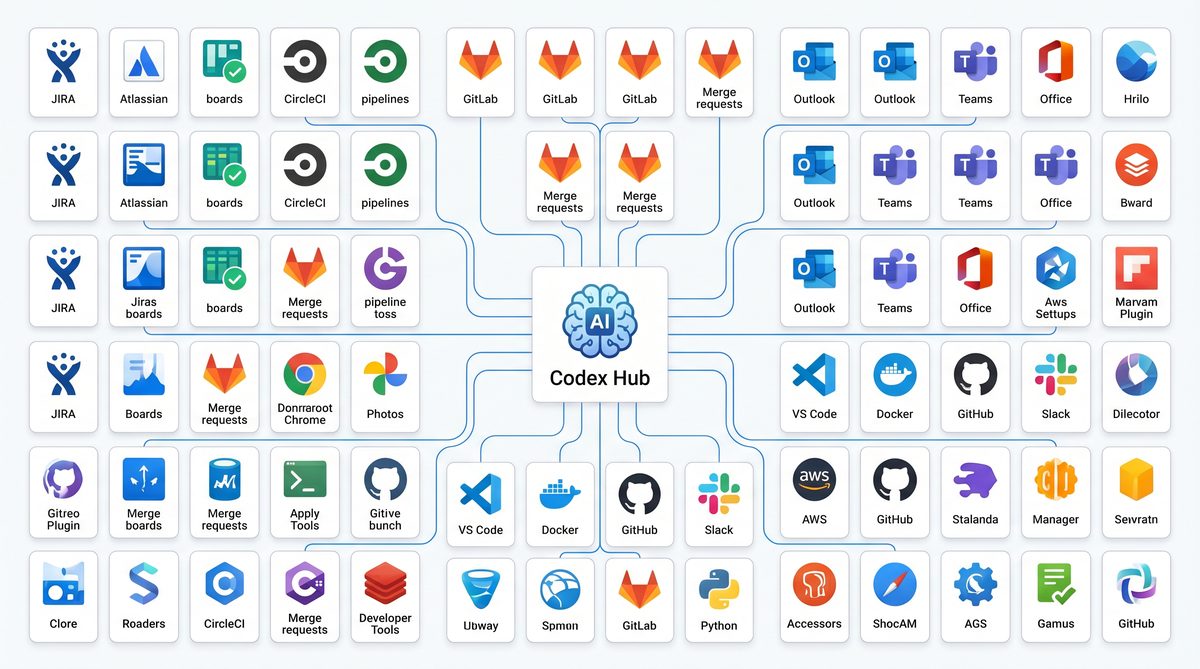
The April 2026 update dramatically expands the OpenAI Codex ecosystem by introducing over 90 new plugins designed to extend the AI’s capabilities across the entire software development lifecycle. These plugins are meticulously categorized to address specific developer needs, enabling a modular and customizable experience. Key categories include:
| Category | Functionality Focus | Examples |
|---|---|---|
| Debugging | Automated error detection, stack trace analysis, breakpoint management | Real-time bug finder, memory leak detector, crash report analyzer |
| Testing | Unit test generation, integration test orchestration, test coverage analysis | Auto-test generator, test suite optimizer, code coverage visualizer |
| Deployment | Continuous integration/continuous deployment (CI/CD), environment configuration | Pipeline automator, container orchestration assistant, cloud deployment manager |
| Code Quality | Style enforcement, code linting, complexity analysis | Style guide enforcer, static analyzer, refactoring advisor |
| Documentation | Automatic documentation generation, API reference creation | Docstring generator, markdown formatter, API doc compiler |
| Security | Vulnerability scanning, dependency auditing, compliance checks | Security scanner, license checker, access control auditor |
Highlighted Plugins and Their Unique Functionalities
Among this extensive suite, several plugins stand out for their innovative contributions to developer productivity and code reliability. The “IntelliDebug” plugin, for example, leverages AI to not only identify bugs but to suggest precise fixes and generate detailed remediation reports, significantly reducing the time spent on troubleshooting. Similarly, the “TestGen Pro” plugin automates the creation of comprehensive test suites by analyzing code paths and predicting edge cases, ensuring robust coverage with minimal manual input.
On the deployment front, the “CloudSync” plugin integrates with major cloud providers to automate environment provisioning, deployment rollbacks, and performance monitoring, streamlining operations for distributed teams. Additionally, the “CodeStyle Maestro” plugin offers adaptive style enforcement that learns team preferences and applies them consistently across codebases, fostering maintainability and reducing stylistic conflicts.
Streamlining Developer Tasks Through Plugin Ecosystem
The plugin architecture transforms OpenAI Codex from a monolithic AI assistant into a highly extensible platform capable of adapting to diverse development workflows. Developers can selectively activate plugins tailored to their project requirements, creating a personalized environment that automates repetitive tasks and enhances code quality at every stage.
This modularity reduces the cognitive load on developers by delegating specialized functions to dedicated plugins, allowing Codex to focus on core code generation while plugins handle auxiliary operations such as testing, security analysis, and deployment orchestration. The result is a cohesive and efficient workflow where AI-assisted coding is seamlessly integrated with ancillary development activities.
How Plugins Enhance AI-Assisted Coding Accuracy and Efficiency
Plugins also contribute to improving the accuracy and efficiency of AI-assisted coding by providing domain-specific knowledge and context that enrich Codex’s understanding. For instance, security-focused plugins supply vulnerability databases and compliance rules that Codex incorporates into its code suggestions, ensuring adherence to best practices. Testing plugins feed back coverage metrics and test results that guide iterative code refinement.
This symbiotic relationship between the AI core and plugins creates a feedback loop that continuously enhances output quality and developer confidence. The integration of real-time diagnostics and automated corrective actions reduces the incidence of bugs and technical debt, accelerating project timelines and improving software reliability.
Community Contributions and Open-Source Plugin Development
Recognizing the value of community-driven innovation, OpenAI has opened the plugin development framework to the public, encouraging developers to create, share, and collaborate on custom plugins. This open-source approach has already resulted in a vibrant ecosystem of plugins catering to niche languages, specialized frameworks, and unique organizational workflows.
Community contributions undergo rigorous validation and security audits before inclusion in the official plugin repository, ensuring quality and reliability. This collaborative model not only accelerates the expansion of Codex’s capabilities but also fosters a sense of shared ownership and continuous improvement among users, driving the platform’s evolution in alignment with real-world developer needs.
Transforming Developer Workflows
Workflow Automation and AI Collaboration
At the heart of the April 2026 update is a fundamental transformation in how developers interact with AI assistants. Codex now facilitates deeper collaboration by automating entire segments of the development pipeline, from initial code scaffolding to final deployment. This automation is powered by both the enhanced computer use capabilities and the extensive plugin ecosystem, enabling Codex to orchestrate multi-step workflows with minimal human intervention.
Developers can delegate routine and repetitive tasks to Codex, such as generating boilerplate code, running unit tests, or setting up deployment pipelines, freeing them to focus on creative problem-solving and architectural design. The AI’s persistent memory ensures that it retains context across these tasks, allowing for coherent and consistent execution. This collaborative dynamic redefines the developer’s role from manual executor to strategic overseer of AI-augmented processes.
Real-World Examples of Productivity Gains
Multiple organizations that have integrated the April 2026 update into their development environments report substantial productivity improvements. A fintech startup noted a 40% reduction in development cycle time due to Codex’s ability to generate and validate code snippets rapidly while simultaneously managing deployment workflows. Similarly, a large enterprise software team highlighted how Codex’s memory enhancements reduced code review iterations by 35%, as the AI consistently applied project-specific conventions and anticipated potential integration conflicts.
Academic research groups employing Codex for scientific computing projects have also benefited from the AI’s capability to maintain long-term context over complex algorithms, enabling faster experimentation and iteration. These documented gains exemplify how the update elevates developer efficiency across sectors and development methodologies.
Adoption Across Different Programming Languages and Frameworks
OpenAI Codex’s April 2026 update maintains and expands its multilingual support, catering to an extensive array of programming languages including but not limited to Python, JavaScript, Go, Rust, Java, C#, Swift, and Kotlin. The update’s plugins further extend functionality to specialized frameworks such as React, Angular, Django, Spring Boot, TensorFlow, and Kubernetes.
This broad language and framework compatibility ensures that developers operating in heterogeneous environments can uniformly apply Codex’s capabilities, avoiding fragmentation and preserving workflow consistency. Enhanced cross-platform support also enables seamless transitions between frontend, backend, and infrastructure code, facilitating full-stack development with unified AI assistance.
The versatility of Codex, combined with its adaptive plugins, empowers developers to leverage AI coding across traditional enterprise applications, modern microservices architectures, and emerging domains such as edge computing and AI model development.
Integration with Popular Development Environments (IDEs)
The update includes deep integrations with leading integrated development environments (IDEs) such as Visual Studio Code, JetBrains IntelliJ IDEA, Eclipse, and Xcode. These integrations provide developers with in-context AI suggestions, real-time diagnostics, and one-click access to plugin functionalities without leaving their coding environment.
Enhanced IDE plugins feature advanced interface elements such as interactive code walkthroughs, inline documentation generation, and AI-driven code refactoring recommendations. This native integration reduces context switching and streamlines the developer experience, making AI assistance a natural part of everyday coding activities rather than a separate tool.
Challenges and Learning Curve for Developers
While the April 2026 update offers considerable advantages, it also introduces new challenges that developers must navigate. The expanded capabilities and plugin ecosystem, while powerful, require a degree of familiarization and configuration to optimize their use effectively. Developers need to understand how to selectively enable and manage plugins, configure memory persistence settings, and maintain security best practices when allowing Codex to interface with system resources.
Additionally, the increased automation and AI collaboration necessitate shifts in team workflows and communication patterns, as traditional roles evolve and responsibilities shift toward AI oversight and strategic planning. Organizations investing in training and change management initiatives report smoother adoption curves and more successful integration outcomes.
Despite these challenges, the consensus among early adopters is that the learning curve is outweighed by the productivity and quality gains enabled by the update, particularly when organizations commit to structured onboarding and continuous learning.
For further exploration of optimizing AI-assisted coding workflows, refer to developer workflows.
Industry and Market Impact
Feedback from Tech Companies and Startups
Industry leaders and startups alike have expressed enthusiastic support for the April 2026 OpenAI Codex update, citing its potential to redefine software development standards. Major technology firms emphasize how Codex’s enhanced memory and system integration capabilities align with their digital transformation goals, enabling faster innovation cycles and reduced operational costs.
Startups appreciate the democratization of advanced AI tools that previously required significant infrastructure investment, now accessible through Codex’s plugin ecosystem and cross-platform support. This accessibility accelerates go-to-market timelines and fosters experimentation, particularly in emerging technology sectors such as AI-powered automation, blockchain, and augmented reality.
Investor sentiment has also been positive, with increased funding directed toward AI-driven development tools, recognizing the strategic advantage conferred by AI-assisted coding in a highly competitive software market.
Competitive Positioning of OpenAI Codex in 2026
In the rapidly evolving landscape of AI programming assistants, OpenAI Codex’s April 2026 update positions it at the forefront of innovation. Its comprehensive feature set, combining advanced memory management, deep system integration, and a rich plugin ecosystem, differentiates it from competitors that primarily focus on isolated code generation or limited AI functionalities.
Competitors have responded by accelerating their own development roadmaps; however, Codex’s head start in integrating persistent memory and extensive automation capabilities provides a durable competitive advantage. Moreover, OpenAI’s commitment to openness and community engagement fosters a vibrant ecosystem that sustains long-term growth and adaptability.
Implications for Software Development Trends
The update signals several emergent trends in software development, including the increasing centrality of AI as a collaborative partner rather than a mere tool, the rise of modular and extensible AI platforms, and the blurring boundaries between development, deployment, and operations. These trends underscore a shift towards more integrated, continuous, and intelligent development pipelines.
Furthermore, the enhanced memory features encourage more sustained and context-aware AI engagement, promoting deeper understanding and higher-quality code generation. The proliferation of plugins reflects a move toward customizable AI ecosystems that adapt to specific organizational needs, heralding a future where AI assistants become fully embedded within enterprise technology stacks.
Future Prospects and Expected Innovations
Looking ahead, OpenAI Codex is poised to continue its trajectory of innovation with planned enhancements focusing on real-time collaborative coding, expanded multimodal inputs including voice and visual programming, and tighter integration with emerging technologies such as quantum computing frameworks and advanced robotics software.
Additionally, ongoing research aims to enhance Codex’s explainability and interpretability, addressing transparency concerns and fostering greater trust in AI-generated code. The community-driven plugin model is expected to grow exponentially, incorporating more domain-specific intelligence and automation capabilities.
These future developments will further blur the lines between human and machine collaboration in software development, unlocking unprecedented levels of productivity and creativity.
Explore more insights on AI coding advancements via AI coding.
Useful Links
- Advanced Prompt Engineering for ChatGPT, Claude, and Codex in 2026
- ChatGPT Pro $100 Plan: Is the 5x Codex Access Worth It?
- How to Use OpenAI Codex Desktop Agent for Automated Workflows in 2026
- Advanced Prompting for AI Desktop Agents: Codex and Claude Code
- OpenAI Codex Major Update: Desktop Computer Use and Multi-Agent Workflows
Related Reading
Conclusion
Summary of Key Updates and Their Importance
The April 2026 update to OpenAI Codex marks a watershed moment in the evolution of AI-assisted software development. By introducing enhanced computer use capabilities, revolutionary memory management improvements, and a vast ecosystem of 90+ new plugins, the update addresses critical limitations and unlocks new potentials for developers worldwide.
These enhancements collectively transform Codex from a reactive code generator into an integrated, context-aware, and highly customizable AI collaborator capable of managing complex workflows, adapting to diverse environments, and improving code quality and productivity at scale. The update’s technical sophistication and practical applications establish new industry benchmarks for AI programming assistants.
Final Thoughts on the Evolution of AI-Assisted Development
As AI technologies mature, their role in software development is shifting from supportive to strategic, empowering developers to innovate faster and more effectively. OpenAI Codex’s April 2026 update exemplifies this transition, demonstrating how thoughtful integration of memory, system access, and extensibility can create AI partners that understand, anticipate, and amplify human creativity.
Such advancements herald a future where AI and human developers work in tandem, each complementing the other’s strengths, leading to higher quality software and more fulfilling developer experiences. Embracing these tools will be essential for organizations seeking to maintain competitive advantage and foster innovation in a rapidly changing technological landscape.
Call to Action for Developers and Industry Stakeholders
Developers and industry leaders are encouraged to explore the new capabilities of OpenAI Codex actively and to integrate the platform’s features into their development workflows to realize productivity gains and quality improvements. Engaging with the plugin ecosystem, adopting best practices for memory management, and leveraging enhanced computer use features will be critical steps toward maximizing the value of AI-assisted development.
Stakeholders should also contribute to the ongoing evolution of the Codex ecosystem by participating in community plugin development, sharing feedback, and investing in training and change management initiatives. Collective action will ensure that OpenAI Codex continues to evolve in ways that meet the diverse and dynamic needs of the global software development community.
For more detailed guidance on integrating AI tools into modern programming environments, visit developer workflows.
Get Free Access to 40,000+ AI Prompts
Join 40,000+ AI professionals. Get instant access to our curated Notion Prompt Library with prompts for ChatGPT, Claude, Codex, Gemini, and more — completely free.
Get Free Access Now →No spam. Instant access. Unsubscribe anytime.
